Dr Srishti Jauhar, Dentist & Clinical Director, The Dentist — 23+ years of clinical experience; 4,500+ root canal treatments; Fellowship in Rotary Endodontics (IARE, USA). She follows an ethical, conservative and patient-first approach, with a strong focus on preserving natural teeth whenever reasonably possible. Through these articles, she shares her clinical experience to help patients better understand their dental problems and treatment options, and make informed decisions about their care.
A deep cavity does not always mean a root canal is necessary. Here’s how two badly decayed upper molars were restored using different minimally invasive approaches, preserving their natural tooth structure without root canal treatment.
A deep cavity does not automatically mean a root canal
When patients are told that they have a deep cavity, one of their first concerns is often whether the tooth will need a root canal. This is understandable.
Deep decay can look alarming, particularly when it affects a back tooth, and many people assume that once a cavity reaches close to the nerve, root canal treatment is inevitable.
However, that is not always the case.
As a dentist, I believe that the first step is to understand the actual condition of the tooth rather than decide on treatment based on how deep or extensive a cavity appears.
The health of the dental pulp, the response of the tooth to clinical tests, the amount of healthy tooth structure remaining, and the possibility of restoring it reliably all matter when making this decision.
I recently came across a case that illustrates this particularly well. A patient came in with pain and food getting stuck around two upper-left back teeth. On examination and dental X-rays, both molars showed extensive, deep decay. Yet, the initial cold tests showed a positive response in both teeth.
After assessing the findings, two different restorative approaches were planned. One tooth was restored directly using composite with the Bioclear Injectable Technique. The other required additional steps, including Immediate Dentin Sealing (IDS) and Deep Margin Elevation (DME), followed by a bonded indirect onlay to provide additional protection.
Both teeth were restored without root canal treatment.
What makes this case important is not simply that root canal treatment was avoided. It demonstrates why I do not consider two deeply decayed teeth identical, or assume that every extensive cavity requires the same treatment.
My approach is to preserve natural tooth structure wherever it is clinically appropriate and predictable, while ensuring that the restored tooth has the support and protection it needs.
In this article, I will explain how I assess a deep cavity, what determines whether a tooth can be saved without root canal treatment, and how two teeth in this case were restored using different conservative adhesive techniques.
What happens when a cavity becomes very deep?
To understand why a deep cavity does not always require a root canal, it helps to understand the basic structure of a tooth and what happens as tooth decay progresses.
A tooth is made up of different layers. Each layer has a role, and the depth to which decay has progressed can influence the treatment required.
How does tooth decay progress?
The outermost layer of a tooth is the enamel. It is the hard, protective covering that shields the tooth from everyday wear and damage.
Beneath the enamel is the dentin. It is softer and contains microscopic channels called dentinal tubules. As decay moves through the enamel and reaches the dentin, it can progress more quickly because dentin is less resistant to bacterial damage.
This is why a cavity that initially appears small on the surface may be much larger underneath.
When decay continues deeper into the tooth, it can approach the dental pulp. At this stage, we are dealing with what is commonly described as a deep cavity in a tooth or deep tooth decay.
What is the dental pulp, and why does it matter?
The dental pulp is the soft tissue located inside the tooth. It contains nerves, blood vessels and connective tissue that help nourish the tooth and respond to external stimuli.
Patients often refer to the pulp as the tooth’s nerve, although it is more than just a nerve.
The condition of this tissue is particularly important when deciding whether a deep cavity can be treated with a filling or another restoration, or whether root canal treatment is necessary.
What happens when decay gets close to the pulp?
When deep tooth decay approaches the pulp, bacteria and the products of bacterial activity can irritate the tissue inside the tooth. This may cause inflammation, which can sometimes produce sensitivity or pain.
However, a cavity close to the nerve does not automatically mean that the pulp is irreversibly damaged.
In some cases, the pulp may still be healthy or capable of recovering after the source of irritation is carefully removed and the tooth is properly sealed. In other cases, the inflammation may be too advanced, or the pulp may already be irreversibly damaged or infected, making root canal treatment necessary.
This distinction is important. The aim is not simply to remove the decay, but to assess how the pulp has responded and determine whether the remaining tooth can be restored reliably.
That is why I do not decide whether a tooth needs a root canal based on the apparent depth of the cavity alone. A clinical examination, appropriate diagnostic tests and dental X-rays help me understand what is happening beneath the visible surface.
Does every deep cavity need a root canal?
No. A deep cavity does not automatically mean that a root canal is necessary.
This is one of the most common concerns I hear from patients who have been told that tooth decay has reached close to the nerve. While some deeply decayed teeth do need root canal treatment, others may still be treated with a conservative restoration that preserves the dental pulp.
The important distinction is whether the pulp inside the tooth is healthy, inflamed but capable of recovery, or irreversibly damaged or infected. The amount of healthy tooth structure remaining also influences whether the tooth can be restored successfully.
When can a deep cavity be treated without a root canal?
A tooth with deep decay may be suitable for treatment without root canal therapy when the pulp is still healthy or its inflammation is considered reversible, and the tooth can be restored reliably.
Depending on the clinical findings, treatment may involve carefully removing the decayed tooth structure, protecting the remaining dentin where appropriate, and sealing the cavity with a well-bonded restoration.
The objective is to remove the source of bacterial irritation while preserving as much healthy tooth structure as possible.
In selected cases, even when the decay is extremely close to the pulp, techniques that aim to preserve the pulp may be considered. The choice depends on the pulp diagnosis and what is found during treatment.
However, avoiding a root canal should never become the objective at the expense of the tooth’s long-term health. The treatment must be appropriate for the condition of that particular tooth.
When is root canal treatment necessary?
Root canal treatment is generally recommended when the dental pulp has become irreversibly inflamed or infected and cannot be predictably maintained.
This may happen when deep tooth decay has allowed bacteria to reach the pulp, or when the tooth has sustained damage from trauma, cracks or repeated dental procedures.
Symptoms such as spontaneous toothache, pain that lingers after exposure to hot or cold, or pain that disturbs sleep can raise concern about significant pulp inflammation. However, symptoms alone are not enough to establish the diagnosis.
When root canal treatment is necessary, it is not a treatment failure. It is a well-established way of removing diseased pulp tissue, cleaning and sealing the root canal system, and retaining a natural tooth that might otherwise need extraction.
My responsibility is to explain why a particular treatment is indicated, rather than recommend or avoid a root canal simply as a matter of preference.
Can a tooth look badly damaged but still be saved?
Yes, sometimes a tooth with extensive visible decay can still be restored.
The visible size of a cavity does not always tell us whether the pulp is irreversibly damaged or whether enough healthy tooth structure remains to rebuild the tooth.
I look at several factors before deciding whether a deeply decayed tooth can be saved. These include the condition of the pulp, the extent and location of decay, whether the tooth has cracks, how much sound tooth structure remains, and whether a predictable restoration can be achieved.
In some situations, a tooth may not need root canal treatment but may require more than an ordinary filling. An onlay or another form of cuspal coverage may be needed to protect the remaining tooth structure.
This is why two teeth with similarly deep cavities can require different treatments.
The decision is not simply about how deep the cavity is. It is about whether the pulp can be maintained and whether the tooth can be restored predictably.
How dentists determine whether a deep cavity can be saved
When I examine a patient with a deep cavity, I do not make a treatment decision based on the size of the cavity alone. I need to understand how far the decay has progressed, whether the pulp inside the tooth is affected, and whether enough healthy tooth structure remains to restore it.
There is no single test that can answer all these questions. I combine the patient’s symptoms, clinical examination, dental X-rays and appropriate pulp tests to arrive at a diagnosis.
Here is what I look for.
Clinical examination of the tooth
I begin by understanding what the patient has been experiencing.
Then I ask about the nature of the pain, when it started, how long it lasts, and whether it occurs spontaneously or in response to hot, cold or sweet foods. I also want to know whether the discomfort is affecting sleep, chewing or everyday activities.
I then examine the tooth to assess the visible decay, the condition of the surrounding gums, any existing fillings or restorations, and whether there are signs of cracks or damage.
The amount and location of the remaining healthy tooth structure are particularly important. Even if the pulp can be preserved, the tooth must still be capable of supporting a reliable restoration.
Why dental X-rays are important for a deep cavity
A dental X-ray helps me assess how far the decay has progressed beneath the visible tooth surface.
It can show the approximate depth of the cavity, how close the decay is to the pulp chamber, and whether there are changes around the root that may indicate disease affecting the surrounding tissues.
This information is important because a cavity can look relatively small when viewed directly but extend much deeper inside the tooth.
However, an X-ray does not tell me everything about the condition of the pulp. It needs to be interpreted alongside the clinical examination and other diagnostic findings.
What does a cold test tell the dentist?
A cold test is one of the important diagnostic tests I use when assessing a tooth with deep decay.
During this test, I apply a controlled cold stimulus to the tooth and observe how it responds. I also compare the response with neighbouring or similar healthy teeth.
A brief response that settles quickly may be consistent with a normal pulp response or a less severe inflammatory condition. An exaggerated response that continues after the cold stimulus is removed can raise concern about more significant pulp inflammation.
A tooth that does not respond may also require further investigation.
It is important to understand that a cold test measures the sensory response of the pulp; it does not directly measure its blood supply or establish its complete health. Therefore, a positive response does not automatically mean that the tooth will never need root canal treatment.
Why symptoms alone may not tell the whole story
Two patients with similarly deep cavities may describe very different symptoms. Equally, a tooth that appears badly decayed may still show a reassuring response during diagnostic testing.
This is why I avoid making a decision based only on whether a patient has pain or how severe that pain feels.
The history of symptoms, clinical findings, X-ray appearance and pulp test responses need to be considered together. In certain situations, additional information during the treatment itself may also influence the final decision.
My aim is to establish whether the pulp can be preserved and whether the remaining tooth can be restored predictably. Only after understanding both can I recommend the most appropriate treatment, whether that is a direct filling, an adhesive restoration, an onlay or root canal treatment followed by a suitable restoration.
The real case: How we restored two deeply decayed molars without root canal treatment
A patient came to us with a concern that many people experience: discomfort in the back teeth, along with food repeatedly getting stuck in the affected area.
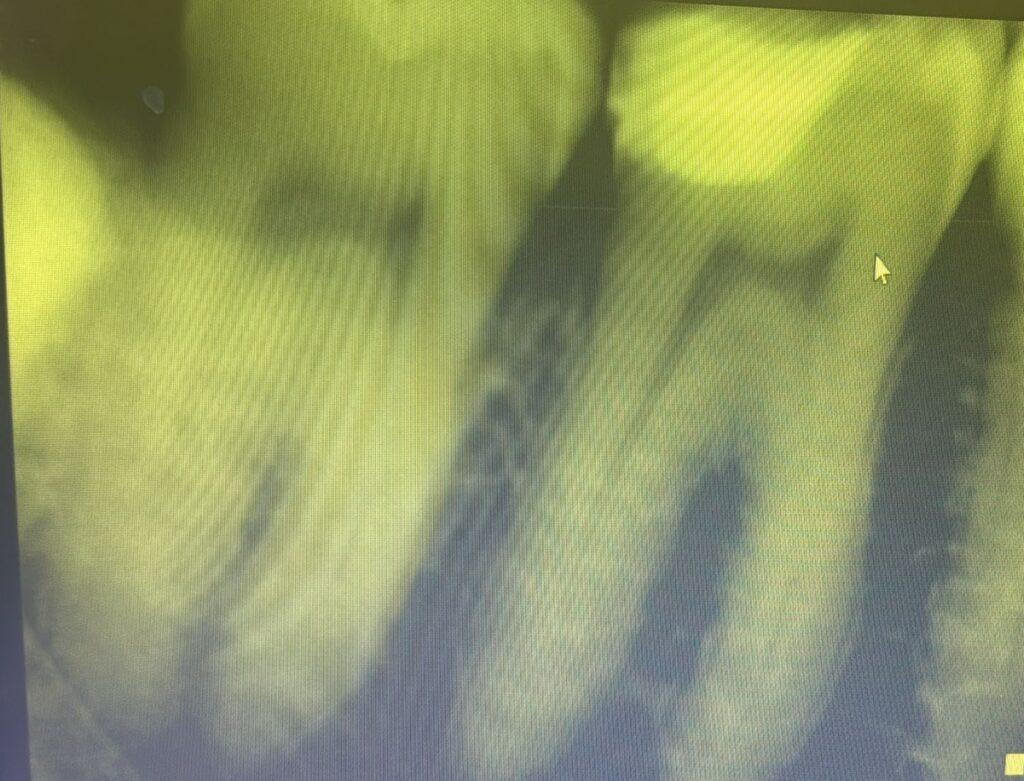
On examination, we found deep decay in two upper-left molars — teeth 26 and 27. Dental X-rays confirmed that the cavities extended deep into the tooth structure.
(Pre-operative dental X-rays showing extensive decay in the upper-left first and second molars (26 and 27))
(Pre-operative intraoral photograph showing the two affected upper-left molars before restorative treatment)
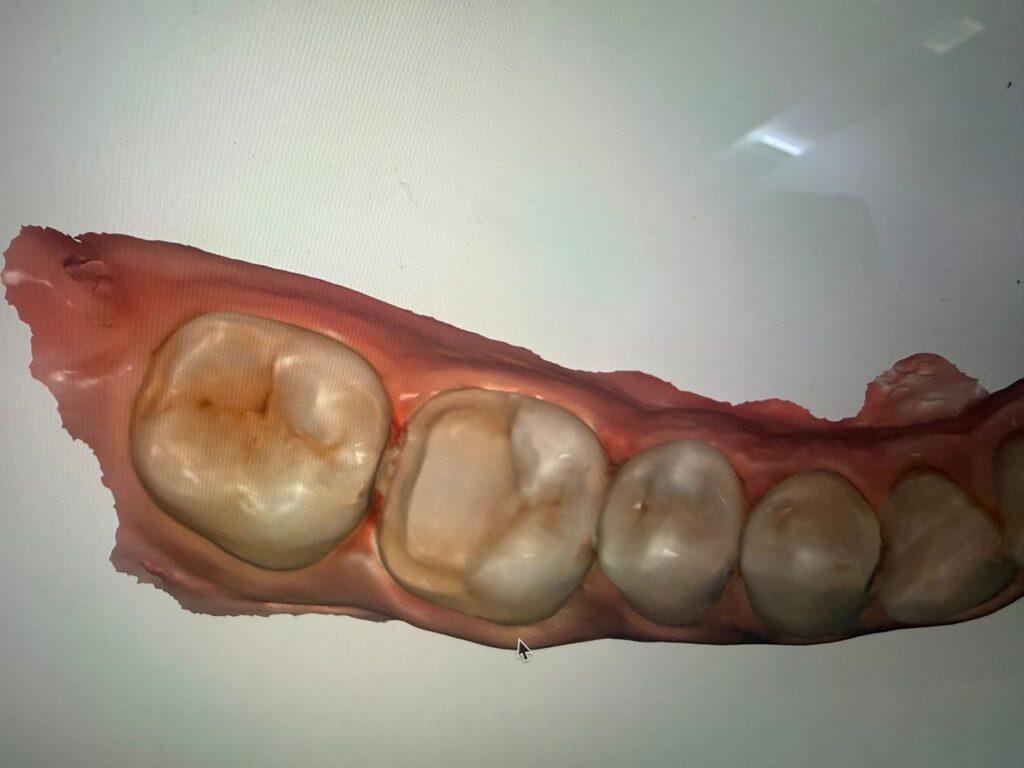
(Pre-operative digital intraoral scan documenting the condition of the teeth before restorative preparation)
Given the extent of decay, it was important to establish whether the pulp inside either tooth was affected and whether both teeth could be restored without root canal treatment.
The initial cold tests showed a positive response in both teeth. This was a useful part of the diagnostic assessment, although it was not, by itself, a guarantee of long-term pulp health.
After evaluating the findings, we planned to preserve both teeth using adhesive restorative techniques. Interestingly, although the two teeth had similarly deep decay, they required different restorative approaches.
What was the treatment objective?
The objective was to preserve as much healthy natural tooth structure as reasonably possible, manage the deep decay, seal the restored areas effectively and protect the remaining tooth structure.
We followed a conservative, adhesive approach rather than automatically opting for root canal treatment or a more extensive restoration.
The treatment plan was based on the individual requirements of each tooth.
Tooth 27: Restoring the deep cavity with composite
For tooth 27, we used a biomimetic adhesive approach and restored the tooth with composite using the Bioclear Injectable Technique.
This technique allowed us to rebuild the affected tooth structure using a direct composite restoration.
The aim was to restore the tooth while preserving the remaining healthy structure and achieving an effective seal.
Tooth 26: Why this tooth needed an indirect onlay
Tooth 26 required a different approach because of the restorative requirements of the remaining tooth structure.
The treatment involved several steps:
Immediate Dentin Sealing (IDS): After preparing the tooth, IDS was used to seal the exposed dentin. This is an important step in adhesive restorative treatment.
Deep Margin Elevation (DME): DME was carried out to manage the deep restorative margin and establish a more suitable margin for the subsequent adhesive restoration.
Composite restoration: Composite was placed using the Bioclear Injectable Technique as part of the restorative procedure.
Intraoral scanning: Once the preparation was ready, an intraoral scan was taken to record the prepared tooth for the indirect restoration.
Bonded indirect onlay: The final restoration was an indirect onlay, which was bonded to the tooth using adhesive protocols. This provided additional protection to the remaining tooth structure.
(Digital intraoral scan after preparation of tooth 26, documenting the prepared tooth for fabrication of the indirect onlay)
Unlike a direct filling, an indirect onlay is fabricated separately and then bonded to the prepared tooth. It can be particularly useful when a molar needs additional protection beyond what a conventional filling can provide.
(Final intraoral photograph showing the bonded indirect onlay on tooth 26 after restorative treatment)
How did the teeth respond after treatment?
At the follow-up visit, the patient was happy with the treatment outcome. There was no pain, and the earlier problem of food getting lodged around the treated teeth had resolved.
Most importantly, both deeply decayed molars had been restored without root canal treatment.
This case demonstrates why the treatment of a deep cavity in a tooth should never be decided by its appearance alone. Even two neighbouring teeth with extensive decay may need different restorative solutions.
The right approach is to assess each tooth individually, understand the condition of its pulp, and choose a restoration that addresses its structural requirements while preserving natural tooth tissue wherever possible.
What are IDS, DME and the Bioclear Injectable Technique?
Some deep cavities can be restored with a conventional filling. Others need a more carefully planned adhesive approach, particularly when the decay extends towards the gum line or a significant amount of tooth structure has been lost.
In the case discussed above, we used three restorative techniques: Immediate Dentin Sealing (IDS), Deep Margin Elevation (DME) and the Bioclear Injectable Technique.
Let me explain what each involves and why these techniques can be useful when restoring a deeply decayed tooth.
What is Immediate Dentin Sealing (IDS)?
Immediate Dentin Sealing, commonly called IDS, is an adhesive technique in which the exposed dentin is sealed with a bonding system immediately after tooth preparation.
When a tooth is prepared for an indirect restoration, such as an onlay, some of its dentin becomes exposed. Rather than waiting until the final restoration is ready, IDS allows this exposed dentin to be sealed at the preparation stage.
The purpose is to protect the prepared dentin from contamination and establish an adhesive surface for the subsequent bonding procedure.
In our case, IDS was used on tooth 26 as part of the preparation for its indirect onlay. It was one of the steps in creating a suitable foundation for the final bonded restoration.
What is Deep Margin Elevation (DME)?
Deep Margin Elevation, or DME, is a restorative technique used when a cavity extends deep towards or below the gum line, particularly around the sides of a tooth.
A deep cavity margin can be difficult to access, isolate, scan or restore accurately. DME involves using an adhesive restorative material, commonly composite resin, to raise the deep margin to a more accessible position.
This can make subsequent restorative procedures, including the placement and bonding of an indirect onlay, more manageable.
However, DME is not suitable for every deep cavity. The dentist must assess the position of the margin, the surrounding gum and supporting tissues, and whether adequate isolation and sealing can be achieved.
In tooth 26, DME was used to manage the deep margin before proceeding with the indirect restoration.
What is the Bioclear Injectable Technique?
The Bioclear Method is an approach to composite dentistry that uses specially designed transparent anatomical matrices and an injection-moulding technique to shape composite material around the prepared tooth.
Instead of simply placing composite into a cavity in conventional increments, the technique uses the matrix to help form the restoration’s intended shape and contours.
The composite is adapted within this anatomical form, allowing the dentist to rebuild the missing tooth structure and establish appropriate contact and contours.
In our case, the Bioclear Injectable Technique was used for the direct composite restoration of tooth 27. Composite using this technique was also part of the restorative procedure for tooth 26 before its final onlay.
The technique is not a substitute for proper diagnosis, cavity preparation or adhesive protocols. Its suitability depends on the tooth, the extent of damage and the restoration being planned.
What is an indirect onlay, and why might a tooth need one?
An onlay is a type of indirect dental restoration that is fabricated outside the mouth and subsequently bonded to the prepared tooth.
Unlike a conventional filling, which is placed directly into the cavity, an indirect onlay is designed to cover and restore a larger portion of the tooth. Depending on the preparation, it can also cover one or more weakened chewing surfaces, known as cusps.
This additional coverage can be important when a back tooth has lost considerable structure due to deep decay. A large conventional filling may not provide the protection that the remaining tooth needs.
An onlay can therefore be considered when the objective is to restore the tooth’s shape and function while providing support to the remaining structure.
For tooth 26, we used a bonded indirect onlay because its restorative requirements called for additional protection. An intraoral scan was taken after preparation to record the tooth for fabrication of the final restoration.
The important point is that these techniques serve different purposes. IDS helps seal prepared dentin, DME helps manage deep restorative margins, the Bioclear technique helps shape direct composite restorations, and an onlay provides coverage and protection where the remaining tooth structure requires it.
They are not treatments that every patient with a deep cavity will need. The choice depends on the condition of the individual tooth and the restoration required.
Deep cavity treatment: Filling, onlay or root canal – what’s the difference?
When a tooth has a deep cavity, the treatment decision is not simply about removing the decay and filling the space. I also need to consider how much healthy tooth structure remains, how close the decay is to the dental pulp, and whether the restored tooth will be strong enough to withstand everyday chewing forces.
Depending on these findings, deep cavity treatment may involve a direct filling, an indirect restoration such as an onlay, or root canal treatment followed by an appropriate restoration.
These treatments serve different purposes. The choice depends on the condition of the individual tooth.
When is a deep cavity filling enough?
A direct composite filling may be suitable when the decay can be removed, the remaining tooth structure is sufficiently strong, and the cavity can be sealed reliably.
With a deep cavity filling, the decayed portion is removed and the prepared area is restored using a tooth-coloured composite material. Modern adhesive techniques allow the restoration to bond to the remaining tooth structure.
However, the size of the cavity matters. A tooth may have enough healthy structure to support a filling even when the decay is deep. In another tooth, extensive decay may leave the remaining walls or cusps too weak to withstand chewing pressure reliably.
That is why I do not decide on a filling simply because the tooth can be filled. I also consider how well it is likely to function over time.
When might an onlay be recommended for a damaged molar?
An onlay may be appropriate when a significant amount of tooth structure has been lost and one or more cusps need additional protection.
Unlike a conventional filling, which restores the prepared cavity directly, an onlay is made outside the mouth and then bonded to the tooth. It can restore the damaged portion while covering and protecting weakened cusps.
For some teeth, this provides a way to reinforce the remaining structure without covering the entire tooth with a full crown. Whether an onlay is suitable depends on the extent and location of the damage, the amount of sound tooth structure available, and whether a reliable adhesive bond can be achieved.
In the case discussed earlier, the two upper-left molars had different amounts and patterns of structural damage. One could be restored directly with composite, while the other required additional protection through a bonded indirect onlay.
This is an important distinction: even when two teeth have deep cavities, they may not need the same restoration.
When does a deep cavity need a root canal?
A root canal is considered when the dental pulp inside the tooth is irreversibly inflamed or infected and cannot be expected to recover with a conservative approach.
The decision is based on the complete clinical assessment, including the patient’s symptoms, examination findings, pulp tests and dental X-rays. The depth of the cavity alone does not establish whether root canal treatment is necessary.
If the pulp is irreversibly damaged, removing the decay and placing a filling or onlay alone will not address the underlying problem. Root canal treatment may then be needed to treat the affected pulp before the tooth is restored.
The final restoration is a separate but equally important decision. Depending on how much healthy tooth structure remains, the tooth may be restored with a suitable filling, an onlay or a crown. Not every tooth that has undergone root canal treatment automatically needs the same type of coverage.
Is avoiding a root canal always the better option?
Not necessarily.
I believe in preserving natural tooth structure wherever it is clinically appropriate and predictable. But avoiding a root canal should never become the treatment objective at the expense of the patient’s long-term oral health.
If the pulp is healthy or has a reasonable prospect of recovery, and the remaining tooth can be restored reliably, a conservative approach may help preserve more of the natural tooth.
On the other hand, if the pulp is irreversibly damaged, delaying or avoiding necessary root canal treatment can allow the problem to progress.
The right question, therefore, is not simply whether a root canal can be avoided. It is which treatment gives this particular tooth the best reasonable chance of remaining comfortable, functional and maintainable?
That is why I assess the pulp condition and the remaining tooth structure together before recommending treatment. A filling, an onlay and a root canal are not competing choices in every situation; each has a different role in treating and restoring a damaged tooth.
What are the signs that a deep cavity may need urgent dental attention?
A deep cavity does not always cause severe pain. In fact, tooth decay can progress for some time without producing obvious symptoms. This is one reason why a cavity may become quite extensive before someone realises how much damage has occurred.
However, certain symptoms should not be ignored. They may indicate that decay has progressed, that the dental pulp is inflamed, or that an infection has developed around the tooth.
Here are some signs to watch for.
Persistent or spontaneous toothache
A tooth that starts hurting without any obvious trigger deserves attention, particularly if the pain keeps returning or becomes more intense.
Unlike brief sensitivity when eating something cold or sweet, spontaneous toothache may indicate that the dental pulp is becoming significantly inflamed.
If the pain persists, disturbs your daily activities or does not settle with ordinary pain relief, arrange a dental assessment promptly.
Pain that lingers after hot or cold food and drinks
Brief sensitivity to cold or sweet foods does not necessarily mean that a tooth needs a root canal.
However, if pain continues even after the hot or cold stimulus has been removed, it may indicate a more significant response from the pulp.
Lingering sensitivity is one of the symptoms I take seriously when assessing a deep cavity. It needs to be considered alongside clinical examination and pulp testing rather than used as a diagnosis on its own.
Pain that disturbs your sleep
Toothache that becomes worse at night or wakes you from sleep should not be dismissed.
Persistent pain, particularly when it occurs without eating or drinking, can be associated with significant inflammation inside the tooth. It is a reason to seek prompt dental attention rather than waiting for the discomfort to become unbearable.
Pain when biting or chewing
If a tooth hurts when you bite down, chew food or release pressure, there may be damage beyond an ordinary cavity.
Deep decay, a crack in the tooth, a weakened cusp or inflammation around the root can all contribute to biting discomfort.
A dentist needs to identify the actual cause before deciding whether the tooth needs a filling, an onlay, root canal treatment or another approach.
Swelling around the tooth or gums
Swelling near a painful tooth, a pimple-like swelling on the gum, or discharge with an unpleasant taste may indicate a dental infection or abscess.
Facial or jaw swelling, fever, and difficulty opening the mouth are also warning signs that require urgent assessment.
A suspected dental abscess should be evaluated by a dentist as soon as possible. It will not reliably resolve on its own.
Increasing sensitivity or discomfort
Sometimes the early signs are less dramatic. You may notice that a tooth is becoming increasingly sensitive, that food gets trapped in the cavity, or that chewing on one side has become uncomfortable.
These symptoms do not necessarily mean that the pulp is irreversibly damaged. However, they can indicate that the decay or structural damage needs attention.
It is better to have the tooth examined before the problem progresses.
When should you seek emergency medical attention?
Most dental problems need assessment by a dentist, but certain symptoms can indicate a more serious spreading infection.
Seek emergency medical care immediately if you experience:
Difficulty breathing, swallowing or speaking.
Significant swelling inside the mouth, throat or neck.
Swelling around the eye or sudden problems with vision.
Do not wait for a routine dental appointment if these symptoms occur.
Do these symptoms mean that you definitely need a root canal?
No. Symptoms can help identify a problem, but they cannot establish the exact condition of the dental pulp or determine the treatment on their own.
For example, a tooth with lingering sensitivity may need further investigation, but the final diagnosis depends on the pattern of symptoms, clinical examination, pulp tests and dental X-rays.
Similarly, the absence of pain does not guarantee that a deep cavity is harmless.
My advice is not to wait for severe toothache before getting a deep cavity examined. An early and accurate diagnosis gives us a better opportunity to understand the extent of decay, assess whether the pulp can be preserved, and choose the most appropriate treatment.
The aim is not simply to relieve the pain. It is to identify the cause and treat the tooth before the damage becomes more extensive.
Can a tooth with deep decay remain healthy after treatment?
Yes, a tooth with deep decay can remain comfortable and functional after treatment, even when the cavity was very close to the dental pulp. However, the outcome depends on several factors, including the condition of the pulp, the amount of healthy tooth structure remaining, the quality of the restoration and how well the tooth is maintained afterwards.
Preserving a tooth is not just about removing the decay and filling the cavity. It is also about creating a reliable seal, protecting the remaining structure and monitoring the tooth over time.
Why a good seal matters after deep cavity treatment
When a cavity is deep, the restoration needs to protect the prepared tooth from further bacterial contamination.
If the restoration does not seal properly, bacteria and fluids can find their way between the filling and the tooth. This can contribute to recurrent decay and compromise the restoration.
That is why I pay particular attention to the quality of the seal and the bonding process when restoring a tooth with deep decay.
The choice of restorative material and technique also matters. A direct composite filling may be appropriate for one tooth, while another may need an onlay to protect weakened cusps and distribute chewing forces more favourably.
The objective is to restore the tooth in a way that is appropriate to the damage, rather than simply close the cavity.
Why follow-up matters after saving a tooth without a root canal
When a deep cavity is treated without root canal treatment, the dental pulp remains inside the tooth. Even when the initial assessment suggests that it can be preserved, the tooth should be monitored.
I advise patients to pay attention to any new or recurring discomfort, prolonged sensitivity to hot or cold, pain on biting or swelling around the tooth.
Follow-up appointments allow the dentist to assess the restoration, check the surrounding tissues and investigate any symptoms that may develop. Further pulp testing or X-rays may be considered when clinically indicated.
A tooth that feels comfortable after treatment is encouraging, but it does not remove the need for appropriate review.
How can you reduce the risk of further decay?
The long-term maintenance of a restored tooth also depends on everyday oral care.
Brush twice a day with fluoride toothpaste, clean between your teeth regularly and avoid frequent exposure to sugary foods and drinks. Pay particular attention to the areas around large restorations, where plaque can accumulate.
Regular dental check-ups are important too. They help identify early signs of recurrent decay, restoration damage or changes in the tooth before they become more complicated problems.
What happened to the two teeth in this case?
In the case discussed in this article, both upper-left molars had extensive decay and were restored without root canal treatment.
The two teeth received different restorations according to their individual condition. One was restored directly with composite using the Bioclear technique. The other received additional restorative steps and a bonded indirect onlay for protection.
At the recall visit, the patient was happy with the treatment. There was no pain, and food was no longer getting trapped around the restored teeth.
This was an encouraging outcome. It also illustrates why I believe that a deep cavity should be assessed individually rather than automatically treated with the same approach in every tooth.
The aim of conservative dentistry is not simply to avoid a root canal. It is to preserve the natural tooth when clinically appropriate, restore it reliably and continue to monitor its health.
Frequently asked questions about deep cavities and root canals
Can a deep cavity be filled without a root canal?
Yes. A deep cavity can sometimes be treated with a filling without root canal treatment, provided the dental pulp is healthy or has a reasonable prospect of recovery and the remaining tooth structure can support a reliable restoration.
The decision depends on clinical examination, pulp tests and dental X-rays. The depth of the cavity alone does not determine whether a root canal is necessary.
Can a tooth with decay close to the nerve be saved?
Yes, in some cases. Decay close to the dental pulp does not automatically mean that the pulp is irreversibly damaged.
If the pulp condition allows it and the tooth can be restored predictably, a conservative approach may help preserve the natural tooth without root canal treatment.
However, if the pulp is irreversibly inflamed or infected, root canal treatment may be necessary.
Does a positive cold test mean I do not need a root canal?
No. A positive cold test indicates that the tooth responds to a cold stimulus, but it does not guarantee that the pulp is completely healthy or will remain healthy.
The result must be interpreted alongside the patient’s symptoms, clinical examination and X-ray findings. A cold test is one part of the diagnosis, not a standalone decision about root canal treatment.
Can a deep cavity heal on its own?
Once a cavity has formed and tooth structure has been lost, it cannot grow back on its own. Early enamel changes may sometimes be managed through remineralisation, but an established cavity generally requires dental assessment and appropriate treatment.
Leaving a deep cavity untreated can allow decay to progress further towards the pulp.
Is a filling enough for a very deep cavity?
Not always. A composite filling may be sufficient if enough healthy tooth structure remains to support it and the restoration can be sealed reliably.
If the cavity has weakened one or more cusps, an onlay or another form of protective restoration may be more appropriate. The decision depends on the amount and condition of the remaining tooth structure, not simply the depth of the cavity.
Is an onlay better than a crown for a damaged molar?
Neither is automatically better. An onlay restores the damaged portion of a tooth and can cover weakened cusps while preserving more of the remaining natural structure.
A crown covers the tooth more extensively and may be appropriate when the damage is more widespread or the remaining structure requires greater coverage.
The choice depends on the tooth’s condition, the available healthy structure and whether a predictable restoration can be achieved.
How do I know if my tooth needs a root canal?
Persistent or spontaneous toothache, lingering pain after hot or cold food and drinks, pain that disturbs sleep, and swelling around the tooth can be warning signs of significant pulp inflammation or infection.
However, symptoms alone cannot confirm whether a root canal is necessary. A dentist needs to assess the tooth using clinical examination, pulp tests and dental X-rays before recommending treatment.
Can a tooth become painful after a deep filling?
Yes. Some sensitivity or discomfort can occur after a deep filling, particularly when the restoration is close to the dental pulp. It may settle, but persistent, worsening or spontaneous pain should not be ignored.
If you experience lingering sensitivity, pain when biting or discomfort that does not improve, have the tooth reviewed by your dentist. Further assessment may be needed to understand how the pulp is responding.
Can a tooth be saved if the cavity has reached the pulp?
It depends on the condition of the pulp and the extent of the damage. If the pulp is irreversibly inflamed or infected, root canal treatment may be required. In selected cases, other pulp-preserving procedures may also be considered depending on the diagnosis and clinical circumstances.
Even when root canal treatment is necessary, the natural tooth may still be saved and restored. The important step is to establish the correct diagnosis and choose treatment that gives the tooth a reasonable long-term prognosis.
Considering treatment for a deep cavity? Start with the right diagnosis
If you have been told that you have a deep cavity, or you are experiencing pain or sensitivity in a tooth, it is natural to worry about whether you will need a root canal.
But the depth of a cavity alone does not determine the treatment. What matters is the condition of the dental pulp, how much healthy tooth structure remains and whether the tooth can be restored reliably.
My approach is to assess these factors carefully before recommending treatment. Where clinically appropriate, I prefer to preserve natural tooth structure and consider conservative restorative options. If root canal treatment is necessary, I believe patients should understand why it is recommended and how the tooth can be restored afterwards.
As this case illustrates, even two teeth with extensive decay may require different treatment approaches. One may be suitable for a direct composite restoration, while another may need an onlay to protect the remaining tooth structure. The important thing is to choose treatment based on the individual tooth rather than follow a standard approach for every deep cavity.
At The Dentist in South Delhi, I believe in taking the time to understand each patient’s condition, explain the available options and help them make an informed decision.
If you are concerned about a deep cavity in your tooth, or have been advised to undergo root canal treatment and would like to understand your options, you can arrange a dental consultation with Dr Srishti Jauhar.
For patients living outside India or travelling to Delhi, an initial video consultation may also help us understand your concerns and discuss the next steps.
The goal is simple: preserve your natural tooth wherever it is clinically possible, while choosing treatment that protects your long-term dental health.
The clinical information in this article is supported by published research and professional guidelines on deep caries management, preservation of dental pulp vitality, endodontic treatment and partial-coverage restorations.
Duncan HF, et al. (2023). Treatment of pulpal and apical disease: The European Society of Endodontology (ESE) S3-level clinical practice guideline. International Endodontic Journal, 56(Suppl 3), 238–295.Read the article – PubMed
Dr Srishti Jauhar, Dentist & Clinical Director, The Dentist — 23+ years of clinical experience; 4,500+ root canal treatments; Fellowship in Rotary Endodontics (IARE, USA). She follows an ethical, conservative and patient-first approach, with a strong focus on preserving natural teeth whenever reasonably possible. Through these articles, she shares her clinical experience to help patients better understand their dental problems and treatment options, and make informed decisions about their care.
A real patient case from Dr Srishti’s practice, showing why symptoms alone cannot tell us whether the pulp inside a tooth is healthy.
A tooth can need a root canal even when it causes no toothache or sensitivity.
This may seem surprising, particularly when the problem first appears to be nothing more than an old filling that has come out.
In my practice, I have seen why it is important to look beyond symptoms when assessing a tooth.
In this case, a careful examination revealed pulp necrosis in a tooth that had caused the patient no discomfort.
Here is what the clinical findings revealed, why root canal treatment was necessary, and how the right diagnosis helps determine whether a natural tooth needs a filling, a root canal or another form of treatment.
A patient came to me with an old filling that had dislodged from the upper left second molar (tooth 27). The filling had been placed many years earlier.
What made this case particularly interesting was that the patient reported no toothache and no sensitivity. There were no symptoms suggesting that anything was wrong with the tooth.
However, the clinical findings told a different story.
(Pre-operative intraoral photograph showing the dislodged longstanding restoration in the upper left second molar (27).)
The tooth did not respond to cold testing. The X-ray also clearly showed a lesion extending well into the pulp, the innermost part of the tooth containing its nerves and blood vessels.
Considering the cold test response alongside the radiographic and other clinical findings, the diagnosis was pulp necrosis.
In this situation, simply replacing the old filling would not have addressed the underlying condition. Root canal treatment was therefore planned to treat the affected pulp while preserving the natural tooth.
The procedure was initiated and completed over two appointments, using rubber dam isolation to maintain a clean, dry and controlled working field.
This case highlights an important point: a tooth can develop pulp necrosis without causing toothache or sensitivity. The absence of symptoms does not necessarily mean that the pulp inside a tooth is healthy.
Careful clinical examination and appropriate diagnostic tests are essential in determining what treatment is needed.
Can you need a root canal without toothache or sensitivity?
Yes. It is possible to need a root canal even when you have no toothache, no sensitivity and no obvious discomfort.
One reason this can happen is a condition called pulp necrosis.
The pulp is the soft tissue inside a tooth. It contains nerves and blood vessels that help maintain the vitality of the tooth. When this tissue loses its vitality and dies, the condition is known as pulp necrosis.
Interestingly, a tooth with pulp necrosis may not cause any noticeable pain. This is because the affected pulp tissue is no longer functioning normally. The patient may not experience the usual pain or temperature response associated with a living, inflamed pulp.
However, this does not mean that the condition is harmless or that the tooth no longer needs attention. Changes can also develop in the tissues surrounding the root, and these may or may not produce symptoms.
This is why the absence of toothache should never be the only reason to assume that a tooth is healthy.
In the case I have described, the patient had neither pain nor sensitivity. Yet, the tooth did not respond to cold testing, and the X-ray showed a lesion extending well into the pulp. The combined clinical findings led to the diagnosis of pulp necrosis and the decision to proceed with root canal treatment.
The important distinction is that pain tells us what a patient is experiencing; it does not, by itself, tell us whether the pulp inside the tooth is healthy.
This is why I look beyond symptoms when assessing a damaged tooth. A proper diagnosis requires a combination of the patient’s dental history, clinical examination, appropriate pulp tests and radiographic findings.
What does it mean when a tooth does not respond to a cold test?
A cold test is one of the clinical tests dentists use to assess the condition of the pulp inside a tooth.
During this test, a cold stimulus is applied to the tooth, and the dentist observes whether the patient feels the sensation. The response helps assess whether the nerves within the pulp are responding to stimulation.
The findings can provide useful clues about the health of the pulp, particularly when considered alongside the patient’s symptoms, clinical examination and dental X-rays.
What does a normal response to a cold test look like?
A tooth with a normally responsive pulp generally produces a brief sensation when exposed to cold. The sensation usually subsides shortly after the cold stimulus is removed.
A tooth with an inflamed pulp may respond more intensely or continue to feel sensitive after the stimulus has been removed. The nature and duration of the response can help the dentist understand the possible condition of the pulp.
However, responses can vary, and no single response should be used to establish a diagnosis on its own.
What does it mean when a tooth does not respond to cold?
When a tooth shows no response to cold testing, it raises the possibility that the pulp has lost its vitality.
One important condition associated with this finding is pulp necrosis, in which the pulp tissue inside the tooth has died.
However, an absent response to cold testing does not automatically confirm pulp necrosis. A false-negative response is possible, which is why the finding needs to be interpreted alongside other diagnostic information.
Why is a cold test not enough to diagnose pulp necrosis?
A cold test assesses the sensory response of the pulp. It does not directly measure the blood supply to the pulp tissue.
This distinction matters because a tooth may not respond to a cold stimulus for reasons other than pulp necrosis.
A dentist therefore needs to consider the patient’s dental history, clinical findings, other appropriate tests and radiographic examination before arriving at a diagnosis.
In the patient I treated, the absence of a response to cold testing was considered alongside the X-ray finding of a lesion extending well into the pulp and the other clinical findings.
It was this combined assessment that led to the diagnosis of pulp necrosis.
An important point to remember: A tooth that does not respond to cold testing needs careful evaluation. The test helps guide the diagnosis, but the treatment decision must be based on the overall clinical picture.
What can a dental X-ray reveal when a tooth doesn’t hurt?
A tooth may feel perfectly normal, but a dental X-ray can reveal changes that cannot be identified from symptoms alone.
One of the important things a dentist looks for is how deep a lesion extends within the tooth and how close it is to the dental pulp.
(Pre-operative radiograph of tooth 27 showing the lesion extending well into the pulp.)
The pulp is the innermost soft tissue of the tooth, containing nerves and blood vessels. When a lesion progresses deep into the tooth, the pulp can become affected, potentially leading to inflammation or loss of pulp vitality.
This is why a dental X-ray is an important part of assessing a tooth when there is concern about deeper damage.
Can an X-ray show if a cavity has reached the nerve?
A dental X-ray helps a dentist assess the depth and extent of a lesion and its relationship with the pulp.
It can show whether a lesion is relatively superficial, extends deep into the dentine, or appears to reach the pulp.
This information is particularly useful when a patient has an old restoration, a damaged filling or a deep cavity but reports no toothache or sensitivity.
However, an X-ray cannot directly establish whether the pulp tissue is alive, inflamed or necrotic. It provides information about the tooth’s structure, which must be interpreted alongside clinical examination and pulp testing.
Can a tooth have deep decay without causing pain?
Yes. The depth of a lesion and the symptoms experienced by a patient do not always correspond.
A lesion may extend considerably into the tooth without producing noticeable discomfort. In some cases, the pulp may already have lost its vitality without the patient experiencing the typical symptoms associated with dental nerve damage.
This is one reason why a lack of toothache should not be taken as reassurance that a deep cavity or damaged restoration is harmless.
What did the X-ray reveal in my patient’s case?
In the case of the upper left second molar (27), the X-ray clearly showed a lesion extending well into the pulp.
This was an important finding because the patient had reported neither toothache nor sensitivity.
The radiographic finding was considered alongside the absence of a response to cold testing and the other clinical findings. Together, these helped establish the diagnosis of pulp necrosis and guide the decision to perform root canal treatment.
The important distinction is that the X-ray did not make the treatment decision on its own. It provided essential diagnostic information that, when considered with the clinical examination and pulp testing, helped explain why the tooth needed more than a replacement filling.
A dental X-ray can reveal problems that a patient cannot feel. That is why assessing a damaged tooth requires more than simply asking whether it hurts.
How does a dentist decide whether you actually need a root canal?
A common question I encounter is: “How do you know that I need a root canal when I don’t have any pain?”
It is a reasonable question. After all, when a tooth feels normal, being told that it needs an endodontic treatment can come as a surprise.
The important thing to understand is that a root canal treatment decision is not based on pain alone, or on the result of just one test. It is based on the overall condition of the tooth and the findings from a clinical assessment.
When I assess a tooth that may need a root canal, I consider several things.
1. Understanding the dental history
I first want to understand what has happened to the tooth over time.
Has it had a filling before? Is filling broken or dislodged? Has the patient experienced any pain or sensitivity in the past? Has the tooth undergone any previous dental treatment or sustained an injury?
Even when a patient reports no current symptoms, the dental history can provide important clues about what may have happened inside the tooth.
2. Examining the tooth and existing restoration
The next step is to examine the tooth itself.
I assess the condition of the existing restoration, the extent of visible damage or decay, and the remaining tooth structure. I also look for other clinical signs that may help establish the condition of the tooth and the surrounding tissues.
This helps me understand whether the problem is limited to the outer structure of the tooth or whether it may have extended deeper towards the pulp.
3. Assessing the condition of the pulp
Clinical tests such as cold testing, and where appropriate, electric pulp testing, help assess how the pulp responds to stimulation.
The findings need to be interpreted in the context of the patient’s history and other examination results. As explained earlier, a tooth that does not respond to cold testing may have lost its pulp vitality, but the result needs to be evaluated carefully before reaching a diagnosis.
4. Reviewing the dental X-ray
A dental X-ray provides further information about the extent of damage within the tooth and the tissues surrounding its roots.
I look at how close a lesion extends towards the pulp and whether there are any other radiographic changes that may influence the diagnosis and treatment plan.
An X-ray is an important diagnostic aid, but it cannot establish the condition of the pulp independently.
5. Establishing the diagnosis and deciding on treatment
Once the findings have been considered together, the next step is to establish the diagnosis.
Is the pulp healthy? Is it inflamed and potentially capable of recovery? Has it undergone irreversible damage? Or has the pulp become necrotic?
The answer matters because these conditions do not necessarily require the same treatment.
I also need to consider whether the remaining tooth structure is sufficient to restore and preserve the natural tooth after treatment.
When pulp necrosis is confirmed and the tooth is suitable for preservation, root canal treatment is generally recommended to address the affected pulp and retain the natural tooth.
In the case discussed in this article, the patient had no pain or sensitivity. However, the absent response to cold testing, the X-ray findings and the overall clinical assessment established the diagnosis of pulp necrosis. That is why I recommended root canal treatment rather than simply replacing the old filling.
My approach is to establish what is actually happening inside the tooth before deciding what treatment it needs. A root canal should be recommended because the clinical findings justify it, not simply because a tooth has a damaged filling or a deep cavity.
Does every deep cavity or damaged filling need a root canal?
No. A deep cavity, an old filling or even a dislodged restoration does not automatically mean that a tooth needs root canal treatment.
The deciding factor is not simply how much of the tooth is damaged. It is also the condition of the pulp inside the tooth.
This distinction is important because the treatment for a tooth with a healthy or potentially recoverable pulp can be very different from the treatment required when the pulp has lost its vitality.
When might replacing a filling be enough?
If the pulp is healthy and the damage is limited to the outer structure of the tooth, removing the affected decay and placing an appropriate restoration may be sufficient.
Even when decay extends deep into the dentine, it may sometimes be possible to manage the tooth while preserving the pulp.
Depending on the clinical findings, a dentist may consider selective removal of decay, followed by a well-sealed restoration. The objective is to remove the affected tissue appropriately while avoiding unnecessary exposure or injury to the pulp.
This is one reason why a deep cavity should not automatically be treated as an indication for a root canal.
Can a tooth be saved without root canal treatment if the decay is close to the nerve?
In selected cases, yes.
When the pulp is still vital, certain procedures known as vital pulp treatments may be considered. These include indirect or direct pulp capping and partial or full pulpotomy.
The purpose of these treatments is to preserve some or all of the living pulp tissue rather than remove it entirely.
However, these procedures are not suitable for every tooth. Their suitability depends on the pulpal diagnosis, clinical findings, extent of damage, restorability of the tooth and the dentist’s assessment.
The important point is that even a deep cavity does not automatically make root canal treatment the only option.
When does a root canal become necessary?
The situation is different when the pulp has lost its vitality and become necrotic.
In pulp necrosis, the tissue inside the tooth has died. Simply removing decay and replacing the filling will not address the condition of the pulp.
When pulp necrosis is confirmed and the tooth is suitable for preservation, root canal treatment is generally recommended. It involves removing the affected pulp tissue, cleaning and shaping the root canals, and filling and sealing them appropriately.
The objective is to address the condition inside the tooth while retaining the natural tooth wherever it can reasonably be preserved.
Why the diagnosis matters more than the size of the cavity
This is where I believe careful diagnosis makes a real difference.
Two teeth may appear to have similarly deep cavities or damaged fillings, but their pulp conditions may be entirely different.
One tooth may have a vital pulp that can be preserved with an appropriate conservative treatment. Another may have irreversible damage or pulp necrosis and require root canal treatment.
The treatment should therefore follow the diagnosis, rather than being decided simply by how large the cavity looks or whether the patient experiences pain.
In the case discussed earlier, the upper left second molar had an old, dislodged filling. The patient had no pain or sensitivity, but the combined diagnostic findings established pulp necrosis.
Replacing the filling alone would not have addressed the underlying pulpal condition. Root canal treatment was therefore the appropriate treatment decision for this particular tooth.
My approach is to preserve the natural tooth and its vitality wherever clinically possible. But when the pulp has become necrotic, avoiding a root canal is not the same as preserving the tooth. Sometimes, root canal treatment is precisely what allows us to retain it.
Why was a root canal necessary when this tooth had no pain?
By this point, you might be wondering why I recommended a root canal instead of simply replacing the old filling.
The answer lies in the condition of the pulp.
When a filling becomes dislodged, the immediate problem may appear to be a damaged or missing restoration. Replacing it might seem like the obvious solution, particularly when the tooth is not causing any discomfort.
However, a filling and a root canal address two different problems.
A filling restores the damaged structure of a tooth. Root canal treatment addresses disease or damage within the pulp and root canal system.
In this patient’s case, the diagnosis was pulp necrosis. The pulp tissue inside the tooth had lost its vitality. Simply placing another filling would have restored the external structure without addressing the underlying condition.
Can a tooth with pulp necrosis be saved?
Yes. Pulp necrosis does not automatically mean that the natural tooth has to be extracted.
When the tooth is suitable for preservation, root canal treatment can be used to treat the affected pulp and retain the natural tooth.
During the procedure, the affected pulp tissue is removed, and the root canal system is cleaned, shaped and sealed. The tooth can then be restored appropriately, depending on how much healthy tooth structure remains.
The treatment plan needs to consider both the condition inside the tooth and whether the remaining structure can be restored adequately.
Why I chose root canal treatment for this patient
In this particular case, the combination of findings was important.
The patient had an old, dislodged filling but reported no pain or sensitivity. The tooth showed no response to cold testing, and the X-ray revealed a lesion extending well into the pulp.
The diagnosis was pulp necrosis.
My recommendation was therefore based on the condition of the pulp, rather than the presence or absence of pain.
The objective was to treat the compromised tooth through root canal treatment rather than leave the underlying pulpal condition unaddressed.
Preserving a natural tooth does not always mean avoiding root canal treatment. When the pulp has become necrotic, root canal treatment may be the appropriate way to preserve the tooth itself.
What happens during root canal treatment?
Once a dentist establishes that root canal treatment is necessary, the next step is to treat the affected pulp while maintaining a clean and controlled working environment.
Many patients are unsure about what happens during a root canal procedure. Understanding the process can make the treatment easier to approach.
Root canal treatment involves accessing the inside of the tooth, removing the affected pulp tissue, cleaning and shaping the root canals, and then filling and sealing them to prevent contamination.
Why is rubber dam isolation important during root canal treatment?
One important aspect of endodontic treatment is isolating the tooth being treated.
A rubber dam is a thin sheet of latex or non-latex material placed around the tooth to separate it from the rest of the mouth during the procedure.
It helps create a clean, dry and controlled working field.
There are several reasons why this is important:
Reduces contamination: It helps prevent saliva and oral bacteria from entering the treated tooth and root canal system.
Maintains a dry working field: It helps keep the tooth isolated from moisture during treatment.
Improves procedural control: It allows the dentist to work in a more controlled environment.
Protects the patient: It helps reduce the risk of accidentally swallowing or inhaling small instruments and materials used during treatment.
Rubber dam isolation is an integral part of modern nonsurgical root canal treatment. It supports the aseptic conditions needed to clean and treat the root canal system appropriately.
How many visits does root canal treatment take?
A root canal does not always require the same number of appointments.
Depending on the tooth, its condition, the complexity of the root canal system and the treatment plan, the procedure may be completed in one or more visits.
Some cases can be completed in a single appointment, while others are carried out over two or more appointments.
In the case discussed in this article, I initiated and completed the root canal treatment over two appointments.
Throughout the procedure, rubber dam isolation was used to maintain a clean, dry and controlled working field.
(Post-operative radiograph of tooth 27 following completion of root canal treatment.)
The objective was to address the compromised tooth through a careful and controlled endodontic treatment process, while retaining the natural tooth.
The important part of root canal treatment is not simply how quickly it is completed, but whether the procedure is carried out with appropriate diagnosis, isolation and clinical care.
What happens to a tooth after root canal treatment?
Completing root canal treatment is an important step in preserving a natural tooth. But it is not necessarily the final step in restoring it.
Once the root canal procedure is complete, the tooth needs an appropriate final restoration to seal it, restore its function and protect the remaining tooth structure.
This is particularly important for back teeth, such as molars, which bear considerable chewing forces.
Does every tooth need a crown after root canal treatment?
No. Not every tooth that undergoes root canal treatment necessarily needs a full dental crown.
The type of restoration depends on how much healthy tooth structure remains, how much of the tooth was damaged by decay or previous fillings, whether any cracks are present and how the tooth functions during chewing.
In some cases, a well-designed bonded filling may be sufficient.
In others, particularly when a substantial amount of tooth structure has been lost, a restoration that covers and protects the cusps may be more appropriate.
This could involve an onlay or a full dental crown, depending on the individual tooth.
Why might a molar need a crown or onlay after root canal treatment?
Molars are back teeth that are subjected to substantial chewing forces.
When a molar has already lost considerable tooth structure through deep decay, large or longstanding restorations, or fractures, the remaining structure may need additional protection after root canal treatment.
A crown or onlay can cover and protect vulnerable parts of the tooth, helping reduce the risk of fracture during normal function.
However, the decision should not be based simply on whether a root canal has been performed. It depends on the amount and distribution of remaining healthy tooth structure, the thickness of the remaining walls, the presence of cracks and the forces acting on the tooth.
Why is timely final restoration important after a root canal?
After the root canals have been cleaned and filled, the tooth also needs a reliable seal at its upper, visible portion.
An appropriate final restoration helps prevent bacteria and saliva from re-entering the treated root canal system. It also protects the remaining tooth structure from further damage.
Delaying the definitive restoration unnecessarily can leave the tooth vulnerable to reinfection, recurrent decay or fracture, particularly when substantial tooth structure has been lost.
This is why the restorative plan should be considered as part of the overall root canal treatment, rather than as an unrelated procedure to think about much later.
How do I decide which restoration is right for a tooth?
My approach is to assess the condition of the remaining tooth structure and the functional demands on that particular tooth.
The aim is to provide adequate protection without removing more healthy tooth structure than necessary.
A full crown is not automatically the answer for every root canal-treated tooth. Sometimes a more conservative restoration, such as an onlay or a bonded filling, may be appropriate.
The objective is to retain as much healthy natural tooth structure as possible while ensuring that the treated tooth is adequately restored and protected for long-term function.
Can you ignore a damaged filling or deep cavity if it doesn’t hurt?
It is easy to postpone a dental appointment when a tooth isn’t causing any discomfort. If an old filling falls out but there is no pain or sensitivity, you might feel that replacing it can wait.
But the absence of pain does not necessarily mean that the tooth is healthy or that the underlying problem is insignificant.
Dental decay, particularly in its earlier stages, may not produce noticeable symptoms. As it progresses deeper into the tooth, it can affect the dentine and eventually the pulp.
By the time pain develops, the condition may already require more extensive treatment.
What happens when an old filling falls out?
A filling restores the part of a tooth that has been damaged by decay or lost through other causes.
When an existing filling becomes dislodged, the underlying tooth structure may be exposed or left inadequately protected. There may also be recurrent decay or other damage around the restoration.
However, the loss of a filling does not automatically mean that the tooth needs a root canal.
The dentist needs to examine the remaining tooth structure, assess the condition of the pulp and determine whether the problem can be managed with a replacement restoration or requires more extensive treatment.
Can tooth decay progress without causing a toothache?
Yes. Tooth decay can progress without producing noticeable pain, particularly during its earlier stages.
Similarly, a tooth with pulp necrosis may not produce the symptoms patients commonly associate with a damaged dental nerve.
This means that waiting for toothache before seeking dental attention is not a reliable way to judge whether a damaged tooth needs treatment.
When should you see a dentist if a filling falls out but there is no pain?
A dislodged filling should be examined even when there is no discomfort.
A dental assessment can help establish:
How much of the tooth has been affected.
Whether there is any remaining decay beneath or around the old restoration.
Whether the pulp inside the tooth is healthy.
Whether a replacement filling is sufficient or another treatment is necessary.
Whether the natural tooth can be restored and preserved.
The appropriate treatment depends on these findings, not simply on whether the tooth hurts.
In the case discussed in this article, the patient had no pain or sensitivity despite having a longstanding filling that had dislodged. The examination revealed pulp necrosis, making root canal treatment necessary rather than simply replacing the filling.
My advice is not to wait for a tooth to start hurting before getting a damaged filling or deep cavity examined. Early assessment helps identify what is happening and gives you a clearer understanding of the treatment needed.
What should you ask your dentist before agreeing to a root canal?
Being told that you need a root canal can raise several questions, particularly when you are not experiencing any pain or sensitivity.
You may wonder why the treatment is necessary, what the examination revealed, or whether a filling or another conservative treatment could work instead.
These are reasonable questions. You should understand the condition of your tooth and the reasons behind a treatment recommendation before proceeding.
When a root canal is recommended, here are some questions worth discussing with your dentist.
1. What is the exact diagnosis of my tooth?
Ask whether the pulp inside your tooth is healthy, inflamed or necrotic.
Understanding the diagnosis is important because different pulpal conditions may require different treatments. The absence of pain does not necessarily mean that the pulp is healthy, just as the presence of a deep cavity does not automatically mean that a root canal is required.
2. What did the clinical tests and X-ray reveal?
Ask your dentist to explain the findings from the clinical examination, cold test and dental X-ray.
For example, did the tooth respond normally to cold testing? Was there an absent response? How deep does the lesion extend? Are there any changes around the root?
Understanding these findings can help explain why a particular treatment has been recommended.
3. Is a filling or another conservative treatment possible?
Not every damaged tooth needs a root canal.
Depending on the condition of the pulp, your dentist may be able to consider a replacement filling, conservative decay removal or an appropriate vital pulp treatment.
However, when pulp necrosis is confirmed, simply replacing the filling will not address the underlying condition.
Ask your dentist why a particular treatment is appropriate for your tooth.
4. Can my natural tooth be preserved?
A tooth may sometimes be preserved with root canal treatment, provided that the remaining tooth structure and supporting tissues offer a reasonable prognosis.
Ask whether the tooth is restorable and whether there are any concerns about cracks, extensive structural damage or other factors that could affect its long-term outcome.
5. How many appointments will I need?
The number of visits depends on the tooth, the condition being treated and the treatment plan.
Ask what is expected in your particular case and whether any additional procedures or appointments may be required.
6. What restoration will I need after the root canal?
Root canal treatment is only one part of restoring the tooth.
Ask whether a filling, onlay or crown will be required afterwards, and why that particular restoration is appropriate.
The answer will depend on how much healthy tooth structure remains and how the tooth will withstand normal chewing forces.
7. What are the possible risks and limitations of the treatment?
Every dental procedure has potential risks and limitations.
Ask your dentist about the expected benefits, possible complications, factors that could affect the outcome and the follow-up care required.
Understanding these aspects helps you make a more informed decision.
Ultimately, the purpose of asking these questions is not to challenge a treatment recommendation without reason. It is to understand the diagnosis, the available options and why one approach is considered more suitable than another.
I believe patients should have a clear understanding of why a tooth needs treatment, what that treatment involves and what alternatives may be appropriate. An informed treatment decision begins with an accurate diagnosis and a clear conversation between the dentist and the patient.
When should you seek a second opinion about root canal treatment?
Being advised to undergo a root canal can sometimes leave you with questions, particularly when your tooth doesn’t hurt or when you are unsure about the diagnosis.
You may want to understand why the treatment is necessary, whether your natural tooth can be preserved, or whether another treatment could be considered.
In such situations, seeking a second opinion can be helpful.
A second opinion is not necessarily about questioning the first dentist’s recommendation. It is about getting another clinical assessment, understanding the findings and becoming more confident about the treatment decision.
When is a second opinion for root canal treatment worth considering?
You may consider another dental opinion when:
You don’t understand the diagnosis: You have been advised to undergo an RCT but have not understood what the examination or diagnostic tests revealed.
You have no noticeable symptoms: Your tooth doesn’t hurt, and you want to understand why treatment is being recommended.
You have received different treatment recommendations: One dentist has suggested a filling, while another has recommended root canal treatment.
You are unsure whether the tooth can be saved: You want to understand whether the natural tooth is restorable and what treatment options are available.
You have concerns about the proposed procedure: You would like another dentist to explain the benefits, limitations and possible risks of the recommended treatment.
What should you take when seeking a second opinion?
A useful second opinion should be based on the available clinical information, not simply on a description of what another dentist has recommended.
Where available, carry:
Previous dental X-rays.
Clinical examination reports or treatment notes.
Details of any pulp tests already performed.
Information about previous fillings or dental procedures.
The proposed treatment plan.
The dentist providing the second opinion may also need to examine the tooth and perform additional tests before reaching an independent assessment.
Why might two dentists recommend different treatments?
Dental treatment decisions depend on the clinical findings and their interpretation.
Two dentists may arrive at different recommendations because they have assessed the tooth at different stages, have access to different diagnostic information, or interpret certain findings differently.
There may also be more than one clinically reasonable approach in some situations.
Rather than focusing only on which recommendation sounds less invasive, it is important to understand the diagnosis behind each recommendation and the likely benefits and limitations of the proposed treatments.
How I approach a patient seeking a second opinion
When someone comes to me for another opinion about root canal treatment, I want to understand the condition of the tooth independently.
I review the available dental history and X-rays, examine the tooth and assess its pulp condition using appropriate clinical tests.
I then explain what the findings indicate, whether the natural tooth appears restorable, and which treatment options may be appropriate.
If root canal treatment is necessary, I explain why. If a more conservative approach is clinically suitable, I discuss that as well.
My objective is not to recommend a particular treatment simply because another dentist has already suggested it or because a patient would prefer to avoid it.
A second opinion should help you understand what your tooth actually needs. The most important consideration is arriving at an accurate diagnosis and choosing a treatment that is appropriate for your individual situation.
Frequently asked questions about root canal treatment without pain
1. Can you have a dead tooth without experiencing any pain?
Yes. A tooth with pulp necrosis may not cause any noticeable pain or sensitivity. This happens because the pulp tissue inside the tooth has lost its vitality. However, the absence of pain does not mean that the condition can be ignored. A dental examination is necessary to establish the diagnosis and determine the appropriate treatment.
2. Does a tooth that doesn’t respond to cold testing always have pulp necrosis?
No. An absent response to cold testing can indicate pulp necrosis, but it does not confirm the diagnosis on its own. False-negative responses are possible. Dentists need to consider other clinical findings, the patient’s dental history and appropriate radiographic examination before establishing a diagnosis.
3. Can a tooth with pulp necrosis be saved?
Yes. If the tooth has sufficient healthy structure and is suitable for restoration, root canal treatment can often help preserve it. The procedure involves removing the affected pulp tissue, cleaning and sealing the root canal system, followed by an appropriate restoration. Pulp necrosis does not automatically mean that the tooth needs to be extracted.
4. Does root canal treatment hurt?
Root canal treatment is usually performed under local anaesthesia, which numbs the tooth and surrounding area. Most patients are comfortable during the procedure. Some tenderness or discomfort may occur afterwards while the surrounding tissues recover. Your dentist can explain what to expect and how to manage any discomfort.
5. Can a dentist determine the need for a root canal from an X-ray alone?
No. A dental X-ray helps identify the extent of decay and changes around the tooth roots, but it cannot directly determine whether the pulp is alive or necrotic. The dentist needs to consider the X-ray alongside the clinical examination, pulp testing and dental history.
6. How many appointments does a root canal treatment take?
The number of appointments depends on the condition of the tooth, the complexity of its root canals and the treatment plan. Some procedures can be completed in one appointment, while others require two or more. In the patient case discussed in this article, Dr Srishti completed the root canal treatment over two appointments.
7. Does every molar need a crown after root canal treatment?
No. The type of final restoration depends on how much healthy tooth structure remains, the extent of previous damage and the forces acting on the tooth. Depending on the individual case, a filling, onlay or full dental crown may be appropriate. The aim is to protect the treated tooth without removing more healthy structure than necessary.
No toothache doesn’t always mean a healthy tooth
The patient in this case came to me because an old filling had dislodged. There was no toothache and no sensitivity. Nothing about the patient’s symptoms suggested that the tooth needed extensive treatment.
Yet, the clinical examination revealed pulp necrosis. The tooth did not respond to cold testing, and the X-ray showed a lesion extending well into the pulp.
Considering these findings together, root canal treatment was the appropriate way to address the condition while preserving the natural tooth.
This is an important distinction to understand: the absence of pain does not necessarily mean that a tooth is healthy, just as a deep cavity or damaged filling does not automatically mean that a root canal is necessary.
In my practice, I believe the treatment decision should always follow a careful diagnosis. Sometimes a tooth can be preserved with a filling or another conservative procedure. At other times, root canal treatment is necessary to retain the natural tooth.
The objective is not to avoid a particular treatment or recommend it routinely. It is to understand what the individual tooth actually needs.
Have you been advised a root canal even though your tooth doesn’t hurt?
If you have been advised to undergo root canal treatment but are unsure why it is necessary, it is worth understanding the diagnosis and the findings behind that recommendation.
At The Dentist in South Delhi, I take time to assess the tooth, review the clinical findings and explain the available treatment options.
Whether you are concerned about a damaged filling, a deep cavity or an apparently healthy tooth that has been advised an RCT, a proper clinical assessment can help you understand what is happening and what treatment may be appropriate.
Your tooth doesn’t have to hurt for something to be wrong. But the decision to undergo a root canal should always be based on what a careful examination reveals.
Clinical sources and references
The clinical information in this article draws on established endodontic guidelines, professional position statements and patient-education resources. These references provide further information about pulp diagnosis, root canal treatment, dental dam isolation and the restoration of root-filled teeth.
American Association of Endodontists (2013) – Endodontic Diagnosis: Colleagues for Excellence. Fall 2013.Explains diagnostic terminology, pulp testing, clinical examination and radiographic assessment, including the limitations of individual diagnostic tests.
American Association of Endodontists (2024) – AAE Position Statement: Dental Dams.Explains why dental dam isolation is considered an essential part of nonsurgical root canal treatment, including its role in reducing contamination, maintaining a clean working field and protecting patients from accidental ingestion or aspiration of instruments and materials.
American Association of Endodontists – Root Canal Treatment: Patient Information.Patient-friendly information about why root canal treatment is performed, how it works and how it helps preserve natural teeth.
Dr Srishti Jauhar, Dentist & Clinical Director, The Dentist — 23+ years of clinical experience; 4,500+ root canal treatments; Fellowship in Rotary Endodontics (IARE, USA). She follows an ethical, conservative and patient-first approach, with a strong focus on preserving natural teeth whenever reasonably possible. Through these articles, she shares her clinical experience to help patients better understand their dental problems and treatment options, and make informed decisions about their care.
You have been told your tooth needs to be extracted. Does it really?
Being told that a tooth needs to be extracted can feel quite final.
Perhaps the tooth is badly broken. Perhaps very little of it is visible above the gum. Or perhaps you have already been told that the only option is to remove it and replace it with an implant or bridge.
But the amount of tooth you can see is not, by itself, enough to decide whether a tooth can be saved.
Before recommending extraction, it is important to understand what remains beneath the gum — particularly the condition of the root, the surrounding bone, any infection, and whether the remaining tooth structure can support a predictable restoration.
Sometimes extraction is the right treatment. But when a natural tooth can be reasonably and predictably preserved, it is worth considering that option before removing it.
That is exactly what happened in the case I want to share here.
The first question is not “How broken is the tooth?”
When a tooth is badly damaged, it is natural to look at what is visible above the gum and assume that there is very little left to save.
Clinically, however, the more important question is:
What is the condition of the tooth that remains beneath the gum?
A tooth that appears severely broken may sometimes still have a healthy or structurally useful root. The surrounding bone may also provide adequate support, and there may be enough remaining tooth structure to rebuild the tooth with a suitable restoration.
On the other hand, some teeth genuinely cannot be saved predictably. Extensive root fractures, inadequate remaining tooth structure, severe loss of supporting bone, or certain forms of infection or damage may make extraction the more appropriate option.
This is why the decision should not be based on appearance alone.
An examination and appropriate X-rays can help assess:
the condition and length of the root
the amount of healthy tooth structure remaining
the condition of the surrounding bone
whether there is infection or other pathology
whether the remaining tooth can support a restoration
and, importantly, whether saving the tooth offers a reasonably predictable long-term outcome
In other words, a tooth can look almost completely lost above the gum and still deserve a closer look before it is extracted.
That was the situation in the case below.
The case: a tooth that had already been advised for extraction
This case involved tooth 45, a lower-right tooth.
The tooth was severely broken. Almost the entire visible portion of the tooth had fractured away, leaving what appeared to be little more than a root stump at the level of the gum.
The patient was finding it uncomfortable to eat on that side.
Before coming to us, the patient had consulted multiple dental clinics. The recommendation had been consistent: extract the tooth and replace it with either a dental implant or a bridge.
There was, however, an important detail.
The tooth had already undergone root canal treatment.
At first glance, with so little tooth structure remaining above the gum, extraction might seem like the obvious solution. But rather than deciding based only on what was visible, we wanted to assess whether the remaining root and supporting tissues offered a realistic possibility of rebuilding the tooth.
The X-ray and scan provided some encouraging information.
What the X-ray and scan showed
The X-ray and scan changed the way we looked at the tooth.
(Scan showing intact root structure)
Although very little of the tooth remained above the gum, the root itself was intact and had adequate length. There were also no periapical changes visible on the X-ray and scan, and the surrounding bone support appeared adequate.
These findings were important.
The question was no longer simply, “How much of the tooth is broken?”
It became:
“Is the remaining root healthy and structurally suitable enough to support a new restoration?”
In this case, the answer appeared to be yes.
The existing root canal treatment meant that the tooth did not need another root canal treatment. Instead, the possibility of using the existing root as the foundation for rebuilding the tooth could be considered.
Of course, preserving the tooth was not presented as a guaranteed outcome. The prognosis was discussed with the patient as guarded, along with the alternative of extraction followed by replacement.
After understanding both approaches, the patient chose to try to preserve the natural tooth.
Why we decided to give the natural tooth a chance
The decision to preserve this tooth was not based simply on a desire to avoid extraction.
There are situations where removing a tooth is the most appropriate and predictable treatment. If a tooth is fractured beyond a point where it can be restored, if the root itself is compromised, if there is inadequate supporting bone, or if the remaining structure cannot reliably support a restoration, trying to save it may only postpone the inevitable.
That is not what we wanted to do here.
The reason this case was different was what we found when we looked beyond the part of the tooth that had broken away.
The visible portion of the tooth was almost completely gone. What remained at the gum level looked, at first, like very little to work with. But the root was intact and sufficiently long. The surrounding bone support was adequate, and there were no periapical changes visible on the X-ray.
Those findings gave us something important: a foundation.
The tooth had already undergone root canal treatment, so our objective was not to repeat that treatment. Instead, the question was whether the existing root could be used to support a new tooth structure above the gum.
We discussed this carefully with the patient.
There were essentially two paths.
The first was to remove the remaining tooth and subsequently replace it with a dental implant or a bridge. This would be a conventional and entirely reasonable approach if the tooth was considered unsalvageable.
The second was more conservative: retain the existing natural root and reconstruct the missing portion of the tooth over it.
The second option also came with uncertainty. We explained that the prognosis was guarded. Preserving a severely damaged tooth is not the same as guaranteeing that it will last indefinitely. The patient needed to understand both the potential benefit and the possibility that the tooth might ultimately require extraction if it could not be maintained.
After discussing these considerations, the patient chose to attempt preservation.
At that point, the treatment was no longer about simply “avoiding an extraction.”
It was about determining whether the remaining natural root could be converted into a stable foundation for a new restoration — and doing so carefully enough that the tooth could return to useful function.
That is where the reconstruction began.
Rebuilding a tooth that had almost disappeared
Reconstructing this tooth was not simply a matter of placing a crown over what was left.
There was very little natural tooth structure visible above the gum, so the first challenge was to create a sound foundation on which the final crown could sit.
The remaining root was therefore prepared carefully. Since the tooth had already undergone root canal treatment, a portion of the existing root canal was used to create space for a post. Care was taken to retain as much of the remaining root structure as possible while creating the space required for the reconstruction.
A customized post and core were then planned.
(Post & Core foundation built on the available root structure)
The purpose of the post was not to make the root itself stronger. Rather, it provided a way to create a new foundation extending from the remaining root, allowing the missing portion of the tooth to be reconstructed above the gum.
Instead of relying on a standard, prefabricated shape, we used a digital workflow to capture the relevant dimensions and fabricate a customized post and core. Once ready, it was cemented into the prepared root.
This changed the situation considerably.
What had initially looked like little more than a root stump now had a reconstructed core that could be prepared for the final crown.
Creating the right foundation for the crown
The next consideration was the relationship between the reconstructed tooth and the surrounding gum tissue.
When a tooth has broken down to the gum level, simply rebuilding the visible portion is not enough. The margin of the eventual restoration also needs to be managed carefully in relation to the soft tissues around the tooth.
The remaining tooth structure and the soft tissue were therefore managed to expose an appropriate margin for the restoration.
The tooth was then prepared using the Biologically Oriented Preparation Technique (BOPT) approach.
A further digital scan was taken after the preparation. This allowed the laboratory to use the actual prepared tooth and surrounding contours to design the final restoration rather than relying on a conventional impression.
The crown was then designed and manufactured using a CAD/CAM digital workflow.
Once the crown was ready, it was tried in to assess its fit and relationship with the surrounding tissues and opposing teeth. After the necessary checks, it was cemented onto the reconstructed tooth.
What had started as a tooth with almost no visible crown structure had therefore been rebuilt in stages:
the remaining natural root → a customized post and core → preparation for the final restoration → a full-coverage crown.
The objective throughout was not to disguise how much of the original tooth had been lost.
It was to make use of the natural root that remained and build a functional restoration around it.
And, importantly, this was achieved without extracting the tooth.
The result: the natural tooth was preserved
Once the crown was cemented, the tooth was no longer just a root stump.
It had been reconstructed into a functional tooth that could once again participate in chewing.
The patient was able to use the tooth without the discomfort that had been present before treatment, and the tooth was restored without having to remove the remaining natural root.
For the patient, this meant something quite significant.
Instead of beginning again with an extraction followed by an implant or bridge, the treatment had made it possible to retain the natural tooth structure that was still clinically usable.
Of course, this does not mean that every severely broken tooth can be treated in the same way. This particular outcome was possible because of the specific circumstances of this tooth — including the condition and length of the remaining root, the supporting bone, and the absence of periapical changes on the X-ray.
That distinction is important.
The lesson from this case is not that extraction is unnecessary.
It is that a tooth that looks beyond saving may sometimes deserve a closer clinical assessment before it is removed.
In this case, the examination and X-ray showed that there was still a viable foundation to work with. The patient understood that the prognosis was guarded, considered extraction and replacement as an alternative, and chose to make an attempt to preserve the natural tooth.
And that decision allowed us to rebuild the tooth rather than replace it.
Can a badly broken tooth really be saved?
Sometimes, yes.
But whether a badly broken tooth can be saved cannot be determined reliably from a photograph or simply by looking at how much of the tooth is visible in the mouth.
The important question is whether there is enough healthy, structurally useful tooth remaining — particularly below the level of the break — to support a restoration in a predictable way.
This is why two teeth that look equally badly broken may have completely different treatment options.
One may have a root that is intact, adequate surrounding bone and enough remaining structure to allow the tooth to be rebuilt. Another may have a fracture extending into the root, extensive loss of supporting tissues, or so little sound structure remaining that any attempt at restoration would have a poor prognosis.
What does the dentist look for?
When assessing a severely broken tooth, several factors become important.
The condition of the root
The root is often the most important part of the tooth when very little crown remains. Its length, shape and structural integrity can influence whether it can provide a suitable foundation for a restoration.
The amount of healthy tooth structure remaining
It is not simply a matter of how much tooth is left. The remaining structure needs to be capable of supporting and retaining the planned restoration.
The surrounding bone and tissues
A tooth does not exist in isolation. The health and support of the tissues around its root are important when considering whether preservation is realistic.
The presence of infection or other changes
Clinical examination and appropriate X-rays can reveal problems that may not be apparent from the visible portion of the tooth. Signs of infection, changes around the root or other pathology can significantly affect the treatment decision.
Whether the tooth can be restored predictably
This is perhaps the most important consideration.
The goal should not be to preserve a tooth at any cost. If a tooth can technically be rebuilt but the prognosis is very poor, extraction may ultimately be the more sensible option.
Conversely, if the remaining tooth structure and supporting tissues offer a reasonable foundation, removing the tooth simply because it looks severely damaged may mean giving up on a natural tooth that could potentially have been retained.
That is why the decision is best made after examining the tooth, studying the appropriate X-rays and considering the patient’s individual circumstances.
The case described above is a good example.
Very little of the visible tooth remained, and several dentists had recommended extraction. But the root was intact, sufficiently long, and supported by adequate surrounding bone, with no periapical changes visible on the X-ray. Those findings changed the conversation from “How do we replace this tooth?” to “Can we reasonably rebuild what is still there?”
Sometimes, that is the question worth asking before an extraction is carried out.
When is tooth extraction actually the right choice?
Preserving a natural tooth is valuable, but preservation should never become the goal at any cost.
There are teeth that cannot be saved predictably. In such situations, recommending extraction is not a failure of conservative dentistry. It is often the more responsible treatment decision.
The challenge is knowing the difference between a tooth that is severely damaged but potentially restorable and one where attempting to preserve it is unlikely to provide a satisfactory or durable result.
Extraction may become the more appropriate option when the tooth or its supporting structures have been compromised beyond what can be predictably restored.
For example, a tooth may have:
a fracture extending into the root that makes restoration unreliable
insufficient sound tooth structure remaining to support a restoration
severe loss of the bone or tissues supporting the tooth
extensive or persistent infection that cannot be predictably managed
structural damage that makes a stable restoration impractical
a prognosis so poor that repeated attempts to preserve the tooth would only delay the inevitable
The exact decision depends on the individual tooth and the findings from a clinical examination and appropriate imaging.
This is why I would be cautious about both extremes.
“This tooth definitely needs extraction” may be too quick a conclusion when the remaining root and supporting tissues have not been properly assessed.
But “every natural tooth should be saved” is equally inappropriate.
The objective is not simply to avoid extraction.
The objective is to choose the treatment that gives the patient the most reasonable balance of predictability, function, biological health and long-term outlook.
Sometimes that means rebuilding the natural tooth.
Sometimes it means removing it and replacing it.
What matters is that the decision is made because the tooth’s actual condition warrants it — not simply because the visible part of the tooth looks badly damaged.
That distinction was particularly important in the case described above.
The tooth looked almost completely lost above the gum. But once we assessed what remained underneath, there was enough of a foundation to consider preservation.
And that is why, before agreeing to an extraction, it can be worthwhile to understand what exactly makes the tooth unsalvageable in your particular case.
If the tooth really cannot be saved, what happens next?
If an examination shows that a tooth cannot be restored predictably, extraction may be the appropriate treatment. But even then, the decision does not end with removing the tooth.
The missing tooth will usually need to be considered as part of a broader treatment plan — particularly if it is important for chewing, appearance or maintaining the function of the surrounding teeth.
Depending on the individual situation, the space can generally be replaced with a dental implant, a bridge or a removable partial denture.
A dental implant replaces the missing tooth’s root with an artificial implant, which can then support a crown. An implant may be an excellent option in an appropriate patient, but it involves its own assessment, planning, healing and restorative stages.
A bridge uses the teeth adjacent to the missing tooth to support a replacement tooth. Whether this is suitable depends on the condition and position of the neighbouring teeth, among other factors.
A removable partial denture is another option in selected situations, particularly when multiple teeth are missing or when a removable solution is more appropriate for the patient.
There is therefore no single replacement that is automatically right for everyone.
The important point is that extraction and replacement should be considered together as part of the overall treatment plan.
This is also why, when a natural tooth has a reasonable possibility of being preserved, it can be worth discussing that possibility before proceeding directly to extraction.
Preserving the tooth may avoid the need for a replacement altogether.
But when preservation is not predictable, the focus should shift from trying to save an unsalvageable tooth to planning the most appropriate way to restore function and oral health after extraction.
The right decision is ultimately the one that makes sense for that particular tooth, that particular mouth and that particular patient.
Should you get a second opinion before tooth extraction?
If you have been told that a tooth needs to be extracted, it is reasonable to ask questions before making that decision.
This does not mean that the first dentist is necessarily wrong. In many cases, extraction is the appropriate treatment. But if you are unsure, particularly when you have been told that the tooth is “too broken” or “cannot be saved,” a second opinion can help you understand why.
A useful second opinion should not simply give you a different answer.
It should give you a better understanding of the tooth.
The dentist should be able to explain what the clinical examination and X-rays show, what remains of the tooth, whether the root is intact, whether there is adequate supporting bone, and whether there is enough healthy structure to support a restoration.
Just as importantly, you should understand the prognosis.
If an attempt is made to preserve the tooth, how predictable is that treatment? What are the limitations? What could happen if the tooth does not respond as hoped? And if extraction is recommended, why is preservation considered unsuitable?
These are more useful questions than simply asking:
“Can you save my tooth?”
A responsible answer may sometimes be yes, sometimes no, and sometimes “we need to investigate further.”
What should you take for a second opinion?
If you decide to seek another opinion, take your existing dental records and X-rays with you whenever possible. They can provide useful information and may prevent unnecessary repeat investigations.
It is also helpful to ask the dentist to explain the options in terms you can understand.
You should leave the consultation knowing:
why extraction has been recommended
whether the tooth has been assessed for possible preservation
what makes the tooth restorable or non-restorable
what the prognosis would be if you attempted to save it
what treatment would be required to preserve it
and what the alternatives would be if extraction is ultimately necessary
The purpose of a second opinion is therefore not to find a dentist who will promise to save the tooth.
It is to make sure you understand the condition of the tooth well enough to make an informed decision.
In the case described in this article, that distinction mattered. The patient had already received consistent recommendations for extraction. A closer assessment showed that the remaining root and supporting structures offered another possibility — although with a guarded prognosis.
The patient was then able to make that decision with a clear understanding of both paths.
Before removing a natural tooth, understanding why it cannot be predictably saved is often worth the time.
What should you ask before agreeing to a tooth extraction?
If you have been advised to have a tooth extracted, you do not need to make the decision without understanding what is happening.
You can ask your dentist to explain the reasoning in straightforward terms.
Here are some questions that can help you have a more useful conversation:
1. Why does this tooth need to be extracted?
Ask what specific finding makes the tooth unsuitable for preservation. “The tooth is badly broken” may describe what you can see, but it does not necessarily explain what is happening beneath the gum.
2. Is the root intact?
When much of the visible tooth has been lost, the condition of the remaining root becomes particularly important.
3. Is there enough healthy tooth structure left to restore it?
A tooth may look severely damaged but still have usable structure. Equally, there may be too little sound structure to support a predictable restoration.
4. What does the X-ray show?
Ask your dentist to show you the X-ray and explain what they see. The condition of the root, surrounding bone and tissues can influence whether preservation is realistic.
5. If we try to save it, what would the treatment involve?
Understanding the treatment required helps you compare preservation with extraction and replacement on an informed basis.
6. What is the prognosis if we try to save the tooth?
This is an especially important question.
Saving a tooth is not simply about whether it can technically be rebuilt. Ask how predictable the proposed treatment is and what limitations or risks you should understand.
7. What happens if the attempt to save it is unsuccessful?
A responsible treatment plan should also consider the alternative. Knowing what would happen if preservation does not work can make the decision much clearer.
8. If it needs to be extracted, what are my replacement options?
Ask about the alternatives available in your particular situation — such as an implant, bridge or removable partial denture — and why one may be more appropriate than another.
You do not need to know the dental terminology before having this conversation.
What matters is that you understand why extraction is being recommended, whether preservation has been properly considered, what the prognosis is, and what your alternatives are.
Sometimes, that conversation confirms that extraction is the right decision.
And sometimes, as this case demonstrates, it reveals that there may still be a reasonable opportunity to preserve the natural tooth.
Why preserving a natural tooth can be worth considering
When a tooth can be preserved with a reasonably predictable prognosis, keeping the natural tooth can have meaningful advantages.
A natural tooth is part of a living biological system. It is held in place by the tissues surrounding its root and functions together with the neighbouring teeth and supporting structures. When the tooth can be retained, we are able to work with that existing biological foundation rather than first removing it and then planning how to replace what has been lost.
This does not mean that a dental implant is a poor treatment.
Implants have an important and well-established role in replacing missing teeth, and for a tooth that genuinely cannot be saved, an implant may be an excellent option. The same applies to bridges and other forms of tooth replacement in appropriately selected situations.
The distinction is simply this:
If a natural tooth can be reasonably and predictably restored, it is worth asking whether it needs to be removed in the first place.
Preserving a tooth can mean avoiding an extraction and the subsequent treatment required to replace it. It also means retaining the patient’s own tooth rather than removing it and introducing an artificial replacement.
But preservation should always be considered in the context of prognosis.
There is little benefit in keeping a tooth temporarily if the remaining structure is incapable of supporting a predictable restoration, or if the biological conditions around it are unfavourable. Repeated treatment on a tooth with a very poor prognosis can eventually become more complicated, costly and frustrating for the patient.
That is why conservative dentistry is not simply about doing less treatment.
It is about doing only the treatment that is justified by the condition of the tooth.
Sometimes the most conservative decision is to restore and retain the natural tooth.
Sometimes the most conservative decision, from the patient’s long-term perspective, is to remove a tooth that genuinely cannot be maintained predictably and replace it appropriately.
The skill lies in making that distinction.
In the case described earlier, the natural root still provided a usable foundation. Rather than removing it automatically because the visible crown had been lost, we assessed whether that foundation could be used to reconstruct the tooth.
In this particular case, it could.
That is why I believe that when extraction has been recommended, the conversation should include one simple question:
“Is there a reasonable and predictable way to preserve this tooth?”
If the answer is no, extraction can be the right treatment.
And if the answer is yes, that possibility deserves to be considered before the natural tooth is removed.
If you have been told your tooth cannot be saved
Being told that a tooth cannot be saved can leave you with very little time to process what you have just been told.
The recommendation may come with an immediate treatment plan: extract the tooth, allow the area to heal, and then consider an implant or bridge.
Sometimes, that is exactly the right sequence.
But if you are uncertain about the recommendation, it is reasonable to pause and understand the diagnosis before making an irreversible decision.
Ask what, specifically, makes the tooth unsuitable for preservation.
Is there a fracture in the root? Is there too little healthy tooth structure remaining? What is the status of the supporting bone – is it severely compromised? Is there an infections or another problem that cannot be predictably treated? Or is the tooth simply very badly broken above the gum?
Those are very different situations.
A tooth that is badly broken may look alarming, but appearance alone does not tell us whether the remaining root can be used.
That is why, when a patient comes to me after being advised extraction, I prefer to first understand the tooth that remains, rather than make a decision based only on the tooth that has been lost.
That means examining the tooth carefully, reviewing the appropriate X-rays and considering whether there is enough sound structure and supporting tissue to make preservation a reasonable option.
And sometimes, after doing that assessment, the conclusion is still that the tooth should be extracted.
That is an important outcome too.
The purpose of a conservative approach is not to promise that every tooth can be saved. It is to make sure that a tooth is not removed simply because it looks difficult to restore, when there may still be a reasonable way to preserve it.
The case in this article was one such situation.
The patient had already heard the same recommendation from several clinics. Extraction followed by replacement appeared to be the straightforward path. But the examination and X-ray revealed that the remaining root was intact, sufficiently long and supported by adequate bone.
That did not make preservation guaranteed.
It made preservation worth considering.
And after discussing the guarded prognosis and the alternative of extraction and replacement, the patient chose to try to retain the natural tooth.
That is ultimately what a good treatment decision should allow a patient to do: understand the choices, understand the uncertainty, and then make an informed decision about their own tooth.
A final thought, as I see the cases
When a tooth is badly damaged, it is understandable to assume that extraction is the only realistic option.
As dentists, however, we have to look beyond what is immediately visible.
The question I ask is not simply, “How much of the tooth is left?” It is, “What is the condition of what remains, and can it support a predictable restoration?”
That distinction can sometimes change the treatment plan completely.
The case discussed in this article is a good example. Very little of the visible tooth remained, and extraction had already been recommended. But the remaining root was intact and sufficiently long, the surrounding bone support was adequate, and there were no periapical changes visible on the X-ray.
Those findings gave us a reason to consider preservation.
At the same time, I would never want a patient to interpret this as a promise that a severely broken tooth can always be saved. Every tooth is different. Sometimes the most responsible treatment is extraction.
My approach is therefore quite simple:
If a natural tooth can be reasonably and predictably preserved, I believe that option deserves to be considered. If it cannot, I believe the patient should be told clearly why — and helped to choose the most appropriate replacement option.
For me, conservative dentistry is not about avoiding treatment.
It is about avoiding unnecessary treatment, while being honest about what is and is not realistically possible.
And when a patient is facing an irreversible decision such as extraction, I believe they deserve to understand that distinction before making it.
Frequently asked questions about extractions
Can a badly broken tooth be saved?
Sometimes, yes. A badly broken tooth may still be restorable if the remaining root and tooth structure are suitable, the surrounding tissues provide adequate support, and the tooth can be restored with a reasonably predictable prognosis.
The visible amount of tooth remaining is not enough to determine this. A clinical examination and appropriate X-rays are important before deciding whether extraction is necessary.
Can a tooth broken at the gum line be saved?
A tooth broken close to or at the gum line may sometimes be rebuilt, but it depends on what remains beneath the gum.
The condition of the root, the amount of sound tooth structure, the surrounding bone and tissues, and the ability to create a stable restoration all need to be assessed. In some cases, preservation is possible; in others, extraction may be the more predictable option.
Is tooth extraction always necessary if most of the tooth is missing?
No. Losing most of the visible crown does not automatically mean that the entire tooth is unsalvageable.
If the remaining root is intact and there is adequate supporting tissue and sufficient structure to support a restoration, preserving the tooth may sometimes be considered.
However, the prognosis needs to be assessed on an individual basis.
Should I get a second opinion before tooth extraction?
If you are uncertain about an extraction recommendation, getting a second opinion can be reasonable, particularly when the tooth is being described as “too broken to save.”
The purpose of a second opinion should not be to find someone who will promise to save the tooth. It should help you understand why extraction has been recommended, whether preservation has been considered, what the prognosis would be, and what your alternatives are.
Can a root canal treated tooth be saved if the crown has broken off?
Sometimes. A root canal treated tooth can occasionally be rebuilt even when a substantial portion of the crown has been lost, provided the remaining root and tooth structure are suitable for restoration.
In the case described in this article, the tooth had already undergone root canal treatment, and the remaining root provided a foundation that could be used for reconstruction.
That does not mean every root canal treated tooth with a broken crown can be saved. The condition of the individual tooth needs to be assessed.
What happens if my tooth cannot be saved?
If a tooth cannot be restored predictably, extraction may be the appropriate treatment. The missing tooth can then be considered for replacement with options such as a dental implant, bridge or removable partial denture, depending on the individual circumstances.
The important thing is to understand why preservation is not considered predictable before proceeding with extraction.
Is saving a natural tooth better than getting a dental implant?
There is no universal answer.
A dental implant can be an excellent way to replace a tooth that genuinely cannot be saved. But if a natural tooth can be reasonably and predictably restored, it is worth considering whether extraction and replacement are necessary in the first place.
The decision should be based on the condition and prognosis of the individual tooth, rather than on the assumption that either preservation or an implant is always better.
How do I know if my tooth can be saved instead of extracted?
The only reliable way to answer that is through an appropriate dental examination and assessment of the tooth, usually including X-rays.
The dentist will need to evaluate the remaining tooth structure, root, surrounding bone and tissues, any infection or other pathology, and whether the proposed restoration can be supported predictably.
If you have been advised to have a tooth extracted and are unsure about the recommendation, a detailed assessment can help you understand your options before making an irreversible decision.
If you have been advised to have a tooth extracted
So, if you have been told that a tooth needs to be extracted and you are unsure whether it can be saved, it is reasonable to understand the diagnosis before making that decision.
At The Dentist, we assess the individual tooth, review the appropriate X-rays and discuss the treatment options with the patient — including preservation when it offers a reasonable and predictable possibility, and extraction when it does not.
There is no promise that every tooth can be saved.
But if preserving your natural tooth is important to you, we can help you understand whether that is a realistic option in your particular case.
You can contact The Dentist to arrange a consultation or discuss your case with our team.
If you are visiting Delhi from overseas or are currently outside India, you can also contact us to discuss your dental concerns and explore whether an initial remote consultation would be appropriate before planning an in-person visit.
Dr Srishti Jauhar, Dentist & Clinical Director, The Dentist — 23+ years of clinical experience; 4,500+ root canal treatments; Fellowship in Rotary Endodontics (IARE, USA). She follows an ethical, conservative and patient-first approach, with a strong focus on preserving natural teeth whenever reasonably possible. Through these articles, she shares her clinical experience to help patients better understand their dental problems and treatment options, and make informed decisions about their care.
If you have been told that you need a root canal, it is natural to wonder whether there is another way to save the tooth.
I understand that hesitation. A root canal is a significant treatment decision, and once it has been recommended, many patients simply want to know one thing:
“Do I really need it?”
The answer cannot be determined by pain alone.
When I assess a tooth that has been advised for root canal treatment, I look at the complete clinical picture: the patient’s symptoms and history, the condition of the tooth and any existing filling or restoration, the findings on examination, pulp sensibility testing and the dental X-rays.
The purpose is not to avoid root canal treatment at all costs. Root canal treatment is an important and predictable treatment when the pulp is irreversibly damaged or when endodontic treatment is otherwise indicated.
But there are also cases in which the tooth may still have a reasonable opportunity to be treated more conservatively.
I recently saw one such case.
The patient came to me with significant pain in a lower molar and had already been advised root canal treatment at other clinics.
The symptoms were serious enough that a root canal seemed like a reasonable possibility. But when I examined the tooth carefully, there were findings that made me pause before committing to an irreversible treatment.
The question became:
Could we treat the cause of the problem while preserving the tooth’s natural pulp?
In this case, the answer was yes.
This is the story of how we approached that tooth, why I decided not to proceed directly to root canal treatment, and what the case can — and cannot — tell us about avoiding a root canal.
Most importantly, it illustrates a principle I consider fundamental to conservative dentistry:
The right treatment begins with the right diagnosis.
Why tooth pain does not always mean you need a root canal
Tooth pain can be a sign that the pulp inside a tooth is inflamed or infected. But pain by itself does not tell us exactly what is happening inside the tooth.
Two teeth can produce very similar symptoms — pain, sensitivity to hot or cold, or discomfort while chewing. Yet they require very different treatment.
A tooth may hurt because of deep decay, a leaking or failing restoration, a crack, trauma, or inflammation of the pulp. In some situations, the pulp may still have the potential to remain healthy after the cause of irritation is treated. In others, the damage may be irreversible and root canal treatment may be the appropriate way to save the tooth.
This is why I would not make a root canal decision based on the intensity of pain alone.
What matters is the condition of the pulp
The pulp is the living tissue inside the tooth that contains nerves and blood vessels. When it becomes severely and irreversibly inflamed or infected, root canal treatment may be necessary.
But if the pulp is still capable of recovering, there may be circumstances in which a more conservative treatment can be considered.
The important question is therefore not simply:
“How much does the tooth hurt?”
It is:
“What is causing the pain, and what is the condition of the pulp?”
Answering that requires a proper clinical assessment rather than relying on any single symptom or test.
A careful diagnosis comes before the treatment decision
When I see a patient who has already been advised a root canal, I first want to understand the tooth before deciding what treatment it needs.
I consider the patient’s symptoms and dental history, examine the tooth and its existing restoration, assess the pulp using appropriate sensibility tests, and study the dental X-rays.
The X-ray can provide important information about the tooth, its roots and the surrounding bone. Pulp sensibility testing provides another piece of the diagnostic picture.
Neither should be interpreted in isolation.
The findings have to be considered together before deciding whether root canal treatment is necessary or whether a conservative approach may be appropriate.
That distinction is important. Because the aim is not to avoid root canal treatment simply because a patient wants to avoid it. The aim is to avoid unnecessary treatment while providing root canal treatment when the tooth genuinely needs it.
That is the approach I took with the patient in this case.
How I assess whether a root canal is actually necessary
When a patient comes to me after being advised a root canal, I do not want to make the decision simply by looking at the previous recommendation. I want to understand the tooth for myself.
There are several pieces to that assessment, and each tells me something different.
Your symptoms and dental history
I start by listening carefully to what the patient has experienced.
When did the pain begin? Is it triggered by cold or hot foods? Does it stop quickly, or does it linger? Does the tooth hurt when biting or chewing? Has there been swelling? Has the tooth been filled, treated or injured previously?
These details help build a picture of what may be happening, but symptoms alone are not enough to establish the diagnosis.
Clinical examination
I then examine the tooth itself.
First, I look for visible decay, a failing or leaking restoration, cracks or other structural problems. Then I also assess the tooth. And the surrounding tissues clinically to understand whether the symptoms can be traced to this particular tooth.
Sometimes the source of pain is not where a patient expects it to be, which is another reason a careful examination matters.
Pulp sensibility testing
The next part of the assessment is understanding how the pulp is responding.
Cold testing and, where appropriate, other sensibility tests can provide useful information about the sensory response of the pulp. These tests do not directly measure the blood supply of the pulp, so they are more accurately described as pulp sensibility tests rather than vitality tests.
The result is interpreted alongside the patient’s symptoms, clinical findings and radiographs. A response to testing is an important piece of information, but it does not by itself prove that a tooth does or does not need root canal treatment.
Dental X-rays and the surrounding bone
Radiographs help me look beyond what can be seen clinically.
I assess the depth and extent of existing restorations or decay, the roots and surrounding bone, and whether there are any visible changes around the root tip.
The absence of a visible change around the root tip can be reassuring, but it does not by itself rule out significant pulpal disease. The radiograph has to be interpreted together with the clinical findings.
Looking at the whole picture
Ultimately, the decision is not based on one symptom, one X-ray or one test.
It comes from putting all of the information together:
What is the patient experiencing? What is happening in the tooth? How is the pulp responding? What do the radiographs show? And is there a conservative treatment that has a reasonable chance of preserving the tooth and its pulp?
That is the assessment I made in the case I am about to describe.
The case: a painful lower molar that had already been advised for root canal treatment
The patient came to me with significant pain in a lower right molar — Tooth 46.
Eating had become difficult. Hot and cold foods were triggering pain, and there was lingering discomfort that had begun to interfere with everyday life.
The tooth had previously been restored with a filling, and the symptoms had gradually worsened over time.
Before coming to The Dentist, the patient had consulted multiple clinics and had been advised to undergo root canal treatment.
Given the symptoms, that recommendation was understandable.
But the patient wanted another opinion before proceeding with an irreversible treatment.
The question was simple:
Could this tooth still be treated without removing its natural pulp?
To answer that, I needed to assess the tooth carefully rather than assume that the previous recommendation was either right or wrong.
I began with the clinical and radiographic findings.
What I found when I examined the tooth
The first part of the assessment was the dental X-ray.
(Pre-treatment dental X-ray showing the deep existing restoration in the affected lower molar, with no visible periapical changes around the root tip.)
It showed a deep, old filling in the affected molar. The seal around the restoration appeared to have broken down, allowing the possibility of bacterial leakage beneath the filling and irritation of the deeper tooth structure.
This provided a possible explanation for the patient’s symptoms.
But there was another important finding.
There were no visible periapical changes around the root tip.
In other words, the X-ray did not show a visible abnormality in the surrounding bone at the apex of the tooth.
That was useful information, but it was not enough on its own to decide against root canal treatment.
An X-ray cannot tell us everything about the condition of the pulp. I therefore needed to consider the clinical findings and the pulp’s response to sensibility testing as well.
The pulp was still responding
The tooth responded positively to pulp sensibility testing.
This was an important finding because it indicated that the pulp was responding to the test stimulus.
However, I did not interpret that result in isolation. A positive sensibility response does not, by itself, establish that the pulp is healthy or that root canal treatment is unnecessary.
I considered it together with the patient’s symptoms, the clinical examination and the radiographic findings.
Taken as a whole, the findings suggested that there was a possibility of treating the tooth conservatively rather than proceeding directly to root canal treatment.
That possibility needed to be weighed carefully against the risks of preserving the pulp.
The next decision was therefore not simply “How can we avoid a root canal?”
It was:
“Does this tooth have a reasonable chance of recovering if we remove the source of irritation and restore it appropriately?”
Why I decided not to proceed directly to root canal treatment
At this point, I had to make a clinical decision.
The patient was experiencing significant pain, so simply assuming that the tooth could be left untreated was not an option. At the same time, the findings did not make it necessary to proceed immediately with root canal treatment without considering whether the natural pulp could still be preserved.
Several findings were important when considered together:
The tooth had a deep, old filling that appeared to have lost its seal.
There was a possible source of bacterial leakage and irritation beneath the existing restoration.
The tooth responded to pulp sensibility testing.
There were no visible periapical changes around the root tip.
The tooth still had sufficient structure to consider restorative treatment.
None of these findings, by itself, was enough to rule out root canal treatment. The decision came from looking at the complete clinical picture.
My thinking was that if the source of irritation could be removed and the tooth could then be properly sealed and restored, there was a reasonable possibility that the pulp could remain functional and the tooth could settle.
So, rather than removing the pulp immediately, I decided to take a conservative approach and treat the underlying problem while giving the natural pulp an opportunity to recover.
This was not a decision to avoid root canal treatment at all costs.
It was a decision to preserve the pulp because, in this particular case, I felt there was a reasonable and clinically appropriate opportunity to do so.
It is also important to say that this does not necessarily mean that the earlier recommendations for root canal treatment were wrong. Dentists may reach different treatment decisions based on the findings available to them, the clinical examination and how the symptoms and tests are interpreted.
The important question for me was not whether a root canal had previously been recommended.
It was whether, after my own examination, this tooth could reasonably be treated without proceeding directly to root canal treatment.
In this case, I felt it was worth trying.
How we treated the tooth while preserving the pulp
Once we decided to take a conservative approach, the next priority was to remove the source of irritation and restore the tooth in a way that protected the remaining healthy tooth structure.
The treatment was carried out under local anaesthesia and with a rubber dam to maintain a clean, controlled working field.
The old filling was carefully removed so that I could assess the tooth underneath it. The compromised tooth structure was then selectively removed, while taking care not to sacrifice sound tooth structure unnecessarily.
At the deeper part of the cavity, a biocompatible material was placed to help protect the underlying pulp.
The tooth was then rebuilt using a fibre-reinforced composite material.
Because the tooth had already lost a significant amount of structure, I did not consider a simple filling sufficient for long-term restoration. We therefore planned an indirect onlay to provide better coverage and protection.
The tooth was digitally scanned, and the onlay was subsequently bonded to the tooth using adhesive cement.
The objective throughout the procedure was straightforward:
Remove the source of irritation, protect the remaining tooth structure and pulp, and restore the tooth without unnecessarily removing the natural pulp.
This approach allowed us to preserve the tooth while still providing the structural protection it needed.
Why the tooth needed more than a simple filling
Preserving the pulp did not mean that the tooth could simply be given another filling and left as it was.
The old restoration had already failed to provide an adequate seal, and removing the compromised filling and damaged tooth structure left the molar with a significant amount of structural loss.
A tooth in this condition needs to be restored with its long-term strength and function in mind.
That is why, after protecting the deeper part of the tooth and rebuilding the lost structure with fibre-reinforced composite, we chose an indirect onlay rather than relying on a conventional filling alone.
The onlay provided additional coverage and helped protect the remaining tooth structure during normal chewing.
This distinction is important.
Preserving the natural pulp and restoring the tooth properly are two separate parts of the treatment.
The goal was not simply to avoid a root canal. It was to leave the patient with a tooth that was both biologically preserved and adequately restored.
The outcome: the pain resolved and the natural tooth was preserved
After the treatment, the patient’s pain settled and the tooth became comfortable enough for normal chewing again.
The sensitivity that had been troubling the patient also reduced significantly.
Most importantly, we were able to preserve the natural tooth without proceeding with root canal treatment at that stage.
For me, this was a satisfying outcome not simply because we avoided a root canal, but because we were able to address the likely source of the problem while preserving the tooth’s natural pulp and restoring the tooth appropriately.
However, I would not want this single case to create the impression that a painful tooth can generally be treated without root canal treatment.
It cannot.
The outcome in this case depended on the condition of this particular tooth, the clinical findings and the assessment made before treatment. Other teeth with similar symptoms may have a very different diagnosis and may genuinely require root canal treatment.
That distinction is important when considering whether a root canal can be avoided.
Does this mean every painful tooth can avoid a root canal?
No.
This case should not be interpreted as evidence that root canal treatment is unnecessary whenever a tooth is painful.
Some painful teeth have pulp inflammation or damage that cannot predictably recover. In those situations, root canal treatment may be the appropriate way to remove the diseased pulp, control infection and retain the tooth.
Other teeth may have a different problem that can be managed more conservatively, provided the tooth and pulp meet the clinical requirements for that approach.
That is why I would not make the treatment decision based on pain intensity alone.
Two patients can have similar symptoms but require completely different treatment.
The important questions are:
What is causing the pain?
What is the condition of the pulp?
What does the clinical examination show?
What do the X-rays show?
Is the tooth structurally restorable?
Is there a reasonable and predictable way to treat the problem while preserving the pulp?
If the answer to these questions supports pulp preservation, a conservative treatment may be worth considering.
If the pulp is irreversibly damaged, infected or otherwise unlikely to recover, trying to avoid a root canal can do more harm than good.
The goal should not be to avoid root canal treatment. The goal should be to choose the least invasive treatment that is appropriate and predictable for that particular tooth.
When root canal treatment is the right treatment
Root canal treatment is an important treatment when the dental pulp has been irreversibly damaged or when endodontic treatment is otherwise indicated.
The aim is not to avoid root canal treatment whenever possible. It is to recognise when the pulp is unlikely to recover and treat the tooth appropriately rather than trying to preserve tissue that cannot be predictably preserved.
Root canal treatment may be appropriate when the clinical diagnosis indicates irreversible pulp damage or pulp necrosis, particularly when the tooth is otherwise restorable.
Symptoms that may raise concern include spontaneous pain, pain that lingers after a hot or cold stimulus, pain that becomes increasingly difficult to manage, or other findings suggesting significant pulpal disease. However, symptoms alone do not establish the diagnosis.
The diagnosis needs to be based on the complete assessment of the tooth, including the patient’s history, clinical examination, pulp sensibility testing and appropriate dental X-rays.
There are also situations where the problem is no longer limited to the pulp. Infection and inflammatory changes around the root may develop, and these findings can influence the treatment decision.
In such cases, trying to avoid root canal treatment simply because the patient would prefer a more conservative option may not be in the patient’s best interest.
A root canal is not a treatment to be feared or avoided at all costs. When the diagnosis indicates that it is the appropriate treatment, it can be an important way of retaining a natural tooth rather than extracting it.
The key is knowing when the tooth has a reasonable opportunity for pulp preservation — and when it does not.
What is vital pulp therapy?
Vital pulp therapy refers to treatments designed to preserve the health and function of all or part of the dental pulp rather than removing the entire pulp through root canal treatment.
It can be considered in appropriately selected teeth when the pulp has a reasonable opportunity to remain healthy or recover after the source of irritation is addressed.
The treatment can take different forms depending on the condition of the tooth and the extent of pulpal involvement. The appropriate procedure therefore cannot be decided simply from the fact that a tooth is painful or that an X-ray looks reassuring.
A careful diagnosis is essential before considering pulp-preserving treatment.
This includes assessing the patient’s symptoms and history, examining the tooth, carrying out appropriate pulp sensibility testing and evaluating diagnostic-quality dental X-rays. The condition of the tooth and its restorability also matter.
In selected cases, preserving the pulp can offer an alternative to removing it completely.
But vital pulp therapy is not suitable for every tooth that has been advised for root canal treatment.
The diagnosis, extent of pulpal damage, condition of the tooth and surrounding tissues, and the clinical judgement of the treating dentist all need to be considered.
In the case described in this article, the decision was made after assessing the individual tooth rather than applying a general rule that root canal treatment should be avoided.
That is an important distinction.
Pulp preservation is a treatment option in appropriately selected cases — not a promise that every painful tooth can be saved without a root canal.
Should you get a second opinion before having a root canal?
If you have been advised to have a root canal, getting a second opinion can be reasonable when you are uncertain about the diagnosis or want to understand whether there are other appropriate treatment options.
A second opinion does not necessarily mean that the first dentist was wrong.
Root canal treatment may be exactly the right treatment for a particular tooth. But because it is an irreversible procedure, it is reasonable to understand why it has been recommended and whether the tooth has any realistic alternative treatment options before proceeding.
When seeking another opinion, take your existing dental X-rays, treatment records and any relevant reports with you. It is also useful to explain clearly what symptoms you have experienced, when they started and what makes them better or worse.
The dentist providing the second opinion should ideally assess the tooth independently rather than simply looking at the previous recommendation.
That assessment may include:
Reviewing your symptoms and dental history
Examining the tooth and surrounding tissues
Performing appropriate pulp sensibility tests
Reviewing existing dental X-rays
Assessing the remaining tooth structure and restorability
Explaining whether root canal treatment is necessary, whether another treatment may be appropriate, or whether further investigation is needed
The purpose of a second opinion should not be to find someone who will simply say “you don’t need a root canal.”
It should help you understand what is actually happening inside and around the tooth, why a particular treatment has been recommended, and what reasonable alternatives exist, if any.
That is the kind of second opinion I believe is most useful to a patient.
Questions to ask your dentist before agreeing to a root canal
Before proceeding with root canal treatment, it is reasonable to understand why it has been recommended and what your options are.
You may want to ask:
What is the diagnosis for this tooth?
What findings indicate that I need a root canal?
What did the pulp sensibility tests show?
What do my X-rays show?
Is the tooth structurally restorable?
Is there any reasonable way to preserve the pulp in my particular case?
If we do not proceed with a root canal immediately, what are the risks?
If a conservative treatment is attempted, how will we know whether it has worked?
If the conservative approach does not succeed, what would the next treatment be?
Are there any cracks, decay or problems with an existing filling that need to be addressed?
You do not need to decide based simply on whether the words “root canal” sound alarming.
What matters is understanding the diagnosis, the reasoning behind the recommendation and the realistic alternatives, if any.
A good treatment decision should leave you understanding what is wrong with the tooth, why the proposed treatment is appropriate, and what you can reasonably expect from each available option.
If you are travelling to Delhi for a second opinion
If you are travelling to Delhi and have already been advised root canal treatment, it can be useful to have your existing dental records reviewed before you make travel arrangements.
You can share your recent dental X-rays, reports and relevant treatment history with the clinic for an initial discussion. A video consultation may also help you understand what information is available and what may need to be assessed in person.
However, a remote consultation has limitations.
A dentist cannot fully examine the tooth, perform pulp sensibility testing or assess the tooth clinically through a video call. The final treatment decision may therefore need to wait until an in-person examination and appropriate diagnostic tests have been completed.
If you are travelling specifically for a second opinion, it is helpful to bring:
Recent dental X-rays, preferably the original digital files if available
Previous treatment records or reports
A list of treatments already performed on the tooth
Information about when the pain or sensitivity started and how it has changed
Details of any medication prescribed for the problem
Having this information in advance can make the consultation more useful and may help the dentist understand your case before you arrive.
For international patients, the practical question is often not simply “Can I have a consultation?”
It is also:
“Can I understand my treatment options before I travel, and can the treatment be planned realistically around my visit?”
That is something worth discussing with the dental team before making travel arrangements.
Frequently asked questions about avoiding root canal treatment
Can root canal treatment be avoided?
Sometimes, but not in every case.
Whether a root canal can be avoided depends on the condition of the pulp, the cause of the problem, the condition and restorability of the tooth, and the findings from the clinical examination, pulp sensibility testing and dental X-rays.
If the pulp has a reasonable opportunity to recover, a pulp-preserving approach may sometimes be considered. If the pulp is irreversibly damaged or infected, root canal treatment may be the appropriate treatment.
Does severe tooth pain always mean I need a root canal?
No. Severe pain can occur for different reasons, and the intensity of pain alone does not establish whether root canal treatment is necessary.
The cause of the pain and the condition of the pulp need to be assessed before deciding on treatment.
What tests are used to decide whether I need a root canal?
A dentist may consider your symptoms and dental history, examine the tooth and surrounding tissues, perform pulp sensibility testing and take appropriate dental X-rays.
No single test should normally be interpreted in isolation.
Cold and electric tests are more accurately described as pulp sensibility tests. They assess the pulp’s response to a stimulus but do not directly measure its blood supply or prove that the pulp is healthy.
Can an inflamed pulp heal without root canal treatment?
In some appropriately selected cases, the pulp may be capable of recovering after the source of irritation is removed and the tooth is properly treated and sealed.
However, this depends on the nature and extent of the pulpal inflammation and the overall condition of the tooth.
A dentist needs to determine whether pulp preservation is a reasonable and predictable option in that particular case.
What are the alternatives to root canal treatment?
There is no single alternative that is suitable for every tooth.
Depending on the diagnosis and condition of the tooth, treatment may involve removing decay or a failing restoration and restoring the tooth, or a pulp-preserving procedure such as vital pulp therapy.
In some cases, root canal treatment remains the appropriate option.
The important point is to establish the diagnosis before deciding which treatment is suitable.
When is root canal treatment unavoidable?
There are situations where the pulp is irreversibly damaged or has become necrotic, or where endodontic treatment is otherwise indicated.
In such circumstances, attempting to avoid a root canal may not be in the patient’s best interest.
The final decision should be based on the clinical diagnosis and the condition of the individual tooth.
Is it worth getting a second opinion about a root canal?
If you are uncertain about the diagnosis or want to understand whether other appropriate treatment options exist, a second opinion can be useful.
It should not be about finding someone who will automatically avoid a root canal.
A good second opinion should help you understand why the treatment has been recommended, what the diagnosis is, and whether there are any reasonable alternatives for your particular tooth.
Can I discuss my dental X-rays with The Dentist before travelling to Delhi?
Yes, you can contact the clinic to discuss your case and share available dental X-rays or reports before travelling.
A preliminary discussion or video consultation can help you understand what can be assessed remotely and what may need to be examined in person.
However, a remote consultation cannot replace a clinical examination or diagnostic tests such as pulp sensibility testing. A final treatment decision may therefore require an in-person assessment.
Have you been advised a root canal and want another opinion?
If you have been advised root canal treatment and are unsure whether it is the right treatment for your tooth, you are welcome to discuss your case with us.
Bring your existing dental X-rays and treatment records if you have them. If you are travelling to Delhi, you can also contact the clinic in advance to discuss whether a video consultation would be useful before your visit.
The purpose of an assessment is not to promise that a root canal can be avoided.
It is to understand what is happening with your tooth, whether the pulp can reasonably be preserved, and which treatment is most appropriate for your particular situation.
If a root canal is genuinely indicated, we will explain why. And if there is a reasonable opportunity to preserve the natural pulp, that option can also be discussed.
If you have been advised a root canal and would like an independent clinical opinion, you can contact The Dentist to discuss your case.
Dr Srishti Jauhar, Dentist & Clinical Director, The Dentist — 23+ years of clinical experience; 4,500+ root canal treatments; Fellowship in Rotary Endodontics (IARE, USA). She follows an ethical, conservative and patient-first approach, with a strong focus on preserving natural teeth whenever reasonably possible. Through these articles, she shares her clinical experience to help patients better understand their dental problems and treatment options, and make informed decisions about their care.
The price is only one part of aligner treatment. Understand what affects the cost, what you’re actually paying for, and why the right treatment plan matters.
The first question most patients ask when they start considering invisible aligners is simple: “How much will it cost?”
It is a reasonable question. But after more than two decades of treating patients, I have found that the price quoted for an aligner treatment rarely tells the whole story.
Two patients can receive very different quotations for what appears to be the same treatment. The difference may have little to do with the plastic trays themselves.
It can come from the complexity of the tooth movement required, the orthodontic planning behind the treatment, the aligner system being used, the level of clinical supervision, refinements during treatment, retainers afterwards, and what is actually included in the package.
There is another question I believe is even more important:
Are invisible aligners the right treatment for your particular teeth and bite?
I would not want a patient to choose aligners simply because they are discreet, convenient or being offered at an attractive price. The starting point should be a proper assessment of the orthodontic problem and what we are trying to achieve.
At The Dentist, patients who are suitable for aligner treatment are evaluated and planned by Dr Karan Bhalla, our orthodontic specialist, whose practice is focused on orthodontics, clear aligners and braces. My role as a dentist and clinical director is also to look at the wider picture — including the health of the teeth and gums and whether any other dental treatment needs to be addressed before orthodontic treatment begins.
So, when we talk about the cost of invisible aligners in India in 2026, I think it is important to look beyond the number on the quotation.
In this guide, I will explain what determines the cost of aligner treatment, what you should expect to be included, why quotations can vary substantially, when aligners may or may not be appropriate, and the questions I would encourage you to ask before committing to treatment.
Why the price of invisible aligners can be misleading
When patients compare aligner treatments, it is natural to compare the numbers first. But a lower quotation does not necessarily mean that you are getting the same treatment for less.
An aligner treatment is not simply a series of transparent trays. Behind those trays is a diagnosis, a treatment plan, a sequence of planned tooth movements, clinical monitoring and, sometimes, adjustments along the way.
This is why I encourage patients not to compare aligner packages based on the number printed on the quotation alone.
A more useful question is:
“What exactly is included in this cost, and who is responsible for planning and supervising my treatment?”
For example, one treatment package may include the initial assessment, digital scans, treatment planning, all planned aligners, progress reviews, refinements and retainers.
Another quotation may appear considerably cheaper but may not include some of these components.
The complexity of the case also matters. Moving a few mildly crowded teeth is not necessarily comparable to correcting significant crowding, gaps, rotations or a bite problem.
The number and type of tooth movements required can affect the treatment plan, the number of aligners and the amount of orthodontic supervision needed.
This is also why I would be cautious about choosing an aligner treatment solely because it is advertised as the most affordable option.
The real cost is the cost of achieving the right orthodontic result — not simply the cost of the plastic trays.
For patients considering aligners, Dr Karan Bhalla, our orthodontic specialist, assesses the orthodontic requirements and plans treatment according to the individual case.
This distinction is important because the same aligner system can be used for very different patients, but the clinical planning behind those treatments is not necessarily the same.
So before comparing prices, I recommend understanding three things:
What problem is the treatment intended to correct?
How has the treatment been planned for your particular teeth and bite?
What is included in the quoted fee from the beginning of treatment through retention?
Once you understand these, comparing the cost of different aligner treatments becomes much more meaningful.
What are invisible aligners, and what can they actually correct?
Invisible aligners, also called clear aligners, are a series of custom-made transparent trays designed to gradually move teeth into planned positions.
Each aligner is slightly different from the previous one. When worn as prescribed, it applies controlled pressure to specific teeth, gradually moving them according to the orthodontic treatment plan.
Unlike traditional fixed braces, aligners can be removed for eating, brushing and flossing. This is one of the main reasons they have become popular, particularly among adults and working professionals who would prefer a more discreet form of orthodontic treatment.
But I think it is important to understand what “invisible” actually means.
The aligner itself may be discreet, but the treatment is not simply about wearing a series of transparent trays. The trays are the visible part of a much larger orthodontic process — assessment, diagnosis, treatment planning, tooth movement, monitoring and retention.
What can invisible aligners correct?
Depending on the individual case and the movements required, aligners may be used to address problems such as:
Crowded or overlapping teeth
Gaps between teeth
Certain tooth rotations
Mild to moderate alignment problems
Some bite-related problems
However, suitability cannot be determined simply by looking at whether the teeth appear crooked or spaced.
The way your upper and lower teeth meet, the amount and direction of tooth movement required, the condition of your teeth and gums, and other orthodontic factors all need to be considered.
This is why I would not recommend deciding on aligners based only on photographs, an online simulation or the appearance of your front teeth.
For patients who are suitable for clear aligner treatment, Dr Karan Bhalla, our orthodontic specialist, evaluates the orthodontic requirements and plans the tooth movements and treatment sequence.
The objective is not simply to make the teeth look straighter. A properly planned orthodontic treatment should take into account the patient’s bite, function, oral health and the stability of the result.
That assessment is also the first reason why the cost of aligner treatment can vary so much from one patient to another.
Before asking “How much do aligners cost?”, ask “Do I need aligners?”
I often find that patients begin the conversation with a treatment already in mind. They may have seen an aligner advertisement, watched a treatment video online, or noticed someone they know getting clear aligners.
By the time they reach the clinic, the question is sometimes simply, “Which aligner should I choose?”
I prefer to take a step back.
The first question should be whether orthodontic treatment is appropriate for you at all, and if it is, what problem we are trying to correct.
A patient may be concerned about crooked front teeth, a small gap or a smile that has changed over the years.
But what appears to be a straightforward cosmetic problem can sometimes involve the way the upper and lower teeth meet, the position of other teeth, or the overall alignment of the bite.
That is why an orthodontic assessment matters before choosing an aligner system.
What does the assessment look at?
An orthodontist will typically consider factors such as:
The position and alignment of your teeth
Crowding or spacing
Tooth rotations and the amount of movement required
How your upper and lower teeth come together
The relationship between the teeth and jaws
The health of your teeth and gums
Previous orthodontic treatment and any subsequent movement of the teeth
The treatment result you are hoping to achieve
The purpose is not simply to decide whether you can wear an aligner.
It is to determine what needs to be moved, where it needs to move, how it can be moved predictably, and whether aligners are an appropriate way of achieving that result.
For patients considering aligner treatment at The Dentist, this orthodontic assessment is carried out by Dr Karan Bhalla, our orthodontic specialist. His role is to evaluate the orthodontic problem and determine the appropriate treatment approach rather than simply selecting an aligner brand.
Why this matters when you’re comparing prices
Once the orthodontic problem has been properly assessed, the cost becomes easier to understand.
A patient requiring relatively straightforward tooth movement may have a very different treatment plan from someone who has significant crowding, rotations or bite-related concerns.
So if you receive two very different aligner quotations, it is worth asking whether the two treatment plans are actually comparable.
The cheapest quotation is only meaningful if it is offering the treatment you actually need, with appropriate planning and supervision.
This is why I would encourage patients to make the clinical assessment the starting point — and the price comparison the next step.
Who should go for invisible aligners?
If you are considering invisible aligners, you may already have a particular concern about your smile — perhaps your teeth have become crowded, you have gaps between them, or your teeth have shifted since you had braces years ago.
You may also simply want straighter teeth without wearing visible metal braces.
These are all common reasons patients ask me about aligners.
Invisible aligners can be a good option for many people, particularly adults and working professionals who want a discreet way to straighten their teeth.
They can be used to address a number of alignment problems, including:
Crowded or overlapping teeth
Gaps between teeth
Teeth that have shifted after previous orthodontic treatment
Certain rotated or poorly positioned teeth
Some bite and alignment problems
But there is an important distinction between wanting aligners and being well suited to aligner treatment.
The type of tooth movement required matters. So does your bite, the condition of your teeth and gums, and the overall orthodontic problem that needs to be corrected.
For example, two people may both feel that their front teeth are crooked, yet the treatment required can be quite different once the teeth and bite are properly assessed.
Are aligners suitable for adults?
Yes. Adults are increasingly choosing clear aligners because they can fit more easily into professional and social life.
But being an adult does not automatically make aligners the right choice. What matters is the condition of your teeth and gums, the orthodontic problem you want to correct and whether the required tooth movements can be achieved appropriately with aligners.
What if I only want to improve my front teeth?
This is another question I hear quite often.
Sometimes the concern really is limited to the visible front teeth. But the teeth cannot always be assessed in isolation. The way those teeth meet the opposing teeth, the available space and the position of the surrounding teeth can all influence the treatment plan.
That is why I would encourage you not to choose an aligner treatment simply because you have identified one or two teeth that you would like to straighten.
The right treatment starts with understanding the whole bite, not just the part of your smile that you can see.
When invisible aligners may not be the right treatment
It is just as important to know when not to choose invisible aligners.
I would never want a patient to start orthodontic treatment simply because aligners are convenient, discreet or currently popular. The treatment needs to be appropriate for the problem we are trying to correct.
There are situations where another orthodontic approach may be more appropriate, depending on the individual case.
This can happen when the required tooth movements are particularly complex, when the bite needs more extensive correction, or when the patient’s teeth and gums need attention before orthodontic treatment can begin.
There is also an important practical consideration: aligners only work when they are worn consistently.
Because they are removable, the responsibility is partly with the patient. If you are unlikely to wear them for the recommended number of hours each day, repeatedly remove them for long periods, or find it difficult to follow the treatment instructions, a different approach may sometimes make more sense.
Previous orthodontic treatment also deserves careful consideration. If your teeth have moved after braces or earlier aligner treatment, the new treatment plan needs to account for why that movement occurred rather than simply trying to straighten the visible teeth again.
And sometimes the issue is not primarily orthodontic at all.
For example, if a tooth looks different because it has lost structure, has been restored, or has another dental problem, moving it may not be the appropriate first step. The underlying dental condition needs to be understood before deciding what treatment is required.
When braces may be a better option
There are orthodontic situations in which traditional fixed braces may provide a more appropriate or predictable way of achieving the required tooth movements.
This does not mean that braces are better than aligners in general. It means that the right treatment depends on the individual case.
This is one of the reasons I encourage patients to discuss both options with their orthodontist rather than deciding on a treatment based purely on appearance or price.
At The Dentist, Dr Karan Bhalla, our orthodontic specialist, evaluates these treatment choices based on the patient’s orthodontic requirements and the result that needs to be achieved.
Sometimes the best aligner treatment is the one you are advised to have. Sometimes the best decision is to choose another form of orthodontic treatment. The important thing is to understand why.
What determines the cost of invisible aligners in India?
There is no single price for invisible aligner treatment because there is no single type of aligner treatment.
The cost depends largely on what needs to be corrected and how that correction needs to be carried out. A straightforward alignment problem may require a very different treatment plan from a case involving significant crowding, rotations or bite correction.
When you receive an aligner quotation, I would therefore look beyond the total amount and understand what has gone into arriving at that figure.
1. The complexity of your case
The more complicated the tooth movements and bite correction required, the more involved the treatment planning may become.
A patient with minor crowding may need a relatively straightforward sequence of movements. Another patient may require considerably more planning because several teeth need to move in different directions or the bite also needs to be addressed.
This is one of the main reasons two patients can be quoted very different amounts for aligner treatment.
2. The number of aligners you need
Aligner treatment usually involves a series of trays, with each tray designed to make specific movements.
The number of trays required depends on the treatment plan. More extensive tooth movement may require a longer sequence, although the number of trays by itself should not be used as a measure of treatment quality.
What matters is whether the sequence has been appropriately planned for your particular orthodontic problem.
3. The aligner system being used
Different aligner systems use different materials, digital workflows, treatment-planning systems and manufacturing processes.
Well-known systems such as Invisalign are not necessarily comparable with every lower-cost aligner product simply because both use transparent trays.
When comparing systems, it is worth understanding not only the brand name but also how your treatment is planned, manufactured and monitored.
4. The orthodontic planning and supervision
An important part of aligner treatment happens before you ever receive your first tray.
Your teeth and bite need to be assessed, the required movements planned and the progress of treatment monitored.
This clinical component can therefore form an important part of the overall cost.
For patients who are suitable for aligner treatment at The Dentist, this orthodontic planning is handled by Dr Karan Bhalla, our orthodontic specialist, who has over 19 years of orthodontic experience and specialises in clear aligners, Invisalign and braces.
5. Attachments and additional procedures
Some patients need small tooth-coloured attachments placed on selected teeth to help achieve particular movements.
Depending on the case, other procedures may also be required before, during or after orthodontic treatment.
These should be discussed before treatment begins so that you understand whether they are included in the quoted cost or charged separately.
6. Refinements during treatment
Sometimes teeth do not move exactly as initially predicted.
Your orthodontist may therefore recommend additional refinement aligners to make further adjustments. Whether refinements are included in the original fee varies between treatment providers and packages.
This is something I would specifically ask about before starting treatment.
7. Retainers after your teeth are straight
Finishing the active aligner treatment is not necessarily the end of your orthodontic journey.
Teeth can move after orthodontic treatment, which is why retention is an important part of maintaining the result.
Find out whether retainers are included in your treatment fee, how many sets are provided and what your orthodontist recommends for wearing them after treatment.
8. The level of follow-up you receive
Aligner treatment requires monitoring.
Depending on the treatment plan and the provider, this may involve regular in-person appointments, remote monitoring or a combination of both.
The important question is not simply how many appointments you will have. It is whether your progress is being appropriately monitored and whether there is a clear process for dealing with problems or unexpected tooth movement.
The cost is more than the aligner trays
When you put all of these factors together, the price of aligner treatment becomes easier to understand.
You are not simply paying for a set of transparent trays. You are paying for a combination of assessment, diagnosis, treatment planning, customised manufacturing, clinical supervision, possible refinements and retention.
That is why I recommend comparing treatment plans rather than prices alone.
A lower quotation may be perfectly appropriate for one patient. It may not provide the same overall treatment for another.
The important thing is to know exactly what you are being offered before you make the comparison.
What is the cost of invisible aligners in India in 2026?
If you are researching invisible aligners, you will probably come across prices ranging from around ₹60,000 to ₹3.5 lakh or more in India.
That is a very wide range — and it is one of the reasons patients often find aligner pricing confusing.
The difference is not simply about the transparent trays themselves. The cost can vary depending on the aligner system, the complexity of your orthodontic problem, the treatment duration, the number of aligners required, the level of orthodontic supervision and what is included in the treatment package.
As a useful 2026 reference, Invisalign India currently lists indicative treatment costs of:
Type of case
Indicative Invisalign cost
Mild cases
From ₹1,50,000
Moderate cases
From ₹2,50,000
Severe/complex cases
From ₹3,50,000
(Note: These are indicative prices, not fixed fees. Invisalign itself states that the final cost is determined by the treating provider and can vary according to case complexity, treatment duration and the provider chosen.)
Other clear-aligner systems available in India can cost considerably less. Current 2026 market references commonly place domestic or regional aligner treatments in the ₹60,000–₹1.5 lakh range, although the exact price varies substantially between brands, providers and cases.
So, rather than thinking of invisible aligners as having one fixed price, I would suggest thinking about them in broad bands:
Treatment level
Approximate 2026 cost in India
Lower-cost / domestic aligner systems
₹60,000–₹1,50,000
Premium aligner treatment
₹1,50,000–₹2,50,000
More comprehensive / complex treatment
₹2,50,000–₹3,50,000+
(Note: These are indicative ranges for understanding the market, not a quotation for your treatment. Your actual cost can only be determined after your teeth and bite have been assessed and a treatment plan has been prepared.)
Why can the difference be so large?
A patient paying ₹70,000 and another paying ₹2.5 lakh may not actually be buying the same treatment.
The difference may relate to:
The complexity of the orthodontic problem
The aligner system and technology used
The number of aligners required
The duration of treatment
Orthodontic diagnosis and treatment planning
In-person monitoring and follow-up
Refinement aligners, if required
Attachments or other additional procedures
Retainers after treatment
What is included in the package and what is charged separately
This is why I would be cautious about choosing an aligner treatment based simply on the lowest advertised price.
The more useful question is not “Which aligner is cheapest?” but “What treatment am I actually getting for the price I have been quoted?”
Why does the cost of invisible aligners vary so much?
If you have already started comparing aligner prices, you may have noticed that the difference can be substantial.
One clinic may quote ₹70,000, another ₹1.2 lakh, and another ₹2.5 lakh or more.
That does not automatically mean that one clinic is overcharging or that the least expensive option is inadequate. In many cases, the treatment being offered is simply not identical.
The cost can change because of several factors.
The complexity of your teeth and bite
A small amount of crowding is very different from a case where multiple teeth need to be rotated, moved vertically or repositioned while also correcting the bite.
More complex orthodontic problems generally require more detailed planning and a more involved sequence of tooth movements.
The aligner system
There are many clear-aligner systems available today, ranging from established international systems to Indian and other regional systems.
They may differ in their materials, digital planning systems, manufacturing processes, clinical protocols and monitoring.
This is one reason it is not particularly useful to compare two treatments simply by asking which brand of aligner is being used.
The treatment planning
The trays are only one part of the treatment.
Before they are manufactured, your teeth need to be assessed and the desired movements planned. The sequence of movements needs to make clinical sense for your particular bite and treatment objectives.
This planning is an important part of what you are paying for.
The amount of treatment required
Some patients need a relatively short sequence of aligners. Others need a longer treatment because there are more teeth to move or more complex corrections to make.
However, I would not recommend using the number of trays or the advertised treatment duration alone as a way of deciding whether one treatment is better than another.
Refinements
Sometimes the teeth do not move exactly as predicted.
Your orthodontist may therefore need to make further adjustments and provide additional aligners. Whether these refinement aligners are included in the original fee varies between providers.
This is an important question to ask before you begin.
What happens after your teeth are straight?
Your treatment does not necessarily end when you finish your last active aligner.
Retainers are generally used to help maintain the new position of your teeth. Find out whether retainers are included in the quoted price and what ongoing retention will involve.
The level of clinical supervision
Some aligner treatments involve regular visits to the orthodontist, while others may make greater use of remote monitoring.
The important consideration is not simply how many times you visit the clinic.
It is whether your treatment is being appropriately monitored and whether your orthodontist can intervene if your teeth are not moving as expected.
So, what should you compare?
When comparing two aligner quotations, I would suggest putting the prices aside initially and asking whether you are actually comparing like with like.
Ask:
Who has assessed my teeth and bite?
Who is planning my orthodontic treatment?
Which aligner system is being used?
How many stages of treatment are anticipated?
Are refinements included?
Are attachments included?
How will my progress be monitored?
Are retainers included?
What happens if my teeth do not move according to the original plan?
Only after you have answers to these questions does the price become meaningful.
A ₹70,000 treatment and a ₹2 lakh treatment may look very different on paper, but the number alone cannot tell you which treatment is appropriate for a particular patient.
The real comparison is between the complete treatment plans, not just the price of the aligners.
What is included in the cost of invisible aligners, and what isn’t?
When a clinic gives you a quotation for invisible aligners, it is worth asking for a little more detail than the final amount.
A quotation may cover the complete treatment journey, or some components may be charged separately. The important thing is to understand this before you start.
Here are the questions I would ask.
Is the initial consultation included?
Find out whether your initial orthodontic assessment is part of the aligner package or charged separately.
This is also the stage at which you should understand what assessment and diagnostic records are required before treatment can be planned.
Are digital scans and treatment planning included?
Ask whether the digital scan and orthodontic treatment planning are included in the quoted fee.
The scan creates the digital model of your teeth, but the important clinical step is what happens with that information — how your tooth movements are planned and how the treatment is designed around your particular bite.
Are all the planned aligners included?
Some quotations may refer to a particular number of aligners or a particular treatment package.
Ask exactly what you are receiving and whether additional aligners later in the treatment would involve another charge.
Are refinements included?
This is one of the questions I would not skip.
Sometimes additional refinement aligners are required if the teeth do not finish exactly where they were expected to. Different providers have different policies about whether these are included.
Ask:
“If I need refinement aligners, will I have to pay extra?”
Are attachments included?
Some cases require small tooth-coloured attachments to help particular teeth move.
Ask whether placing and removing these attachments is included in your treatment fee.
Are follow-up appointments included?
Find out how your progress will be monitored and whether these reviews are included in the package.
You should also understand what happens if your treatment does not progress according to the original plan.
Are retainers included?
This is particularly important because the active phase of orthodontic treatment is not the whole story.
Once your teeth have reached their planned positions, retainers are generally required to help maintain them.
Ask:
“Are my retainers included, and how many sets will I receive?”
What happens if I need additional treatment?
Sometimes a patient has another dental problem that needs to be addressed before or during orthodontic treatment.
For example, a cavity, gum problem or an existing restoration may need attention. Ask how such treatment would be handled and whether it forms part of the aligner quotation or is separate.
A simple checklist before you pay
Before committing to an aligner treatment, I would want the following to be clear:
What to ask
Included?
Initial consultation
✓ / ✗
Digital scans
✓ / ✗
Treatment planning
✓ / ✗
Planned aligners
✓ / ✗
Attachments
✓ / ✗
Refinements
✓ / ✗
Progress reviews
✓ / ✗
Retainers
✓ / ✗
Additional procedures
✓ / ✗
There is nothing wrong with choosing a lower-cost treatment if it is appropriate for your needs and you understand what you are receiving.
The problem is paying less without knowing what has been left out.
A transparent quotation should allow you to understand the likely total cost of your treatment rather than discovering additional expenses only after you have started.
Low-cost aligners vs orthodontist-supervised treatment
A lower-cost aligner treatment can be tempting, particularly when the difference in price appears substantial.
But before making that decision, I would look carefully at how the treatment is being delivered, not just at the aligners themselves.
There are different ways in which clear aligner treatment can be provided. Some models rely heavily on remote communication and digital workflows, while others involve regular in-person assessment and supervision by an orthodontist.
Neither the price nor the delivery model, by itself, tells you whether a particular treatment is appropriate for you.
What matters is whether the level of assessment and supervision is suitable for the complexity of your case.
What does orthodontic supervision add?
Orthodontic treatment involves moving living teeth through bone. The movement needs to be planned carefully and monitored throughout treatment.
With supervised treatment, your orthodontist can assess how your teeth are responding and determine whether the treatment is progressing as expected.
If something needs to change, the treatment plan can be reviewed rather than simply continuing with the original sequence.
This becomes particularly relevant when the treatment involves more than straightforward cosmetic alignment.
What should you understand about remote or at-home aligner treatment?
Remote monitoring can make orthodontic treatment more convenient, and for appropriately selected cases it may form part of the treatment process.
However, convenience should not replace appropriate clinical assessment.
A photograph or digital scan can provide useful information, but it does not necessarily provide everything an orthodontist needs to assess a patient’s overall oral health and orthodontic requirements.
I would therefore ask how your teeth and bite will be assessed before treatment, who is responsible for the treatment plan, how often your progress will be reviewed and what happens if your teeth do not move as expected.
Does paying more guarantee a better result?
No.
I would not equate a higher price automatically with a better outcome. A more expensive aligner system is not necessarily the right choice for every patient, just as the least expensive option is not necessarily the wrong one.
The important question is whether the treatment approach, clinical planning and level of supervision are appropriate for your particular case.
This is also why I would be cautious about choosing an aligner treatment purely because of the brand or because it has been advertised as premium.
What I would compare before choosing
If you are comparing a lower-cost aligner package with a more closely supervised treatment, ask:
Who is diagnosing and planning my orthodontic treatment?
Will my bite be assessed, rather than just the appearance of my teeth?
Who will monitor my progress?
How will problems be identified?
What happens if my teeth do not move as planned?
Are refinements included?
Are retainers included?
Can I see and discuss my treatment plan with the orthodontist?
The goal is not to find the most expensive aligner treatment. It is to find an appropriate treatment plan with a level of clinical care that matches your needs.
Invisible aligners vs traditional braces: how do you decide?
If you know that your teeth need orthodontic treatment, the next question is often: “Should I choose invisible aligners or braces?”
The appearance of aligners is an obvious advantage for many patients. But I would not make the decision based on appearance alone.
Both aligners and braces are orthodontic treatments. The more important question is which approach is appropriate for the particular tooth movements and bite correction that you need.
Invisible aligners
Clear aligners are removable, discreet and can make eating and maintaining your usual brushing and flossing routine more convenient.
They are particularly attractive to adults and working professionals who may not want visible brackets and wires during treatment.
However, because they are removable, they also require a high level of patient compliance. You need to wear them as instructed for the treatment to progress as planned.
Traditional braces
Braces use brackets and wires attached to the teeth to apply controlled forces throughout treatment.
They remain fixed in place, so the patient does not have to remember to put them back after eating or brushing.
Braces can also be considered when more extensive or complex orthodontic movements are required.
So which one should you choose?
There isn’t a universal answer.
For some patients, clear aligners may provide an appropriate way of achieving the required tooth movements. For others, traditional braces may be a more suitable approach.
This is where an orthodontic assessment becomes important.
Dr Karan Bhalla, our orthodontic specialist, considers the patient’s teeth, bite, treatment objectives and the movements required when deciding which orthodontic approach is appropriate.
I also encourage patients to think about their own circumstances.
If discretion and removability are particularly important to you, aligners may have advantages. If you are concerned about remembering to wear removable appliances consistently, fixed braces may offer a practical benefit.
A simple comparison
Invisible aligners
Traditional braces
Appearance
Clear and discreet
Visible brackets and wires
Removable
Yes
No
Eating
Aligners removed while eating
Some dietary adjustments may be needed
Brushing and flossing
Easier to maintain your usual routine
Requires additional care around brackets and wires
Patient compliance
Important because aligners are removable
Less dependent on daily wear
Orthodontic suitability
Depends on the required tooth movements
Can be used for a wide range of orthodontic problems
Monitoring
Regular orthodontic monitoring is still required
Regular orthodontic monitoring is required
The decision should therefore come after understanding the orthodontic problem, not before.
If someone tells you that you need orthodontic treatment, I would ask not only “Which treatment looks better?” but also:
“What are we trying to correct, and why is this particular treatment appropriate for my case?”
What does the invisible aligner treatment process actually involve?
Invisible aligner treatment is often presented as simply wearing a series of clear trays. In reality, the trays are only one part of the treatment.
A properly planned aligner treatment involves assessment, diagnosis, digital planning, active treatment, monitoring and, eventually, retention. Each stage has a role in making sure the teeth are moving towards the intended result.
1. Your initial consultation
The process begins with an examination rather than with choosing an aligner brand.
Your teeth, gums, bite and overall oral health need to be assessed. We also discuss what you would like to change — whether that is crowding, spacing, teeth that have moved after previous orthodontic treatment, or a broader concern about the alignment of your teeth.
If there are dental problems that need attention first, such as decay or gum disease, these may need to be addressed before orthodontic treatment begins.
2. Records and digital scans
Depending on your case, your orthodontic records may include photographs, digital scans and dental X-rays.
The digital scan creates a three-dimensional representation of your teeth. This allows the orthodontic treatment to be planned virtually and helps determine how the teeth are expected to move.
A scan, however, is not a diagnosis by itself. It needs to be interpreted alongside your clinical examination and bite.
3. Your treatment plan is created
Once the records have been assessed, the required tooth movements are planned.
The software can show a simulation of how your teeth may move during treatment. I think it is important for patients to understand that this simulation is a treatment plan, not a guarantee of the final result.
The orthodontist has to decide whether the proposed movements are appropriate for your particular teeth and bite and whether aligners are the right way to achieve them.
4. Your aligners are made
Once the treatment plan is finalised, a series of custom aligners is produced.
Each aligner is designed to make a small, planned change in the position of your teeth. You progress through the series according to the schedule given to you by your orthodontist.
Some patients may also need small tooth-coloured attachments placed on particular teeth. These can help the aligners achieve specific movements that would otherwise be difficult to accomplish.
5. You wear the aligners as instructed
This is where your role becomes particularly important.
Unlike braces, aligners can be removed. You will normally need to wear them for the amount of time recommended by your orthodontist and remove them for eating, drinking anything other than water, and oral hygiene as instructed.
The success of treatment therefore depends not only on the treatment plan but also on how consistently you follow it.
6. Your progress is monitored
Aligner treatment is not simply a matter of receiving a box of trays and completing them on your own.
Your orthodontist needs to monitor how your teeth are actually responding. At review appointments, progress can be assessed and any necessary changes to the treatment plan can be made.
Sometimes the teeth move very closely to the original plan. Sometimes they do not. Monitoring allows the treatment to be adjusted when necessary.
7. Refinement aligners may sometimes be needed
Not every patient finishes exactly where the initial digital simulation predicted.
If some teeth need further movement, additional or refinement aligners may be prescribed. Whether these are needed — and whether they are included in your original package — is something worth asking about before treatment begins.
This is also one reason why I encourage patients to understand what their quoted treatment cost actually covers.
8. Retention after the teeth are straight
Finishing the last active aligner does not mean that orthodontic treatment is over.
Teeth can move after orthodontic treatment, which is why retainers are an important part of maintaining the result. Your orthodontist will advise you about the type of retainer and how it should be worn.
I often tell patients that straightening the teeth is one stage; maintaining that result is another.
The important point
When you are comparing invisible aligner treatments, don’t think of the treatment as simply “How many trays am I getting?”
The more useful question is:
“Who is assessing my teeth, who is planning the movements, how will my progress be monitored, and what happens if my teeth do not move exactly as planned?”
That is what turns a series of clear plastic trays into an orthodontic treatment plan.
How long does invisible aligner treatment take?
The duration of invisible aligner treatment depends largely on what needs to be corrected.
A patient with minor crowding or a small amount of tooth movement may complete treatment relatively quickly. Someone who needs more extensive tooth movement or bite correction may require a longer treatment period.
This is why I would be cautious about choosing an aligner treatment simply because an advertisement promises a particular number of months.
What affects the treatment time?
Several factors can influence how long treatment takes:
The amount of tooth movement required
The complexity of your bite
The type of movements your teeth need
How consistently you wear your aligners
How your teeth respond to the planned movements
Whether additional refinement aligners are required
Two patients can have apparently similar crooked teeth but need very different treatment durations because the underlying orthodontic problems are not the same.
Can treatment take longer than initially estimated?
It can.
The initial treatment plan is based on how your teeth are expected to respond. In practice, tooth movement is a biological process, and individual teeth do not always move exactly as predicted.
If some teeth have not reached their planned positions, your orthodontist may recommend additional aligners or adjustments to the treatment plan.
This is one reason I prefer patients to think of the quoted treatment duration as an estimate rather than a guarantee.
Does wearing the aligners properly make a difference?
Yes.
Because aligners are removable, your cooperation is an important part of treatment. They need to be worn according to the instructions given to you, and you need to progress through the aligners as advised.
If you frequently leave them out for longer than recommended, the planned tooth movements may not happen as expected and treatment may take longer.
What should you ask about treatment duration?
Instead of asking only:
“How many months will my aligner treatment take?”
I would ask:
“What is the estimated duration for my case, what could make it longer, and are refinements included if they are needed?”
That gives you a much more realistic understanding of the commitment involved.
The goal should not simply be to finish orthodontic treatment as quickly as possible. It should be to achieve the intended result in a carefully planned and appropriately monitored way.
What does wearing aligners actually require from you?
One of the biggest differences between invisible aligners and braces is that you are responsible for wearing your aligners.
They are removable, which is one of their biggest advantages. You can take them out when you eat and when you clean your teeth. But that same flexibility means that treatment depends partly on how consistently you follow the instructions given to you.
You need to wear them consistently
Your orthodontist will give you specific instructions about how long you should wear your aligners each day and when to change from one aligner to the next.
The important thing is consistency.
Taking your aligners out occasionally for meals or other necessary reasons is expected. Leaving them out for long periods on a regular basis, however, can interfere with the planned tooth movements.
You will need to remove them for eating
Unlike braces, aligners are normally removed when you eat.
This means you can continue to eat your usual foods without worrying about food getting trapped around brackets and wires. But it also means that if you snack frequently throughout the day, you will need to consider the practical inconvenience of repeatedly removing and replacing your aligners.
Water is generally the simplest choice while wearing them. Follow your orthodontist’s instructions regarding other drinks.
Your oral hygiene needs to remain good
You should continue brushing and cleaning your teeth carefully throughout treatment.
Because the aligners fit closely over your teeth, maintaining good oral hygiene is particularly important. Food debris and plaque should not simply be trapped underneath the aligners for long periods.
Your aligners themselves also need to be cleaned according to the instructions provided for your particular system.
You need to remember to put them back
This sounds obvious, but it is one of the most common practical challenges with removable orthodontic treatment.
You take them out to eat, perhaps remove them for a meeting or occasion, and then forget to put them back.
For some patients this is easy to manage. For others, particularly those with irregular routines, it requires more discipline.
You may need attachments
Some tooth movements require small tooth-coloured attachments to be placed on selected teeth.
These help the aligner grip the teeth and produce particular movements. They are generally much less noticeable than traditional braces, but they are still part of the treatment and should be considered when discussing what your treatment will involve.
You need to attend your reviews
Even though much of the treatment happens through the aligners themselves, orthodontic treatment still needs appropriate monitoring.
Your orthodontist needs to check whether the teeth are moving as planned and whether any changes are required.
If something is not progressing as expected, identifying it during a review is much more useful than simply continuing through the remaining trays without assessment.
The most important question is whether aligners fit your lifestyle
I often find that patients focus on whether aligners are discreet. That is certainly one of their attractions, but there is another question worth asking:
“Can I realistically follow the routine that aligner treatment requires?”
If you are comfortable removing and replacing your aligners, maintaining your oral hygiene and following the prescribed schedule, their removability can be a significant advantage.
If you know that you are unlikely to wear them consistently, a fixed orthodontic option may sometimes be worth discussing instead.
Invisible aligners are therefore not completely passive treatment. The technology does some of the work, but your consistency matters too.
What happens if you don’t wear your aligners as instructed?
Invisible aligners are removable, and that is one of their biggest advantages. But it also means that your consistency becomes part of the treatment.
If you do not wear your aligners for the amount of time recommended by your orthodontist, the teeth may not move according to the planned sequence.
Your next aligner may not fit properly
Each aligner is designed to make a specific stage of tooth movement.
If the teeth have not moved sufficiently with the previous aligner, moving to the next one can make it feel tight or uncomfortable, or it may not seat properly over the teeth.
This is not something to simply ignore. If an aligner does not fit as expected, it is better to contact your orthodontist rather than continuing through the series without guidance.
Treatment may take longer
Inconsistent wear can mean that the planned tooth movements take longer than anticipated.
You may therefore need to wear certain aligners for longer, change your treatment schedule or require additional aligners before the planned result is achieved.
This is one reason why I tell patients that the treatment duration quoted at the beginning is an estimate. Your cooperation and the way your teeth respond both influence the actual timeline.
You may need refinement aligners
If some teeth have not reached their planned positions, your orthodontist may recommend refinement aligners to complete or adjust the movements.
Refinements are not unusual in orthodontic treatment, but it is worth understanding before starting whether they are included in your package and under what circumstances.
What should you do if you have not worn your aligners properly?
Don’t try to compensate by making your own changes to the schedule.
If you have been wearing your aligners inconsistently, or have left them out for an extended period, tell your orthodontist. They can assess where your teeth are and advise you whether to continue with the current aligner, return to an earlier one or modify the treatment plan.
The important point
Aligners can offer considerable convenience because they are removable, but that convenience comes with responsibility.
Before choosing them, ask yourself honestly:
“Can I follow the wearing schedule consistently for the duration of my treatment?”
If the answer is yes, their removability can be a major advantage. If you know that consistent wear is likely to be difficult, it is worth discussing other orthodontic options before starting treatment.
The aim is not simply to have a box of aligners. It is to use them consistently enough for the treatment plan to work as intended.
Are invisible aligners painful?
A question I am often asked is: “Will invisible aligners hurt?”
The honest answer is that you may experience some pressure, tightness or mild discomfort, particularly when you start a new aligner. This is generally associated with the gentle pressure being used to move the teeth.
It should not, however, be assumed that significant or persistent pain is simply something you have to tolerate.
What does aligner discomfort feel like?
Patients commonly describe the sensation as:
pressure on certain teeth
tightness when a new aligner is fitted
mild tenderness when biting
occasional irritation from the edge of an aligner
The sensation can be more noticeable when you move to a new stage because the new aligner is designed for the next set of tooth movements.
For many patients, the discomfort settles as they become accustomed to the new aligner.
Why do aligners cause pressure?
Orthodontic treatment works by applying controlled forces to the teeth.
Each aligner is designed to make a small change in tooth position. The feeling of pressure is therefore not necessarily a sign that something is wrong — it can simply indicate that the aligner is doing what it was designed to do.
What matters is the nature and severity of the discomfort.
Can aligners cause mouth irritation?
They can occasionally.
A new aligner may have an edge that rubs against the inside of the cheek, lip or tongue. If this happens, don’t simply continue wearing an uncomfortable aligner without discussing it with your orthodontist.
Sometimes a minor adjustment can make the aligner more comfortable.
When should you contact your orthodontist?
If you experience significant pain, persistent discomfort, swelling, bleeding or another symptom that concerns you, contact your orthodontist.
Similarly, if an aligner suddenly feels very different, does not seat properly, or causes unusual discomfort, it is worth having it checked rather than assuming that you simply need to “push through” the problem.
Are aligners more comfortable than braces?
This is difficult to answer universally.
Aligners do not have brackets and wires, so some patients find them more comfortable in everyday life. They can still create pressure as the teeth move, and some people may experience irritation from the trays.
Braces and aligners also produce discomfort in different ways, so the experience varies from person to person.
I would therefore be wary of choosing one treatment purely because it is advertised as “painless”.
The important thing to remember
Some pressure or mild discomfort can be a normal part of moving teeth. Significant or persistent pain deserves attention.
The objective of orthodontic treatment is controlled tooth movement — not making you uncomfortable for the sake of treatment.
If you are considering aligners, ask not only how they will look but also what you should expect during treatment and who you can contact if something does not feel right.
Can aligners fix bite problems, or are they only for crooked teeth?
When people think about invisible aligners, they often think about straightening crowded or crooked front teeth.
But orthodontic treatment is not only about how your teeth look. The way your upper and lower teeth come together — your bite — is also important.
Depending on the case, clear aligners can be used to address certain bite and alignment problems. However, not every bite problem can or should be treated with aligners.
What is a bite problem?
Your bite describes how your upper and lower teeth meet when you close your mouth.
There are several different types of bite relationships, and they can range from relatively minor alignment issues to more complex orthodontic problems.
A patient may therefore come to me saying:
“My teeth are crooked.”
But when we examine the teeth and bite together, the issue may be more than simple crowding.
Can aligners correct bite problems?
In some cases, yes.
Clear aligners can be used to make planned tooth movements that improve both tooth alignment and certain bite relationships.
They may be appropriate for some patients with issues involving:
crowding
spacing
certain types of overbite or underbite
crossbite involving particular teeth
teeth that have shifted after previous orthodontic treatment
other alignment problems that can be addressed through controlled tooth movement
But the important word is “some.”
The suitability of aligners depends on the individual diagnosis, the movements required and the relationship between the teeth and jaws.
Why can’t you decide from the front teeth alone?
This is particularly important for patients who are interested in treating only the teeth that show when they smile.
Your front teeth may look relatively straightforward to align, while the relationship between your upper and lower teeth may require a different approach.
Straightening the visible teeth without considering the overall bite can therefore be an incomplete way of looking at orthodontic treatment.
This is why an orthodontic assessment should look beyond the appearance of the smile.
What if my bite problem is more complex?
Some orthodontic problems may require treatment beyond what aligners can predictably achieve on their own.
In such cases, traditional braces or another orthodontic approach may be more appropriate. In some patients, the underlying issue may also involve the position or relationship of the jaws rather than simply the position of individual teeth.
That does not mean aligners are unsuitable for everyone with a bite concern. It means that the treatment method should follow the diagnosis, rather than the other way around.
Don’t choose aligners simply because they are invisible
This is one of the reasons I prefer to assess the complete situation before discussing the cost or the brand of aligners.
If aligners can achieve the correction you need appropriately, they can be an excellent option.
If another treatment is more suitable for your particular bite or tooth movements, I would rather explain that to you than recommend aligners simply because they are more discreet.
The useful question is therefore not:
“Can aligners fix bite problems?”
It is:
“Can aligners predictably correct my particular bite and achieve the result I need?”
That is a clinical question that can only be answered after your teeth and bite have been properly assessed.
Can adults get invisible aligners?
Yes. Adults can absolutely have orthodontic treatment with invisible aligners.
In fact, many adults who visit me have spent years thinking about straightening their teeth but have postponed treatment because they did not want visible braces.
Aligners can make orthodontic treatment more discreet and can fit relatively easily into many adult lifestyles. But being an adult does not automatically make aligners the right choice. The same clinical assessment is still necessary.
Why do adults choose invisible aligners?
The reasons are often practical rather than purely cosmetic.
Adults may choose aligners because they:
want to improve crowded or uneven teeth
have gaps they would like to close
have noticed their teeth shifting after previous orthodontic treatment
would prefer a less noticeable alternative to conventional braces
want to be able to remove their orthodontic appliance for eating and brushing
have professional or social commitments where they would rather not have visible brackets and wires
For many working adults, the discreet appearance is a significant advantage.
Is it too late to straighten your teeth?
No.
There is no rule that orthodontic treatment is only for teenagers. Adults can undergo orthodontic tooth movement when their teeth and supporting tissues are suitable for treatment.
What matters is the condition of your teeth and gums, the orthodontic problem that needs to be corrected and your overall treatment requirements.
What if I had braces when I was younger?
This is quite common.
Some adults seek aligner treatment because their teeth have shifted after previous orthodontic treatment, particularly if they have not been wearing their retainers consistently.
These cases can sometimes involve relatively limited tooth movement. However, it is still important to understand why the teeth have moved and whether there are other bite or alignment issues that need to be considered.
What if I have crowns, fillings or other dental work?
Having previous dental treatment does not automatically rule out aligners.
However, existing restorations and the condition of the teeth need to be considered when planning orthodontic movement. The same applies to gum health and any other dental issues.
This is another reason why I would not recommend choosing an aligner package based simply on an online assessment or photograph.
What if I only want to straighten my front teeth?
This is one of the most common requests I hear from adults.
Sometimes limited orthodontic treatment can be appropriate. But even when the concern is only the front teeth, I would want to understand how moving those teeth will affect the surrounding teeth and your bite.
The objective should not simply be to make the front teeth look straighter. It should be to achieve a result that is appropriate for your overall dental situation.
The question is not your age
If you are an adult considering invisible aligners, the more useful questions are:
Are my teeth and gums healthy enough for orthodontic treatment?
What exactly needs to be corrected?
Can aligners achieve that correction appropriately in my case?
Am I prepared to wear and care for them consistently?
Age alone should not be the deciding factor.
If aligners are appropriate for your case, being an adult should not stop you from considering them.
What should you ask your orthodontist before paying for aligners?
Once you start comparing invisible aligners, it is easy to focus on the number at the bottom of the quotation.
I would encourage you to pause before making that decision.
A lower price may represent a perfectly appropriate treatment plan — but it may also mean that some parts of the treatment are not included. Similarly, a higher price does not automatically mean that the treatment is more suitable for you.
Before paying for aligners, I would ask these questions.
1. What exactly are you correcting?
Ask your orthodontist to explain the problem in simple terms.
Is it crowding, spacing, tooth rotation, a bite problem, relapse after previous orthodontic treatment, or a combination of these?
You should understand what the treatment is actually intended to change.
2. Are aligners the right treatment for my case?
Don’t assume that because you want invisible aligners, they are necessarily the best option.
Ask whether aligners can achieve the movements you need predictably, and whether braces or another approach would be more appropriate.
3. Who is planning and supervising my treatment?
Find out who is responsible for the orthodontic diagnosis, treatment planning and ongoing monitoring.
This is particularly important when comparing different treatment models, because the level of clinical involvement can vary.
4. What does the quoted price include?
Ask specifically about:
consultation and assessment
scans and other records
treatment planning
the planned series of aligners
attachments, if required
follow-up appointments
refinement aligners
retainers after treatment
Don’t assume that everything you will need is included simply because you have been given a single treatment price.
5. What happens if my teeth don’t move as planned?
This is a very useful question.
Ask what happens if a tooth does not track with the aligner, if the treatment takes longer than expected, or if additional aligners are required.
Also ask whether there are additional costs in such situations.
6. How long is my treatment expected to take?
Ask for an estimated treatment duration based on your case, rather than a general promise made in an advertisement.
It is equally useful to ask what could make the treatment take longer.
7. Will I need attachments or other procedures?
Some movements require attachments or other orthodontic techniques.
If you are expecting a completely invisible treatment, it is better to know in advance what will actually be placed on your teeth.
8. What happens after my teeth are straight?
Ask about retainers before you begin treatment, not after you finish it.
Find out what type of retainer is recommended, whether it is included in the treatment cost and what the longer-term retention plan will be.
9. How often will I need to be reviewed?
Ask how your progress will be monitored and what happens if you have a problem between scheduled appointments.
You should know who you can contact if an aligner does not fit properly or something does not feel right.
10. Can you explain my treatment plan to me?
You should feel comfortable asking your orthodontist to explain what is going to happen and why.
A good treatment discussion should leave you understanding:
what needs to be corrected → how it will be corrected → how long it may take → what it will cost → and what happens if the plan needs to change.
Don’t compare aligners on price alone
After asking these questions, you may find that two quotations that initially looked very different are actually offering quite different things — or that two similar-looking prices have very different levels of inclusion and supervision.
That is why I believe the most useful comparison is not simply:
“Which aligner is cheaper?”
It is:
“Which treatment plan is appropriate for my teeth, what exactly is included, and who will be responsible for my care throughout the process?”
That is a much better basis for making an informed decision.
If you are travelling to India for aligner treatment
For patients living outside India, the decision to have orthodontic treatment in another country involves more than comparing treatment costs.
If you are considering travelling to India for invisible aligners, you should also think about how your treatment will be assessed, planned and monitored during your stay and after you return home.
Can aligner treatment be planned before you travel?
In some cases, an initial discussion can be arranged before you travel.
You may be able to share existing dental records, photographs, scans or X-rays so that the dentist or orthodontist can understand your concerns and advise you about the next steps.
However, these records cannot always replace an in-person examination. The final treatment plan may need to be confirmed after your teeth, gums and bite have been clinically assessed.
How many visits will you need?
This depends on the complexity of your treatment and how the particular practice manages aligner care.
Before travelling, ask what appointments are likely to be required and whether some follow-ups can be managed remotely.
This is particularly important if you are visiting India for a limited period.
How long should you plan to stay?
Don’t plan your trip around an advertised treatment duration alone.
Your first visit may involve examination, records and treatment planning, while the active orthodontic treatment continues over a longer period.
If you are travelling from overseas, it is therefore useful to discuss the expected treatment stages before booking flights or accommodation.
What happens after you return home?
This is one of the most important questions for an international patient.
Ask how your progress will be monitored if you are no longer in India, what happens if an aligner does not fit properly, and who you should contact if you have a problem during treatment.
If refinements or additional treatment are required, you should also understand how these will be managed.
What should international patients send before travelling?
If you already have recent dental records, you can ask whether they would be useful for the initial discussion.
Depending on your situation, these may include:
recent dental X-rays
intraoral scans, if available
photographs of your teeth
details of previous orthodontic treatment
information about existing dental restorations or other dental treatment
The more relevant information your dental team has beforehand, the more useful the initial discussion can be.
Don’t choose treatment only because it costs less in India
India can offer a cost advantage for many types of dental treatment, but for orthodontic treatment I would not recommend making the decision based on the price difference alone.
You are committing to a treatment process that may continue for many months. The quality of the assessment, treatment planning, clinical supervision and arrangements for follow-up are all important.
For an international patient, I would therefore ask:
Who will assess and plan my treatment?
How will my progress be monitored?
What happens if I need refinement aligners?
If I have a problem after I return home, what do I do?
What exactly is included in the quoted cost?
These questions are often more useful than simply asking how much aligners cost in India.
At The Dentist
For patients travelling to India, we can discuss your concerns and available records before you travel where appropriate.
The purpose of that initial discussion is not to promise a treatment plan from photographs alone. It is to help you understand whether an in-person assessment is likely to be appropriate, what records may be needed and how the treatment process could be organised around your visit.
For international patients, planning the logistics of treatment is part of making an informed decision — particularly when orthodontic treatment extends well beyond a single visit.
How I approach aligner treatment at The Dentist
When a patient comes to The Dentist asking about invisible aligners, I don’t start with the aligner brand or the price.
I start with the teeth.
I want to understand what the patient is concerned about, what needs to be corrected and whether orthodontic treatment is actually necessary. If treatment is appropriate, the next question is whether aligners are the right way to achieve it.
For me, this is important because the most expensive treatment is not necessarily the right treatment, and the cheapest treatment is not necessarily the right treatment either.
We begin with an assessment, not a package
The first step is to understand your dental and orthodontic situation properly.
We look at your teeth, gums, bite and the movements that would be required. If there are other dental issues that need attention first, these are discussed before orthodontic treatment is started.
Only after understanding the case can we have a meaningful conversation about the treatment options and their likely cost.
The treatment should match the problem
I don’t believe every patient who wants straighter teeth needs the same treatment.
For some patients, clear aligners may be an appropriate and convenient option. For others, conventional braces or another approach may make more sense.
There are also patients who initially come asking for aligners but discover that their concern is not primarily an orthodontic problem. In those situations, treating the underlying dental issue may be more appropriate than starting orthodontic treatment.
Specialist orthodontic planning matters
Where aligner treatment is appropriate, the orthodontic aspects of the case are planned and supervised with Dr Karan Bhalla.
The aim is not simply to make the teeth appear straighter in a digital simulation. The treatment needs to consider the movements required, the bite and the result we are trying to achieve.
That distinction matters because orthodontic treatment is about moving teeth in a controlled way — not simply changing their appearance on a screen.
I want patients to understand what they are paying for
When we discuss the cost of aligner treatment, I prefer to explain what is included rather than give a single number without context.
Depending on the treatment plan, this may include the assessment, records and scans, treatment planning, aligners, attachments, follow-up appointments, refinement aligners and retainers.
The exact inclusions should always be clear before treatment begins.
We don’t recommend treatment simply because it is popular
Invisible aligners have become much more widely available, and there are now many systems and treatment models for patients to choose from.
That gives patients more choice, but it can also make the decision confusing.
My role is not to convince every patient to have aligners. It is to help the patient understand whether orthodontic treatment is appropriate, what the alternatives are and what is involved before making that decision.
If aligners are suitable, we can discuss them properly.
If they are not the right option, I would rather explain why.
The result matters more than the tray
Ultimately, I don’t think patients should judge aligner treatment by the appearance of the trays, the number of aligners in the box or the price quoted at the beginning.
The more important questions are:
Is the treatment appropriate for my teeth?
Is the plan based on a proper assessment?
Are the movements and bite being considered?
Will my treatment be monitored properly?
Do I understand what is included in the cost?
And perhaps most importantly:
Do I understand why this is the treatment being recommended for me?
That is the approach I believe gives patients a better basis for making an informed decision about invisible aligners.
When I would recommend aligners, and when I would not
I don’t believe that invisible aligners should be recommended simply because a patient wants a discreet way to straighten their teeth.
There are many situations where aligners can be an excellent orthodontic option. But there are also situations where another treatment may be more appropriate.
When I would consider aligners
I would consider clear aligners when the patient’s orthodontic problem can be addressed appropriately with them and the patient is comfortable with the responsibilities that come with removable treatment.
This may include patients with:
certain types of crowding or spacing
teeth that have shifted after previous orthodontic treatment
selected tooth rotations and alignment problems
certain bite problems that can be addressed with aligner-based tooth movement
a preference for a discreet, removable orthodontic appliance
For an adult who wants to improve the alignment of their teeth without conventional braces, aligners can therefore be a very reasonable option — provided the clinical situation is suitable.
When I would be more cautious
I would be more cautious when the treatment requires movements that may not be predictably achieved with aligners alone, or when there are other dental or gum problems that should be addressed first.
I would also consider how realistic aligner treatment is for the individual patient.
If someone knows that they are unlikely to wear removable aligners consistently, I would rather discuss that honestly before treatment begins.
When I would recommend another approach
There are cases where conventional braces or another orthodontic treatment may be more appropriate.
This can depend on the complexity of the tooth movements, the nature of the bite problem and the overall treatment objectives.
The point is not that braces are “better” than aligners, or that aligners are “better” than braces.
The appropriate treatment depends on the problem we are trying to solve.
Sometimes orthodontic treatment isn’t the first treatment needed
There are also situations where a patient comes in wanting aligners but has another dental issue that needs attention first.
For example, if there is untreated dental disease or a problem affecting the health of the teeth or gums, that needs to be considered before starting orthodontic movement.
In such circumstances, delaying aligner treatment is not a rejection of the patient’s goal. It is part of making sure the teeth are in a suitable condition for orthodontic treatment.
My approach is simple
I don’t want a patient to leave with aligners simply because they asked for them.
I want them to leave understanding:
what needs to be corrected,
which treatment options are available,
why one option may be more appropriate than another,
and what that treatment will involve.
If aligners are the right choice, I am very happy to discuss them.
If they are not, I believe the patient deserves to know that just as clearly.
For me, the success of a consultation is not measured by whether a patient starts aligner treatment. It is measured by whether the patient understands their options well enough to make an informed decision.
The real cost of invisible aligners: what should matter beyond the price?
By now, you can see why there is no single meaningful answer to the question, “How much do invisible aligners cost in India?”
The price you are quoted is important. But it is only one part of the decision.
When you are comparing treatments, I would look at the complete treatment plan, rather than the cost of the aligners alone.
What are you actually paying for?
The treatment cost can reflect much more than the clear trays themselves.
It may include:
your initial assessment
scans and diagnostic records
orthodontic treatment planning
the aligners themselves
attachments where required
clinical monitoring and follow-up
refinement aligners, if needed
retainers after active treatment
adjustments to the treatment plan when necessary
The exact inclusions vary, which is why two quotations should not be compared simply by looking at the final number.
A lower price is not automatically a problem
There is nothing inherently wrong with choosing a lower-cost aligner system.
If it is appropriate for your case, the treatment is properly planned and supervised, and you understand exactly what is included, a lower price may simply reflect a different aligner system or treatment model.
Equally, a higher price does not automatically mean that the treatment is more appropriate.
Price alone cannot tell you the quality or suitability of an orthodontic treatment plan.
Look at the complete treatment journey
Before making a decision, I would consider:
Diagnosis — Has your teeth and bite been properly assessed?
Treatment planning — Is there a clear explanation of what needs to move and why?
Supervision — Who will monitor your progress during treatment?
Inclusions — Do you know exactly what your quoted cost covers?
Refinements — What happens if some teeth do not move as planned?
Retention — What happens after your active treatment is finished?
Convenience — Does the treatment fit realistically into your lifestyle?
So, what is the “true cost”?
For me, the true cost of invisible aligner treatment is not simply the amount you pay for a series of trays.
It is the cost of achieving and maintaining an appropriate orthodontic result, including the assessment, planning, treatment, supervision and retention that may be required along the way.
That is why I would encourage you not to ask only:
“How much do invisible aligners cost?”
Instead, ask:
“What treatment do I need, why is this treatment appropriate for me, what exactly is included, and who will look after my treatment from beginning to end?”
Once you have answers to those questions, the price becomes much easier to understand — and much more meaningful to compare.
Invisible aligners in India — Frequently asked questions
How much do invisible aligners cost in India in 2026?
The cost can vary considerably depending on the aligner system, complexity of your case, treatment duration, clinical supervision and what is included in the treatment package. In India, patients may see quotes ranging from around ₹60,000 to ₹3.5 lakh or more. These are broad indicative ranges rather than a fixed price for treatment. Your actual cost can only be determined after assessing your teeth and planning the treatment.
Are invisible aligners worth the cost?
That depends on your particular case and what is included in the treatment. The important question is not simply whether aligners are expensive or inexpensive. You should understand whether they are appropriate for your teeth, who is planning and supervising the treatment, what is included in the quoted cost and what happens if refinements are required.
Are invisible aligners suitable for everyone?
No. Aligners can be appropriate for many orthodontic problems, but they are not the right treatment for every patient. The complexity of your tooth movements, your bite, oral health and your ability to wear removable aligners consistently all need to be considered.
Can invisible aligners fix crowded teeth?
They can correct certain types of crowding. However, the amount and nature of crowding matters. More complex cases may require a different orthodontic approach, so an assessment is necessary before deciding whether aligners are appropriate.
Can invisible aligners close gaps between teeth?
Yes, clear aligners can be used to close certain spaces between teeth. The cause and location of the spacing are important, however. Your orthodontist should determine why the gaps exist and whether simply moving the teeth together is the appropriate treatment.
Can invisible aligners fix an overbite or other bite problems?
They can address certain bite problems through planned tooth movement. However, not every bite problem can be predictably corrected with aligners alone. The relationship between your upper and lower teeth, the movements required and the overall orthodontic diagnosis need to be considered.
Are invisible aligners painful?
You may experience some pressure, tightness or mild discomfort, particularly when starting a new aligner. Significant, persistent or unusual pain should not simply be ignored. If an aligner causes considerable discomfort or does not fit properly, contact your orthodontist.
How long do I need to wear invisible aligners each day?
Your orthodontist will give you the specific wearing instructions for your treatment. Because aligners are removable, consistent wear is important. Frequently leaving them out for longer than recommended can interfere with the planned tooth movements and may extend treatment.
How long does invisible aligner treatment take?
Treatment time varies according to the complexity of your case. Minor alignment problems may require less time, while more extensive tooth movement or bite correction can take longer. Refinement aligners may also be required if some teeth do not move exactly as planned.
Can adults get invisible aligners?
Yes. Adults can undergo orthodontic treatment with clear aligners if their teeth and supporting tissues are suitable for treatment. Previous orthodontic treatment, existing dental work, gum health and the type of tooth movement required should all be considered.
Can I get aligners if I have crowns or fillings?
Having crowns or fillings does not automatically rule out aligner treatment. However, your existing dental work and the condition of your teeth need to be considered when planning orthodontic movement. An examination is therefore important before treatment begins.
Are invisible aligners better than braces?
Neither is universally better. Aligners and braces are different ways of providing orthodontic treatment. The appropriate option depends on the tooth movements required, your bite, treatment objectives and how consistently you can manage removable aligners.
What happens if I don’t wear my aligners properly?
The planned tooth movements may not occur as expected. Your next aligner may not fit properly, treatment may take longer and additional or refinement aligners may sometimes be required. If you have not worn your aligners consistently, speak to your orthodontist rather than changing the treatment schedule yourself.
Do invisible aligners include retainers?
Not necessarily. This depends on the treatment package and provider. Retainers are an important part of maintaining the result after active orthodontic treatment, so ask whether they are included in your quoted cost before starting.
Can I travel to India for invisible aligner treatment?
Yes, international patients can explore aligner treatment in India. However, orthodontic treatment generally extends over a period of time rather than being completed during a single visit. If you are travelling to India, discuss the expected appointments, monitoring arrangements, refinements and follow-up before planning your trip.
What should I ask before choosing an invisible aligner treatment?
At a minimum, ask: What exactly needs to be corrected? Are aligners appropriate for my case? Who is planning and supervising my treatment? What is included in the quoted price? Are refinement aligners included? Are attachments included if I need them? How long is my treatment expected to take? How will my progress be monitored? What happens if my teeth don’t move as planned? What happens after treatment, and are retainers included?
These questions can tell you considerably more than the price of the aligners alone. Clinical sources and references
Clinical sources and references
The clinical information in this article is informed by guidance and evidence from recognised orthodontic organisations and evidence-based sources.
British Orthodontic Society (BOS) — Clear Aligners Covers clear aligner treatment, case selection, comprehensive assessment, treatment planning, limitations and the importance of retention after treatment. British Orthodontic Society — Clear Aligners
American Association of Orthodontists (AAO) — Orthodontic Treatment Methods Provides patient information on clear aligners, braces and retainers, including how treatment choice depends on individual orthodontic needs. American Association of Orthodontists — Orthodontic Treatment Methods
American Association of Orthodontists (AAO) — Orthodontic Retainers Explains the role of retainers in maintaining tooth position after active orthodontic treatment and the different types of retainers available. American Association of Orthodontists — Orthodontic Retainers
Martin C, Littlewood SJ, Millett DT, et al. — Retention procedures for stabilising tooth position after treatment with orthodontic braces. Cochrane Database of Systematic Reviews. 2023;5:CD002283. A systematic review examining different approaches to orthodontic retention and the evidence for maintaining tooth position after treatment. Cochrane Review — Retention procedures after orthodontic treatment
Dr Srishti Jauhar, Dentist & Clinical Director, The Dentist — 23+ years of clinical experience; 4,500+ root canal treatments; Fellowship in Rotary Endodontics (IARE, USA). She follows an ethical, conservative and patient-first approach, with a strong focus on preserving natural teeth whenever reasonably possible. Through these articles, she shares her clinical experience to help patients better understand their dental problems and treatment options, and make informed decisions about their care.
Understand when invisible braces can straighten crooked teeth, when traditional braces may be a better option, and how to choose the right treatment for your teeth.
If you have crooked teeth, you may have wondered whether you really need traditional metal braces or whether invisible braces can straighten your teeth just as effectively.
It is a question I understand, particularly among adults who would prefer to improve their smile without wearing visible braces.
The good news is that invisible braces can correct many types of crooked teeth, including crowding, overlapping and certain rotated teeth.
However, they are not the right option for every alignment problem.
Before choosing between invisible braces and traditional braces, it is important to understand what your teeth actually need. The position of your teeth, the way your bite comes together and the health of your gums all matter when deciding on treatment.
In this article, I will explain the differences between the two options, when invisible braces may be suitable and how to make a more informed decision about straightening your teeth.
You have crooked teeth. Do you really need traditional braces?
When someone comes to us concerned about crooked teeth, the first conversation is not necessarily about choosing between invisible braces and traditional braces.
It is about understanding what is bothering them about their teeth and what they would like to change.
For some people, a few front teeth have become uneven or overlap slightly.
Others have more noticeable crowding, twisted teeth or teeth that have gradually moved out of position over the years.
And quite often, the question is the same: can these problems be corrected without having to wear visible metal braces?
It is understandable why many people prefer invisible braces.
The idea of straightening your teeth with transparent aligners, without the appearance of conventional braces, can be appealing, particularly if you are an adult.
But I would not recommend choosing an orthodontic treatment simply because one option is less noticeable than another.
Crooked teeth can involve different types of alignment problems. Sometimes the concern is mainly how the teeth look. In other cases, the way the upper and lower teeth meet also needs attention.
Your overall dental health and the condition of your gums matter too.
This is why invisible braces and traditional braces should be considered in the context of what your teeth actually need.
Invisible braces can be an effective option for many people, but they are not necessarily suitable for every case.
The important thing is to understand which treatment can address your particular concern appropriately, rather than deciding on the appliance before understanding the problem.
Can invisible braces straighten crooked teeth?
Yes, invisible braces can straighten many types of crooked teeth. They have made orthodontic treatment a more discreet option for people who would prefer not to wear conventional metal braces.
Invisible braces, commonly known as clear aligners or transparent braces, consist of a series of custom-made, removable trays that fit over your teeth.
Each set is designed to move your teeth gradually towards their planned positions. As you progress from one set of aligners to the next, your teeth move in small, controlled steps.
However, I would not suggest that someone choose invisible braces simply because they want to avoid traditional braces. The more important question is whether clear aligners can achieve the correction their teeth actually need.
For example, correcting a few slightly misaligned front teeth may involve a different level of treatment from correcting significant crowding, rotated teeth or an uneven bite.
These situations cannot all be approached in the same way.
The suitability of invisible braces depends on several factors, including the position of your teeth, the movements required and how your upper and lower teeth come together.
Some alignment problems can be treated effectively with clear aligners, while others may be better managed with traditional braces.
This is where an orthodontic assessment becomes important. An orthodontist can examine your teeth and bite, understand the correction required and determine whether invisible braces are likely to be an appropriate option.
So, if you have crooked teeth, you do not necessarily have to rule out invisible braces or assume that traditional braces are your only option.
But the choice should follow a proper assessment of your teeth, rather than being based only on the appearance or convenience of the appliance.
What types of crooked teeth can invisible braces correct?
When you look at crooked teeth, you may simply feel that some teeth are not sitting where they should. But the underlying alignment problem can be quite different from one person to another.
Some people have teeth that overlap, while others have gaps, twisted teeth or front teeth that appear uneven.
There are also people whose teeth have shifted after wearing braces earlier in life.
Invisible braces can be considered for several of these alignment concerns. However, the type and extent of correction required will determine whether clear aligners are suitable.
Let’s look at some common situations.
Crowded or overlapping teeth
If some of your teeth overlap or appear to be pushed behind or in front of neighbouring teeth, you may have dental crowding.
This often happens when there isn’t enough space in the dental arch for the teeth to align comfortably. Depending on the extent of crowding and the space available, invisible braces may be an option for gradually bringing the teeth into better alignment.
However, not all crowded teeth can be treated in the same way. The orthodontist needs to assess how much movement is required and how that space can be managed before recommending clear aligners.
Crooked or twisted teeth
Sometimes, the problem is not simply that a tooth is out of line. A tooth may also be rotated, making it appear twisted in relation to the neighbouring teeth.
Certain rotated teeth can be corrected with invisible braces. However, the amount of rotation and the position of the tooth can influence how predictable the correction will be.
This is one of the situations where an orthodontist needs to assess the actual tooth movement required rather than judging suitability from appearance alone.
Uneven or crooked front teeth
For many people, the concern is mainly about their front teeth. One tooth may sit slightly forward, another may overlap it, or the front teeth may not appear evenly aligned when smiling.
Invisible braces may be suitable for correcting some of these problems. But even when only the front teeth appear crooked, it is important to consider how they relate to the remaining teeth and the overall bite.
Straightening the visible teeth should not come at the expense of proper alignment.
Gaps between teeth
Not everyone who wants straighter teeth has crowded teeth. Some people have spaces between their teeth that make their smile appear uneven.
Clear aligners can be used to close certain gaps by gradually moving the teeth closer together. However, the reason for the gaps also matters. Their size, location and underlying cause need to be understood before deciding on treatment.
Teeth that have shifted after previous braces
You may have worn traditional braces earlier in life and been happy with the results, only to notice that some teeth have gradually moved again.
This can happen after orthodontic treatment, particularly when retainers are not worn as advised.
Depending on how much the teeth have shifted and whether the bite has changed, invisible braces may be an option for correcting the alignment again. An orthodontic assessment is important before deciding whether further aligner treatment is appropriate.
As you can see, invisible braces are not restricted to people who have just one or two slightly crooked teeth. They can be considered for different types of alignment problems. What matters is understanding the correction required in your particular case and whether clear aligners can achieve it appropriately.
What if your teeth are very crooked?
If your teeth are noticeably crooked, crowded or overlapping, you may wonder whether invisible braces can correct them or whether traditional braces are your only option.
It is a reasonable concern. Many people associate clear aligners with minor corrections and assume that more severely crooked teeth can only be treated with conventional braces. However, the decision is not always that straightforward.
Invisible braces can be used for some cases involving considerable crowding or misalignment. But the fact that aligners can correct certain complex problems does not mean they are suitable for every case.
What matters is not just how crooked your teeth look, but what needs to happen to bring them into the right position.
For example, some teeth may need to be moved sideways, while others may need to be rotated or repositioned. There may also be a bite problem that needs to be corrected along with the visible misalignment.
These movements can differ considerably in their complexity. In some situations, clear aligners may be appropriate. In others, traditional braces may offer the orthodontist better control over the movements required.
This is why I would advise against deciding whether invisible braces will work simply by looking at photographs of other people’s treatment results. Two people can have teeth that look similarly crooked but require quite different treatment approaches.
An orthodontist needs to examine your teeth, assess your bite and understand the correction required before recommending either option.
So, if you have very crooked teeth, don’t assume that invisible braces are automatically ruled out. Equally, don’t assume that they will necessarily work just because they are a popular alternative to traditional braces.
The right treatment is the one that can address your particular alignment problem appropriately.
Invisible braces or traditional braces: What is the difference?
When comparing invisible braces with traditional braces, I would encourage you to look beyond how they appear. Both are designed to straighten teeth, but the way they work and what they require from you during treatment are quite different.
The differences become important when you consider your daily routine, eating habits, oral hygiene and the discipline needed to complete the treatment.
Appearance
The most obvious difference is how visible they are.
Invisible braces use transparent, removable aligners that fit over your teeth. They are generally less noticeable when you speak or smile, which is one reason many adults consider them.
Traditional braces use brackets attached to the teeth and a wire that connects them. Metal braces are clearly visible, although other types of fixed braces may be less noticeable.
If you are particularly conscious about the appearance of braces at work, during meetings or in social situations, clear aligners may feel more convenient.
Eating and drinking
With invisible braces, you remove the aligners before eating. This means you can generally continue eating your usual meals without having to work around brackets and wires.
You should also remove them when drinking anything other than plain water, as food and drinks can stain the aligners or affect your teeth while they are covered.
Traditional braces remain fixed to your teeth throughout treatment. You may need to avoid certain hard, sticky or chewy foods because they can damage the brackets or wires.
Cleaning your teeth
Oral hygiene needs attention with both options, but the routine is different.
With invisible braces, you remove the aligners to brush and floss your teeth. You also need to clean the aligners as instructed before wearing them again.
With traditional braces, brushing and flossing can take more time because food particles and plaque can collect around the brackets and wires. You need to be particularly careful about cleaning these areas.
Whichever option you choose, keeping your teeth and gums healthy throughout orthodontic treatment is important.
Comfort during treatment
Neither option is completely free from discomfort.
With invisible braces, you may feel pressure or tightness when you start wearing a new set of aligners. This is expected as the aligners apply force to move your teeth.
With traditional braces, you may experience soreness after adjustments. The brackets and wires can also sometimes irritate the inside of your cheeks or lips.
The nature of the discomfort may differ, but both treatments require some adjustment as your teeth move.
The discipline required
This is an important difference that people sometimes underestimate.
Invisible braces are removable, which makes them convenient. But that convenience also means you are responsible for wearing them as prescribed by your orthodontist. Taking them out too frequently or not wearing them for the recommended duration can affect treatment progress.
Traditional braces remain attached to your teeth, so you do not have to remember to put them back after meals or throughout the day. However, they require careful cleaning and attention to food choices.
In other words, clear aligners require consistency in wearing them, while fixed braces require greater care with cleaning and everyday habits.
Which option can correct crooked teeth better?
This is where the comparison becomes more individual.
Both invisible braces and traditional braces can correct crooked teeth. However, they may not be equally suitable for every alignment problem.
The treatment choice depends on the position of your teeth, the amount and type of movement required, and whether your bite also needs correction.
In some cases, clear aligners may be an appropriate option. In others, traditional braces may give the orthodontist better control over the movements needed.
This is not something I would want you to decide based only on photographs, treatment advertisements or someone else’s results. An orthodontist needs to assess your teeth and bite before recommending the approach.
Ultimately, invisible braces are not automatically better because they are less noticeable, and traditional braces are not automatically better because they are fixed. The right choice is the one that can achieve the correction your teeth need, while also being suitable for your circumstances.
Are invisible braces suitable for adults with crooked teeth?
Many adults who come to us with concerns about crooked teeth have one question in mind: can they straighten their teeth at this stage of life without having to wear traditional metal braces?
The answer is yes. Adults can undergo orthodontic treatment, and invisible braces can be an option for many of them.
In fact, clear aligners have made teeth straightening more convenient for adults who may feel uncomfortable wearing visible braces at work, during meetings or in their everyday social lives.
However, I would not want you to assume that invisible braces are suitable simply because you are an adult or because your teeth have only recently become crooked.
Does age matter when choosing invisible braces?
Being an adult does not automatically make you unsuitable for orthodontic treatment.
Teeth can be moved at different ages, provided the teeth and supporting gums are healthy enough for treatment. What matters is the condition of your mouth and the type of correction required.
For adults, I would particularly want the overall dental health to be considered before starting treatment. Existing fillings, crowns, missing teeth, gum health and any other dental concerns may influence how treatment is planned.
This is also why a proper dental assessment matters before choosing an orthodontic appliance.
What if your teeth have become crooked over the years?
You may have had reasonably straight teeth earlier in life but noticed that they have gradually become crowded or uneven.
This can happen for different reasons. Teeth may shift over time, including after previous orthodontic treatment, particularly if retainers have not been worn as advised.
If you are considering invisible braces to correct this movement, the first step is to understand how much your teeth have shifted and whether your bite has also changed.
In some cases, clear aligners may be suitable for correcting the new alignment. In others, a different orthodontic approach may be needed.
What if you have crowns, fillings or other dental work?
Many adults have already had dental treatment before considering braces. You may have fillings, crowns, bridges or even missing teeth.
This does not automatically rule out invisible braces. However, existing dental work needs to be considered carefully because it can affect how aligners fit and how teeth can be moved.
Your dentist and orthodontist should understand your dental history before treatment is planned. If there are untreated cavities, gum problems or other concerns, these may need attention first.
I would always prefer that these issues are addressed rather than rushing into teeth straightening.
Is it too late to straighten your teeth?
Not necessarily.
If you are an adult with crooked teeth, you do not have to assume that you have missed the opportunity to improve their alignment.
Invisible braces may be suitable, but the decision should be based on your dental health, the movements required and the condition of your bite.
The important thing is not to choose a treatment simply because it is discreet. It is to find an approach that can straighten your teeth appropriately while taking care of your overall oral health.
How do you know which treatment is right for your teeth?
By now, you may have a better understanding of what invisible braces and traditional braces can do. But you may still be wondering which option would be right for your teeth.
This is where I would suggest moving away from comparing the two treatments in general and looking at your own dental condition.
Two people can have crooked teeth that look quite similar but need very different orthodontic treatment. The amount of crowding, the position of individual teeth and the way the upper and lower teeth meet can all influence the treatment approach.
Dr Karan Bhalla, our orthodontist, can assess your teeth and bite, explain the available treatment options and help determine which approach is appropriate for your particular case. His profile includes his MDS in Orthodontics, 19+ years of experience and expertise in clear aligners and braces.
Start with the health of your teeth and gums
Before considering how to straighten your teeth, it is important to understand their overall condition.
Are your gums healthy? Do you have any untreated cavities? Are there existing fillings, crowns or other dental restorations that need to be considered?
These are not minor details. Orthodontic treatment involves moving teeth within the supporting tissues, so the health of your teeth and gums needs attention before treatment begins.
If any dental problems need to be addressed first, I would rather have those taken care of than rush into straightening your teeth.
Understand the correction your teeth need
The next step is to understand what is actually causing the crooked appearance.
Some people have mild crowding or overlapping. Others have rotated teeth, more significant alignment problems or an uneven bite.
The correction required may involve more than simply bringing the visible front teeth into a straight line.
This is why an orthodontist needs to examine your teeth, assess your bite and determine the movements required. Based on this assessment, the orthodontist can advise whether invisible braces, traditional braces or another approach would be more appropriate.
Discuss your expectations and everyday routine
The treatment also needs to work with your lifestyle.
If you travel frequently, attend meetings or prefer not to wear visible braces, you may naturally lean towards clear aligners.
However, aligners need to be worn consistently as prescribed. You must also remove them for meals and clean your teeth before putting them back.
Traditional braces do not depend on you remembering to wear them, since they remain attached to your teeth. But they require careful cleaning and some adjustments to your eating habits.
I believe it is important to discuss these practical considerations honestly before starting treatment. The option that looks more convenient may not necessarily be the one best suited to your dental needs.
Get an orthodontist’s opinion before deciding
At The Dentist, I believe treatment decisions should be made after understanding the patient’s overall dental health and the correction they need.
For the orthodontic part of this decision, a specialist assessment is important. Dr Karan Bhalla, our orthodontist, can evaluate the alignment of your teeth, your bite and the movements required to determine which treatment approach is suitable.
You should have a clear understanding of why a particular option is being recommended, what it is expected to correct and what the treatment will involve.
My advice is simple: don’t begin by deciding that you want invisible braces or traditional braces. Begin by understanding what your teeth need. Once that is clear, choosing the appropriate treatment becomes a much more informed decision.
How long does it take to straighten crooked teeth?
One of the first things people want to know when considering braces is how long they will need to wear them.
It is an understandable question. Whether you are considering invisible braces or traditional braces, you would naturally want to know when you can expect to see your teeth looking straighter.
The honest answer is that there is no single treatment duration that applies to everyone.
Why does treatment time differ from person to person?
The time required to straighten crooked teeth depends on the type of alignment problem and the amount of correction needed.
If only a few teeth need relatively minor movement, treatment may take less time than a case involving significant crowding, rotated teeth or bite correction.
The orthodontist also needs to consider how your teeth respond during treatment and whether the planned movements are progressing as expected.
This is why I would be cautious about relying on someone else’s treatment duration when estimating your own.
Do invisible braces take less time than traditional braces?
Not necessarily.
It is tempting to assume that invisible braces will straighten your teeth faster because they use a series of aligners. But treatment time depends primarily on the correction required and the orthodontic plan, rather than simply on whether you choose removable or fixed braces.
Some cases may be treated effectively with clear aligners, while others may require traditional braces. The estimated duration can differ even between people using the same type of appliance.
Your orthodontist should explain the expected treatment time after assessing your teeth and bite.
Does wearing invisible braces consistently matter?
Yes. This is particularly important with clear aligners.
Unlike traditional braces, aligners can be removed. You therefore need to follow the prescribed wearing schedule and change to the next set only as instructed by your orthodontist.
If you do not wear them consistently, your teeth may not move as planned. This can affect treatment progress and may mean that additional aligners or adjustments are required.
Regular follow-up appointments are also important so that your orthodontist can monitor the movement of your teeth.
What if your teeth are not straightening as expected?
Orthodontic treatment needs to be monitored rather than treated as a fixed sequence that will always proceed exactly as planned.
Sometimes, teeth do not move as anticipated. The orthodontist may need to reassess the progress, make adjustments or modify the treatment plan.
I believe it is important to understand this before beginning treatment. Straightening teeth is a gradual process, and achieving a suitable result matters more than trying to finish within an arbitrary deadline.
When you consult an orthodontist, ask for an estimated treatment duration based on your particular condition. Also understand what could affect that estimate.
The aim should not simply be to straighten your teeth as quickly as possible. It should be to achieve the required correction in a planned and appropriate manner.
What happens after your crooked teeth have been straightened?
Getting your teeth straightened is an important step, but it is not the end of the process.
Once your orthodontic treatment is complete, you need to take steps to maintain the alignment you have achieved. This is because teeth can gradually shift over time, even after successful treatment with invisible or traditional braces.
This is something I would want every patient to understand before beginning orthodontic treatment.
Why can teeth become crooked again after braces?
Teeth are not permanently fixed in one position. They can move throughout life, and the changes that occur after orthodontic treatment may cause some teeth to shift.
This is known as orthodontic relapse.
You may notice that a front tooth has started overlapping another tooth again, or that small spaces have appeared between previously straight teeth.
This can happen for different reasons, including not wearing retainers as advised after treatment.
Why are retainers important after treatment?
Retainers help maintain the position of your teeth after braces or clear aligner treatment.
During orthodontic treatment, your teeth are gradually moved into new positions. Once the active treatment is complete, retainers help keep them in those positions while the surrounding supporting tissues adapt.
Your orthodontist will recommend the type of retainer and explain how often and for how long you need to wear it.
Some retainers are removable, while others are fixed behind the teeth. The right choice depends on your individual treatment and circumstances.
Do you need retainers after invisible braces too?
Yes. Retention is important after both invisible braces and traditional braces.
Choosing clear aligners does not mean your teeth will stay straight permanently once the last aligner has been worn.
You should follow your orthodontist’s instructions about retainers just as carefully as you followed the instructions during active treatment.
If you stop wearing removable retainers without guidance, your teeth may gradually move out of alignment.
How can you maintain your results?
The most important thing is to follow the retention plan recommended by your orthodontist.
Continue attending dental check-ups, maintain good oral hygiene and let your dentist know if you notice any changes in your teeth or gums.
If you have a fixed retainer, it is also important to keep the area around it clean and have it checked periodically.
I would encourage you not to think of retainers as an optional extra after treatment. Maintaining the result is part of the overall orthodontic journey.
Straightening your teeth takes time and commitment. Taking care of that result afterwards deserves the same attention.
So, should you choose invisible braces or traditional braces?
If you have read this far, you probably have a better idea of what invisible braces and traditional braces can do. But you may still be wondering which one you should choose.
My advice would be not to make this decision based only on appearance, convenience or the experiences of other people.
Invisible braces can be an excellent option for many people who want to straighten crooked teeth discreetly. Traditional braces can also achieve good orthodontic results and may be more appropriate for certain types of tooth movements or bite corrections.
Neither option is automatically right for everyone.
What matters is the condition of your teeth and gums, the alignment problem that needs to be corrected and the treatment approach that can address it appropriately.
I would also encourage you to consider what you can realistically manage during treatment. If you choose invisible braces, you need to be disciplined about wearing and caring for your aligners. If you choose traditional braces, you need to be prepared for the additional attention required for cleaning and eating.
At The Dentist, I believe that any decision about straightening your teeth should begin with understanding your overall dental health and what you want to achieve.
Dr Karan Bhalla, our orthodontist, can assess your teeth and bite, explain the available treatment options and help determine whether invisible braces or traditional braces are suitable for your particular case.
You do not need to decide which appliance you want before seeking an opinion. First understand what your teeth need. Then choose the treatment that is appropriate for them.
If crooked teeth have been bothering you, it is worth getting them assessed rather than assuming that one type of braces will necessarily be better than the other.
Frequently asked questions about invisible braces for crooked teeth
Can invisible braces fix really crooked teeth?
Invisible braces can correct many types of crooked teeth, including certain cases involving crowding, overlapping and rotated teeth. However, they are not suitable for every complex alignment problem.
The decision depends on the movements required and whether your bite also needs correction. An orthodontist needs to assess your teeth before confirming whether clear aligners are an appropriate option.
Can invisible braces straighten only the front teeth?
In some cases, orthodontic treatment can focus on the front teeth. However, even if only your front teeth appear crooked, the orthodontist needs to consider how they relate to the remaining teeth and your overall bite.
Treating only the visible area without considering the rest of your teeth may not address the underlying alignment problem.
Are transparent braces as effective as traditional braces?
Both transparent aligners and traditional braces can straighten teeth effectively when used for suitable cases.
However, their effectiveness depends on the type of tooth movement required, the complexity of the case and how well the treatment is followed.
Some problems can be managed with clear aligners, while others may be better treated with fixed braces. The two options should not be considered interchangeable for every patient.
Can adults get invisible braces for crooked teeth?
Yes. Adults can undergo orthodontic treatment, and invisible braces may be suitable for many of them.
Age alone does not determine whether you can have clear aligners. Your dental health, gum condition, existing dental work and the alignment problem all need to be considered before treatment is recommended.
Can crooked teeth be corrected without traditional braces?
Yes. Traditional braces are not the only way to straighten crooked teeth.
Clear aligners offer a removable and less noticeable alternative for many suitable cases. However, some alignment problems may still require fixed braces.
The best approach depends on the correction your teeth need, rather than simply on which appliance you prefer.
Can teeth become crooked again after braces?
Yes. Teeth can gradually shift after orthodontic treatment, whether you have worn invisible braces or traditional braces.
This is why retainers are an important part of treatment. Your orthodontist will recommend the appropriate type of retainer and explain how regularly you need to wear it to maintain the alignment achieved.
Clinical sources and references
The information in this article is informed by established orthodontic guidance and published clinical research. The following resources offer further reading on clear aligners, traditional braces, adult orthodontic treatment and the importance of retainers.
These resources provide general clinical information and research evidence. The suitability of invisible braces or traditional braces must be determined through an individual dental and orthodontic assessment.
Dr Srishti Jauhar, Dentist & Clinical Director, The Dentist — 23+ years of clinical experience; 4,500+ root canal treatments; Fellowship in Rotary Endodontics (IARE, USA). She follows an ethical, conservative and patient-first approach, with a strong focus on preserving natural teeth whenever reasonably possible. Through these articles, she shares her clinical experience to help patients better understand their dental problems and treatment options, and make informed decisions about their care.
What teeth whitening really involves, what you are paying for, how results vary, and whether it is the right treatment for you.
If you are searching for teeth whitening, you may already have a simple question in mind: How much does it cost to get whiter teeth in India?
The price, however, is only one part of the decision.
Before choosing a whitening treatment, it is worth understanding why your teeth look darker or yellow in the first place. Some discolouration is caused by surface stains from tea, coffee, tobacco or food.
Some changes occur within the tooth itself. In some people, a professional cleaning may make a noticeable difference, while others may benefit from whitening. And sometimes, whitening may not produce the result a person is expecting.
This is why two people who both describe their teeth as “yellow” may not need the same treatment.
The true cost of teeth whitening is therefore not simply the number quoted for a session.
It includes understanding the cause of the discolouration, choosing an appropriate method, having realistic expectations about the result, considering factors such as sensitivity or existing fillings and crowns, and knowing what ongoing maintenance may be needed.
In this article, I will explain what teeth whitening actually involves, the different options available, what professional whitening costs in India in 2026, why prices vary, and what you should consider before deciding whether whitening is right for you.
Teeth whitening: what are you actually trying to change?
When people look at their smile and feel that their teeth have become yellow, darker or less bright, the natural reaction is often to think about whitening.
But the colour you see when you look at your teeth does not necessarily tell you what is causing it.
Natural teeth are not naturally pure white. Their colour varies from person to person and can change gradually over the years. The appearance of a tooth is also influenced by what is happening on its surface and by the colour of the tooth structure underneath.
This is important because not every type of discolouration is the same, and not every type of discolouration should be approached in the same way.
Your natural tooth colour is not the same as staining
Some of the colour you see is simply the natural colour of your teeth.
With age, teeth can gradually appear darker or more yellow. This is not necessarily because the teeth have become dirty or unhealthy. The natural appearance of the tooth can change over time.
Then there are stains that develop on the surface.
Tea and coffee, tobacco, certain foods and drinks, and accumulated deposits can all contribute to staining. These can make teeth look darker, duller or less even in colour.
In such cases, removing the surface staining may make a meaningful difference to the appearance of the teeth. Whitening is a different process: it is intended to lighten the colour of suitable natural teeth rather than simply remove deposits from them.
Surface staining and intrinsic discolouration are different
Not all colour changes are on the surface of the tooth.
Some forms of discolouration are associated with changes within the tooth itself. These may be related to ageing, developmental factors, fluorosis, trauma or other causes.
This distinction matters because the cause of the discolouration can influence how well the teeth respond to whitening.
A person whose teeth look darker because of significant surface staining may therefore have a very different situation from someone whose tooth colour has changed from within.
Why two people with “yellow teeth” may need different treatment
Imagine two people who both say, “My teeth are yellow and I want them whiter.”
For one person, the main issue may be years of surface staining from tea or coffee. For another, the natural colour of the teeth may be the main concern. Someone else may have intrinsic discolouration, existing fillings or crowns, or another dental condition that needs to be considered before deciding on whitening.
They may all use the same words to describe their teeth, but the appropriate approach may not be the same.
This is also why simply choosing a whitening product based on photographs or advertisements can be misleading. The result depends not only on the treatment but also on what you are starting with.
What does teeth whitening actually change?
The purpose of whitening is to lighten the colour of suitable natural teeth.
It does not remove every possible cause of dental discolouration, and it does not change the colour of every material that may be present in the mouth. Existing restorations such as crowns, veneers or some fillings need to be considered separately because their colour does not necessarily change along with the natural tooth.
The aim, therefore, should not simply be to make teeth “as white as possible.”
The more useful question is:
What is causing the teeth to look darker, and is whitening the right way to address it?
Once that is understood, it becomes much easier to decide whether whitening is appropriate, whether another treatment may be more suitable, and what kind of result can realistically be expected.
Do you actually need teeth whitening?
Wanting whiter teeth does not necessarily mean that whitening is the treatment you need.
This is an important distinction because the appearance of yellow or darker teeth can have several different causes. Sometimes the teeth themselves have become darker.
Sometimes the main problem is staining or deposits on the surface. And sometimes there are other dental issues that need to be addressed before whitening is considered.
The first step, therefore, is not to choose a whitening treatment. It is to understand what you are actually trying to change.
Sometimes, whitening may be the right treatment
If the teeth are healthy and their colour can be improved through whitening, professional whitening may be an appropriate way to achieve a lighter smile.
The method chosen can depend on several factors, including the existing colour of the teeth, the nature of the discolouration, sensitivity and the result the patient is hoping to achieve.
But even when whitening is appropriate, the aim should be to establish a realistic expectation of what the treatment can achieve rather than promising a particular shade.
Sometimes, cleaning may be all you need
A common reason teeth look darker is the accumulation of surface stains and deposits.
Tea and coffee are particularly relevant for many adults, while tobacco and certain foods and drinks can also contribute to staining. Plaque and calculus can further affect how clean and bright the teeth appear.
If the main concern is surface staining or deposits, professional cleaning may make the teeth look noticeably cleaner and brighter.
That is different from whitening.
Cleaning removes deposits and surface staining. Whitening is intended to lighten the colour of suitable natural teeth.
So if someone has significant staining but relatively little change in the underlying tooth colour, starting with whitening may not be the most logical approach.
Sometimes whitening will not give the result you expect
There are also situations in which a patient wants a significantly whiter smile, but whitening alone may not produce the change they have in mind.
This can happen with certain forms of intrinsic discolouration. It can also become important when a person has crowns, veneers, fillings or other restorations whose colour will not change in the same way as natural teeth.
Expectations matter too.
A patient may have a particular shade in mind after seeing a photograph or an advertisement. But the result of whitening depends on the starting colour and condition of the teeth, the nature of the discolouration and the individual’s response to treatment.
A responsible discussion about whitening should therefore include not only what might be achieved, but also what may not be achievable.
Existing dental problems may need attention first
Whitening is a cosmetic treatment. It should not be used as a way of overlooking an underlying dental problem.
If there are concerns involving the teeth or gums, these may need to be assessed before deciding whether whitening is appropriate.
Similarly, if a patient has significant sensitivity, existing restorations or a tooth whose colour has changed for a particular reason, these factors should form part of the treatment decision.
This does not mean that people with these issues can never have their teeth whitened. It means that the treatment needs to be considered in the context of the person’s actual dental situation.
The question is not simply “Do I want whiter teeth?”
A better starting point is:
Why do my teeth look the way they do, and what treatment is most likely to address that concern?
For some patients, the answer may be professional whitening.
For others, it may be cleaning first. And for some, whitening may not be capable of producing the result they are hoping for.
That distinction is important not only for the treatment itself, but also when you start comparing the cost of teeth whitening. There is little value in paying for a treatment that does not address the reason your teeth look darker in the first place.
What causes yellow or discoloured teeth?
Teeth can become yellow, darker or less bright for many different reasons. Some are related to what accumulates on the surface of the teeth, while others are related to changes within the tooth itself.
Understanding the difference is important because the reason for the discolouration can affect what treatment is appropriate and what result can realistically be expected from whitening.
External or surface staining
Surface staining develops on the outside of the teeth. Common contributors include:
Tea and coffee
Tobacco
Certain foods and drinks
Plaque and accumulated deposits
These stains can build up gradually and make otherwise healthy teeth appear darker or duller.
For someone who drinks tea or coffee regularly, for example, the colour of the teeth may be influenced significantly by accumulated surface staining. If deposits or staining are the main concern, professional cleaning may be an important first step.
Cleaning and whitening should not be confused. Cleaning is intended to remove deposits and surface stains; whitening is intended to lighten the colour of suitable natural teeth.
Internal or intrinsic discolouration
Colour changes can also occur within the tooth.
These may be associated with:
Age-related changes: Teeth can naturally appear darker or more yellow as we get older.
Developmental causes: Changes that occur while teeth are developing can affect their final colour.
Fluorosis: Exposure to excessive fluoride during tooth development can result in changes in the appearance of the teeth.
Trauma: An injury to a tooth can sometimes result in a change in its colour.
Other intrinsic causes: There are other situations in which the colour change originates within the tooth rather than from surface staining.
These forms of discolouration can behave differently from ordinary surface stains, which is why simply increasing the intensity or duration of whitening is not necessarily the answer.
Why identifying the cause matters
Two people can look at their teeth in the mirror and describe exactly the same problem—“my teeth are yellow”—while having quite different underlying reasons for that appearance.
One person may primarily have surface staining. Another may have a naturally darker tooth colour. Someone else may have intrinsic discolouration or a combination of factors.
The treatment decision should take this into account.
Whitening is not a treatment for every type of dental discolouration. Understanding what has caused the change in appearance is the first step towards deciding whether whitening is likely to help, whether cleaning may be more appropriate, or whether another approach needs to be considered.
What are your options if you want whiter teeth?
Once you know that whitening may be appropriate for you, the next question is which type of whitening should you choose?
There is no single approach that suits everyone. The options differ in how they are carried out, how quickly a change may be seen, how much professional supervision is involved and how much control you have over the treatment process.
The main options include professional in-clinic whitening, dentist-prescribed take-home whitening, over-the-counter products and whitening toothpastes. Home or DIY remedies are also widely promoted, although they should be approached with caution.
Professional in-clinic whitening
In-clinic whitening is performed under the supervision of a dentist and is generally the option considered by people who want a more immediate change in the colour of their natural teeth.
One advantage of professional treatment is that the dentist can assess the teeth before treatment and take factors such as existing sensitivity, restorations and the type of discolouration into account.
The treatment is also carried out in a controlled setting rather than relying entirely on the patient to select and use a product independently.
However, choosing an in-clinic treatment simply because it is professional or faster does not automatically make it the right choice. The condition of the teeth and the patient’s expectations still need to be considered.
Dentist-prescribed take-home whitening
Take-home whitening allows the patient to carry out the whitening process at home as part of a dentist-supervised treatment plan.
The change is generally more gradual than an in-clinic procedure. For some patients, that may be preferable—they may value the convenience of home treatment and be comfortable with a longer treatment period.
Because the treatment is planned with a dentist, factors such as sensitivity, the condition of the teeth and the desired outcome can be considered when deciding whether this approach is appropriate.
Over-the-counter whitening products
There are many whitening products available directly to consumers, including strips and other home-use products.
Their main attraction is convenience and, often, a lower initial cost than professional treatment.
However, buying a whitening product does not necessarily mean that you have established whether whitening is appropriate for your teeth. If you have significant sensitivity, existing restorations, unusual discolouration or an underlying dental problem, these factors may need to be considered first.
The result you achieve can also differ from what you may see in advertising or photographs.
Whitening toothpaste
Whitening toothpastes are often used to help reduce or control certain surface stains.
They should not, however, be considered equivalent to professional teeth whitening. Removing or reducing surface staining is different from changing the underlying colour of the natural tooth.
For someone whose main concern is surface staining, a whitening toothpaste may have a useful role as part of routine oral care. It should not be expected to produce the same degree or type of colour change as a professional whitening treatment.
What about DIY or home remedies?
The internet is full of suggestions for whitening teeth at home using household or “natural” ingredients.
The fact that something is natural does not automatically make it appropriate for teeth. Some home remedies may have little meaningful whitening effect, while abrasive or unsuitable substances can potentially cause problems for teeth or gums.
If you are considering a home whitening method, it is worth asking not only whether it might make your teeth look lighter, but also whether it has been appropriately evaluated for dental use.
So which option is right for you?
The important point is that there is no universally best whitening method.
The appropriate option depends on factors such as:
The cause and type of discolouration
The existing colour of your teeth
Your dental and gum health
Existing sensitivity
Fillings, crowns, veneers or other restorations
How quickly you want to see a change
The degree of professional supervision you prefer
Your expectations about the final result
A treatment that is appropriate for one patient may not be the best choice for another.
The decision should therefore be based less on which treatment sounds strongest or promises the fastest result, and more on which approach makes sense for your teeth and your particular concern.
Professional teeth whitening: what actually happens?
Professional teeth whitening is sometimes described as though it is simply a matter of applying a whitening product to the teeth and waiting for the colour to change.
There is more to it than that.
Before whitening is carried out, it is important to establish whether the teeth are suitable for the treatment, what is causing the discolouration, and what kind of result can realistically be expected.
The exact procedure can vary depending on the whitening approach being used and the individual patient. But the clinical process generally begins with understanding the patient’s teeth rather than starting with the whitening material itself.
1. The teeth and gums are assessed
The first step is to look at the condition of the teeth and gums and understand the reason for the patient’s concern.
This is particularly important when the teeth have significant discolouration, sensitivity or existing dental work. A patient may be asking for whitening when the underlying concern is actually surface staining, an existing restoration or another change in the appearance of a tooth.
The assessment helps determine whether whitening is appropriate and whether anything else needs to be considered first.
2. The starting colour and expectations are discussed
There is no single shade that every patient’s teeth will reach with whitening.
The starting colour, the type of discolouration and the individual response to treatment can all influence the result. It is therefore useful to discuss what the patient is hoping to achieve before treatment begins.
Someone may simply want their smile to look cleaner and brighter. Another person may be expecting a dramatic change in colour.
These are very different expectations, and it is important that the patient understands what whitening can and cannot reasonably achieve.
3. The teeth are prepared for treatment
Once whitening has been considered appropriate, the teeth are prepared for the treatment being used.
This may include addressing surface deposits or staining where necessary and taking appropriate precautions to protect the surrounding soft tissues.
The precise preparation depends on the treatment approach and the patient’s individual circumstances.
4. The whitening treatment is carried out
The whitening material is then used according to the particular treatment protocol.
With professional treatment, the process is carried out under dental supervision rather than relying entirely on the patient to decide how a product should be used.
The aim is not simply to apply as much whitening material as possible. The treatment needs to be appropriate for the patient’s teeth and consistent with the result that has been discussed beforehand.
5. What will you experience?
The experience varies from person to person.
Some patients may experience temporary sensitivity during or after whitening, while others may have little or no sensitivity. Existing sensitivity is therefore worth discussing before treatment.
The length of treatment and the number of appointments also depend on the approach being used and the individual case. It would be misleading to assume that every patient will have exactly the same treatment time or achieve the same degree of whitening from a single appointment.
6. What happens after whitening?
Whitening does not permanently change the teeth to a new colour for life.
The appearance can gradually change again over time, influenced by factors such as the patient’s diet, tea or coffee consumption, tobacco use, oral hygiene and the natural ageing of the teeth.
After treatment, the patient should understand how to look after the result and whether any future maintenance may be appropriate.
Professional whitening is a treatment, not simply a product
This is an important distinction when you start comparing whitening prices.
The cost of professional whitening is not only the cost of the whitening material. It also relates to the assessment of the teeth, deciding whether the treatment is appropriate, planning the approach, carrying out the treatment under supervision and discussing the expected result and aftercare.
That does not mean that the most expensive whitening treatment is necessarily the best one.
It means that when comparing prices, you need to understand what treatment you are actually being offered and what is included in it.
In-clinic vs take-home whitening
If whitening is appropriate, there may be more than one way to approach it. Two common options are in-clinic whitening and dentist-prescribed take-home whitening.
Neither is automatically the right choice for every patient.
The more useful question is which approach fits your teeth, your expectations and your circumstances.
In-clinic whitening
In-clinic whitening is carried out at the dental clinic under professional supervision.
For someone who wants to see a change over a relatively short period, this can be an attractive option. The treatment takes place in a controlled setting, and the dentist can assess the teeth and manage the treatment according to the patient’s individual situation.
It may be particularly suitable for someone who has a specific event coming up or who simply prefers to complete the whitening process through a clinical appointment rather than carrying it out at home.
The trade-off is that it requires an appointment and may involve a higher initial cost than some take-home approaches.
Dentist-prescribed take-home whitening
Take-home whitening is a more gradual approach. The patient carries out the treatment at home according to the dentist’s instructions as part of a planned whitening treatment.
For some patients, this is more convenient. It allows the whitening process to take place over a longer period rather than being concentrated into a clinical appointment.
It can also suit someone who is comfortable with a gradual change and prefers the flexibility of treatment at home.
The trade-off is that the process takes longer and requires the patient to follow the instructions consistently.
How do the two compare?
In-clinic whitening
Dentist-prescribed take-home whitening
Speed: Generally faster
Speed: More gradual
Where: At the dental clinic
Where: At home
Supervision: Direct during treatment
Supervision: Dentist-prescribed and supervised
Treatment period: Usually shorter
Treatment period: Usually longer
Convenience: Requires a clinical appointment
Convenience: Can be carried out at home
Suitable for: Patients looking for a quicker change
Suitable for: Patients comfortable with gradual whitening
These differences do not make one option universally better than the other.
Which should you choose?
The decision can depend on several factors, including the condition and colour of your teeth, your expectations, your preferred treatment timeline and whether you have existing sensitivity or dental work that needs to be considered.
For example, someone who wants a relatively quick change may prefer an in-clinic approach, while someone who is comfortable with gradual whitening may prefer a dentist-prescribed take-home option.
The important thing is to understand what each approach involves and why it is being recommended for you, rather than choosing purely on speed or price.
Ultimately, the better option is the one that fits the patient’s teeth, expectations and circumstances.
How much does teeth whitening cost in India in 2026?
One of the first questions people ask when considering teeth whitening is straightforward:
How much does it cost?
There is no single price for teeth whitening in India because the term can refer to very different treatments.
A professional in-clinic whitening procedure, a dentist-prescribed take-home treatment and an over-the-counter whitening product are not the same thing. Even among professional treatments, prices can vary depending on the treatment approach, the clinic, the city, the whitening system used and what is included as part of the treatment.
Typical teeth whitening costs in India in 2026
For someone planning the cost of treatment, the following are reasonable indicative private-clinic ranges:
Whitening option
Indicative cost in India (2026)
Professional in-clinic whitening
₹6,000 – ₹18,000
Dentist-prescribed take-home whitening
₹4,000 – ₹10,000
Over-the-counter strips / whitening kits
₹500 – ₹5,000+
Whitening toothpaste
₹100 – ₹500+
Disclaimer: These are indicative 2026 private-clinic price ranges compiled from publicly available pricing and are intended only as a guide. Actual fees vary by city, clinic, treatment method, dental condition and what is included in the treatment. The price quoted after a dental assessment is the relevant price for your case. Prices for over-the-counter products are retail prices and should not be directly compared with professionally supervised dental treatment.
Why does teeth whitening cost vary?
Several factors can influence the price of whitening.
The type of whitening treatment
In-clinic whitening and dentist-prescribed take-home whitening involve different treatment approaches and different levels of clinical involvement.
An over-the-counter product may have a much lower purchase price, but it is not directly comparable with a professionally planned whitening treatment.
The level of dental assessment
Professional whitening involves assessing whether whitening is appropriate for the individual patient.
If there is significant staining, sensitivity, existing dental work or a type of discolouration that may not respond predictably, these factors may need to be considered before treatment.
What is included in the treatment
When comparing two prices, it is worth finding out exactly what you are paying for.
Does the quoted price include the dental assessment? Is the whitening treatment itself included? Is preparation included? What happens if you experience sensitivity? Is there any follow-up or advice after treatment?
A lower advertised price may not necessarily represent a lower total cost if additional services are required.
The treatment approach
Different whitening systems and approaches can involve different materials, methods and clinical protocols. This can contribute to differences in price.
However, a higher price does not automatically mean a better or more appropriate treatment.
The important question is whether the treatment being offered is suitable for your teeth and whether the price accurately reflects what is included.
Is professional teeth whitening more expensive than doing it yourself?
Usually, professional treatment will have a higher upfront cost than buying a whitening product yourself.
That difference needs to be understood in context.
With professional treatment, you are not simply paying for a whitening product. You are also paying for the dental assessment, treatment planning, professional supervision and advice surrounding the treatment.
On the other hand, a cheaper product may be adequate for some people’s needs, particularly when the concern is limited to surface staining. For others, it may not address the underlying reason their teeth look darker.
The question should therefore not simply be:
“Where can I get the cheapest teeth whitening?”
It should be:
“What treatment am I actually getting for the price I am paying?”
The quoted price doesn’t tell you whether you’re comparing the same treatment
This is particularly important when you see very different whitening prices advertised.
Before comparing two prices, find out:
What type of whitening is being offered?
Is a dentist assessing the teeth beforehand?
Is the treatment suitable for your particular type of discolouration?
What is included in the quoted price?
How is sensitivity addressed if it occurs?
Are existing fillings, crowns or veneers being considered?
Is any follow-up included?
What result can you realistically expect?
Are there additional costs, such as cleaning or maintenance?
Only after answering these questions does the price become meaningful.
And this is where the idea of the “true cost” of teeth whitening becomes important.
The true cost of teeth whitening: what are you actually paying for?
Once you start comparing teeth whitening prices, it is easy to focus on the number at the bottom of the quotation.
But the price of a whitening treatment does not tell you everything about the treatment itself.
Two clinics may use the same words—“professional teeth whitening”—and quote very different prices. That does not necessarily mean that one clinic is overcharging or that the cheaper treatment is inferior. The important question is whether you are actually comparing the same level and type of care.
What can be included in the cost of professional whitening?
Depending on the treatment and the clinic, the overall cost may include several components.
Dental assessment
Before whitening, the teeth and gums need to be considered to determine whether whitening is appropriate.
This is particularly relevant if there is significant staining, sensitivity, existing dental work or an unusual change in the colour of a tooth.
Clinical decision-making
Choosing whether to whiten, what type of whitening may be appropriate, and what result can reasonably be expected is part of the treatment decision.
This is different from simply buying a whitening product.
A patient may come asking for whitening, but after assessing the teeth, the dentist may recommend cleaning first, discuss limitations of whitening, or explain other considerations that need to be addressed.
The whitening treatment itself
The whitening materials and system used form part of the cost.
However, the material alone does not determine the quality or suitability of the treatment. How it is selected and used in relation to the individual patient also matters.
Protection and controlled application
Professional treatment involves appropriate precautions around the teeth and surrounding tissues and controlled use of the whitening treatment.
This is one of the differences between a professionally supervised procedure and simply purchasing a product and using it independently.
Managing sensitivity and individual concerns
Sensitivity is one of the issues that patients commonly want to understand before whitening.
If you already have sensitive teeth, that should form part of the discussion before treatment. The approach may need to take the individual’s circumstances into account rather than assuming that every patient will respond in exactly the same way.
Advice after treatment
The treatment does not end simply when the whitening procedure is finished.
Understanding what to expect afterwards, how long the result may last, and what factors can affect the colour of the teeth over time is also part of making an informed decision.
A higher price does not automatically mean better treatment
It would be wrong to assume that the most expensive whitening treatment is necessarily the best.
The reverse is also true: the cheapest advertised treatment is not automatically the best value simply because it costs less.
The useful comparison is what you are actually receiving for the price.
For example, a very low advertised price may refer only to the whitening procedure itself, while assessment, cleaning or other necessary services may be separate. Another clinic may quote a higher figure that includes more of the treatment process.
Neither price can be judged properly without understanding what is included.
So what is the “true cost”?
The true cost of teeth whitening is not just the amount you pay for the whitening session.
It is the cost of choosing a treatment that is appropriate for your teeth, achieving a result that matches realistic expectations, and understanding what may be required to maintain that result over time.
That is why price should be one part of the decision—not the entire decision.
And when two whitening treatments appear to have very different prices, the right response is not necessarily to choose the cheaper one or the more expensive one.
First ask:
“What exactly is included, and am I comparing the same treatment?”
Is cheap teeth whitening actually cheaper?
When you see one clinic offering teeth whitening for considerably less than another, it is natural to wonder whether you are simply getting the same treatment at a better price.
Sometimes the difference may be straightforward—different clinics have different fees, treatment systems and operating costs.
But sometimes the prices are different because the treatments being compared are not actually the same.
A low advertised price is not necessarily a problem, just as a higher price is not automatically a sign of better care. The important thing is to understand what you are being offered before deciding on the basis of price alone.
What should you ask before comparing two prices?
If two clinics quote very different amounts for teeth whitening, ask a few basic questions.
Is a dentist assessing your teeth before treatment?
Whitening is not appropriate for every type of discolouration. An assessment can help determine whether the concern is surface staining, natural tooth colour, intrinsic discolouration or something else.
If there is no assessment, you may be paying for a treatment without first establishing whether it is likely to address your concern.
What type of whitening is being used?
“In-clinic whitening” can describe different treatment approaches. Similarly, take-home whitening can involve different products and protocols.
Find out exactly what treatment is being offered rather than comparing two prices simply because both are called “teeth whitening.”
What is included in the quoted price?
A headline price may not necessarily represent the complete cost.
Ask whether the quotation includes the consultation, any necessary preparation, the whitening treatment itself, instructions, follow-up or anything else that may be required.
A treatment that appears cheaper initially may not remain cheaper if important components are charged separately.
How is sensitivity addressed?
Some patients experience temporary sensitivity with whitening.
If you already have sensitive teeth, this is particularly worth discussing before treatment. Ask what you should expect and how sensitivity would be managed if it occurs.
You should not have to discover these details only after you have started treatment.
Are existing fillings, crowns or veneers being considered?
Whitening affects natural teeth differently from dental restorations.
If you have visible crowns, veneers or fillings, particularly towards the front of the mouth, their existing colour can be relevant to the treatment plan. Whitening the natural teeth may change the contrast between them and an existing restoration.
This is something worth discussing before you decide on treatment.
What result should you realistically expect?
A price is easier to judge when you understand what you are paying to achieve.
Be cautious about choosing a treatment purely because it promises an extremely white smile or a dramatic change. The result depends on the starting colour of the teeth, the type of discolouration and the individual’s response to whitening.
A responsible treatment discussion should include both the possible improvement and the limitations.
The cheapest treatment is not necessarily the lowest total cost
Imagine paying for a whitening treatment that does not address the actual reason your teeth look darker.
You may then need cleaning, another whitening treatment or additional dental work. In that situation, the initial saving may not have represented a saving at all.
This does not mean that an inexpensive whitening treatment is necessarily inadequate. It simply means that price should be considered alongside suitability and what is included.
The better question is not:
“Where can I get the cheapest teeth whitening?”
It is:
“Am I getting an appropriate treatment for my teeth, and do I understand exactly what I am paying for?”
That is a much more useful way to compare whitening treatments.
How white can teeth actually become?
One of the most important things to understand before teeth whitening is that there is no single shade that every person’s teeth can or should reach.
Patients sometimes come to whitening with a very specific expectation—a particular shade they have seen in a photograph, advertisement or on someone else’s smile. But whitening does not work in exactly the same way for everyone.
The result depends on several factors, including the starting colour of the teeth, the reason for the discolouration and the individual’s response to the treatment.
Your starting shade matters
Teeth do not all begin at the same colour.
Some people naturally have lighter teeth, while others have a warmer or darker natural tooth colour. Teeth can also become darker over time as part of the normal changes that occur with age.
The amount of change that can be achieved therefore depends partly on where the teeth are starting from.
The type of discolouration matters
Surface staining and changes within the tooth are not the same.
Teeth affected mainly by surface staining may look significantly cleaner and brighter once the staining has been addressed. Other forms of discolouration may respond differently to whitening.
This is one reason why it is difficult to promise a particular final shade without first understanding the condition and colour of the teeth.
Everyone responds differently
Even when two people have apparently similar tooth colour, their response to whitening may not be identical.
The result can vary between individuals, which is why statements such as “this treatment will make your teeth X shades whiter” should not be interpreted as a guarantee of the final appearance.
A shade change can be useful for describing improvement, but it does not tell the entire story.
Existing restorations can affect the final appearance
If you have crowns, veneers or fillings that are visible when you smile, they need to be considered before whitening.
Whitening changes the colour of suitable natural teeth. Existing restorations may not change colour in the same way.
This means that whitening the natural teeth can sometimes make an existing restoration appear more noticeable if its colour no longer matches the surrounding teeth.
If restorative treatment is also being planned, the timing of whitening can therefore become an important part of the overall treatment decision.
“Whiter” does not always mean “better”
It is easy to assume that the best whitening result is the whitest possible result.
But a very white smile is not necessarily the most natural-looking or appropriate result for every person.
The aim should be to understand what change is realistically achievable and whether that change fits the patient’s expectations, existing teeth and overall smile.
This is particularly important when photographs or digitally enhanced images create expectations that may not correspond to a realistic clinical result.
What should you expect from whitening?
A good whitening consultation should leave you with a realistic understanding of:
Your starting tooth colour
The likely response of your teeth
The type of discolouration you have
Whether existing restorations will affect the result
How much improvement may reasonably be expected
What whitening cannot change
The goal is therefore not simply to ask, “How white can my teeth become?”
A more useful question is:
“What is a realistic and appropriate result for my teeth?”
That distinction can make a significant difference to whether you are satisfied with the treatment—not just immediately after whitening, but when you live with the result over time.
Does teeth whitening damage teeth?
One of the most common concerns patients have before whitening is whether the treatment can damage their teeth.
The answer is not simply a yes or no. How whitening is carried out, whether it is appropriate for the individual, and how the treatment is used all matter.
Professional whitening is intended to lighten the colour of suitable natural teeth. Like any dental treatment, it should be approached with an understanding of the patient’s existing dental condition and the possible side effects.
What about the enamel?
Patients often worry that whitening will “wear away” the enamel or permanently damage the teeth.
Whitening should not be confused with physically removing the outer layer of the tooth. The treatment is intended to change the colour of the tooth rather than mechanically grind away enamel.
However, this does not mean that whitening should be used without consideration. The suitability of treatment, the whitening method and how it is used all matter.
This is one reason professionally supervised whitening is different from experimenting with untested or unsuitable home remedies.
Tooth sensitivity is a common concern
Temporary tooth sensitivity can occur with whitening.
Some people may notice sensitivity during treatment or for a period afterwards. Others may experience little or no sensitivity.
If you already have sensitive teeth, it is important to mention this before treatment. The dentist can then take your sensitivity into account when discussing whether whitening is appropriate and which approach may be suitable.
Sensitivity should not simply be ignored in the hope that it will disappear after treatment.
What about the gums?
The whitening material is intended for the teeth, so the surrounding soft tissues also need to be considered during treatment.
Gum irritation can occur, particularly if whitening material comes into contact with the gums or if products are used incorrectly.
This is another reason to follow the instructions for any dentist-prescribed whitening treatment carefully and to avoid using untested home remedies simply because they are described as “natural”.
More whitening is not necessarily better
It can be tempting to think that using more product, using it more frequently or extending the treatment will produce a better result.
That is not a sensible way to approach whitening.
The objective is to achieve an appropriate improvement in tooth colour, not to keep increasing the treatment in pursuit of the whitest possible shade.
If you are considering whitening, it is better to understand what treatment is appropriate for your teeth and what result can realistically be expected.
When should whitening be postponed?
There may be situations in which whitening should not be the immediate priority.
If there is an untreated dental or gum problem, significant sensitivity, or another concern affecting the teeth, that may need to be addressed or assessed before cosmetic whitening is considered.
Similarly, if the discolouration is due to a problem that whitening is unlikely to correct, treating the underlying issue may be more appropriate than simply trying to whiten the tooth.
Is teeth whitening safe?
For an appropriate patient, when a suitable whitening treatment is used correctly and according to the recommended instructions, whitening can be considered a cosmetic dental treatment with known and generally manageable side effects.
But “safe” does not mean that every whitening product or every method is suitable for every person.
The important questions are whether you are a suitable candidate, what type of whitening is being used, how it is being carried out, and whether you understand the possible effects before you begin.
That is why a discussion about safety should be part of the decision to whiten—not something considered only after treatment has already started.
Can you whiten sensitive teeth?
Tooth sensitivity is one of the most common concerns people have when considering teeth whitening.
Some patients already have sensitive teeth before they think about whitening. Others may notice temporary sensitivity during or after treatment.
Having sensitive teeth does not automatically mean that whitening is impossible. But it is something that should be discussed before treatment, because the patient’s existing sensitivity is relevant when deciding whether and how whitening should be approached.
Why can whitening cause sensitivity?
Whitening can temporarily make the teeth more sensitive in some people.
The degree of sensitivity is not the same for everyone. Some people may notice a mild response, while others may find their teeth more sensitive to cold or other sensations for a period after treatment.
If you have experienced sensitivity before, it is therefore useful to tell your dentist about it rather than assuming that whitening will have exactly the same effect on you as it does on someone else.
Can sensitive teeth still be whitened?
In many cases, having some sensitivity does not automatically rule out whitening.
The important question is why the teeth are sensitive and how significant the sensitivity is.
Sensitivity can have different causes. It may be associated with exposed areas of the tooth, gum recession, existing dental conditions or other factors. If there is an underlying dental problem, that should be understood rather than simply treating the sensitivity as an unavoidable part of cosmetic whitening.
This is why a dental assessment can be particularly useful for someone who already has sensitive teeth.
The whitening approach may need to be considered carefully
A patient with significant sensitivity may not be approached in exactly the same way as someone who has no history of sensitivity.
The choice of whitening approach, the treatment plan and the patient’s expectations all need to be considered together.
The objective is not to achieve the fastest or most dramatic whitening possible at any cost. It is to decide whether whitening is appropriate and, if so, how it can be approached sensibly for that particular patient.
What should you tell your dentist before whitening?
Before treatment, mention if you:
Regularly experience sensitivity to cold or hot foods and drinks
Have recently developed tooth sensitivity
Have had sensitivity during previous whitening
Have gum recession or exposed areas of teeth
Have any known dental problems associated with sensitivity
This information can help the dentist understand whether the sensitivity needs to be investigated before whitening and whether the planned treatment is appropriate.
What if sensitivity develops after whitening?
Temporary sensitivity can occur even when a patient has not previously considered their teeth sensitive.
If this happens, it is worth discussing it with the dentist rather than simply continuing or increasing the whitening treatment yourself.
Whitening is not a treatment where more is necessarily better. If sensitivity becomes significant, the appropriate response is to understand what is happening and decide how to proceed.
The important question is not simply “Can I whiten sensitive teeth?”
It is:
“Why are my teeth sensitive, and is there a sensible way to approach whitening in my particular situation?”
For some patients, whitening may still be an option. For others, the sensitivity or its underlying cause may need attention first.
That assessment is an important part of making sure that the desire for a whiter smile does not come at the expense of the comfort or health of the teeth.
What if you have fillings, crowns or veneers?
One important limitation of teeth whitening is often overlooked: whitening changes the colour of natural tooth structure, but it does not generally change the colour of existing restorations in the same way.
This matters if you have fillings, crowns, veneers or other visible dental work, particularly on your front teeth.
Whitening natural teeth is different from changing a restoration
Whitening works by lightening the colour of suitable natural teeth. Existing dental restorations are made from materials such as composite resin, porcelain or other dental ceramics, and they do not respond to whitening in the same way as natural enamel and dentine.
This means that if you already have a visible crown, veneer or tooth-coloured filling, whitening the surrounding natural teeth may not make the restoration lighter.
What happens if you whiten around an existing crown or veneer?
Suppose you have a crown on one front tooth and natural teeth next to it.
If the natural teeth become lighter after whitening but the crown remains the same colour, the difference between them may become more noticeable.
This is why the presence and location of existing restorations should be considered before deciding on whitening.
The same issue can arise with veneers and some tooth-coloured fillings, particularly when they are visible when you smile.
Should you whiten before replacing a crown or veneer?
This can be an important part of treatment planning.
If a visible restoration needs to be replaced for another reason and you are also considering whitening, the sequence of treatment may matter. In some situations, it may be sensible to establish the desired colour of the natural teeth first and then select or match the new restoration accordingly.
However, this depends on why the restoration is being replaced, its location, the condition of the tooth and the overall treatment plan.
There is no single sequence that is right for every patient.
What if you already have several restorations?
The more visible dental work you have, the more important it becomes to discuss expectations before whitening.
You may achieve a noticeable improvement in the colour of your natural teeth but still have restorations that remain at their original shade.
That does not necessarily mean the whitening has failed. It means the materials have responded differently.
Can whitening make crowns or veneers white?
Whitening should not be considered a way of changing the shade of an existing crown or veneer.
If an existing restoration is too dark, stained, damaged or no longer matches the surrounding teeth, the appropriate solution may need to be considered separately.
That does not automatically mean that the restoration needs to be replaced. The reason for the mismatch should first be understood.
What should you tell your dentist before whitening?
Before starting whitening, mention if you have:
Crowns on visible teeth
Veneers
Tooth-coloured fillings
Previous cosmetic dental work
A restoration that already looks darker than your natural teeth
Plans to replace or repair any visible restoration
Your dentist can then consider how whitening may affect the overall appearance of your smile and whether your expectations are realistic.
The important question is not simply “Can I whiten my teeth?”
It is:
“How will whitening affect the colour of my natural teeth in relation to the dental work I already have?”
This is particularly important when the goal is not simply whiter teeth, but a smile in which the different teeth look harmonious.
If you have visible crowns, veneers or fillings, the right treatment plan may therefore involve more than simply choosing a whitening method. It may involve considering the colour of your natural teeth, the shade and material of existing restorations, and what you ultimately want your smile to look like.
Teeth whitening vs dental cleaning: what is the difference?
A common reason people look for teeth whitening is that their teeth have gradually become yellow or darker.
But sometimes the problem is not the natural colour of the teeth at all.
Tea, coffee, tobacco, food and drinks can leave stains on the surface of teeth. Plaque and calculus can also build up around the teeth and gums. In these situations, cleaning may be more appropriate than whitening.
This is one reason it is useful to understand the difference between the two treatments before paying for a cosmetic procedure.
What does dental cleaning do?
Professional dental cleaning is primarily about removing deposits and staining from the surfaces of the teeth.
Depending on what is present, cleaning may remove:
Plaque
Calculus (tartar)
Surface stains
Deposits around the gumline and between teeth
If your teeth look darker mainly because of surface deposits or staining, removing them can make your teeth look noticeably cleaner and brighter.
However, cleaning does not change the underlying natural colour of the tooth.
What does teeth whitening do?
Teeth whitening is intended to lighten the colour of suitable natural teeth.
It is therefore different from simply removing something sitting on the surface of the tooth.
If your natural teeth are relatively dark or yellow even after the teeth have been properly cleaned, whitening may be considered if you are suitable for it and want a lighter shade.
Cleaning and whitening are not competing treatments
It is tempting to think of the choice as:
Cleaning OR whitening
But that is not always how it works.
A person may have both surface staining and a desire for a lighter natural tooth colour. In such a situation, addressing the surface deposits first may help establish what the natural teeth actually look like before deciding whether whitening is necessary.
For another person, cleaning may be all that is needed.
And for someone with a type of intrinsic discolouration, cleaning may make relatively little difference to the underlying colour.
How do you know which one you need?
The important question is why your teeth look darker.
If the main issue is…
Treatment that may be relevant
Surface stains or deposits
Professional cleaning
Natural tooth colour
Teeth whitening may be considered
Plaque or calculus
Professional cleaning
Certain intrinsic discolouration
Whitening may have limitations and needs assessment
Existing crowns, veneers or fillings
Separate consideration may be needed
An underlying dental problem
The underlying problem should be assessed first
This is why simply asking for “whitening” may not always lead to the most appropriate treatment.
Can cleaning make teeth look whiter?
Yes, if the darker appearance is caused partly by surface staining or deposits.
But there is an important distinction:
Cleaning can remove what is making the tooth look darker. Whitening can lighten the colour of suitable natural tooth structure.
They are not the same thing.
Should you have your teeth cleaned before whitening?
That depends on your teeth and what is causing the discolouration.
If there are significant deposits or surface stains, your dentist may consider cleaning as part of the overall approach before assessing whether whitening is appropriate.
The purpose is not to add another treatment unnecessarily. It is to make sure that the treatment being recommended actually addresses the reason for your concern.
The question to ask before paying for whitening
Instead of asking only:
“How much does teeth whitening cost?”
consider asking:
“Are my teeth actually discoloured, or do I mainly have surface staining that could be addressed with cleaning?”
That simple distinction can make a significant difference to both the treatment you choose and what you ultimately spend.
How long does teeth whitening last?
One of the most common questions people ask after considering teeth whitening is:
“How long will my teeth stay white?”
There is no single answer that applies to everyone.
Teeth whitening is not a permanent change. Over time, teeth can gradually become darker again because of normal ageing, diet, lifestyle and the development of new surface stains.
The important question is therefore not simply how long whitening “lasts”, but what can influence how long the result remains noticeable.
Why does whitening fade over time?
Even after professional whitening, your teeth continue to be exposed to the things that naturally affect their appearance.
These can include:
Tea and coffee
Tobacco use
Foods and drinks that cause staining
Plaque and surface deposits
Natural ageing of the teeth
Changes in your oral health and hygiene
This does not necessarily mean that the whitening treatment has failed. It is simply part of what happens to teeth over time.
How long will the result last?
The duration varies considerably between individuals.
Two people who undergo the same type of whitening may not maintain the same level of brightness for the same length of time.
The result can depend on:
Your starting tooth colour
The reason for the original discolouration
The whitening method used
Your diet and lifestyle
Tobacco use
Oral hygiene
Natural changes in the teeth over time
For this reason, it is better to be cautious about promises that whitening will remain unchanged for a specific number of years.
Does that mean you need to keep whitening your teeth?
Not necessarily.
Some people may be satisfied with the result and do nothing further for a considerable period. Others may eventually want to refresh the colour.
If maintenance or repeat whitening is being considered, it is important not to assume that more frequent treatment is automatically better.
Repeated or unnecessary whitening should be approached thoughtfully, particularly if you experience sensitivity or have other dental concerns.
What can you do to maintain the result?
Good everyday oral hygiene is important.
Depending on your circumstances, maintaining the appearance of your teeth may involve:
Regular brushing and interdental cleaning
Professional dental cleaning when appropriate
Being mindful of frequent exposure to staining foods and drinks
Avoiding tobacco
Following any specific advice given by your dentist
These measures do not “lock in” a whitening result permanently, but they can help maintain the overall cleanliness and appearance of your teeth.
What about touch-up whitening?
Touch-up treatment may sometimes be considered when the colour has gradually changed.
However, it should not simply become an automatic routine.
Before repeating whitening, it is worth considering why the teeth have become darker again and whether there is now surface staining, calculus, a change in an existing restoration or another dental issue.
The appropriate approach may be different from the original treatment.
The realistic way to think about whitening
A better expectation is:
Teeth whitening can produce a noticeable improvement in the colour of suitable natural teeth, but it is not a permanent change in tooth colour.
How long you remain happy with the result depends partly on your teeth and partly on what happens to them afterwards.
So rather than asking only:
“How many months will my whitening last?”
ask:
“What can I realistically expect from this treatment, and what will help me maintain the result?”
That is a much more useful conversation to have before undergoing whitening.
What I look for before recommending teeth whitening
When a patient comes to me asking for whiter teeth, I don’t think the first question should be which whitening system to use.
The first question is why the teeth look the way they do, and whether whitening is actually going to address the patient’s concern.
A patient may describe their teeth simply as “yellow” or “not white enough”, but the reason for that appearance can be quite different from one person to another.
I first want to understand the concern
Before recommending whitening, I would want to consider factors such as:
The natural colour of the teeth
Whether there is surface staining or deposits
The type and pattern of any discolouration
The condition of the teeth and gums
Any existing sensitivity
Existing fillings, crowns, veneers or other dental work
What the patient is hoping to achieve
This matters because whitening is not the right answer to every concern about tooth colour.
Sometimes whitening is appropriate
If the teeth are healthy and suitable for whitening, and the patient’s expectations are realistic, whitening may be a reasonable way to achieve a lighter tooth colour.
The choice of whitening approach can then depend on the patient’s circumstances, including how quickly they want to see a change and whether they prefer treatment in the clinic or a gradual approach at home under dental supervision.
Sometimes cleaning is the better first step
If the darker appearance is largely due to surface staining or deposits, cleaning may make a significant difference without needing whitening.
In such cases, it would not make sense to treat every “yellow” tooth as though it needs a whitening procedure.
And sometimes I explain that whitening may not achieve what the patient expects
This can happen when the underlying discolouration is unlikely to respond sufficiently to whitening, when visible restorations are involved, or when the patient’s desired result is beyond what whitening can realistically achieve.
I think it is important to explain this before treatment rather than allow a patient to spend money on a procedure with an unrealistic expectation of the result.
The objective is not simply to make teeth as white as possible
A lighter shade is not automatically a better result.
The aim should be to achieve an improvement that is appropriate for the individual patient, while taking into account the condition of the teeth, the reason for the discolouration and the patient’s expectations.
That is why I prefer to assess the teeth first and then discuss whether whitening is appropriate, what it can realistically achieve, and what its limitations are.
Whitening should be a treatment decision, not simply a product choice.
What happens when you come to The Dentist for a whitening consultation?
If you are considering teeth whitening, the consultation should be about more than choosing a whitening treatment.
The first step is to understand what you want to change and whether whitening is actually the right way to achieve it.
We start with your concern
You may simply feel that your teeth have become darker, that your smile is not as bright as it used to be, or that you would like a lighter tooth colour.
The reason for wanting whitening matters because the same concern can have very different causes.
Your teeth are assessed before a treatment is recommended
The assessment considers factors such as:
The current colour and appearance of your teeth
Surface staining or deposits
The type of discolouration
The condition of your teeth and gums
Existing sensitivity
Fillings, crowns, veneers or other restorations
Your expectations from whitening
The purpose is not to make the consultation complicated. It is to determine whether whitening is likely to address the concern you have actually come in with.
We discuss what whitening can — and cannot — do
If whitening is appropriate, the next step is to discuss the likely improvement and the limitations.
This is particularly important if you have visible restorations, significant discolouration or a specific shade in mind based on photographs or other people’s results.
Whitening can lighten suitable natural teeth, but it does not change every type of discolouration and does not change existing restorations in the same way.
Different patients may need different approaches
There is no reason to assume that every patient should have the same whitening treatment.
Depending on the assessment, the appropriate recommendation may be:
Professional in-clinic whitening
Dentist-prescribed take-home whitening
Cleaning first
Addressing another dental concern before whitening
Or, in some situations, explaining that whitening may not provide the result the patient is expecting
The aim is to choose the treatment based on the patient’s teeth and expectations rather than simply selecting a whitening product.
You can then make an informed decision
A good whitening consultation should leave you understanding:
Why your teeth look the way they do.
Whether whitening is likely to help.
What sort of improvement is realistic.
What limitations or risks are relevant to you.
What treatment options are available and what they are likely to cost.
You should then be able to decide whether you want to proceed.
For us, the consultation is therefore not simply the first step towards selling a whitening treatment. It is an opportunity to determine whether whitening is appropriate for you in the first place.
Teeth whitening for expats and international patients
If you are living outside India, travelling to Delhi, or visiting family and considering teeth whitening during your stay, the practical side of treatment becomes just as important as the treatment itself.
A cosmetic dental procedure may be relatively straightforward, but your available time, travel plans and expectations need to be considered before you book.
Can teeth whitening be planned around a short visit?
Often, professional whitening can be considered within a relatively short stay, but the appropriate approach depends on your teeth and the type of treatment recommended.
It is therefore useful to discuss your travel dates in advance rather than assuming that every whitening treatment can be completed in exactly one appointment.
If you are travelling specifically for dental treatment, allow some flexibility in your itinerary where possible.
Can you discuss your teeth before travelling to India?
For international patients, it can be helpful to share relevant information before arriving.
Depending on the situation, this may include:
Recent photographs of your teeth
Previous dental records
Relevant X-rays or other dental reports
Information about existing crowns, veneers or fillings
Any history of sensitivity
Your preferred treatment timeline
A video consultation may also be useful in appropriate situations.
However, a remote discussion has limitations. It cannot always replace an in-person clinical assessment, particularly when the suitability of whitening depends on the condition of the teeth and gums.
How many visits will you need?
The number of visits depends on the treatment approach and your individual circumstances.
An in-clinic approach may be planned differently from dentist-prescribed take-home whitening. If you have existing dental problems, significant staining or visible restorations, these may also need to be considered before whitening.
Rather than planning your trip around a guaranteed number of appointments, it is better to discuss the likely treatment sequence beforehand.
What if you are only in Delhi for a few days?
Tell the dental team about your travel schedule at the beginning.
This allows the discussion to include:
Whether whitening is appropriate
What type of whitening may be suitable
What can realistically be achieved within your available time
Whether any assessment or dental treatment should happen first
Whether any follow-up may be required
The aim should be to make the treatment fit sensibly into your visit rather than rush treatment simply because you are travelling.
What about the cost?
For an international patient, the treatment fee is only one part of the decision.
You should also consider:
Whether an examination is included
What type of whitening is being offered
Whether the quoted fee includes the necessary materials and professional supervision
Whether additional dental treatment may be required
Whether follow-up is needed
Whether the proposed result is realistic for your teeth
A very low advertised price may not represent the total cost of treatment.
Planning whitening from overseas
If you are considering teeth whitening while visiting Delhi, it is useful to contact the clinic before your trip rather than treating whitening as a last-minute cosmetic appointment.
Providing your travel dates and explaining what you would like to change can allow the dentist to discuss what may be possible and what information would be useful before you arrive.
For international patients, good treatment planning is often more valuable than simply finding the lowest advertised price.
Questions to ask before choosing teeth whitening
Teeth whitening is widely available, and it can be tempting to compare treatments mainly by their advertised price.
But the better comparison is not simply “Which whitening treatment is cheapest?”
It is “Is this the right treatment for my teeth, and do I understand what I am paying for?”
Before going ahead, consider asking the dentist these questions.
1. Why do my teeth look yellow or discoloured?
This is perhaps the most important question.
The answer may be surface staining, deposits, natural tooth colour, intrinsic discolouration, ageing or another cause.
Knowing the cause helps determine whether whitening is likely to help.
2. Do I actually need whitening?
Sometimes cleaning may be more appropriate.
In other situations, whitening may be reasonable, while in some cases it may not achieve the improvement you are expecting.
A good consultation should address this rather than assume that everyone asking for whiter teeth needs the same treatment.
3. Which type of whitening is appropriate for me?
Ask whether professional in-clinic whitening, dentist-prescribed take-home whitening or another approach is more suitable for your circumstances.
There is no universally best method for every patient.
4. How much whitening can I realistically expect?
Ask about your starting colour and the likely degree of improvement.
Be cautious about treating a promised number of “shades” as a guarantee. Individual response varies.
5. What happens if I have sensitive teeth?
If you already experience sensitivity, mention it before treatment.
Ask whether whitening is appropriate in your situation and what can reasonably be expected in terms of sensitivity during or after treatment.
6. I have crowns, veneers or fillings. Will they whiten too?
Existing restorations may not change colour in the same way as natural teeth.
If they are visible when you smile, ask how whitening may affect the overall colour match.
7. What exactly is included in the price?
Do not compare two whitening prices until you know what each price actually covers.
Ask whether the fee includes:
Dental assessment
Whitening treatment
Materials
Necessary protection
Take-home products, if applicable
Follow-up or additional appointments
Any other charges
A low headline price may not represent the final cost.
8. How long is the result likely to remain noticeable?
Whitening is not permanent.
Ask what factors may affect how long the result lasts and whether any maintenance may eventually be appropriate.
9. Is there anything that should be treated before whitening?
If there are dental or gum problems, significant sensitivity, deposits or other concerns, these may need to be addressed before cosmetic treatment.
Whitening should not distract from an underlying dental problem.
10. What happens if whitening does not give me the result I want?
This is an especially useful question if you have significant discolouration, visible restorations or a very specific shade in mind.
Understanding the limitations beforehand is better than discovering them after treatment.
The most useful question of all
You can summarise the entire conversation with one question:
“Based on my teeth and what I want to achieve, would you recommend whitening for me — and why?”
The answer should help you understand not just what treatment is available, but why that treatment is appropriate for your particular situation.
That is a much better basis for choosing cosmetic dental treatment than price alone.
Teeth Whitening – FAQs
How much does teeth whitening cost in India?
The cost depends on the type of whitening, the clinic, the method used and what is included in the treatment.
As an indicative 2026 range, professional in-clinic whitening may cost around ₹6,000–₹18,000, while dentist-prescribed take-home whitening may be around ₹4,000–₹10,000. These are indicative private-clinic ranges, not fixed fees.
The most useful comparison is what is included in the quoted price and whether the treatment is appropriate for your teeth.
Is professional teeth whitening safe?
Teeth whitening can be considered safe when an appropriate method is used for a suitable patient and the treatment is carried out correctly.
However, it is not appropriate to assume that every whitening product or method is suitable for everyone.
Temporary tooth sensitivity and gum irritation can occur, and existing dental problems or significant sensitivity may need to be assessed first.
Does teeth whitening damage enamel?
Whitening should not be thought of as physically removing a layer of enamel to make teeth lighter.
However, the method, concentration, frequency and suitability of treatment matter. Using whitening products excessively or without considering the condition of your teeth can increase the likelihood of problems such as sensitivity or irritation.
More whitening is not necessarily better whitening.
Does teeth whitening hurt?
Whitening is not necessarily painful, but some people experience temporary sensitivity during or after treatment. The likelihood and degree of sensitivity vary between individuals. If you already have sensitive teeth, tell your dentist before starting whitening rather than assuming that you simply have to tolerate it.
Can yellow teeth become white?
Suitable natural teeth can often be lightened, but the degree of improvement varies. The result depends on the original tooth colour, the cause of the discolouration and the individual’s response to treatment. Some types of intrinsic discolouration may respond less predictably, and existing crowns, veneers and fillings do not whiten in the same way as natural teeth.
Is teeth whitening permanent?
No. Teeth whitening is not a permanent change in tooth colour. Over time, teeth can become darker again because of ageing, diet, tobacco, surface staining and other factors. How long the result remains noticeable varies from person to person.
Can I whiten sensitive teeth?
Having sensitive teeth does not automatically mean that whitening is impossible. However, the reason for the sensitivity and its severity should be considered before treatment. Depending on the situation, the approach may need to be modified or whitening may need to be postponed until another dental concern is addressed.
Can I whiten my crowns, veneers or fillings?
Whitening changes the colour of suitable natural teeth, but existing crowns, veneers and many tooth-coloured fillings do not respond in the same way. If you have visible restorations, particularly on front teeth, this should be discussed before whitening because the natural teeth may become lighter while the restorations remain their existing colour.
Is teeth whitening the same as dental cleaning?
No. Cleaning removes plaque, calculus and surface deposits or stains. Whitening is intended to lighten the colour of suitable natural teeth. If your teeth look darker mainly because of surface staining, cleaning may be the more appropriate first step.
Is laser teeth whitening better?
The word “laser” by itself does not tell you whether a whitening treatment is better for you. The important questions are what treatment is actually being provided, whether you are suitable for it, what result can realistically be expected, and what the treatment involves. A particular technology or marketing term should not replace a proper assessment of your teeth.
Can teeth whitening be completed in one visit?
Some professional in-clinic approaches can produce a noticeable change within one appointment, but this does not mean that every patient should expect the same result from a single visit. The appropriate treatment and number of appointments depend on the individual situation.
Is teeth whitening worth the cost?
It can be, if you are a suitable candidate, want a lighter natural tooth colour and have realistic expectations about the result and its maintenance. But whitening is not automatically the best use of money for everyone. If surface staining is the main issue, cleaning may be sufficient. If the discolouration is unlikely to respond well, another approach may need to be discussed.
Should I get my teeth cleaned before whitening?
Not necessarily in every case, but if significant deposits or surface staining are present, cleaning may be appropriate before assessing the underlying tooth colour. This can help determine whether you actually need whitening.
How long does teeth whitening last?
There is no fixed duration that applies to everyone. The result gradually changes as teeth are exposed to normal ageing, diet, staining substances and other factors. Good oral hygiene and appropriate maintenance can help preserve the appearance, but whitening should not be considered permanent.
What is the best teeth whitening treatment?
There is no single treatment that is best for every patient. The appropriate choice depends on the reason for discolouration, your existing dental condition, sensitivity, restorations, desired result, timeline and expectations.
The best starting point is therefore not “Which whitening product should I buy?” It is: “Is whitening appropriate for my teeth, and which approach makes sense for me?”
Clinical sources and references
American Dental Association (ADA) — Whitening A strong clinical overview covering professional and at-home whitening, extrinsic/intrinsic staining, natural teeth versus restorations, sensitivity and gingival irritation. This supports several of the core clinical explanations in the article. American Dental Association — Whitening
Hajeer O, Hasan A. In-office tooth bleaching protocols: an umbrella review of systematic reviews and meta-analyses on whitening efficacy and tooth sensitivity. Saudi Dental Journal. 2026;38(4):39. A particularly useful 2026 evidence review for the article. It evaluates peroxide concentration, light activation, application protocols and sensitivity, and synthesises 24 systematic reviews. PubMed — Hajeer & Hasan, 2026
de Geus JL, Martins ACR, Reis A, Rezende M. At-home vs In-office Bleaching: An Updated Systematic Review and Meta-analysis. Operative Dentistry. 2025;50(4):E47-E69. Useful for our comparison of in-office and take-home whitening, including effectiveness and tooth sensitivity. PubMed — At-home vs In-office Bleaching, 2025
Comparison of in-office and at-home bleaching techniques: An umbrella review of efficacy and post-operative sensitivity. Heliyon. 2024;10(3):e25833. An umbrella review of systematic reviews/RCTs examining colour change and post-treatment sensitivity with in-office and at-home bleaching. Heliyon, 2024
Rezende M, Coppla FM, Chemin K, et al. Tooth Sensitivity After Dental Bleaching With a Desensitizer-containing and a Desensitizer-free Bleaching Gel: A Systematic Review and Meta-analysis. Operative Dentistry. 2019;44(2):E58-E74. Supports our discussion of bleaching-related sensitivity and the evidence surrounding desensitising approaches. PubMed — Rezende et al., 2019
Effectiveness of desensitizing toothpastes in reducing tooth sensitivity after tooth bleaching: a systematic review. Clinical Oral Investigations. 2024. Relevant to the section on sensitive teeth and management of post-whitening sensitivity. The review included five studies involving 387 participants. PubMed — Desensitizing toothpastes after bleaching
Do Laser and Light Activation Improve In-Office Dental Bleaching Outcomes? An Umbrella Review of Efficacy, Tooth Sensitivity, and Biological Safety. Journal of Esthetic and Restorative Dentistry. 2026;38(9):1665–1690. Particularly useful for our FAQ addressing laser/light-activated whitening, since it reviews efficacy, sensitivity and biological safety rather than assuming that “laser” automatically means better whitening. Journal of Esthetic and Restorative Dentistry, 2026
Dr Srishti Jauhar, Dentist & Clinical Director, The Dentist — 23+ years of clinical experience; 4,500+ root canal treatments; Fellowship in Rotary Endodontics (IARE, USA). She follows an ethical, conservative and patient-first approach, with a strong focus on preserving natural teeth whenever reasonably possible. Through these articles, she shares her clinical experience to help patients better understand their dental problems and treatment options, and make informed decisions about their care.
What you should know about implant costs, treatment options, clinical expertise, and long-term value before making a decision.
If you have been told that you need a dental implant, one of the first questions you are likely to ask is: “How much will it cost?”
That is a reasonable question. But after more than two decades of treating patients, I have found that the cost of a dental implant is rarely the most important question to answer first.
The first question should be: Do you actually need an implant?
A missing tooth can often be replaced with an implant, but not every tooth that has been recommended for extraction necessarily needs to be removed. In some situations, a natural tooth can still be treated and retained.
When that is clinically possible and predictable, I believe it is worth considering before moving to extraction and implant treatment.
When an implant is genuinely the right option, the next question is not simply whether one clinic is charging ₹40,000 and another ₹80,000. These figures may represent very different treatments.
The implant system, surgical expertise, diagnostic planning, crown, laboratory work, additional procedures and follow-up can all affect the final cost.
For international patients in particular, there is another dimension to consider. The cost of treatment is not just the dental fee. It can also involve the number of visits to India, the time required for healing, additional procedures, travel planning and arrangements for follow-up care.
In this guide, I want to explain what I mean by the true cost of a dental implant—not just the number on a quotation, but the clinical decisions, expertise, planning and treatment involved in achieving a predictable long-term result.
I will also explain when an implant may be appropriate, when other tooth-replacement options may make more sense, why implant prices vary so widely in India, what you should ask before accepting a quotation, and how international patients can plan implant treatment in India.
The aim is not to persuade you to have an implant. It is to help you understand whether you need one, what your options are, and what you should look for when making that decision.
Before you consider the cost of an implant, ask: do you actually need one?
When a tooth is badly damaged, missing, or has been recommended for extraction, it is natural to start looking at replacement options. Dental implants are an excellent way of replacing missing teeth in appropriately selected patients. But I would not consider an implant to be the starting point of the conversation.
The starting point should be understanding what has happened to the tooth and whether it can still be saved.
Can the natural tooth still be saved?
This is one of the first questions I ask when a patient comes to me after being told that a tooth needs to be extracted.
Depending on the condition of the tooth, treatment such as root canal treatment, rebuilding the tooth, or other restorative or periodontal procedures may sometimes allow the natural tooth to be retained.
That does not mean every tooth can or should be saved. A tooth may be too badly fractured, have insufficient healthy tooth structure, have advanced supporting-tissue problems, or have another condition where retaining it would not provide a predictable long-term result.
The important distinction is between saving a tooth when it is reasonably predictable and trying to save a tooth at any cost.
My approach is to assess the tooth carefully, understand its prognosis, and then discuss the realistic options with the patient.
When does a dental implant genuinely become the better option?
If a tooth is already missing, or cannot be predictably restored, an implant may be an appropriate way to replace it.
Implants can be used to replace a single missing tooth, support a bridge when several teeth are missing, or provide support for certain types of dentures. However, the suitability of an implant depends on factors such as the condition of the jawbone and gums, the position of neighbouring teeth, your general health, your bite, oral hygiene and the specific site being treated.
This is why I do not believe that an implant should be recommended simply because it is a modern or convenient treatment option.
Why extraction should not automatically be the first step
Once a natural tooth is removed, it cannot be put back.
An implant can replace the function of a missing tooth, but it does not make the decision to extract a tooth reversible. This is why I believe the condition and prognosis of the natural tooth should be established before discussing the implant itself.
Sometimes, after a careful assessment, extraction really is the most appropriate option. In those situations, an implant may provide an excellent replacement.
But when a natural tooth can be retained with a reasonable and predictable long-term prognosis, preserving it deserves serious consideration.
How I approach a tooth that has been recommended for extraction
I look at the tooth as a whole rather than making the decision based on a single X-ray or symptom.
I want to understand:
How much healthy tooth structure remains?
Is the tooth restorable?
Is there a crack or fracture, and where is it located?
What is the condition of the surrounding bone and gums?
Has the tooth already undergone root canal treatment?
What is the likely long-term prognosis?
What treatment options are realistically available?
Only after answering these questions can we have a meaningful conversation about whether the tooth should be retained or replaced.
If an implant is the right treatment, I am completely comfortable recommending one. But I believe the decision should come from the condition of the tooth and the patient’s long-term interests—not from the fact that an implant is available.
What is a Dental Implant?
A dental implant is a treatment used to replace the root of a missing tooth and support a replacement tooth above it.
Unlike a conventional dental bridge, an implant does not rely on neighbouring teeth for support. Instead, a small implant fixture is surgically placed into the jawbone. Once the implant has integrated with the surrounding bone, it can be used to support a crown or another type of dental restoration.
A dental implant has three main components
Although we commonly use the term “dental implant” to describe the entire replacement tooth, there are usually three main components involved:
1. Implant fixture This is the portion placed into the jawbone. It acts as an artificial tooth root and is usually made from a biocompatible material such as titanium.
2. Abutment The abutment connects the implant fixture to the replacement tooth or crown. Depending on the case, it may be a standard or customised component.
3. Crown The crown is the visible part of the replacement tooth. It is designed to restore the appearance and function of the missing tooth.
These components may be supplied and charged separately, which is one reason it is important to understand exactly what is included in an implant quotation.
How does an implant become part of the jaw?
After the implant is placed, the surrounding bone gradually integrates with its surface. This biological process is known as osseointegration.
The time required for this process varies between patients and depends on factors such as the implant site, bone condition, surgical approach and whether additional procedures have been performed.
This is also why dental implant treatment is not always a same-day procedure. In selected cases, immediate placement or loading may be possible, but these approaches are not appropriate for every patient or every implant site.
What can an implant replace?
An implant can replace the root component of a missing tooth and provide support for a dental restoration.
It can be used in different ways depending on how many teeth are missing. For example, a single implant may support a single crown, while multiple implants can sometimes be used to support a bridge or a denture.
However, an implant is not simply a mechanical replacement for a natural tooth.
The health of the surrounding gums and bone, the position of the implant, the bite, the quality of the restoration and the patient’s ability to maintain good oral hygiene all influence the long-term outcome.
This is why implant treatment begins with diagnosis and planning—not with choosing an implant brand or comparing prices.
When is a Dental Implant the right treatment?
Once a tooth is missing—or a natural tooth cannot be predictably restored—the next question is how best to replace it.
A dental implant is one option, but it is not the only one. Depending on the number and location of missing teeth, the condition of the surrounding teeth and gums, your bone structure, your overall health and your personal preferences, other solutions may also be appropriate.
Replacing a single missing tooth
For a single missing tooth, an implant-supported crown is one possible option.
A major advantage is that the implant can provide support without requiring the neighbouring teeth to be prepared for a conventional bridge.
However, an implant is not automatically the best choice for every patient. The condition of the adjacent teeth, the bone available at the implant site, the appearance of the area and the patient’s ability to maintain the implant all need to be considered.
Replacing several missing teeth
When several teeth are missing, there are several possible approaches.
Depending on the situation, multiple implants may support individual crowns or an implant-supported bridge. In other cases, a conventional bridge or removable partial denture may be more appropriate.
The number of missing teeth does not, by itself, determine the number of implants required. Treatment needs to be planned around the patient’s anatomy, function and long-term needs.
When a tooth cannot be predictably restored
Sometimes a tooth has deteriorated to a point where retaining it would not provide a reasonable long-term outcome.
This can happen with certain severe fractures, extensive loss of tooth structure, advanced supporting-tissue problems or other conditions that make restoration unpredictable.
In such situations, extraction followed by tooth replacement may be the more appropriate path. An implant can then be considered as one of the replacement options.
When implants may not be the right option
There are also circumstances where an implant may need to be delayed, modified or avoided.
For example, there may not be sufficient bone in the required position, active gum disease may need to be treated first, or other health and treatment factors may need to be addressed before implant surgery.
Sometimes the most appropriate decision is simply to choose another form of tooth replacement.
This is why I would not recommend deciding on an implant based only on the fact that a tooth is missing.
There is no single replacement option for every patient
When I discuss tooth replacement with a patient, I look at the complete situation rather than starting with a particular treatment.
I consider:
How many teeth are missing
The condition of the remaining teeth
The health of the gums and supporting bone
The available bone at the proposed implant site
The patient’s bite and functional requirements
Aesthetic considerations
General health and relevant medical history
Oral hygiene and ability to maintain the restoration
The patient’s expectations, timeframe and preferences
The objective is not simply to replace a missing tooth. It is to choose a treatment that makes clinical sense for that particular patient and can be maintained over the long term.
An implant can be an excellent solution—but the right treatment is the one that is appropriate for the individual case, not simply the most technologically advanced option.
Dental Implant vs Bridge vs Denture: What are your options?
If you have a missing tooth, an implant is not the only way to replace it.
Depending on your particular situation, a dental implant, dental bridge or removable denture may each have a role. The right choice depends on the number and position of missing teeth, the condition of the remaining teeth and gums, the available bone, your general health, your expectations and how you want the treatment to fit into your life.
Dental Implant
A dental implant is placed into the jawbone and can support a crown, bridge or denture.
For a single missing tooth, an implant-supported crown can replace the missing tooth without using the neighbouring teeth as support.
However, implant treatment involves surgery and requires adequate planning, healing and long-term maintenance. Additional procedures may sometimes be necessary before or during implant treatment.
Dental Bridge
A conventional dental bridge replaces a missing tooth by using neighbouring teeth for support.
A bridge may be a reasonable option when the adjacent teeth are already heavily restored or would otherwise benefit from crowns. It can also avoid implant surgery.
However, depending on the type of bridge, healthy neighbouring teeth may need to be prepared to support the restoration.
Removable Denture
A removable partial denture can replace one or several missing teeth without implant surgery.
Dentures can be useful in situations where implants are not appropriate, are not desired, or where a removable solution is more suitable for the patient’s circumstances.
The trade-off is that a removable denture can feel different from a fixed tooth replacement and requires removal and cleaning.
How do these options differ?
There is no universally superior replacement for every missing tooth.
The important differences include:
Treatment option
How it works & key considerations
Dental implant
Support: Jawbone. Surgery: Yes. An implant can replace a single or multiple missing teeth and can also be used to support certain dentures.
Dental bridge
Support: Usually neighbouring teeth. Surgery: Usually no implant surgery. A bridge can replace one or several missing teeth, depending on its design and the teeth available for support.
Removable denture
Support: Gums and remaining teeth, depending on the design. Surgery: No. A removable denture can replace one or several missing teeth.
These are broad differences. The actual suitability of each option depends on the individual case.
Which option may be appropriate for you?
I would not choose between an implant, bridge or denture simply by comparing their prices.
Instead, I would first look at the condition of the mouth and then discuss what each option would mean for you in terms of:
Treatment complexity
Treatment time
Surgery and healing
Effect on neighbouring teeth
Appearance and function
Maintenance
Long-term expectations
Overall treatment cost
For some patients, an implant may be the most appropriate solution. For another patient with a similar-looking missing tooth, a bridge or denture may make more sense.
The aim is not to select an implant because it is an implant. The aim is to select the treatment that is appropriate for your mouth, your circumstances and your long-term oral health.
What does Dental Implant treatment actually involve?
A dental implant is not a single procedure. Even when a patient needs only one replacement tooth, treatment usually involves several stages, from diagnosis and planning through to the final crown.
The exact sequence varies from patient to patient. Some cases are relatively straightforward, while others require additional treatment before an implant can be placed.
1. Consultation and clinical examination
The first step is understanding your dental and medical history and examining the area where the tooth is missing.
I would also want to understand why the tooth was lost, the condition of the neighbouring teeth and gums, your bite, your expectations and whether there are any factors that could affect treatment.
If the tooth is still present but has been recommended for extraction, this is also the stage at which its restorability and long-term prognosis should be assessed.
2. Imaging and treatment planning
Implant placement needs to be planned around the patient’s anatomy rather than simply placing the implant where the missing tooth appears to be.
Depending on the case, dental imaging—including a CBCT scan—may be required to assess the available bone and important anatomical structures.
The position of neighbouring teeth, nerves, the maxillary sinus and the shape and volume of the available bone can all influence the treatment plan.
3. Implant placement
Once the treatment has been planned, the implant fixture is surgically placed into the jawbone.
The complexity of this procedure varies considerably between patients. A straightforward implant site is very different from a site where bone augmentation, a sinus lift or other surgical procedures are required.
4. Healing and osseointegration
After placement, the implant needs time to integrate with the surrounding bone.
This biological process is known as osseointegration. The length of the healing period depends on the individual case and the treatment approach being used.
In selected situations, an implant may be loaded immediately or relatively early. However, this is not appropriate for every patient or every implant site.
5. Abutment and final crown
Once the implant is ready to support the restoration, an abutment may be connected to the implant and the final crown is fabricated and fitted.
The crown is the visible part of the replacement tooth and needs to be designed not only for appearance but also for function, fit and the patient’s bite.
The quality of the laboratory work and the communication between the dentist, implant surgeon and dental laboratory can therefore be important parts of the final result.
Treatment may involve additional stages
Not every patient has enough healthy bone or gum tissue to proceed directly to implant placement.
Depending on the situation, treatment may involve:
Tooth extraction
Bone grafting or bone augmentation
Sinus lift
Gum or periodontal treatment
Temporary teeth
Treatment of neighbouring teeth
Additional healing periods
These additional stages are one of the reasons why two patients receiving an implant in the same general area can have very different treatment plans—and very different costs.
The implant itself is only one part of the treatment. The diagnosis, planning, surgery, restoration and follow-up all contribute to the outcome.
Why diagnosis and treatment planning matter so much
A dental implant may look straightforward from the outside: a missing tooth is replaced with an implant and a crown.
Clinically, however, the planning is much more detailed.
The implant needs to be placed in the right position, at the right depth and in the right relationship to the surrounding teeth, bone and anatomical structures. This is why I consider diagnosis and treatment planning to be just as important as the implant itself.
A clinical examination comes first
Before planning an implant, I need to understand the condition of the entire area.
This includes looking at:
The neighbouring teeth
The gums and supporting tissues
The available space for the replacement tooth
Your bite
The condition of the bone
Any existing infection or inflammation
Your general and dental history
If the tooth is still present, I would also want to establish whether it can be predictably saved before discussing extraction and implant placement.
Why a CBCT scan may be important
A conventional dental X-ray provides a two-dimensional view. In many implant cases, a CBCT (Cone Beam Computed Tomography) scan can provide three-dimensional information about the proposed implant site.
This can help the implant team assess factors such as:
The amount and shape of available bone
The position of important nerves
The relationship of the implant site to the maxillary sinus
The position of neighbouring tooth roots
The anatomy of the proposed implant site
A CBCT is not automatically required for every patient or every situation. The imaging required should depend on the clinical circumstances and the information needed for appropriate treatment planning.
Implant position matters
An implant is not simply placed in the space where a tooth used to be.
Its position needs to work with the final crown, the surrounding bone and gums, the neighbouring teeth and the patient’s bite.
This is particularly important in the visible front teeth, where the position of the implant can influence the appearance of the gums and the final restoration.
The condition of the bone and gums matters
A missing tooth does not necessarily leave behind an ideal implant site.
Bone can change after a tooth is lost, and the amount and shape of bone available may influence where and how an implant can be placed.
Similarly, active gum disease or poor oral hygiene may need to be addressed before implant treatment.
In some patients, additional procedures such as bone augmentation or a sinus lift may be required before or alongside implant placement.
Planning should include the final tooth—not just the implant
One of the principles I consider particularly important is that implant placement should be planned around the final restoration.
The objective is not simply to place an implant successfully into the bone. The implant also needs to provide a suitable foundation for a functional, cleanable and aesthetically appropriate replacement tooth.
This is why implant treatment involves coordination between the clinical examination, imaging, surgical planning and restorative design.
Why this matters when comparing implant costs
This is also one reason why two implant quotations can look very different.
One quotation may represent a straightforward implant and crown in an uncomplicated site. Another may include more detailed diagnostics, specialist surgical planning, additional procedures, customised components or more complex restorative work.
Before comparing prices, it is therefore important to make sure you are comparing like with like.
A lower quotation is not necessarily for the same treatment as a higher quotation, just as a higher quotation does not automatically mean that the treatment is better.
The meaningful comparison is what treatment you are actually being offered, why you need it, who is providing it, and what is included in the complete treatment plan.
What can add to the cost of a Dental Implant?
The cost of a dental implant is not determined by the implant fixture alone.
Some patients have a relatively straightforward implant procedure, while others need additional treatment before an implant can be placed safely or restored properly. These differences can significantly affect the overall cost.
This is why I recommend asking for a complete treatment plan and cost breakdown, rather than comparing the price of the implant fixture alone.
Bone grafting or bone augmentation
After a tooth has been missing for some time, there may not always be sufficient bone in the ideal position for implant placement.
If additional bone is needed, a bone graft or other bone augmentation procedure may be recommended.
Whether this is necessary depends on the individual implant site and the treatment plan.
Sinus lift
For implants in the upper back teeth, the position of the maxillary sinus can sometimes limit the available bone.
In selected cases, a sinus lift may be considered to create the conditions needed for implant placement.
This is an additional surgical procedure and therefore contributes to the overall treatment cost.
Tooth extraction
If the tooth that needs to be replaced is still present, extraction may be required before or as part of the implant treatment.
The complexity of the extraction can vary considerably. A straightforward extraction is different from the surgical removal of a fractured or severely damaged tooth.
Treatment of gum disease
Healthy gums and supporting tissues are important for successful implant treatment and long-term maintenance.
If there is active gum disease or another periodontal problem, this may need to be treated before implant placement.
This can add both treatment time and cost, but it is part of preparing the mouth for the implant rather than an unnecessary extra.
Temporary teeth or temporary restorations
Depending on the location of the missing tooth and the treatment approach, a temporary tooth or provisional restoration may be needed during the healing period.
This can be particularly relevant for teeth that are visible when you smile.
More complex implant surgery
Not every implant site presents the same surgical challenge.
Factors such as limited bone, difficult anatomy, the location of the tooth, previous bone loss or the need for additional procedures can make treatment more complex.
Complex cases may require specialist planning and additional surgical procedures, which can affect the overall fee.
Multiple implants or implant-supported restorations
The cost also changes substantially when several teeth are being replaced.
A treatment involving multiple implants, an implant-supported bridge or an implant-supported denture is very different from a straightforward single-tooth implant.
The number of implants, type of restoration and laboratory work all need to be considered when calculating the complete treatment cost.
Why your initial quotation may not look like someone else’s
Two patients can both be told they need a “dental implant” while having completely different clinical situations.
One patient may need:
Implant + abutment + crown
Another may need:
Extraction + bone augmentation + implant + healing period + abutment + crown
These are not equivalent treatments, even though both may be described simply as “getting an implant.”
When comparing dental implant costs, always ask what is included in the complete treatment—not just the price of the implant itself.
What is the cost of Dental Implants in India in 2026?
If you are researching dental implants in India, you will find a fairly wide range of prices. This is because there is no single standard price for an implant treatment.
The cost depends on what is actually being done, which implant system and restoration are being used, the complexity of the surgery, and whether additional treatment is required.
Current published pricing from large dental providers in India shows that a single implant with its final crown can fall approximately in the ₹30,000–₹1,00,000 range in straightforward cases, although costs can be lower or considerably higher depending on the treatment plan and clinic.
These figures should be treated as indicative market information, not as a fixed price for every patient.
What should a complete implant quotation include?
When you receive a quotation, it is important to understand exactly what you are paying for.
A single-tooth implant treatment may involve:
Treatment component
What it covers
Implant fixture
The implant placed into the jawbone. The cost can vary significantly depending on the implant system and components used.
Abutment
The connector between the implant and the final crown. It may be included in the implant package or charged separately.
Final crown
The visible replacement tooth. The material and laboratory work can affect the cost.
Diagnostics and planning
Clinical examination, X-rays and, where clinically indicated, CBCT or other diagnostic procedures.
Surgical treatment
Implant placement and any surgical procedures required as part of the planned treatment.
Additional procedures
Extraction, bone augmentation, sinus lift, periodontal treatment or other procedures when clinically necessary.
Temporary restoration
A temporary tooth or provisional restoration when required during treatment.
Follow-up and restoration visits
Reviews, healing assessment and fitting or adjustment of the final restoration.
Not every patient will require every component.
Why can one clinic quote ₹30,000 and another ₹1,00,000 or more?
The two quotations may simply be for different treatments.
For example, one quotation may cover a straightforward implant and crown in a site with adequate bone. Another may involve a different implant system, a different crown, specialist surgical planning or additional procedures.
It is therefore important to ask whether the quoted price includes the implant, abutment, final crown, diagnostics and any necessary surgical procedures.
Some clinics publish the implant fixture and crown as separate costs, while others offer a combined package.
What about very low-cost implant offers?
You may come across advertisements offering dental implants at prices significantly below the ranges you see elsewhere.
A low starting price does not automatically mean that the treatment is inappropriate. However, I would always ask what that price actually includes.
Before comparing a low-cost quotation with another clinic’s price, ask:
Which implant system is being used?
Is the abutment included?
Is the final crown included?
What type of crown is being provided?
Are imaging and treatment planning included?
Is the surgical procedure included?
What happens if bone grafting or another procedure is required?
Who will place the implant?
What follow-up is included?
The important number is not simply the lowest price you can find. It is the total cost of the treatment you actually need.
Why I don’t quote an implant price without understanding the case
An implant cannot be priced responsibly in isolation from the patient’s clinical situation.
A patient with adequate bone and a straightforward missing tooth may need a relatively simple treatment plan. Another patient may need extraction, bone augmentation, treatment of gum disease or a more complex surgical approach before the final crown can be placed.
This is why I prefer to assess the case first and then explain the treatment options and associated costs clearly.
A dental implant is a clinical treatment, not a product you simply purchase. The cost should make sense only after you understand what treatment you are actually being offered.
(Note: The indicative ₹30,000–₹1,00,000+ cost range mentioned in this article is a broad market indication and is not derived from the clinical sources above. Actual treatment costs vary according to the individual treatment plan, implant system, restoration and any additional procedures required.)
Why do Dental Implant prices vary so much?
If you compare dental implant prices in India, you may find surprisingly large differences between clinics.
This does not necessarily mean that one clinic is overcharging or that the lower-priced treatment is inferior. In many cases, the quotations are simply not for exactly the same treatment.
Before comparing prices, it is important to understand what is included in each quotation.
The implant system and components
Dental implants are available from different manufacturers and in different implant systems.
The cost can vary depending on the implant system being used, the components selected and whether standard or customised components are required.
I would recommend asking the dentist to tell you which implant system is being proposed rather than choosing an implant simply because it is the cheapest option.
The experience and expertise involved
Implant treatment is not only about the implant itself.
The clinician needs to assess the site, plan the position of the implant and manage the surgical and restorative aspects of treatment. More complex cases may require additional expertise in areas such as bone augmentation, sinus procedures or complex implant rehabilitation.
The level of expertise involved can therefore be one factor contributing to the overall treatment fee.
The complexity of your case
A straightforward single-tooth implant in a healthy site is very different from an implant site with limited bone, gum problems, previous infection or difficult anatomy.
If additional procedures are required, the treatment becomes more complex and the overall cost increases.
The crown and laboratory work
The implant is only the foundation of the replacement tooth.
The final crown is an important part of the treatment, and its material, design and laboratory work can affect the total cost.
This is particularly relevant in the front teeth, where the appearance of the crown and surrounding gum tissues may be especially important.
Diagnostic and treatment planning
A proper implant treatment plan may involve clinical examination, dental imaging and, where indicated, three-dimensional imaging such as CBCT.
The amount of planning required depends on the individual case.
A quotation that excludes diagnostics or certain planning procedures may initially appear cheaper than one that includes them.
Additional procedures
Some patients require treatment before or during implant placement.
This may include:
Tooth extraction
Bone augmentation
Sinus lift
Gum or periodontal treatment
Temporary restorations
Treatment of neighbouring teeth
These procedures are not required for every patient, but when they are clinically necessary, they form part of the true cost of treatment.
Why approx ₹30,000 and ₹1,00,000 may not be comparable
Looking only at the headline price would make the first option appear much cheaper.
But these are not equivalent quotations.
This is why I encourage patients to ask for a complete treatment estimate, with the individual components clearly explained.
What should you compare instead of just the price?
When comparing two implant quotations, I would look at:
What implant system is being used?
Who will place the implant?
Is the surgical procedure included?
Is the abutment included?
Is the final crown included?
What type of crown is being provided?
Are diagnostic scans included?
Are additional procedures included or separately charged?
How many visits are expected?
What follow-up is provided after treatment?
The right question is not simply, “Which clinic is cheaper?” It is, “Are these two clinics offering me the same treatment, with the same components and the same level of clinical care?”
What are you actually paying for when you get a Dental Implant?
When patients compare dental implant prices, it is natural to focus on the implant itself.
But the implant is only one part of the treatment.
What you are actually paying for is a combination of diagnosis, treatment planning, surgical expertise, the implant system, the restoration, laboratory work and follow-up care.
The implant system and materials
The implant fixture is the component placed into the jawbone.
Different implant systems have different designs, components and clinical protocols. The choice should be based on the clinical situation and the treatment plan rather than simply on price.
You should always be able to ask your dentist which implant system is being recommended and what components are included in your quotation.
Clinical diagnosis and planning
Before an implant is placed, the clinician needs to understand the anatomy and conditions at the proposed site.
This may involve clinical examination, dental X-rays and, where appropriate, CBCT imaging.
The planning determines factors such as the proposed implant position, the need for additional procedures and how the final tooth will be restored.
Good implant treatment starts before the implant is ever placed.
Surgical expertise
Implant placement is a surgical procedure.
The complexity varies from case to case. A straightforward implant site is very different from a case involving limited bone, difficult anatomy, previous infection, bone augmentation or a sinus procedure.
The experience and training of the clinician performing and planning the procedure therefore form an important part of the treatment.
The final crown and laboratory work
An implant does not look or function like a tooth on its own.
The final crown is what replaces the visible portion of the missing tooth.
Its design, material, fit, appearance and relationship with the neighbouring teeth all need to be considered. The dental laboratory and communication between the clinical and laboratory teams can therefore be important parts of the treatment.
Infection control and clinical infrastructure
Implant treatment involves surgery and restorative procedures, so appropriate clinical facilities, sterilisation and infection-control protocols are essential parts of responsible dental care.
These are not usually visible when a patient compares two quotations, but they form part of the environment in which treatment is provided.
Follow-up and long-term maintenance
Implant treatment does not necessarily end when the crown is fitted.
The implant and surrounding tissues need to be maintained with good oral hygiene and appropriate professional reviews.
Follow-up allows the dental team to assess the implant, restoration and surrounding tissues over time and address problems if they arise.
The cost of getting the treatment right
One of the most important things I would encourage patients to consider is the long-term consequence of the treatment decision, rather than simply the initial price.
An inexpensive quotation may be attractive, but the meaningful comparison is whether it represents an appropriate treatment plan, with the necessary diagnosis, expertise, components and follow-up.
At the same time, a higher price does not automatically mean better treatment.
The true value of an implant lies in whether the treatment is appropriate for you, carefully planned, competently performed and capable of being maintained over the long term.
How should you evaluate a low-cost Dental Implant?
If you search for dental implants in India, you may come across clinics advertising very low starting prices.
A low price does not automatically mean that the treatment is poor or inappropriate. However, the headline price alone does not tell you what treatment you are actually being offered.
Before choosing an implant based primarily on cost, I would suggest understanding exactly what is included.
What does the advertised price actually include?
An advertisement may quote the price of an implant fixture rather than the cost of the complete treatment.
Ask whether the quoted amount includes:
The implant fixture
The abutment
The final crown
The crown material
Diagnostic scans
Implant placement surgery
Temporary restoration, if required
Follow-up visits
Any additional procedures that may be needed
A ₹30,000 quotation and a ₹1,00,000 quotation may therefore represent very different treatments.
Which implant system is being used?
Ask the dentist which implant system is being recommended and why it is appropriate for your case.
The implant brand should not be the only factor in your decision, but you should be able to get a clear answer about the system being used and the components included in your treatment.
Who will perform the implant surgery?
It is reasonable to ask about the experience and training of the clinician who will actually place your implant.
This becomes particularly important if your case involves limited bone, difficult anatomy, bone grafting, sinus procedures or multiple implants.
You should know who is planning the treatment and who will perform the surgical procedure.
Is the treatment plan complete?
A low starting price may change if additional treatment is required.
For example, you may need:
Tooth extraction
Bone augmentation
Sinus lift
Treatment for gum disease
Temporary teeth
Additional imaging
Treatment of neighbouring teeth
These should be identified as far as possible during the treatment-planning stage.
What happens if something does not go as planned?
It is also reasonable to ask what follow-up and support are provided after implant placement.
For example:
How are healing and integration monitored?
What happens if the implant does not integrate with the bone?
Who will manage complications?
What follow-up is included?
What happens if you experience a problem after returning to your home country?
You do not need to assume that complications will occur. The purpose of these questions is simply to understand the complete treatment pathway before committing to it.
Don’t compare only the starting price
A low-cost implant can sometimes be an appropriate treatment at the right price for a straightforward case.
The concern is when patients compare advertised starting prices rather than complete treatment plans.
Before choosing an implant, I would therefore ask for a written estimate that clearly explains what is included, what may be charged separately and what additional procedures could potentially be required.
The cheapest implant is not necessarily the wrong choice, and the most expensive implant is not necessarily the best choice.
What matters is understanding exactly what you are paying for and whether the proposed treatment is appropriate for your particular case.
Dental Implant cost in India vs other countries
For international patients, the cost of dental implants in India is often one of the reasons they consider travelling for treatment.
India can offer lower dental treatment costs than countries such as the US, UK, Australia and several other high-cost healthcare markets. However, a simple comparison of the headline implant price can be misleading.
The treatment being compared, the implant system, the crown, the complexity of the case, the clinician’s expertise and any additional procedures all need to be considered.
Why international price comparisons can be misleading
A quotation for an implant in one country may include the implant, abutment, crown, diagnostics and surgical procedure.
Another quotation may advertise only the implant fixture.
Similarly, one patient may require a straightforward single implant, while another may require extraction, bone augmentation or other additional treatment.
For this reason, there is no meaningful way to say that an implant “costs X” in a particular country without understanding exactly what is included.
India vs the US and UK
Dental implant treatment is often substantially more expensive in markets such as the US and UK, although direct comparisons are difficult because treatment components and fees vary.
However, the difference should not be interpreted as a direct saving on an identical treatment unless the quotations have been compared component by component.
For an international patient, the relevant calculation should include:
Implant and restoration
Diagnostics and treatment planning
Additional procedures, if required
Number of visits
Accommodation and travel
Time away from work or home
Follow-up arrangements after returning home
India vs other international destinations
The same principle applies when comparing India with Europe, the Middle East, Australia, Canada or other countries.
Dental treatment fees vary considerably within every country.
The cost in a major city may differ from that in another region, and specialist or complex treatment may cost substantially more than a straightforward case.
The country alone does not determine the quality or cost of implant treatment. The individual treatment plan does.
What international patients should compare
If you are considering travelling to India for an implant, I would recommend comparing the following rather than looking only at the advertised price:
Which implant system is being used?
Is the abutment included?
Is the final crown included?
What crown material is being used?
Are diagnostic scans included?
Who will perform the implant surgery?
Are bone grafting or other additional procedures included if required?
How many visits to India will be necessary?
What happens if treatment needs to be modified?
How will follow-up be managed after you return home?
The real question is not “How cheap is India?”
For an international patient, I think the more useful question is:
“What treatment am I receiving, who is providing it, and what will the complete treatment cost me?”
India may offer a significant difference in dental treatment costs compared with some other countries, but the decision should still be based on appropriate diagnosis, clinical expertise, treatment planning and long-term care—not price alone.
If you are travelling specifically because of the cost difference, make sure you understand the complete treatment plan and total expected expenditure before booking your trip.
(Note: The indicative ₹30,000–₹1,00,000+ cost range mentioned in this article is a broad market indication and is not derived from the clinical sources above. Actual treatment costs vary according to the individual treatment plan, implant system, restoration and any additional procedures required.)
How important is the implant specialist?
A dental implant is a surgical treatment, and the person planning and performing that treatment is an important part of the equation.
I do not believe that choosing an implant should come down to the brand of implant or the advertised price alone. The clinical judgement behind the treatment plan matters just as much.
Implant treatment is more than placing a screw
The implant has to be planned around the patient’s anatomy, the future crown, the surrounding teeth and gums, and the functional demands of the area.
The clinician needs to assess whether the site is suitable, where the implant should be positioned and whether any additional procedures are required.
This becomes particularly important when the case is not straightforward.
What should you look for in an implant clinician?
When choosing someone for implant treatment, I would suggest looking beyond general years of dental experience and understanding their specific experience with implant dentistry.
Questions worth asking include:
How much experience do they have with implant treatment?
Who will actually perform the implant surgery?
Do they routinely manage complex implant cases?
What is their experience with bone grafting or sinus procedures, when these are required?
How is the implant position planned?
Who will plan and provide the final crown?
How will complications or implant-related problems be managed if they occur?
You should also feel comfortable asking the clinician to explain why an implant is being recommended in your particular case.
Why specialist expertise can matter in complex cases
Not every implant case presents the same level of difficulty.
A healthy patient with adequate bone and a straightforward missing tooth may have a relatively simple treatment plan.
Other patients may have:
Significant bone loss
Limited space
Difficult anatomical structures
Previous failed implant treatment
Advanced gum problems
A need for bone augmentation
A need for sinus lift surgery
Multiple missing teeth requiring more complex rehabilitation
Such cases may require more advanced implant and surgical expertise.
At The Dentist, implant cases that require specialist surgical expertise are handled with Dr Anurag Singh, who has more than 24 years of experience and has performed over 5,000 implant procedures.
His areas of expertise include dental implants, advanced implantology, oral and maxillofacial surgery, sinus lifts, bone grafting and complex implant cases.
My role is different but complementary. I approach the patient from the perspective of overall oral health and, where a tooth is still present, whether it can be predictably preserved before extraction is considered.
When an implant is the appropriate option, the case can then be planned with the appropriate implant and surgical expertise.
Experience should support—not replace—careful planning
I would not advise choosing an implant clinician based simply on the number of implants they have placed.
Experience is important, but it needs to be combined with proper diagnosis, appropriate treatment planning, understanding of the patient’s individual risks and good long-term follow-up.
The goal is not simply to have an implant placed. It is to have the right treatment planned and carried out appropriately for your particular situation.
What are the risks and complications of Dental Implants?
Dental implants have a high rate of long-term success, but like any surgical treatment, they are not completely free of risks or complications.
I believe it is important for patients to understand these possibilities before making a decision. Knowing the risks does not mean that you should be worried about implant treatment; it means you can make an informed decision and understand why careful planning and follow-up matter.
Implant failure or failure to integrate
One possibility is that the implant does not successfully integrate with the surrounding bone.
When this happens, the implant may need to be removed and the area allowed to heal before another treatment approach is considered.
The reasons can vary, and an individual case needs to be assessed rather than assuming that there is one single cause.
Infection and inflammation around an implant
The tissues around an implant can develop inflammation or infection.
Problems affecting the tissues around implants can sometimes lead to loss of supporting bone if they are not identified and managed appropriately.
This is one reason why good oral hygiene and regular professional monitoring remain important even after the implant and crown have been completed.
Bone loss around the implant
The bone supporting an implant can change over time.
Factors such as oral hygiene, inflammation around the implant, individual susceptibility, excessive loading and other clinical factors can influence the health of the tissues around an implant.
Regular reviews can help identify changes before they become more difficult to manage.
Gum recession or aesthetic problems
In some cases, the gum around an implant may recede or change in appearance.
This can be particularly noticeable when an implant is placed in the front of the mouth.
The amount of bone and gum tissue available, the position of the implant and the patient’s individual anatomy can all influence the final appearance.
This is why aesthetic implant cases require careful planning rather than simply replacing the missing tooth.
Implant position and restorative problems
An implant that is not positioned appropriately can create problems for the final restoration, cleaning or surrounding tissues.
The crown itself can also experience complications such as loosening, chipping, wear or other technical problems.
Importantly, an implant can remain successfully integrated while the crown or another component requires repair or replacement.
The implant and the visible restoration are therefore not the same thing and should be considered separately.
Nerve or sinus-related complications
The jaw contains important anatomical structures that need to be considered during implant planning.
In the lower jaw, the position of nerves is particularly important. In the upper back jaw, the relationship between the implant site and the maxillary sinus needs to be assessed.
Appropriate imaging and treatment planning help the clinician understand these anatomical relationships and plan accordingly.
What happens if an implant fails?
Implant failure does not necessarily mean that you cannot have an implant in the future.
The appropriate response depends on why the implant failed, the condition of the surrounding tissues and the individual circumstances.
In some cases, the implant may need to be removed and the site allowed to heal before reassessment.
This is another reason why I prefer to approach implant treatment as a long-term treatment plan rather than simply as a surgical procedure.
How can the risks be reduced?
There is no way to eliminate every possible complication, but careful planning and appropriate maintenance can help reduce risks.
This includes:
Thorough diagnosis before treatment
Appropriate imaging and treatment planning
Selecting the right implant approach for the individual case
Treating active gum disease or other relevant problems
Good oral hygiene
Following post-operative instructions
Regular professional reviews and maintenance
A dental implant should be planned with the same long-term perspective as any other important dental treatment. The objective is not simply to place the implant successfully, but to maintain the health of the implant, surrounding tissues and final restoration over time.
Does Dental Implant surgery hurt?
One of the most common concerns I hear from patients considering an implant is whether the procedure will be painful.
The good news is that the implant placement procedure itself is performed under local anaesthesia, so you should not feel pain during the surgery. You may feel some pressure or movement, but the area being treated is numbed.
The experience after the procedure is different and can vary depending on the complexity of the surgery.
What does the procedure feel like?
During implant placement, local anaesthesia is used to numb the treatment area.
You may notice sensations such as pressure, vibration or movement, but you should not experience sharp pain while the procedure is being performed.
If you do feel discomfort during treatment, it is important to tell your dentist so that additional anaesthesia can be given.
What can you expect after the surgery?
Some soreness, swelling or tenderness is normal after oral surgery.
The amount of discomfort depends on factors such as:
The number of implants placed
The location of the implant
The complexity of the surgery
Whether bone grafting or another procedure was performed
Your individual response to the treatment
A straightforward implant placement may involve relatively limited discomfort, while more extensive surgical procedures can result in more noticeable swelling and soreness.
Your dentist will give you specific instructions for managing the recovery period.
How long does the discomfort last?
Discomfort generally improves as the surgical site heals.
The recovery experience is not identical for every patient, so I would avoid promising a specific number of pain-free days. Your dentist can give you a more realistic expectation after assessing the complexity of your planned procedure.
When should you contact your dentist?
Some discomfort after surgery is expected. However, you should contact your dental team if you experience symptoms that concern you, particularly if pain or swelling is worsening rather than improving, or if you develop other unexpected symptoms.
The aim of good implant surgery is not only to achieve the planned clinical result but also to make the patient’s experience as comfortable and predictable as possible.
How long does Dental Implant treatment take?
The total time required for dental implant treatment varies considerably from one patient to another.
A straightforward implant case may be completed relatively quickly, while cases involving bone grafting, sinus procedures, gum treatment or multiple implants can require several months.
The important point is that implant treatment is not determined only by the time needed to place the implant. The healing and integration of the implant are also part of the treatment.
How long does implant surgery take?
The actual placement of a single implant can often be completed within a relatively short surgical appointment.
However, the duration depends on the complexity of the case and whether additional procedures are required.
For example, placing an implant in a straightforward site is very different from placing one in an area where bone augmentation or another surgical procedure is needed.
What happens after the implant is placed?
After placement, the implant needs time to integrate with the surrounding bone.
This biological process is known as osseointegration.
The appropriate healing period depends on the individual case, the quality and quantity of available bone, the location of the implant and the treatment approach being used.
This is one reason why it is not always appropriate to rush from implant placement to the final crown.
When can the final crown be fitted?
Once the implant has reached the appropriate stage of healing and the clinical team is satisfied that it is ready to support the restoration, the next stage involves the abutment and final crown.
The exact timing varies between patients.
In selected situations, implants may be placed and loaded immediately or relatively early. However, these approaches require appropriate case selection and are not suitable for every patient.
What can make treatment take longer?
Several factors can extend the overall treatment timeline, including:
Bone grafting or bone augmentation
Sinus lift procedures
Treatment of active gum disease
Complex surgical cases
Multiple missing teeth
The need for temporary restorations
Individual healing response
The need to treat other dental problems first
This is particularly important for international patients, because the treatment timeline can affect how many visits to India need to be planned.
Why I don’t recommend rushing implant treatment
Patients understandably want their missing tooth replaced as quickly as possible.
In selected cases, faster treatment protocols can be appropriate. But speed should not come at the expense of diagnosis, surgical planning or biological healing.
The right timeline is the one that is appropriate for your individual case—not simply the shortest timeline a clinic can offer.
Can Dental Implants be completed in one trip to India?
For international patients, this is an important practical question.
The answer is: sometimes, but not for every patient or every implant case.
Whether treatment can be completed during a single visit to India depends on the condition of the tooth or implant site, the available bone and gums, the type of implant treatment being planned, and whether the implant can be restored immediately or needs a period of healing before the final crown.
When can treatment be completed in one trip?
In carefully selected cases, an implant may be placed and a temporary tooth provided during the same treatment period.
Some patients may also be suitable for immediate or early loading protocols.
However, these approaches require appropriate case selection and careful planning. They should not be treated as a standard solution for every missing tooth.
When might two or more visits be necessary?
A second visit may be required when the implant needs time to integrate with the surrounding bone before the final restoration is fitted.
Multiple visits may also be necessary when additional treatment is required, such as:
Bone grafting or bone augmentation
Sinus lift
Treatment of gum disease
Complex tooth extraction
Multiple implants
More extensive implant-supported rehabilitation
In these situations, trying to complete everything during one short visit may not be clinically appropriate.
What about immediate implants?
An immediate implant refers to placing an implant at the time of tooth extraction.
This can be a useful treatment approach in selected cases, but it does not mean that every extracted tooth should immediately receive an implant.
The condition of the extraction site, surrounding bone and gums and other clinical factors need to be assessed before deciding whether immediate placement is appropriate.
What about immediate temporary teeth?
In selected situations, a temporary restoration can be attached to an implant soon after placement.
This can be particularly useful when a missing tooth is visible when you smile.
However, an immediate temporary tooth does not necessarily mean that the final permanent crown can also be fitted immediately. The treatment plan and healing requirements still need to be considered.
How should international patients plan their visit?
If you are travelling to India specifically for implant treatment, I recommend planning the treatment before booking your flights.
A video consultation can be useful as a first step. You can share existing dental records, X-rays or CBCT scans where available, allowing the dental team to understand your situation and discuss the likely treatment pathway.
However, a remote consultation cannot replace the clinical examination required to confirm the final treatment plan.
One trip or two? The clinical situation should decide
For some international patients, a single-trip treatment plan may be possible.
For others, two or more visits will be the safer and more appropriate approach.
I would not recommend choosing a treatment plan simply because it allows you to finish everything in one trip. The number of visits should follow the clinical requirements of your case—not the other way around.
Can international patients travel to India for Dental Implants?
For patients living outside India, dental treatment involves more than choosing a dentist and arranging an appointment.
You also need to think about how much treatment is required, how many visits you may need, how long you should stay, and how follow-up will be managed after you return home.
This is why I recommend planning the dental treatment before planning the trip.
Can the initial consultation be done remotely?
In many cases, an initial video consultation can be useful.
You can share your previous dental records, X-rays, CBCT scans, photographs and information about your dental history before travelling.
This allows the dental team to understand the situation and discuss the likely treatment options and sequence of treatment.
However, a remote consultation cannot replace an in-person clinical examination. The final treatment plan may need to be modified after examining you and reviewing the appropriate diagnostic records.
How many visits will you need?
The number of visits depends on the treatment required.
A straightforward implant case may potentially be planned around fewer visits, particularly when the patient is suitable for an immediate or early treatment protocol.
Other cases may require two or more visits because the implant needs time to integrate with the bone or because additional procedures are necessary.
If you are travelling from another country, the expected number of visits should be discussed before you make your travel arrangements.
How long should you stay in India?
There is no single recommended stay for every implant patient.
The appropriate duration depends on what is being done during that particular visit and whether the treatment involves surgery, temporary restoration, healing or the final crown.
If additional procedures such as bone augmentation or sinus lift are required, the treatment timeline may be longer.
I would therefore recommend planning your stay around the actual clinical treatment plan, rather than choosing a fixed number of days first.
What should you bring to your consultation?
If you have already seen a dentist in your home country, it can be useful to bring or share:
Previous dental X-rays
CBCT scans, if available
Dental treatment records
Details of previous root canal or implant treatment
A list of relevant medications and medical conditions
Information about any previous dental complications
The more complete the information available before the consultation, the easier it is to have a meaningful discussion about your options.
What can be decided before you travel?
A video consultation can often help establish:
Whether an implant may be a suitable treatment option
Whether other treatment options should be considered
What additional records or scans may be needed
The likely sequence of treatment
Whether one or multiple visits may be required
An indicative treatment cost
However, some decisions can only be confirmed after an appropriate clinical examination and diagnostic assessment in person.
What happens after you return home?
Follow-up is an important part of planning implant treatment for international patients.
Before travelling, I would recommend discussing what follow-up will be required after the treatment and what you should do if you develop a concern once you return home.
Where possible, it is also sensible to have a dentist in your home country who can provide routine dental care and help with any issues that may arise.
Travelling to India for an implant should be planned as a complete treatment journey, not simply as a dental procedure booked during a holiday.
If you are considering implant treatment in India, you can begin with a video consultation so that your case and likely treatment requirements can be discussed before you make your travel arrangements.
Travelling after Dental Implant surgery
If you are travelling to India specifically for dental implant treatment, your travel plans need to take the timing of surgery and recovery into account.
There is no single rule that determines when every patient can safely fly after implant surgery. The appropriate timing depends on the type and extent of treatment, your recovery and whether additional procedures have been performed.
Can you fly after Dental Implant surgery?
For a straightforward implant procedure, many patients are able to travel after an appropriate period of recovery.
However, the timing should be discussed with your dentist or implant surgeon rather than assuming that every implant procedure has the same recovery period.
This becomes particularly important if your treatment involved bone grafting, sinus lift surgery or another more extensive procedure.
Why does the type of surgery matter?
A simple implant placement and a complex procedure involving additional bone or sinus treatment place different demands on the healing tissues.
If a sinus lift has been performed, for example, the advice regarding air travel may be different from that following a straightforward implant placement.
Your clinician should therefore give you specific travel instructions based on the procedure you have actually undergone.
What should international patients consider before flying home?
Before arranging your return flight, I would suggest discussing:
How the surgical site is healing
Whether any additional procedure was performed
Whether a temporary restoration has been fitted
Whether you need an immediate post-operative review
What symptoms you should watch for during travel
Who to contact if you develop a concern after returning home
It is also sensible to leave some flexibility in your travel plans rather than arranging a flight immediately after surgery.
What about travelling before the final crown is fitted?
In some treatment plans, the implant may be placed during one visit and the final crown fitted during a later visit.
This means you may be able to return home during the healing period, provided your dental team considers this appropriate and you have a clear follow-up plan.
For international patients, this can make a staged treatment approach practical.
Plan the return journey as part of the treatment
When I plan treatment for a patient travelling from another country, I think about the entire journey—not just the implant procedure itself.
The timing of surgery, healing, temporary teeth, reviews and the eventual final restoration all need to be considered together.
Do not book your return flight solely around the date of surgery. Your travel schedule should allow enough time for the clinical team to assess your recovery and advise you appropriately.
How long do Dental Implants last?
One of the questions I am often asked is whether a dental implant will last for life.
The honest answer is that no dentist can guarantee that an implant will last for a specific number of years in every patient.
Dental implants can provide long-term tooth replacement, but their longevity depends on the health of the surrounding tissues, oral hygiene, the condition of the implant and crown, bite forces, lifestyle factors and regular maintenance.
The implant and the crown are not the same thing
It is important to distinguish between the implant itself and the visible crown.
The implant fixture is designed to remain integrated with the jawbone, while the crown is exposed to everyday chewing forces and can experience wear, chipping or other problems over time.
As a result, the implant may remain healthy even though the crown eventually needs repair or replacement.
What can affect implant longevity?
Several factors can influence how an implant performs over the long term.
These include:
Good oral hygiene
Health of the gums and surrounding bone
Regular professional reviews
Smoking
Bite forces and teeth grinding
The condition of neighbouring teeth
The quality of the initial treatment and implant positioning
General health and relevant medical factors
This is why I look at implant treatment as a long-term commitment rather than something that ends when the crown is fitted.
Maintenance matters
An implant does not develop dental decay in the same way as a natural tooth, but the tissues around it can still develop problems.
Daily brushing and appropriate cleaning between the teeth are important. Regular dental examinations can also help identify inflammation, changes around the implant or problems with the crown before they become more difficult to manage.
Does an implant last forever?
Some implants remain functional for many years, and long-term outcomes can be very good.
However, I would be cautious about promising a patient that an implant will definitely last for life.
The better question is what can we do to give the implant the best reasonable chance of remaining healthy and functional for the long term?
That starts with appropriate patient selection, careful diagnosis and treatment planning, good surgical and restorative treatment, and continuing maintenance.
An implant is not maintenance-free. Like natural teeth, it benefits from good daily care and regular professional attention.
What does life with a Dental Implant look like?
Once an implant has healed and the final crown has been fitted, most patients want to know what everyday life with an implant will actually feel like.
A well-planned implant-supported tooth is designed to restore function and appearance, but it is still important to understand that an implant is not exactly the same as a natural tooth.
Can you eat normally with a Dental Implant?
A properly restored implant can allow you to eat and chew comfortably.
Once the implant has healed and the final restoration has been fitted, you can generally use the replacement tooth as part of your normal bite.
However, it can take some time to become accustomed to the new tooth, particularly if you have been without the tooth for a long period.
Will an implant feel like a natural tooth?
An implant can look and function very much like a natural tooth, but there is an important biological difference.
A natural tooth has a periodontal ligament between the tooth root and the surrounding bone. An implant is directly integrated with the bone and does not have this ligament.
Because of this, the sensation you experience when biting may not be identical to that of a natural tooth.
Most importantly, the implant should feel stable and comfortable rather than loose or painful.
How do you clean an implant?
An implant still needs regular cleaning.
You should brush your teeth thoroughly and clean around the implant and neighbouring teeth using the method and cleaning aids recommended by your dentist or hygienist.
Depending on the design of the crown and your individual situation, this may include:
Dental floss
Interdental brushes
Water flossers
Other specialised cleaning aids
The objective is to keep plaque from accumulating around the implant and surrounding tissues.
Does an implant need regular check-ups?
Yes.
Regular professional reviews allow your dental team to check the condition of the implant, surrounding tissues and crown.
The frequency of these appointments depends on your individual oral health and risk factors.
This is particularly important if you have previously experienced gum disease or have other factors that may increase the risk of problems around implants.
What should you not assume about an implant?
One common misconception is that an implant is completely maintenance-free.
It is not.
An implant cannot develop a cavity in the same way as a natural tooth, but the tissues around it can become inflamed and the implant or crown can develop other problems.
Your remaining natural teeth also continue to require normal dental care.
The goal of implant treatment is not simply to replace a missing tooth. It is to provide a replacement that you can function with comfortably and maintain properly for many years.
Real Dental Implant cases treated at The Dentist
Over the years, we have treated patients from across India, as well as expats and international patients seeking dental implant treatment in Delhi.
Every implant case is different, and the treatment recommendation depends on detailed diagnosis, the condition of the teeth and supporting tissues, and the patient’s long-term prognosis.
Here are a few examples that illustrate how we approach implant treatment.
Dental Implant case for a patient from the Netherlands
A patient from the Netherlands consulted us during a longer stay in India after struggling with an old missing tooth and progressive difficulty while chewing.
The patient was specifically looking for a clinic that focused on detailed consultations and long-term predictability rather than aggressive treatment recommendations.
After evaluating the bone levels and gum health, the implant treatment was planned in stages to allow appropriate healing and achieve stable bite alignment.
The patient later shared that the transparency of communication and personalised attention throughout the treatment journey made the experience far more comfortable than expected.
Long-term implant rehabilitation for an expat living in Delhi
An expat living in South Delhi visited The Dentist after experiencing repeated difficulties with a removable denture that affected chewing confidence and daily comfort.
Following detailed diagnostics and treatment planning, the patient underwent staged implant treatment aimed at improving long-term stability, bite support and overall comfort.
The patient particularly valued the slower, more conservative treatment approach, where every stage—from diagnosis to final crown placement—was explained thoroughly before proceeding further.
Not every patient who comes to us asking about dental implants ultimately needs one.
In some situations, patients referred for extraction and implant replacement still have natural teeth that may potentially be preserved with appropriate treatment.
One such patient visiting from overseas approached us expecting immediate extraction and implant replacement for a severely damaged tooth.
After detailed diagnosis and evaluation, the tooth was found to be salvageable with root canal treatment and restoration.
Since preserving natural teeth remains my first priority whenever this can be done with a reasonable and predictable prognosis, implant treatment was deferred in favour of conservative treatment.
These cases illustrate an important part of how I approach implant treatment: the goal is not to place an implant simply because a tooth is missing or damaged. The goal is to determine what treatment makes the most clinical sense for that particular patient.
How I approach Dental Implant decisions at The Dentist
When a patient comes to me asking about a dental implant, I do not begin with the implant itself.
I begin by asking a more fundamental question: What is the best way to manage this particular tooth or missing-tooth situation over the long term?
I look at whether the natural tooth can be preserved
If a tooth is badly damaged or has been recommended for extraction, I first want to understand whether it can still be treated with a reasonable and predictable prognosis.
Sometimes that may involve root canal treatment, rebuilding the tooth, periodontal treatment or a combination of treatments.
If the tooth cannot be predictably saved, I am comfortable recommending extraction and considering an implant when it is appropriate.
I consider the whole mouth, not just the missing tooth
An implant does not exist in isolation.
I consider the condition of the neighbouring teeth, gums, supporting bone, bite, oral hygiene and any other factors that could influence the treatment and its long-term maintenance.
This is particularly important when a patient is considering treatment because of a single missing or damaged tooth.
I explain the alternatives
Depending on the situation, an implant may be one option among several.
A bridge or removable denture may sometimes be appropriate. In other cases, preserving the natural tooth may be the better approach.
I believe patients should understand these alternatives before making a decision rather than being presented with an implant as the automatic solution.
When an implant is the right choice, I involve the appropriate expertise
When implant treatment is clinically appropriate, the surgical planning and implant placement can be carried out with the expertise of Dr Anurag Singh, whose practice focuses on implant and oral surgery.
My role is to look at the patient’s overall dental situation and the long-term preservation of their oral health, while the implant procedure itself requires appropriate surgical and restorative planning.
For international patients, planning extends beyond the procedure
For patients travelling to Delhi for treatment, I also consider the practical side of care.
We need to understand how many visits may be required, what stages of treatment are involved, how healing will be managed, and what follow-up may be needed after the patient returns home.
This is particularly important because the shortest treatment plan is not necessarily the most appropriate one.
My aim is simple: to recommend the treatment that makes the most clinical sense for the patient—not simply the treatment that is most readily available. When an implant is the right solution, I am happy to recommend it. But when a natural tooth can be predictably preserved, I believe that option deserves to be considered first.
Questions to ask before agreeing to Dental Implant treatment
Before agreeing to Dental Implant treatment, I would encourage you to ask questions—not just about the price, but about the treatment itself.
You should understand what is being recommended, why it is appropriate for you, who will perform each part of the treatment, and what is included in the quoted cost.
Can my natural tooth still be saved?
If the tooth is still present, ask whether extraction is definitely necessary and whether there is a reasonable and predictable way to preserve it.
If the tooth cannot be saved, ask your dentist to explain why.
What exactly is included in the quoted implant cost?
Ask whether the quotation includes:
The implant
The abutment
The final crown
The crown material
Diagnostic imaging and planning
Implant surgery
Temporary teeth, if required
Bone grafting or other additional procedures, if needed
Follow-up appointments
A low starting price can be misleading if important components are charged separately.
Which implant system is being used?
Ask for the name of the implant system and understand why it has been selected for your case.
It is also worth asking whether the implant details will be documented so that you have a record for future maintenance or treatment elsewhere.
Who will actually place the implant?
Find out who will carry out the surgical procedure and what experience they have with implant treatment.
For more complex cases, you can also ask who will manage procedures such as bone augmentation or sinus-related surgery if these are required.
Do I need any additional treatment before the implant?
Ask whether you need treatment for:
Gum disease
Infection
Bone deficiency
A sinus-related issue
A damaged tooth that needs extraction
Other teeth that may affect the treatment
These factors can change both the treatment sequence and the overall cost.
How long will my treatment take?
Ask how many stages are expected and how long you may need between them.
If you are travelling from another country, this becomes particularly important because you will need to plan flights, accommodation and time away from home around your treatment and healing.
What happens if the implant does not heal as expected?
No medical treatment comes with an absolute guarantee.
Ask how your dentist monitors healing, what happens if the implant does not integrate with the bone, and how complications would be managed if they occur.
What follow-up will I need after treatment?
An implant is not simply placed and forgotten.
Ask how often you will need reviews, how the implant and surrounding tissues will be monitored, and what you should do if you develop a problem after returning home.
What happens after I return to my home country?
This is particularly important for international patients.
Before travelling for treatment, discuss what follow-up may be required, what records you will receive, and how communication can be managed if you have a concern after returning home.
A good implant consultation should leave you with a clear understanding of what is being recommended, why it is being recommended, what alternatives exist, what the complete treatment involves, and what you can realistically expect afterwards.
Dental Implant – Frequently Asked Questions
How much does a dental implant cost in India in 2026?
As an indicative range, a single dental implant in India may cost approximately ₹30,000 to ₹1,00,000 or more per tooth. This is not a fixed price. The final cost depends on the implant system, crown, surgical complexity, diagnostic planning and whether additional procedures such as bone grafting or a sinus lift are required.
Are dental implants worth the cost?
A dental implant can be an effective way of replacing a missing tooth, but whether it is the right choice depends on your individual situation. Before considering the cost, I would first want to establish whether the tooth can be saved, whether an implant is clinically appropriate, and what other replacement options are available.
Can a badly damaged tooth be saved instead of getting an implant?
Sometimes, yes. A severely damaged tooth may still be treatable with procedures such as root canal treatment and restoration. However, some teeth cannot be predictably saved. The important question is not simply whether a tooth can be treated, but whether it can be preserved with a reasonable long-term prognosis.
Is a dental implant better than a bridge?
Neither option is automatically better for every patient. An implant replaces the missing tooth without relying on neighbouring teeth for support, while a bridge uses neighbouring teeth to support the replacement tooth. The decision should take into account the condition of the surrounding teeth, bone and gums, your bite, treatment requirements, maintenance and long-term expectations.
How long does a dental implant take?
Treatment time varies considerably. A straightforward case may involve fewer stages, while patients requiring bone grafting, sinus procedures, gum treatment or more complex rehabilitation may need several months. The healing requirements of the individual case should determine the treatment timeline rather than trying to make every case fit into the shortest possible schedule.
Can I get a dental implant in one trip to India?
Sometimes, but not in every case. Selected patients may be suitable for immediate or early implant procedures and temporary restoration. Others need staged treatment with a period of healing before the final crown is placed. If you are travelling from overseas, I recommend discussing your scans, dental records and proposed treatment sequence before booking your trip.
Is dental implant surgery painful?
The procedure is performed under local anaesthesia, so you should not feel pain during the surgical placement of the implant. Some soreness, swelling or tenderness can occur afterwards. The amount of discomfort depends on factors such as the number of implants, the location and complexity of the procedure, and whether additional procedures are required.
How long do dental implants last?
Dental implants can provide long-term tooth replacement, but there is no way to guarantee that an implant will last for a particular number of years in every patient. Long-term maintenance depends on factors including oral hygiene, the health of the surrounding gums and bone, bite forces, general health, regular professional reviews and the condition of the restoration.
Can international patients come to Delhi for dental implant treatment?
Yes. International patients can plan implant treatment in Delhi, but the number of visits and length of stay depend on the individual treatment plan. A video consultation can be useful before travelling to review available dental records and discuss the likely treatment sequence. However, remote consultation cannot replace the clinical examination and investigations required before treatment.
What should I ask before choosing an implant clinic?
I would suggest asking: Can my natural tooth still be saved? Why is an implant the recommended option for me? What alternatives do I have? Who will place the implant? Which implant system is being used? What exactly is included in the quoted cost? Do I need bone grafting or any other additional treatment? How many visits will I need? What follow-up will I require after treatment? What happens if there is a complication or the implant does not heal as expected? A clear answer to these questions is often more useful than comparing implant prices alone.
If you are considering a Dental Implant, where should you start?
If you are considering a dental implant, I would recommend starting with a proper clinical assessment rather than with the price of the implant.
If the tooth is still present, the first question is whether it can be predictably preserved. If it cannot, we can then discuss whether an implant is the most appropriate way to replace it and compare it with alternatives such as a bridge or denture.
For patients considering treatment at The Dentist, the process usually begins with understanding your dental history, examining the area, reviewing appropriate imaging and discussing your treatment options.
If you are travelling from outside Delhi—or from another country—we can also begin with a video consultation and review any existing dental records, X-rays, CBCT scans and photographs that you have available.
This can help us understand your situation before you travel, although a remote consultation cannot replace the clinical examination and investigations needed before treatment.
If you are an international patient
If you are considering travelling to India specifically for dental implant treatment, I would encourage you to discuss the treatment plan before making travel arrangements.
We can discuss:
Whether an implant appears appropriate based on the information available
Whether there may be alternatives worth considering
What additional records or scans may be required
The likely stages of treatment
The number of visits that may be needed
How healing may affect your travel plans
What follow-up may be required after you return home
The objective is to make the treatment plan clear before you commit your time and money to travelling.
If you are unsure whether you actually need an implant
That is also a perfectly reasonable place to start.
You do not need to arrive with a decision already made.
Bring us your dental problem, and we can first work out what the clinically appropriate options are.
If an implant is the right solution, we can plan it accordingly. If your natural tooth can be predictably preserved, I would want you to know that option before making a decision.
To discuss your case or arrange a consultation, you can contact The Dentist or enquire about a video consultation if you are travelling from outside Delhi.
Clinical sources and references
The clinical information in this article is informed by evidence-based resources and consensus recommendations in implant dentistry, particularly those published by the International Team for Implantology (ITI).
International Team for Implantology (ITI)
Implant Placement and Loading Protocols — ITI Consensus Statement
This consensus statement covers implant placement and loading protocols, treatment planning, patient- and site-specific factors, alternative treatment options, and considerations relating to complications and clinical expertise.
The ITI Treatment Guide series provides evidence-based resources covering different aspects of implant dentistry, including diagnosis and treatment planning, implant placement and loading, complications, soft-tissue management and bone augmentation.
This guide focuses specifically on immediate implant placement and loading, including the biological principles, clinical considerations and evidence surrounding these treatment approaches.
Clinical guidelines and research can help inform treatment decisions, but they cannot determine the correct treatment for an individual patient without appropriate examination and diagnosis.
Dental implant treatment should therefore be planned according to the patient’s individual dental condition, supporting tissues, medical and dental history, treatment objectives and long-term prognosis.
(Note: The indicative ₹30,000–₹1,00,000+ cost range mentioned in this article is a broad market indication and is not derived from the clinical sources above. Actual treatment costs vary according to the individual treatment plan, implant system, restoration and any additional procedures required.)
Dr Srishti Jauhar, Dentist & Clinical Director, The Dentist — 23+ years of clinical experience; 4,500+ root canal treatments; Fellowship in Rotary Endodontics (IARE, USA). She follows an ethical, conservative and patient-first approach, with a strong focus on preserving natural teeth whenever reasonably possible. Through these articles, she shares her clinical experience to help patients better understand their dental problems and treatment options, and make informed decisions about their care.
A practical guide to understanding what affects the cost of a dental crown, whether you actually need one, and how to make an informed treatment decision.
When a patient asks me, “How much does a dental crown cost?”, I understand why they want a number.
But in my experience, the number on a quotation is rarely the whole story.
Before discussing the price of a crown, I want to understand why the crown has been recommended in the first place. How much healthy tooth is still present? What has happened to the tooth? Does it need treatment before it can be restored? Is a crown actually the most appropriate way to restore it, or could another option preserve more of the natural tooth?
Only after those questions are answered does it make sense to start comparing crown materials and prices.
That is what I mean by the true cost of a dental crown.
The cost is not simply the piece of ceramic or metal that ultimately sits over your tooth.
It can include the diagnosis, treatment needed beforehand, preparation of the tooth, the laboratory work, the temporary restoration, the fitting and adjustment of the crown, and the follow-up afterwards.
And there is another important point: the most expensive crown is not automatically the right crown, and the cheapest crown is not automatically the wrong one. What matters is whether the treatment is appropriate for your particular tooth, what you are paying for, and whether the recommended restoration makes sense for your long-term oral health.
For patients living outside India or travelling to Delhi for treatment, there are additional questions to consider: what can be discussed before you travel, how much can realistically be planned in advance, how many appointments you may need, and what happens if the examination reveals something that changes the treatment plan.
This guide is intended to help you look at dental crown costs from that wider perspective — not simply to tell you what a crown costs, but to help you make a better-informed decision about whether, why and how you should have one.
Do you actually need a dental crown?
A dental crown can be an excellent way to restore and protect a damaged or weakened tooth. But a damaged tooth does not automatically mean that a crown is the only, or even the most appropriate, treatment.
This is one of the first things I would want a patient to understand before comparing crown prices.
When I assess a tooth that has been recommended for a crown, I want to understand what has happened to the tooth, how much healthy tooth structure remains, and what the tooth needs to function properly in the long term.
How much healthy tooth is left?
The amount and distribution of healthy tooth structure remaining can make a significant difference to the treatment decision.
A tooth with relatively little structural damage is a very different situation from one that has been extensively affected by decay, fracture, a large filling or previous treatment.
The aim should be to restore the tooth appropriately while preserving as much sound tooth structure as reasonably possible.
What has happened to the tooth?
The reason a tooth is being considered for a crown matters.
A tooth may have been weakened by extensive decay, a fracture, loss of a large restoration or previous dental treatment. The nature and extent of that damage help determine what kind of restoration may be appropriate.
Does the tooth need treatment before it can be restored?
Sometimes the crown is not the first treatment that the tooth needs.
For example, there may be decay, infection, an inadequate existing restoration or another problem that needs to be addressed before the final restoration can be considered.
Putting a crown over an unresolved problem does not solve the underlying problem.
Is a crown the most appropriate restoration?
A full crown is only one way of restoring a tooth.
Depending on the individual circumstances, a dentist may consider a more conservative restoration when sufficient healthy tooth structure remains and that approach can provide the required protection and function.
This is a question I am asked frequently, and the answer is not simply “every root canal-treated tooth needs a crown.”
Many root canal-treated teeth do require a substantial restoration, particularly when significant tooth structure has been lost. Back teeth in particular often need protection because of the forces they experience during chewing. But the appropriate restoration still depends on the individual tooth, including how much healthy structure remains and how extensively it has been affected.
The American Association of Endodontists also notes that the restoration after root canal treatment depends on the amount of remaining tooth structure and the particular tooth; some teeth with minimal structural loss may be restored without a full crown.
So if you have been told that you need a crown simply because you have had a root canal, it is reasonable to ask why a crown is appropriate for your particular tooth.
When a tooth may need something other than a crown
Depending on the findings, the options may include a direct restoration, a partial-coverage restoration such as an onlay, a full crown, or—in a tooth that cannot be predictably restored—removal and replacement.
There is no single restoration that is right for every damaged tooth.
For me, the goal is not to avoid crowns. It is to use them when they are appropriate, while preserving the natural tooth wherever it can be reasonably and predictably maintained.
Is a crown the only option?
Not necessarily.
Once the tooth has been properly assessed, there may be more than one way to restore it. The appropriate choice depends on how much healthy tooth remains, the extent of the damage, the tooth’s function and the amount of protection it needs.
In some cases, a direct filling or restoration may be sufficient.
Where more tooth structure has been lost, a partial-coverage restoration such as an onlay may be considered when it can provide the required protection while preserving more of the natural tooth.
In other situations, a full crown may be the more appropriate restoration, particularly when the tooth has lost substantial structure and requires greater protection.
And sometimes a tooth is too severely damaged or compromised to be restored predictably. In those circumstances, removal and replacement of the tooth may need to be considered.
The important point is that these options should not be treated as a simple hierarchy from “least expensive” to “most expensive”.
The right treatment is the one that is appropriate for the condition of that particular tooth.
That is why I prefer to decide on the restoration first, and the material and cost second.
So, what does a dental crown cost in India in 2026?
There is no single price for a dental crown across India.
The amount can vary considerably depending on the material, the tooth being restored, the condition of the tooth, the laboratory work involved, the city and clinic, and what is included in the treatment quotation.
To give you a useful reference point, the ranges below reflect indicative market pricing published by dental clinics and other dental-care sources in India in 2026. They are intended to show the broad pricing trends patients may encounter, rather than represent a fixed national price.
Indicative dental crown price ranges in India
Crown type
Indicative market range per tooth
Metal crown
₹1,500–₹6,000
PFM (porcelain-fused-to-metal)
₹2,500–₹10,000
Zirconia crown
₹6,000–₹20,000+
E-Max / lithium disilicate
₹8,000–₹22,000+
Gold alloy crown
₹15,000–₹35,000+
(Source: Indicative market trends based on publicly published 2026 pricing from Indian dental clinics and dental-care sources. Prices vary by city, clinic, case complexity, laboratory and material specification. This is not a price list or quotation from The Dentist.)
These ranges are deliberately broad. In practice, two dentists may quote very different amounts for what appears to be the same type of crown.
That does not necessarily mean that one dentist is overcharging or that the other is offering an inferior restoration.
The more useful question is:
What does the quoted price include, and why has that particular treatment been recommended?
For example, a quotation may differ because one case requires additional treatment before the crown, a different laboratory workflow, a more demanding aesthetic result, a different material specification, or additional appointments.
This is why comparing crown prices purely on the number written on the quotation can sometimes be misleading.
For an individual patient, the written treatment plan and quotation from the treating dentist are more meaningful than a national price range.
What are you really paying for when you get a dental crown?
The price of a dental crown reflects much more than the material that eventually covers the tooth.
Depending on the condition of the tooth and the type of restoration required, the overall cost may include several different parts of the treatment process.
Diagnosis and treatment planning
Before a crown is planned, the tooth needs to be assessed properly. This may involve a clinical examination and, where appropriate, dental X-rays or other diagnostic records.
The purpose is not simply to decide whether a crown can be placed. It is to understand why the tooth needs restoration, how much healthy tooth remains, and whether there are problems that need to be addressed first.
Preparing the tooth
A crown requires the tooth to be prepared so that the restoration can fit properly and function as intended.
The amount and type of preparation will depend on the condition of the tooth and the restoration being planned. A heavily damaged tooth may require considerably more restorative work than a tooth with relatively intact structure.
Treatment needed before the crown
Sometimes the crown is not the first treatment the tooth needs.
There may be decay, infection, a defective existing restoration, a fracture or insufficient tooth structure that needs to be addressed first.
This is one reason two patients discussing a “dental crown” can receive very different overall treatment estimates.
The crown material
The material is one part of the cost, but it is not the only part.
Zirconia, E-Max or lithium disilicate, porcelain-fused-to-metal and metal crowns have different properties and may be appropriate in different clinical situations.
The material should therefore be selected based on the tooth and the clinical requirements, rather than simply because one material is more expensive.
Dental laboratory work
A crown is individually fabricated for a particular tooth, so the laboratory process can be an important part of the overall cost.
The type of restoration being made, the laboratory workflow and the level of aesthetic customisation required can all influence the price.
Temporary restoration
Depending on the treatment, a temporary restoration may be needed while the final crown is being fabricated.
It is worth asking whether this is included in the quotation.
Fitting, bite adjustment and finishing
The process does not end when the crown arrives from the laboratory.
The crown needs to be assessed in the mouth, fitted appropriately and checked for factors such as contacts and bite. Adjustments may sometimes be required before the restoration is finally cemented.
Follow-up and maintenance
A crown is part of the long-term restoration of a tooth, not simply a one-time purchase.
The condition of the tooth, the surrounding gums, the bite, oral hygiene and ongoing dental care can all influence how the restoration performs over time.
This is why two quotations for a “dental crown” can look very different. The numbers may be describing different treatments, different levels of laboratory work, or different things that are included in the overall cost.
Why can the same type of dental crown cost so differently?
Patients are often surprised when two dentists quote very different prices for what appears to be the same type of crown.
Before assuming that one dentist is expensive or that another is offering a cheaper version of the same treatment, I would suggest looking at what is actually included in each quotation.
The cost of a crown can be influenced by several factors.
The condition of the tooth
A tooth that is relatively intact can require a very different treatment from one that has extensive decay, a fracture, a large existing restoration or significant loss of tooth structure.
The crown may be the visible part of the treatment, but the condition of the tooth underneath it can have a substantial effect on the overall work required.
Treatment needed before the crown
Sometimes additional treatment is needed before a crown can be placed.
This could include treatment for decay or infection, replacement of an inadequate existing restoration, rebuilding lost tooth structure, or other procedures that are specific to the condition of the tooth.
These costs may or may not be included in the initial crown quotation, so it is important to ask.
The material and type of crown
Different crown materials have different properties, laboratory requirements and typical price ranges.
But I would not recommend choosing a material simply because it is more expensive.
The material should make sense for the particular tooth, its function, the amount of remaining tooth structure and the aesthetic requirements of the case.
Laboratory work
The laboratory is an important part of the process because the final crown has to be individually made for your tooth.
The laboratory involved, the type of restoration, the fabrication process and the level of customisation required can all affect the cost.
The complexity of the case
Not every crown is equally straightforward.
A crown on a relatively uncomplicated tooth may require a different level of planning and clinical work from a restoration involving substantial damage, an unusual bite, difficult access or other complicating factors.
What is included in the quotation
This is one of the most important things to check.
One quotation may include the temporary restoration, laboratory work, fitting and follow-up, while another may list some of these separately.
So two prices that appear to be comparing the same crown may not actually be comparing the same treatment package.
The clinical work and follow-up
A crown is not simply manufactured and handed to the patient.
The tooth has to be assessed and prepared, the restoration checked in the mouth, and the fit, contacts and bite evaluated before it is finally placed.
Depending on the case, adjustments or follow-up may also be required.
So, which quotation is the better one?
I would be cautious about answering that question from the price alone.
A higher quotation does not automatically mean a better crown, and a lower quotation does not automatically mean poorer dentistry.
Instead, ask the dentist to explain:
Why do I need this crown?
What treatment will I need before it?
Why has this particular material been recommended?
What exactly is included in the quoted price?
What could be charged separately?
How many visits might be required?
Once you understand these points, you are in a much better position to compare quotations sensibly.
The goal should not be to find the cheapest crown. It should be to understand what you are paying for and whether the proposed treatment is appropriate for your tooth.
How does India compare internationally?
If you live in the UK, US, Australia, Canada or another country where private dental treatment is relatively expensive, you may naturally want to compare the cost of a dental crown with what you would pay at home.
That comparison can be useful, but it needs to be made carefully.
There is no universal international price for a dental crown. Costs vary by country, city, dentist, crown material, laboratory, complexity of the case and, importantly, what is included in the quoted fee.
Indicative market comparison
The figures below are intended only to give international patients a broad reference point. They are based on publicly available pricing information and fee references available in 2026 and should not be interpreted as directly comparable quotations.
Country
Indicative private crown cost*
India
₹6,000–₹20,000+
UK
£600–£1,500+
USA
US$800–$2,500+
Australia
A$1,500–A$2,500
Canada
C$900–C$2,000
(*Indicative market ranges only. Actual fees vary significantly according to location, material, complexity, dentist, laboratory and what is included. India figures reflect published private-clinic market ranges; overseas figures are based on publicly available private-practice pricing and should be treated as broad reference ranges rather than national averages.)
There is also an important complication when comparing countries.
For example, in England, an NHS patient who requires a crown as part of an NHS course of treatment may pay the applicable Band 3 charge rather than a private crown fee. From 1 April 2026, that charge is £332.10. Private dental fees are separate and can be considerably higher.
Australia similarly does not have a single standard dental fee. Healthdirect notes that dental costs vary widely between private clinics because dentists set their own fees.
So the figures above should be viewed as market context, not a promise of how much you will save by having treatment in India.
Why can the difference be so large?
Part of the difference can come from local operating and professional costs, laboratory charges, clinic overheads and the structure of dental care in each country.
But the more important question for a patient is whether the two quotations are actually describing the same treatment.
A crown quoted at one price in India and another price in the UK or US may differ in:
The type of crown material
Laboratory work
Tooth preparation
Diagnostic investigations
Temporary restoration
Additional treatment required beforehand
Fitting and adjustments
Follow-up arrangements
So I would be cautious about looking at two numbers and concluding that one treatment is simply “cheaper”.
Should you travel to India because the dental treatment costs less?
Cost can certainly be one reason patients consider treatment abroad.
But I would not make the decision on the dental fee alone.
If you are travelling specifically for treatment, consider the whole treatment journey: the diagnosis, the proposed restoration, the number of appointments, the possibility of additional treatment, travel and accommodation costs, and what happens if you need follow-up after returning home.
For some patients, the financial difference may make treatment abroad worth considering. For others, the practical cost of travelling and arranging follow-up may reduce that advantage.
The useful comparison is therefore not simply “India versus my home country”. It is “What treatment am I being offered, what does the price include, and is the treatment appropriate for my tooth?”
That is the comparison I would encourage a patient to make before deciding where to have a dental crown.
Which dental crown material is right for you?
Once you know that a crown is appropriate, the next question is often, “Which material should I choose?”
Patients are often presented with several options, each with a different price. It can be tempting to assume that the most expensive material must be the best one.
I would not look at it that way.
There is no single crown material that is ideal for every tooth. The right choice depends on factors such as where the tooth is located, how much healthy tooth remains, the forces it will be exposed to, the appearance you want, and the particular requirements of your case.
Here are some of the materials you may come across.
Zirconia crowns
Zirconia is a strong ceramic material that is widely used for dental crowns.
It can be a useful option where strength is an important consideration, while modern zirconia restorations can also provide good aesthetics.
However, zirconia is not automatically the right choice simply because it is strong or because it may cost more than some other options.
The appropriate type of zirconia and its suitability depend on the individual tooth and clinical situation.
E-Max or lithium disilicate crowns
E-Max is a commonly used name for crowns made from lithium disilicate ceramic.
These restorations are particularly valued for their aesthetic qualities and can be an appropriate choice in situations where natural-looking appearance is an important consideration.
Whether E-Max is suitable depends on the particular tooth, the functional demands placed on it and the amount of remaining tooth structure.
PFM crowns
Porcelain-fused-to-metal, or PFM, crowns combine a metal substructure with a porcelain outer layer.
They have been used in restorative dentistry for many years and can still be appropriate in selected situations.
Although newer all-ceramic options are often discussed more prominently today, that does not make PFM crowns unsuitable in every case.
Metal crowns
Metal crowns can offer considerable strength and durability and may be appropriate where appearance is less important and function is the primary consideration.
Their main limitation for many patients is aesthetic rather than functional, which is why they are less commonly chosen for visible front teeth.
Gold alloy crowns
Gold alloy restorations are another option in selected cases.
They can have useful mechanical properties and may be appropriate for particular teeth and patients. However, their availability, cost and appearance mean that they are not the first choice for everyone.
So, which crown material is best?
There is no universal answer.
A material that may be very appropriate for one tooth may not be the first choice for another.
When I recommend a particular material, I would want the decision to be based on the tooth, its function, the amount of remaining healthy structure, the patient’s expectations and the overall treatment plan—rather than simply choosing the material with the highest price.
This is also why I would be cautious about choosing a crown solely from an online comparison chart.
The material matters, but the clinical situation comes first.
Zirconia vs E-Max crowns: which is better?
This is one of the most common questions patients ask when they are comparing crown options.
My answer is usually: neither is automatically better.
Zirconia and lithium disilicate (often referred to by the brand name E-Max) are different ceramic materials, and each has characteristics that can make it suitable for particular situations. The choice should depend on the tooth being restored and what that tooth needs, rather than simply choosing the more expensive material.
Zirconia
Zirconia is a high-strength ceramic and is widely used for crowns, particularly where strength and resistance to functional forces are important. It is used for both front and back teeth, with different forms of zirconia offering different balances between strength and translucency.
E-Max / lithium disilicate
Lithium disilicate is a glass-ceramic valued particularly for its optical qualities and translucency. It can therefore be a useful option when achieving a natural appearance is an important part of the restoration.
So how do I think about the choice?
I would look at questions such as:
Is this a front tooth or a back tooth?
How much healthy tooth structure remains?
How much chewing force will the restoration be exposed to?
Is appearance a major consideration?
What is the patient’s bite like?
Is there any history of clenching or grinding?
What type of restoration is being planned?
These factors can matter more than the name of the material itself.
There is also an important practical point: the material is only one part of the restoration. The diagnosis, tooth preparation, design, laboratory work, fit, bite and long-term maintenance all matter as well.
The American Dental Association’s review of indirect restorative materials notes that lithium disilicate offers greater translucency than zirconia, while zirconia is widely used for posterior restorations because of its strength. It also reports good clinical performance for both materials, while noting that complications can still occur.
So, when a patient asks me, “Which one should I get?”, I would rather answer that question after looking at the tooth than recommend a material in isolation.
The best crown is not necessarily the most expensive crown. It is the one that is appropriate for the tooth, the patient’s needs and the clinical situation.
What matters more than the crown material?
It is easy to focus on the name of the crown material because that is often what patients see on a quotation.
But the material is only one part of the restoration.
In my experience, several other factors can be just as important when determining whether a crown is appropriate and how well it performs over time.
The diagnosis
The first priority is understanding what is happening with the tooth.
A well-made crown cannot compensate for an incorrect diagnosis or an untreated problem underneath it. Before restoring a tooth, the underlying condition needs to be properly assessed.
The amount of healthy tooth remaining
A crown sits on and is supported by the remaining tooth structure. The condition and amount of healthy tooth left can therefore influence both the treatment plan and the type of restoration that is appropriate.
Preserving sound tooth structure wherever reasonably possible is an important part of restorative treatment.
The preparation of the tooth
The tooth needs to be prepared appropriately for the restoration being planned.
The preparation should provide sufficient space and support for the crown without removing more healthy tooth structure than is necessary.
The fit of the crown
A crown needs to fit the prepared tooth accurately.
The margins, contacts and overall fit all need to be assessed carefully when the restoration is tried in and placed.
The bite
The way the teeth come together is also important.
A crown has to function as part of the patient’s existing bite. In some patients, particularly those who clench or grind their teeth, the forces placed on a restoration may be greater and need to be taken into account during treatment planning.
The laboratory work
The final crown is individually fabricated for the patient.
The laboratory’s work therefore matters, particularly when the restoration requires precise fit, functional accuracy or a high level of aesthetic customisation.
The condition of the gums
A crown is not isolated from the rest of the mouth.
Healthy surrounding gums and good oral hygiene are important for maintaining the tooth and the restoration over time.
Follow-up and maintenance
Even a well-planned crown needs appropriate care after it is placed.
Regular dental examinations, good oral hygiene and attention to problems such as persistent discomfort, changes in the bite or damage to the restoration can help identify issues early.
This is why I would not judge a crown simply by its material or its price. A good treatment decision begins with the tooth, and the restoration needs to be considered as part of the patient’s overall oral health.
How long does a dental crown last?
“How long will my crown last?” is another question I hear frequently.
There is no single number that applies to every crown.
A crown can remain functional for many years, but its longevity depends on much more than the material from which it is made. The condition of the tooth, the quality and fit of the restoration, the patient’s bite, oral hygiene and the health of the surrounding gums can all influence how it performs over time.
What can affect the life of a crown?
The condition of the tooth underneath it
A crown cannot make an underlying tooth healthy. If the tooth has significant structural problems or develops decay around the restoration, its long-term outlook may be affected.
The fit and design of the crown
A well-designed restoration should fit the prepared tooth appropriately and function within the patient’s bite.
Oral hygiene
Plaque and bacteria can still affect the tooth and gums around a crown. A crowned tooth therefore still needs the same attention to daily brushing, cleaning between the teeth and regular dental care.
The bite and chewing forces
Some teeth are exposed to considerably more force than others. Clenching and grinding can also place additional stress on crowns and the teeth supporting them.
Gum health
Healthy gums around the restoration are important for maintaining the tooth and its surrounding tissues.
Regular follow-up
A crown does not mean that the tooth no longer needs dental care. Regular examinations can help identify decay, gum problems, bite changes or other concerns before they become more significant.
Can a dentist guarantee that a crown will last 10 or 15 years?
I would be cautious about any promise of a specific lifespan for an individual crown.
Dental research can tell us how restorations perform across groups of patients, but that does not mean that every crown will last for the same length of time.
The more useful question is not simply “How many years will it last?” but “What has been done to give this particular tooth the best reasonable chance of remaining healthy and functional?”
That brings us back to the principle I mentioned earlier: the long-term outcome depends on the tooth, the diagnosis, the restoration and the care that follows, rather than on the crown material alone.
What should be included in a dental crown quotation?
When you receive a quotation for a dental crown, it is worth looking beyond the final number.
Different dentists and clinics may structure their quotations differently. One price may include several stages of treatment, while another may list some of them separately.
Before comparing two quotations, I would therefore ask what exactly is included.
The dental examination and diagnosis
Find out whether the initial consultation and clinical assessment are included in the quoted price.
If X-rays or other diagnostic records are required, ask whether these are included or charged separately.
Preparation of the tooth
Ask whether the quoted price includes the clinical work required to prepare the tooth for the crown.
This can be particularly important when the tooth has already lost substantial structure or needs additional restorative work.
The temporary crown
A temporary crown may be needed while the final restoration is being made.
Check whether this is included in the quotation.
The final crown
The quotation should clearly state what type of crown is being proposed and, where relevant, the material being used.
If a dentist recommends a particular material, it is reasonable to ask why that material is appropriate for your tooth.
Laboratory work
Ask whether the laboratory fabrication of the crown is included.
You can also ask what laboratory or material specification is being used if this is relevant to your decision.
Fitting and final placement
Clarify whether the fitting, cementation and any necessary bite adjustment are included.
These are part of the clinical process and should not be treated as incidental to the final crown.
Follow-up
Ask what follow-up is included after the crown is placed.
This is especially important if you are travelling from another city or another country for treatment.
Any additional treatment
Finally, ask what circumstances could result in an additional charge.
For example, the tooth may need treatment before the crown can be placed, or the examination may reveal an issue that was not apparent when the initial estimate was given.
A good quotation should make these possibilities as clear as reasonably possible.
A simple way to compare two crown quotations
Rather than asking only:
“Which dentist is cheaper?”
try asking:
“Are these two quotations actually for the same treatment?”
Compare the proposed material, what is included, whether additional treatment is expected, the number of appointments, laboratory work and follow-up arrangements.
A lower quotation may look attractive initially but may not represent the same scope of treatment. At the same time, a higher quotation is not automatically evidence of better dentistry.
The more clearly you understand what a quotation includes, the easier it becomes to compare your options on something more meaningful than price alone.
What can add to the cost of a dental crown?
The price of the crown itself is not always the full cost of treatment.
Sometimes a tooth needs additional treatment before the crown can be placed. In other cases, the clinical situation may require extra appointments, diagnostic work or restorative procedures.
This does not mean that these additional costs are necessary in every case. They depend on what the dentist finds when the tooth is assessed.
Treatment for decay
If there is significant decay in the tooth, this may need to be treated before the crown is placed.
Root canal treatment
If the tooth has an infection or the pulp is no longer healthy, root canal treatment may be necessary before the tooth can be restored.
A crown and a root canal are therefore two different treatments, even though they may sometimes be part of the same overall treatment plan.
Rebuilding lost tooth structure
A tooth that has lost a substantial amount of structure may need to be rebuilt before it can adequately support a crown.
The type of restoration required will depend on how much healthy tooth remains and the condition of the tooth.
Removal of an existing crown or restoration
If you are replacing an existing crown, the old restoration may need to be removed and the tooth assessed before a new one can be planned.
Sometimes the condition of the tooth underneath the old restoration is different from what was expected, which can change the treatment plan.
Additional diagnostic investigations
In some cases, the dentist may need additional X-rays or other diagnostic records to understand the condition of the tooth and surrounding structures.
These should be considered part of the clinical assessment rather than simply an additional cost attached to the crown.
Gum treatment
If the gums around the tooth are unhealthy, this may need to be addressed as part of the overall treatment plan.
A crown should not be viewed in isolation from the health of the tissues supporting the tooth.
Additional appointments or adjustments
Some cases may require more appointments than a straightforward crown.
There may also be occasions when an adjustment is needed after the crown is fitted, particularly if the bite or another aspect of the restoration needs refinement.
Why this matters when comparing prices
When comparing quotations, I would not assume that an additional procedure means that a dentist is making the treatment unnecessarily complicated.
Equally, I would not assume that a quotation with fewer items is automatically better.
The important thing is to understand why each part of the treatment has been recommended and whether it is relevant to your particular tooth.
A useful question to ask is:
“Which parts of this treatment are essential for my tooth, and which are only being considered if something additional is found?”
That can make a quotation much easier to understand and compare.
If you are considering having a dental crown in India
For someone living in Delhi, getting a dental crown is relatively straightforward: the dentist can examine the tooth, discuss the options, and plan the treatment around the clinical findings.
For an expat, overseas patient or someone travelling to India specifically for dental treatment, there are a few additional things worth considering.
The first is to plan around the diagnosis rather than around a fixed number of days.
Can I discuss my case before travelling to India?
Yes, a preliminary discussion can often be useful, particularly if you already have dental X-rays, photographs, reports or a treatment recommendation from your dentist.
These can help a dentist understand the background of the case and discuss what may need to be assessed when you arrive.
However, there is an important limitation: a remote consultation cannot always establish whether a particular tooth is suitable for a crown or what the final treatment will involve. An in-person examination may reveal findings that are not apparent from photographs or previous records.
I would therefore treat a pre-travel consultation as a way of preparing for the discussion, rather than as a substitute for the examination itself.
How many visits might I need?
There is no single number of appointments that applies to every crown.
A straightforward case may be planned differently from a tooth that needs additional treatment or has more extensive structural damage.
The type of crown, laboratory process and the condition of the tooth can also affect the treatment sequence.
For this reason, I would be cautious about planning an international trip around a promised number of appointments before the tooth has actually been assessed.
Can I have a crown fitted during a short visit to Delhi?
Sometimes treatment can be organised efficiently, but this should not be assumed in advance.
If the tooth requires additional treatment, the original plan may change. A patient travelling from overseas should therefore leave some flexibility rather than treating the first online estimate as a guaranteed treatment schedule.
What if the examination reveals that I need more treatment?
This is one of the reasons I prefer to discuss the tooth rather than simply quote the price of a crown.
An examination may show decay, infection, inadequate previous treatment, a fracture or insufficient tooth structure. In that situation, the appropriate treatment may need to be reconsidered before the final crown is made.
For an international patient, this can have practical implications because it may affect the number of appointments, the timing of the treatment and the overall cost.
What about follow-up after I return home?
This is a question I would encourage every international patient to consider before travelling.
Ask the clinic what follow-up is expected, what happens if the restoration needs an adjustment, and what records you will receive to share with your dentist at home.
More broadly, anyone considering treatment abroad should think about how follow-up or unexpected care would be managed after returning home. The CDC specifically recommends understanding follow-up arrangements and obtaining copies of medical records when receiving care abroad.
What I would want an international patient to know
If you are travelling to India for a dental crown, I would not make your decision based on the quoted crown price alone.
Before booking your treatment, make sure you understand:
why the crown has been recommended
whether there are reasonable alternatives
what the quoted treatment includes
what might be additional
what can realistically be planned before you arrive
how many appointments you may need
how follow-up will be handled after you return home
The purpose of planning treatment before travelling is not to make everything sound certain. It is to reduce avoidable uncertainty while leaving room for the clinical findings to guide the final decision.
How to judge a dental crown recommendation
Once you have been told that you need a crown, it is natural to start comparing prices and materials.
But before doing that, I would suggest asking a few more fundamental questions.
You do not need to become an expert in dentistry. You simply need enough information to understand why the crown has been recommended and what you are being asked to pay for.
1. Why does this tooth need a crown?
Ask your dentist to explain what has happened to the tooth and why a crown is being recommended.
The answer should relate to the condition of your particular tooth rather than simply its appearance or the fact that it has had previous treatment.
2. How much healthy tooth structure remains?
Ask how much of the original tooth is still healthy and whether this affects the type of restoration being recommended.
This can help you understand why a crown may be appropriate—or why another restoration might also be considered.
3. Are there reasonable alternatives?
It is reasonable to ask whether a direct restoration, partial-coverage restoration or another approach could be suitable.
The answer will depend on the tooth and the clinical findings, but understanding the alternatives helps you make a more informed decision.
4. Does the tooth need treatment before the crown?
Ask whether there is decay, infection, a crack or another problem that needs to be addressed first.
This is particularly important when comparing quotations because additional treatment can change the total cost.
5. Why has this particular crown material been recommended?
Rather than asking only, “Which crown is best?”, ask why the proposed material is suitable for your particular tooth.
A material may be chosen because of functional demands, appearance, remaining tooth structure or other clinical considerations.
6. What exactly is included in the quotation?
Ask whether the quotation includes the examination, preparation, temporary restoration, laboratory work, fitting, cementation and follow-up.
A clear understanding of what is included makes it much easier to compare quotations fairly.
7. What could cost extra?
Ask which parts of the treatment are certain and which could become necessary if the examination reveals something unexpected.
This helps prevent an apparently simple quotation from becoming confusing later.
8. How many visits might I need?
There may not be a single answer before the tooth has been examined.
If you are travelling from another city or country, this question becomes particularly important because the treatment schedule may need to be planned around your stay.
9. What should I expect after the crown is fitted?
Ask about follow-up, bite adjustment and what you should do if you experience discomfort, sensitivity or a change in the way your teeth come together.
10. What happens if I need further care later?
A crown is intended to be part of a long-term treatment plan.
It is therefore sensible to understand how follow-up will be handled, particularly if you live outside the city or country where the crown is placed.
The questions that matter most
If you remember only a few questions, I would start with these:
Why do I need this crown?
Are there reasonable alternatives?
Why is this material appropriate for my tooth?
What exactly does the quoted price include?
What additional treatment or cost might arise?
These questions do not tell you which decision to make. They simply give you the information you need to have a more useful conversation with your dentist.
For me, an informed patient is not someone who knows every dental material or laboratory technique. It is someone who understands the problem with their tooth, the options available to them, and why a particular treatment has been recommended.
The price is important—but it should not be the only thing you compare
Dental treatment is a personal clinical decision, and there is no single quotation that is right for every patient.
When comparing dentists, I would therefore look beyond the price and ask:
Do I understand why I need this treatment?
Have my alternatives been explained?
Do I understand what I am paying for?
Am I feeling comfortable asking questions and discussing concerns?
Do I understand what happens after the crown is fitted?
These questions can tell you much more about the treatment you are considering than the price of the crown alone.
How I approach a crown decision
Over more than 23 years of clinical practice, I have learned that the most useful crown consultations are not simply about choosing a material or comparing prices.
I first want to understand the tooth itself.
What has happened to it? How much healthy tooth structure remains? Is there decay, infection or another problem that needs to be addressed? Can the tooth be restored predictably? And importantly, is a full crown actually the most appropriate way to restore it?
I also want my patients to understand the available options.
Sometimes a crown is the right treatment. At times another restoration may be appropriate. Sometimes the tooth needs treatment before it can be restored. And occasionally, despite everyone’s best efforts, a tooth may not be predictably restorable.
I believe patients should be given enough information to understand why a particular treatment has been recommended, rather than simply being told which treatment to have.
The same applies to crown materials. I do not believe that the most expensive material is automatically the best choice for every tooth. The decision should take into account the particular tooth, its function, the amount of healthy structure remaining, the patient’s needs and the overall treatment plan.
This is also why I encourage patients to look beyond the number on a quotation.
A lower price may not represent the same treatment as a higher one, but a higher price does not automatically mean that the treatment is more appropriate either. Before making a decision, I would want a patient to understand what is included, what may be additional, why the treatment has been recommended and what alternatives may exist.
My approach is simple: preserve the natural tooth wherever it can be reasonably and predictably preserved, recommend treatment when it is genuinely needed, and make sure the patient understands the reasoning behind the decision.
What about dental bridges?
A dental bridge is different from a dental crown, although the two are sometimes discussed together because both can be used to restore missing or damaged teeth.
A crown restores a tooth that is still present. A bridge, on the other hand, is used to replace a missing tooth or teeth by using the surrounding teeth or other supporting structures.
The important point is that the decision to have a bridge should not be based on its price alone.
A dentist would need to consider the condition of the teeth or structures supporting the bridge, the number of teeth being replaced, the location of the missing tooth, your bite and the alternatives available.
What affects the cost of a dental bridge?
The cost can vary according to factors such as:
The number of teeth being replaced
The type and material of the bridge
The condition of the supporting teeth
Any treatment needed before the bridge
Laboratory work
The complexity of the case
What is included in the quotation
This is why a bridge quotation should be understood in the same way as a crown quotation: what is being proposed, why is it appropriate, and what exactly is included?
In some situations, both a bridge and an implant-supported replacement may be considered.
They are not interchangeable treatments, and each has different clinical considerations. The appropriate option depends on the individual patient’s oral health, the condition of the surrounding teeth and other findings.
If you have been advised to replace a missing tooth, it is reasonable to ask your dentist to explain which options are appropriate in your particular situation and why.
As with crowns, I would not recommend choosing between a bridge and another treatment simply by comparing prices.
The most useful comparison is between treatments that are clinically appropriate for you—not simply between their costs.
How should international patients compare dental crown costs?
For an expat or overseas patient, the price of a dental crown in India may look very different from the price quoted in their home country.
It is tempting to compare the two numbers directly.
I would be careful about doing that.
A dental quotation can include different components in different countries and clinics. The material may be different, the laboratory arrangements may be different, and some aspects of diagnosis, preparation, temporary restoration or follow-up may be included in one quotation but charged separately in another.
Look at the treatment, not just the number
If you are comparing a quotation from India with one from your home country, first check whether you are actually comparing the same treatment.
Ask:
What type of crown is being proposed?
What material will be used?
Is the dental examination included?
Are X-rays or other diagnostic records included?
Is preparation of the tooth included?
Is the temporary crown included?
Is the laboratory work included?
Is fitting and final placement included?
Are adjustments or follow-up included?
Could the tooth require additional treatment?
Only after these points are clear does the difference in price become meaningful.
Remember the costs outside the dental quotation
For someone travelling specifically for treatment, there can also be costs that do not appear on the dental estimate.
These may include travel, accommodation, time away from work, local transport and the possibility of needing additional time if the treatment plan changes.
There is also the question of follow-up after you return home.
For these reasons, I would not encourage a patient to choose treatment abroad simply because the quoted dental fee is lower.
What should matter when comparing treatment in different countries?
Price is certainly relevant, particularly when dental treatment is a significant expense.
But I would also compare:
Whether the treatment is appropriate for your tooth
What is included in the quotation
Who is providing the treatment and their relevant experience
The proposed material and why it has been selected
The laboratory and clinical process
How many visits may be required
What happens if the treatment plan changes
How follow-up will be managed after you return home
A lower dental fee may be financially attractive, but it is only one part of the overall decision.
The aim should be to compare like with like—and to understand the treatment behind the price before making a decision based on the price alone.
Considering a dental crown in Delhi?
If you have been advised to have a dental crown and would like to understand why it has been recommended, whether there are reasonable alternatives, and what the treatment may involve, you can discuss your case with Dr Srishti.
For patients living in Delhi or elsewhere in India, an in-person consultation allows the tooth to be assessed properly and the treatment options discussed in the context of your individual situation.
If you are an expat or are considering travelling to Delhi for dental treatment, you can also contact the clinic before making your travel plans. Where appropriate, existing X-rays, photographs or dental reports can help with an initial discussion.
A preliminary conversation can help you understand what may be involved, but the final treatment recommendation may still depend on an in-person examination.
The aim is not simply to find out what a crown costs. It is to understand whether you need one, what your options are, and what you are actually paying for.
Questions to ask before getting a dental crown
Before agreeing to a dental crown, I would encourage patients to ask a few simple questions.
You do not need to understand every dental material or laboratory technique. You simply need enough information to understand why the treatment is being recommended and what you are paying for.
1. Why does this tooth need a crown?
Ask what has happened to the tooth and why a crown is considered appropriate.
2. How much healthy tooth structure remains?
This can help you understand the condition of the tooth and why a particular restoration has been recommended.
3. Are there reasonable alternatives?
Ask whether another type of restoration could be appropriate for your particular tooth.
4. Does the tooth need any treatment before the crown?
Find out whether there is decay, infection, a crack or another problem that needs to be addressed first.
5. Why has this crown material been recommended?
Ask why the proposed material is suitable for your tooth rather than simply choosing a material because it is more expensive.
6. What exactly is included in the quotation?
Clarify what is included for the examination, preparation, temporary restoration, laboratory work, fitting and follow-up.
7. What might cost extra?
Ask what additional treatment or appointments could become necessary if the examination reveals something unexpected.
8. How many visits might I need?
This is particularly important if you are travelling from another city or country and need to plan your time.
9. What happens after the crown is fitted?
Ask about follow-up, bite adjustment and what you should do if you have a concern after treatment.
10. What happens if I need care after I return home?
If you live away from the clinic, understand how follow-up and any necessary adjustments will be handled.
One final question I would always ask
“Can you explain why this is the right treatment for my tooth?”
A good treatment decision is not simply about choosing a crown at the lowest price or selecting the most expensive material.
It is about understanding the condition of your tooth, the options available to you, what the treatment involves and why the recommended approach makes sense.
Frequently asked questions about dental crown cost in India
How much does a dental crown cost in India in 2026?
There is no single standard price for a dental crown in India. The cost varies according to the material, the condition of the tooth, the complexity of the treatment, laboratory work and what is included in the quotation. The market ranges discussed in this guide are indicative only. A quotation for your own tooth can only be determined after the tooth has been assessed.
Why are dental crowns so different in price?
The crown material is only one part of the cost. Differences in the condition of the tooth, treatment required beforehand, laboratory work, clinical complexity, temporary restoration, fitting, appointments and follow-up can all affect the overall cost. This is why it is important to compare what is included in two quotations rather than comparing the final numbers alone.
Does every damaged tooth need a crown?
No. A crown may be appropriate when a tooth has lost substantial structure or requires additional protection, but the appropriate restoration depends on the individual tooth. In some cases, another type of restoration may be possible. The decision should be based on the condition of the tooth and what it needs to function properly.
Does every root canal-treated tooth need a crown?
No, not automatically. The appropriate restoration after root canal treatment depends on factors such as the tooth involved, how much healthy tooth structure remains and how extensively the tooth has been damaged. A dentist should assess the individual tooth before deciding whether a full crown is appropriate.
Which is better: zirconia or E-Max?
Neither is universally better. Zirconia and lithium disilicate (often referred to as E-Max) have different properties and may be appropriate for different clinical situations. The choice may depend on the location of the tooth, functional demands, remaining tooth structure, aesthetics and other aspects of the treatment plan.
How long does a dental crown last?
There is no fixed lifespan that applies to every crown. Longevity can be influenced by the condition of the underlying tooth, the fit and design of the restoration, bite forces, grinding or clenching, gum health, oral hygiene and ongoing dental care. A dentist cannot responsibly guarantee that an individual crown will last for a particular number of years.
What should I ask before accepting a dental crown quotation?
Start with these questions: Why does this tooth need a crown? Are there reasonable alternatives? Why has this particular material been recommended? What exactly is included in the quoted price? What additional treatment or cost might arise? Understanding these points can make it much easier to compare different treatment proposals.
Can I get a dental crown during a short visit to India?
It may be possible in some straightforward cases, but it should not be assumed before the tooth has been examined. If additional treatment is needed or the clinical findings are different from what was expected, the treatment plan and number of visits may change. Patients travelling to India should therefore allow some flexibility when planning treatment.
Can I have a consultation before travelling to India for a dental crown?
A preliminary discussion may be possible, particularly if you already have relevant X-rays, photographs or dental reports. These can help a dentist understand the background of your case and discuss what may need to be assessed. However, a remote consultation cannot always determine the final diagnosis or treatment plan. An in-person examination may still be necessary before treatment is recommended.
Is it cheaper to get a dental crown in India?
Dental treatment costs can vary considerably between countries, so some international patients may find the quoted dental fee in India lower than what they are accustomed to paying elsewhere. However, the dental fee should not be considered in isolation. When comparing treatment abroad, also consider what is included in the quotation, the treatment that may be needed beforehand, the number of visits, travel and accommodation, and how follow-up would be handled after you return home.
Should I choose the cheapest dental crown?
Not necessarily. The lowest quotation may not represent the same treatment as a higher quotation, while a higher price does not automatically mean a better or more appropriate restoration. The more useful approach is to understand why the crown has been recommended, what you are paying for, and whether the proposed treatment is appropriate for your particular tooth.
Clinical sources and references:
The clinical information in this guide is intended for patient education and should not be used as a substitute for an individual dental examination.
Where we discuss dental restorative materials and the factors that influence their selection and performance, we have referred to information from the American Dental Association (ADA), including its overview of materials used for indirect dental restorations. The ADA notes that different restorative materials have different physical and clinical characteristics, and that the appropriate material depends on the individual clinical situation.
For information relating to the restoration of teeth after root canal treatment, we have referred to guidance from the American Association of Endodontists (AAE). The AAE notes that the appropriate restoration depends on factors including the tooth involved and the amount of remaining tooth structure, rather than every root canal-treated tooth automatically requiring the same type of restoration.
For information relating to treatment and follow-up when receiving healthcare abroad, we have also referred to guidance from the U.S. Centers for Disease Control and Prevention (CDC). Its guidance for medical travellers highlights the importance of understanding follow-up arrangements and retaining copies of treatment records when care is received outside the patient’s home country.
Where individual treatment decisions are discussed in this article, the final recommendation should always be based on an appropriate clinical examination and the patient’s specific circumstances.
Dr Srishti Jauhar, Dentist & Clinical Director, The Dentist — 23+ years of clinical experience; 4,500+ root canal treatments; Fellowship in Rotary Endodontics (IARE, USA). She follows an ethical, conservative and patient-first approach, with a strong focus on preserving natural teeth whenever reasonably possible. Through these articles, she shares her clinical experience to help patients better understand their dental problems and treatment options, and make informed decisions about their care.
Understanding what affects the cost of a Root Canal Treatment, and why the cheapest quote is not always the true cost of saving your tooth.
The price you see is not always the cost of the treatment
When you start looking for the cost of Root Canal Treatment in India, you may find surprisingly different prices for what appears to be the same treatment. One clinic may quote a few thousand rupees, while another may quote considerably more.
So, what explains the difference?
The answer is that the price of a Root Canal Treatment does not depend only on the procedure itself.
It can reflect the complexity of the tooth, how carefully the diagnosis is made, the equipment and techniques used, the materials used to clean and seal the canals, the time required, and what is planned to restore the tooth afterwards.
There is another question that is just as important as “How much does a Root Canal Treatment cost?”
“What am I actually getting for that price?”
This becomes particularly important if you are travelling to India for dental treatment or are an expat living in Delhi or another Indian metro city.
When you have limited time, comparing treatment simply by the number on a quotation may not tell you enough about the care your tooth actually needs.
In this article, I will explain the cost of Root Canal Treatment in India in 2026, what can make one treatment more expensive than another, how the cost of a Root Canal relates to the crown or other restoration that may follow, and what I believe patients should look at before choosing a treatment based on price alone.
How much does Root Canal Treatment cost in India in 2026?
The cost of Root Canal Treatment in India can vary considerably. There is no single price that applies to every tooth or every patient because the treatment required depends on the condition and anatomy of the tooth.
As a broad guide, Root Canal Treatment in India may range from a few thousand rupees to considerably more in clinics where more time, advanced equipment, specialist expertise or complex treatment is involved.
For an individual patient, however, the more useful question is not simply “What is the cost of a root canal?” but “What does the quoted cost include, and what treatment does my tooth actually need?”
A quotation for Root Canal Treatment may cover the cleaning, shaping and sealing of the root canals, but other parts of the treatment may be charged separately. For example, the final restoration of the tooth may involve a filling, core build-up or crown, depending on how much tooth structure remains and which tooth is being treated.
This is why two apparently similar root canal treatment costs can be quite different without necessarily representing the same treatment.
What is usually included in the quoted RCT cost?
The exact inclusions vary between clinics, so it is worth asking for a clear breakdown before starting treatment.
Depending on the clinic and the case, the quoted RCT cost may include:
Clinical examination and treatment planning
Dental X-rays or other necessary imaging
Cleaning and shaping of the root canals
Disinfection of the canals
Filling and sealing of the canals
Materials and instruments used during the procedure
Follow-up related to the Root Canal Treatment
For more complicated teeth, additional procedures or appointments may be necessary.
What may cost extra?
The cost of a Root Canal Treatment should also be considered alongside what is needed to restore and protect the tooth afterwards.
Depending on the condition of the tooth, additional costs may include:
A temporary or permanent filling
Core build-up or other restoration
A dental crown
Additional imaging
Treatment of a complicated or previously treated tooth
Re-treatment if an earlier Root Canal has failed
Other procedures needed before the tooth can be properly restored
For this reason, if you are comparing root canal treatment costs in India, ask whether the quotation is for the Root Canal alone or for the complete treatment required to bring the tooth back to function.
The price of the Root Canal is one part of the cost of saving and restoring the tooth.
Indicative cost of Root Canal Treatment in India in 2026
There is no single price for Root Canal Treatment across India. The cost of Root Canal Treatment can vary depending on the tooth being treated, the complexity of its root canal anatomy, whether it is a first-time treatment or a re-treatment, the clinical expertise involved, the technology and materials used, and what is included in the quotation.
The table below provides an indicative reference range to help you understand the broad range of RCT costs that patients may encounter in India in 2026. These figures are not a fixed national price and should not be taken as a quotation for your individual tooth.
Type of Root Canal Treatment
Indicative higher-end private clinic range
Indicative lower-priced private clinic range
Simple case – single canal, usually a front tooth
₹7,000–₹8,000
₹1,500–₹3,000
Moderate case – premolar or a tooth with more complex anatomy
₹9,000–₹10,000
₹3,500–₹5,500
Complex case – molar, multiple canals or more difficult anatomy
₹11,000–₹12,000
₹4,000–₹7,000
Re-RCT – retreatment of a previously treated tooth
₹12,000–₹15,000
₹5,000–₹8,000
(Note: The figures above are indicative ranges intended to illustrate how Root Canal Treatment costs can vary in India in 2026. Actual fees vary by clinic, tooth, case complexity, materials, treatment requirements and what is included in the quoted fee. These figures should not be treated as fixed or standardised market prices.)
The important point is that these numbers should not be viewed as a simple comparison between a “good” price and a “bad” price.
A lower quotation may represent a different scope of treatment or different inclusions, while a higher quotation does not automatically mean that the treatment is better or more appropriate.
For an individual patient, the written treatment plan and quotation from the treating dentist are much more meaningful than a general market range.
It is also important to check whether the quoted cost of a root canal includes the consultation, diagnostic imaging, temporary restoration, final restoration or crown, and follow-up care.
Two quotations that appear to be for the same Root Canal Treatment may therefore represent quite different overall treatment plans.
The price of the Root Canal Treatment is only one part of the cost of saving and restoring the tooth.
Why does Root Canal Treatment cost so differently from one clinic to another?
When patients compare the cost of Root Canal Treatment between different clinics, they are often surprised by how much the quotations can differ.
As a dentist, I understand why this can be confusing. If the treatment is called “Root Canal Treatment” in both places, it is natural to assume that the procedure—and therefore the price—should be more or less the same.
In reality, the treatment required can be quite different from one tooth to another. The way the tooth is diagnosed, the complexity of its root canal anatomy, the techniques and materials used, the time involved and what happens after the Root Canal Treatment can all influence the overall cost.
This is why I would not recommend choosing a Root Canal Treatment simply by comparing the number on two quotations.
The experience of the dentist treating your tooth
Root Canal Treatment involves working inside very small and sometimes complex spaces within a tooth. The dentist needs to identify the canals, clean and disinfect them thoroughly, and then seal them appropriately.
The experience and training of the dentist can therefore be one of the factors reflected in the treatment fee.
A straightforward Root Canal Treatment on a front tooth is also very different from treating a molar with several or difficult-to-access canals. Looking only at the words “RCT” on a quotation does not tell you how demanding the treatment may actually be.
The complexity of your tooth
No two teeth are exactly alike.
Some have relatively straightforward root canal anatomy. Others may have narrow, curved, calcified or unusually shaped canals. A previously treated tooth can be more challenging still, particularly when re-treatment is required.
When I assess a tooth, I therefore look beyond the diagnosis of “needs a Root Canal.” I want to understand the anatomy and condition of that particular tooth before deciding how it should be treated.
Diagnosis and imaging
Root Canal Treatment should begin with an appropriate assessment of the tooth.
The examination and imaging help establish what is happening inside the tooth and around its roots, and whether Root Canal Treatment is actually the appropriate treatment.
The diagnostic work required can therefore form part of the overall cost of Root Canal Treatment.
Technology and instruments used during Root Canal Treatment
Much of Root Canal Treatment takes place inside the tooth, where the entire canal system cannot simply be seen with the naked eye.
Different dentists may use different instruments, magnification, imaging and treatment techniques. These can be particularly relevant when the anatomy is difficult or when a previously treated tooth requires re-treatment.
The presence of technology alone, however, does not determine the quality of treatment. What matters is how appropriately it is used as part of the clinical process.
Infection control and sterilisation
Infection control is an essential part of dental treatment.
Sterilisation procedures, instruments and the clinical environment are therefore important components of how Root Canal Treatment is delivered, even though they may not be apparent when you are simply comparing two prices.
Materials used during Root Canal Treatment
Cleaning and disinfecting the canals is only part of the procedure. The canals also need to be filled and sealed after they have been prepared.
The materials and techniques used during these stages can vary and may contribute to differences in the quoted cost of Root Canal Treatment.
Time, appointments and clinical attention
Not every Root Canal Treatment takes the same amount of time.
A relatively straightforward case may require less clinical time than a complicated molar, a difficult canal or a re-treatment. Some teeth can be treated in one appointment, while others may require more than one.
An additional appointment is not necessarily an indication that treatment is being unnecessarily prolonged. Sometimes the condition and complexity of the tooth determine how much time is needed.
What happens after Root Canal Treatment
There is one part of the cost that patients sometimes overlook: what happens to the tooth after the Root Canal Treatment is completed.
Root Canal Treatment treats the inside of the tooth, but the tooth may still need to be restored afterwards. Depending on how much healthy tooth structure remains and which tooth has been treated, this may involve a filling, core build-up or crown.
This is why, when discussing the cost of Root Canal Treatment with a patient, I prefer to look at the complete treatment plan, rather than discussing the RCT fee in isolation.
The aim should not simply be to find the lowest quotation. It is to understand what treatment your particular tooth needs, what is included in the cost, and what will be required to restore the tooth afterwards.
What are you really paying for when you pay for Root Canal Treatment?
When a patient asks me about the cost of Root Canal Treatment, I think it is important to look beyond the number on the quotation.
A Root Canal Treatment is not simply about putting a price on a procedure. There is a process behind that treatment: understanding the tooth, planning the treatment, working carefully within the root canal system, disinfecting it thoroughly, sealing it appropriately and then restoring the tooth so that it can function again.
These steps may not all be visible to a patient, but they are part of what you are paying for.
You are paying for diagnosis before treatment
Before discussing the cost of Root Canal Treatment, I first want to understand why the tooth needs treatment.
Tooth pain does not automatically mean that Root Canal Treatment is required. The symptoms, clinical examination and appropriate imaging need to be considered together.
For me, this assessment is an important part of treatment because the first question should always be whether Root Canal Treatment is actually appropriate for that particular tooth.
You are paying for accuracy during Root Canal Treatment
Root Canal Treatment is performed within a small and often intricate system of canals inside the tooth.
Finding the canals, determining their working length, cleaning them adequately and preparing them appropriately all require precision. The anatomy can vary considerably from one tooth to another.
This is particularly important in molars and in teeth where the canal anatomy is difficult or a previous Root Canal Treatment has failed.
You are paying for thorough cleaning and disinfection
The objective of Root Canal Treatment is not simply to remove what can be seen inside the tooth.
The root canal system needs to be cleaned and disinfected as thoroughly as possible before it is filled and sealed.
The instruments, irrigation methods, techniques and time involved in achieving this can all form part of the treatment.
You are paying for a properly sealed Root Canal
After the canals have been cleaned and prepared, they need to be filled and sealed appropriately.
The purpose is to prevent the treated canal system from becoming a pathway for further contamination.
This stage requires the same attention to detail as the cleaning and preparation that came before it. A Root Canal Treatment should therefore be viewed as a complete process rather than simply the removal of infected tissue.
You are paying for the restoration of the tooth afterwards
One of the most important things I explain to patients is that Root Canal Treatment and restoration of the tooth are not necessarily the same thing.
Once Root Canal Treatment has been completed, the tooth may need a suitable restoration depending on the amount of remaining tooth structure, the position of the tooth and the forces it will be subjected to.
For some teeth this may be a filling or other restoration. For others, a crown may be recommended.
So when you compare the cost of Root Canal Treatment, it is worth asking what happens afterwards as well.
The real question is not simply “How much does the RCT cost?” It is “What treatment does my tooth need, and what is included in the complete plan to save and restore it?”
Why accuracy matters in Root Canal Treatment
When I explain Root Canal Treatment to patients, I often find that the procedure sounds simpler than it actually is.
From the outside, it may seem that the dentist simply removes the infection, cleans the tooth and fills it.
In reality, Root Canal Treatment involves working inside a complex system of very small canals, many of which cannot be seen directly.
This is why accuracy matters at every stage of Root Canal Treatment.
Why Root Canal Treatment requires precision
The root canal system is not always a simple, straight tube. Its anatomy can vary from tooth to tooth, and some canals may be narrow, curved, calcified or difficult to locate.
The dentist needs to identify the canal system as accurately as possible and work within it carefully.
The objective is to clean and disinfect the areas that require treatment while preserving as much healthy tooth structure as reasonably possible.
Finding and treating all the canals
One of the challenges of Root Canal Treatment is identifying the canals that are actually present in the tooth.
This can be particularly relevant in molars, where the internal anatomy can be more complex.
If a canal is not identified and therefore does not receive the required treatment, the underlying problem may remain.
This is one reason why diagnosis, imaging, magnification where appropriate and careful knowledge of dental anatomy can be important parts of Root Canal Treatment.
Cleaning and shaping the canals accurately
Once the canals have been located, they need to be cleaned and prepared appropriately.
The dentist has to work within the existing anatomy of the tooth rather than simply following a standard shape. The aim is to remove diseased or contaminated tissue and prepare the canal system for effective disinfection and sealing.
This requires careful control of the instruments and an understanding of the individual tooth being treated.
Filling and sealing the Root Canal properly
After cleaning and preparation, the canals need to be filled and sealed.
This is another stage where accuracy matters. The canals need to be prepared appropriately so that the filling material can adequately occupy the prepared space and the treated system can be sealed.
Root Canal Treatment is therefore not one single step. The quality of the final result depends on how the different stages of treatment work together.
Why small differences in treatment can matter over time
Patients understandably tend to focus on whether their tooth feels better after treatment. That is important, but it is not the only consideration.
Root Canal Treatment is intended to address disease within the tooth and allow the tooth to be retained and subsequently restored where appropriate.
For this reason, I prefer to think about Root Canal Treatment as a process that requires careful diagnosis, precision during treatment and appropriate restoration afterwards, rather than simply as a procedure that should be completed as quickly or inexpensively as possible.
This is also why the cost of Root Canal Treatment should be considered in the context of how the treatment is planned and delivered, rather than judged by the price alone.
Root Canal Treatment and Crowns: two parts of protecting the tooth
When patients ask me about the cost of Root Canal Treatment, they sometimes assume that the quoted RCT fee represents the complete cost of restoring the tooth.
It may not.
Root Canal Treatment addresses the inside of the tooth. The tooth may then need to be restored separately, depending on how much healthy tooth structure remains and which tooth has been treated.
Is a crown included in the cost of Root Canal Treatment?
A crown is not automatically included in every Root Canal Treatment quotation.
Some clinics may quote the Root Canal Treatment and the final restoration separately, while others may provide a combined treatment estimate. This is why I recommend asking exactly what is included before comparing two quotations.
If you are looking at the cost of Root Canal Treatment, also ask:
Is the final restoration included?
Is a core build-up included?
Is a crown required in this particular case?
If a crown is recommended, is its cost included in the quotation?
Are any temporary restorations or additional appointments charged separately?
This gives you a much clearer picture of the total cost of treatment.
Why a Root Canal and a crown are different treatments
Root Canal Treatment and a crown serve different purposes.
Root Canal Treatment deals with the diseased or infected tissue within the tooth and involves cleaning, disinfecting and sealing the root canal system.
A crown, when appropriate, is a restoration placed over the remaining tooth structure to restore its shape and function and, in selected teeth, provide additional protection to the remaining tooth structure.
They should therefore not be thought of as two names for the same treatment.
When a crown may be recommended after Root Canal Treatment
Whether a crown is appropriate depends on the individual tooth.
The amount of remaining tooth structure, the position of the tooth in the mouth, the forces it is expected to withstand and the type of restoration required all need to be considered.
For some teeth, particularly those that have lost a significant amount of tooth structure, a crown may be recommended. In other situations, a different type of restoration may be appropriate.
I do not believe that every Root Canal Treatment should automatically be followed by a crown without first considering the tooth itself.
The total cost of saving and restoring the tooth
For this reason, I encourage patients to think beyond the cost of Root Canal Treatment alone.
If you are comparing treatment options, the more useful figure is the expected cost of the complete treatment plan—from diagnosis and Root Canal Treatment through to the final restoration that the tooth needs.
A quotation that initially appears cheaper may not include the same stages of treatment as another quotation.
The aim should be to understand the complete treatment your tooth needs, rather than simply choosing the lowest RCT price.
Why two Root Canal Treatment quotes can look completely different
Imagine that you have spoken to two dental clinics and received two very different quotations for Root Canal Treatment.
It is tempting to assume that one clinic is simply charging more for the same treatment.
But before making that conclusion, I would suggest looking at what each quotation actually includes.
A quotation for Root Canal Treatment is meaningful only when you know what treatment is being proposed and what is included in the price.
One quotation may include diagnostic imaging, the complete Root Canal Treatment and certain follow-up appointments. Another may quote only the RCT procedure, with the final restoration or other components listed separately.
The treatment itself may also be different. A straightforward case and a technically difficult case cannot always be compared on price alone.
Look beyond the number on the quotation
When comparing the cost of Root Canal Treatment, I would look at:
Which tooth is being treated?
How many canals are expected?
Is this a first-time Root Canal Treatment or a re-treatment?
What diagnostic investigations are included?
What does the RCT fee actually cover?
Are the materials and other treatment components included?
How many appointments may be required?
Is the final restoration included?
Will the tooth require a crown or another restoration afterwards?
What follow-up is included?
These questions can reveal why two apparently similar quotations are actually quite different.
A lower quotation is not necessarily a better deal
I understand why patients look at price. Dental treatment is an investment, and everyone wants to know that they are paying a fair amount.
But with Root Canal Treatment, the lowest initial quotation does not necessarily represent the lowest overall cost of treatment.
If important components are excluded from the initial quotation, they may appear later as additional costs. And if a tooth requires further treatment because the original problem has not been adequately addressed, the financial and clinical implications can be considerably greater.
For this reason, I recommend patients to compare treatment plans rather than just prices.
The right question is not “Which clinic is charging less?”
It is “What exactly is being proposed for my tooth, what is included, and what will I need to pay for the complete treatment?”
Is the cheapest Root Canal Treatment actually the cheapest option?
When you are comparing the cost of Root Canal Treatment, it is completely understandable to look at the lowest quotation first.
But I would encourage patients to look beyond the initial price.
A lower fee does not automatically mean that the treatment will be inadequate, just as a higher fee does not automatically mean that the treatment will be better. What matters is whether the treatment being offered is appropriate for your tooth and whether the quotation covers the treatment you actually need.
What can happen when important steps are compromised?
Root Canal Treatment involves several stages, from diagnosis and locating the canals to cleaning, disinfecting, filling and sealing them.
If any necessary part of the treatment is not carried out appropriately, the tooth may not respond as expected.
For example, difficulties can arise when:
A canal is not identified or treated
The canal system is not adequately cleaned and disinfected
The Root Canal is not appropriately filled and sealed
The tooth is not adequately restored after treatment
The complexity of the case is underestimated
This does not mean that every lower-priced Root Canal Treatment has these problems. It simply means that price alone cannot tell you what has or has not been done during treatment.
When a failed Root Canal Treatment becomes a much bigger problem
Sometimes a tooth that has already undergone Root Canal Treatment may continue to cause problems or develop a new problem later.
The reason needs to be assessed rather than assumed. Depending on the situation, the options may include re-treatment, additional procedures, or in some cases extraction.
Re-treatment can also be more technically demanding than treating the tooth for the first time.
This is why I believe the cost of Root Canal Treatment should be considered alongside the quality and completeness of the treatment plan.
The cheapest quotation is not necessarily the lowest overall cost—but neither is the highest quotation automatically the best choice.
For me, the starting point is always the same: understand the tooth, understand the treatment it needs, and then understand what you are paying for.
Does a higher-priced Root Canal Treatment mean better treatment?
Not necessarily.
It is easy to assume that a higher cost of Root Canal Treatment means that you will receive better treatment. But price alone cannot tell you whether a particular treatment is appropriate for your tooth or whether it has been carried out well.
The fee may reflect many things: the complexity of the case, the dentist’s experience and training, the time required, the technology and materials used, the diagnostic process, and what is included in the treatment plan.
At the same time, a lower fee does not automatically mean that the treatment is inadequate.
As a patient, I would therefore be cautious about using price as a measure of quality in either direction.
What matters more is whether the dentist has properly assessed your tooth, explained the diagnosis and treatment options, and given you a clear understanding of what the proposed treatment involves.
I also believe that patients should be able to ask questions about their treatment without feeling that they are questioning the dentist’s expertise.
If you have received two very different quotations, it is perfectly reasonable to ask:
“Why is the treatment being recommended, what does the quotation include, and what will my tooth need after the Root Canal Treatment?”
Those answers are much more useful than comparing the numbers alone.
Ultimately, the cost of Root Canal Treatment should be considered in the context of the treatment your particular tooth needs—not as a standalone measure of quality.
Do you actually need a Root Canal Treatment?
Before discussing the cost of Root Canal Treatment, I believe there is a more important question to answer:
Does the tooth actually need Root Canal Treatment?
Tooth pain, sensitivity or discomfort does not automatically mean that Root Canal Treatment is required. Different dental problems can produce similar symptoms, and the appropriate treatment depends on what is happening inside and around the tooth.
This is why I prefer to examine the tooth carefully and understand the diagnosis before discussing treatment options or cost.
When the natural tooth may still be saved
There are situations where a tooth that is painful or damaged may be treated without Root Canal Treatment.
The appropriate approach depends on the condition of the tooth, how much healthy tooth structure remains and the underlying cause of the symptoms.
My approach is to preserve the natural tooth whenever it is reasonably possible and predictable to do so. That does not mean avoiding Root Canal Treatment when it is genuinely needed. It means making sure that the treatment is based on the actual condition of the tooth.
When Root Canal Treatment is the appropriate treatment
When the pulp inside the tooth is irreversibly inflamed or infected, Root Canal Treatment may be an appropriate way to treat the tooth while preserving it.
The decision should be based on the clinical examination, symptoms, diagnostic findings and appropriate imaging—not simply on the presence of pain.
Why I prefer to assess the tooth before discussing the treatment cost
When someone contacts a dental clinic asking, “What is the cost of Root Canal Treatment?”, I understand that they want a clear answer.
But without seeing the tooth, giving a definitive treatment recommendation or exact cost can be misleading.
The same symptom can arise from different causes, and two teeth that appear similar from the outside may require very different treatment.
I therefore prefer to establish what the tooth needs first, and then explain the treatment options and associated costs clearly.
For me, the objective is not to recommend Root Canal Treatment simply because it is a common treatment. It is to determine whether it is the appropriate way to preserve that particular tooth.
Does the cost of Root Canal Treatment depend on which tooth is being treated?
Yes. The tooth being treated is one of the factors that can influence the cost of Root Canal Treatment.
Different teeth have different root canal anatomy. The number, shape, size and accessibility of the canals can vary, and this can affect the time and technical difficulty involved in treatment.
This is why it is not always meaningful to compare the cost of Root Canal Treatment simply by looking at a generic “RCT price”.
Front teeth
Front teeth generally have a simpler root canal anatomy than many back teeth, although individual cases can vary.
When the canal anatomy is straightforward, treatment may be less technically demanding than treatment of a molar.
Premolars
Premolars can have more than one canal and their internal anatomy can vary.
The number and configuration of the canals, together with the condition of the tooth, can influence the complexity of Root Canal Treatment and therefore its cost.
Molars
Molars generally require more attention because they commonly have multiple canals and can have more complex internal anatomy.
Some canals may also be narrow, curved or difficult to locate. This can make molar Root Canal Treatment more technically demanding and time-consuming.
Re-treatment of a previous Root Canal Treatment
A tooth that has already undergone Root Canal Treatment can be more complicated to treat again.
When a previous treatment has not resolved the underlying problem, the dentist first needs to understand why. Existing filling material, restorations, altered anatomy or other factors may make re-treatment more challenging.
This is why the cost of Re-Root Canal Treatment (Re-RCT) is often different from that of an initial Root Canal Treatment.
Ultimately, the type of tooth provides only a starting point. I would always assess the individual tooth before deciding how complex the treatment is likely to be or giving a final treatment cost.
How many visits will you need?
One of the practical questions I am often asked about Root Canal Treatment is, “How many appointments will I need?”
There is no single answer. Some teeth can be treated in one appointment, while others may require more than one visit depending on the condition and complexity of the tooth.
This is also relevant when considering the cost of Root Canal Treatment, particularly if you are an international patient or travelling to India for dental care. Planning the number of appointments in advance can make your treatment and travel arrangements much easier.
When a Root Canal Treatment can be completed in one visit
Some teeth can be successfully treated in a single appointment when the clinical situation is suitable and the dentist can complete the necessary stages of treatment appropriately.
The decision should be based on the condition of the tooth and the treatment required, rather than on a fixed rule that every Root Canal Treatment should take one visit.
When your tooth may require more than one appointment
Some cases may require additional appointments.
This can happen when the tooth has significant infection, complex canal anatomy, requires drainage or needs further treatment before the canals can be appropriately filled and sealed. Re-treatment of a previous Root Canal Treatment may also require additional time.
I would rather take the appointments that a particular tooth genuinely requires than make the number of visits the primary objective.
For patients travelling from overseas or from another city, I understand that this planning becomes particularly important. Before you travel, it is useful to discuss the likely number of appointments, the expected treatment timeline and whether the final restoration can be completed during the same trip.
The number of appointments, therefore, should be considered as part of the complete treatment plan, rather than simply as another factor in the price of Root Canal Treatment.
Root Canal Treatment in India compared with other countries in 2026
For patients coming to India from overseas, the cost of Root Canal Treatment in India can be an important part of the decision to seek dental care here.
India is often considered a lower-cost destination for dental treatment when compared with countries such as the United States, the United Kingdom, Canada, Australia and several other developed healthcare markets.
However, comparing the price of Root Canal Treatment across countries is not as simple as converting one currency into another.
Why dental treatment can cost less in India
Dental fees are influenced by many factors, including local operating costs, dentist fees, staff costs, laboratory charges, equipment, materials, rent and the wider cost of providing healthcare in that country.
These factors differ substantially between countries.
As a result, a Root Canal Treatment that may cost considerably more in one country can be available at a lower fee in India without the difference necessarily representing a difference in the treatment itself.
Root Canal Treatment costs in India compared with other countries
Indicative private-sector costs for Root Canal Treatment can vary considerably between countries and even between cities and clinics within the same country.
Country / region
Indicative Root Canal Treatment cost
United States
US$900–2,500+
United Kingdom
£700–1,800
Canada
CAD 900–2,000
Australia
AUD 1,200–3,000
Europe
€700–2,000
UAE / Middle East
AED 2,500–6,000
Singapore
SGD 800–2,000
India
₹7,000–15,000 in higher-end private clinics
(Note: International figures are indicative ranges provided for broad comparison only. Dental fees vary significantly between countries, cities, clinics, treatment complexity and what is included in the quoted fee. They should not be interpreted as standard or universally applicable prices.)
For an international patient, therefore, the useful comparison is not simply “How much cheaper is Root Canal Treatment in India?”
It is “What treatment am I receiving, what does the quoted cost include, and what will I need to complete the treatment?”
Why international price comparisons need context
A lower treatment fee in India does not automatically mean that the treatment is equivalent to a higher-priced treatment elsewhere. Equally, a higher fee elsewhere does not automatically mean that the treatment is better.
The comparison becomes more meaningful when you look at the complete treatment plan.
For example, check whether the quoted cost includes:
Consultation and diagnosis
Necessary dental imaging
Root Canal Treatment itself
Additional appointments, if required
Temporary restoration
Final restoration or crown
Follow-up care
You should also consider the practical cost of travelling for treatment, including flights, accommodation, local transport and the time required for appointments.
For some international patients, the overall financial benefit may still be significant. But the decision should be based on the complete clinical and financial picture, rather than the RCT fee alone.
If you are travelling to India for Root Canal Treatment
If you are travelling to India specifically for dental treatment, the cost of Root Canal Treatment is only one part of the decision.
You also need to consider how the treatment will fit into your travel plans. Unlike a routine dental visit, Root Canal Treatment may require more than one appointment, and the tooth may also need a final restoration afterwards.
This is why I recommend discussing the treatment plan with the dentist before making travel arrangements whenever possible.
Can your treatment be planned before you travel?
In many cases, some preliminary planning can be done before you arrive.
You can share existing dental X-rays, reports, photographs and details of your symptoms with the clinic. A video consultation may also help the dentist understand your situation and discuss what may be required.
However, a remote consultation cannot replace an in-person clinical examination and the necessary diagnostic investigations. The final diagnosis and treatment plan may therefore change after the tooth is examined in person.
How many visits might you need?
The number of appointments depends on the condition and complexity of the tooth.
Some Root Canal Treatments can be completed in one appointment, while others may require additional visits. If the tooth also needs a crown or another final restoration, that needs to be included in your overall treatment timeline.
If you have limited time in India, I would recommend discussing the likely number of appointments and the expected treatment sequence before you travel, rather than assuming that every case can be completed within a particular number of days.
What should you ask the clinic before booking your treatment?
If you are comparing clinics in India, particularly from overseas, I would suggest asking:
Has the tooth been assessed, and is Root Canal Treatment definitely the proposed treatment?
What diagnostic records or X-rays will you need to provide?
How many appointments are likely to be required?
What does the quoted cost of Root Canal Treatment include?
Is the final restoration or crown included?
Could additional treatment be required once the tooth is examined?
How should you plan your follow-up after returning home?
These questions can give you a much clearer understanding of both the clinical and financial aspects of treatment.
What happens if you need further treatment after returning home?
This is an important consideration for anyone travelling internationally for dental treatment.
Even when treatment is carefully planned, dentistry cannot be completely separated from individual healing, the condition of the tooth and what happens after treatment.
Before travelling, ask the clinic what follow-up arrangements are available and what information you will receive about your treatment.
If you return home and develop a problem, you may need to see a local dentist for an examination. Having your treatment records, X-rays and details of the treatment performed can make that process easier.
For international patients, I believe good planning means understanding not only the cost of Root Canal Treatment in India, but also the appointments, restoration, follow-up and practical arrangements involved in completing the treatment.
How to compare two Root Canal Treatment quotes properly
If you have received different quotations for Root Canal Treatment, it is worth comparing them carefully before deciding.
The lowest quotation may not include everything you need, while a higher quotation may include components that are listed separately elsewhere.
Rather than comparing only the final number, I would suggest asking what each quotation actually covers.
10 questions to ask before choosing a Root Canal Treatment
1. Has my tooth been properly examined before the cost was quoted?
A diagnosis should come before a definitive treatment plan. The condition and anatomy of your particular tooth can affect both the treatment and its cost.
2. What exactly is included in the Root Canal Treatment fee?
Ask whether the quoted cost of Root Canal Treatment includes the complete RCT procedure or whether certain stages are charged separately.
3. Are the necessary X-rays or other diagnostic investigations included?
Find out whether diagnostic imaging is part of the quoted fee or an additional charge.
4. How complex is my particular tooth?
Ask whether the tooth has a straightforward canal system or whether there are factors that may make treatment more technically demanding.
5. Is this a first-time Root Canal Treatment or a re-treatment?
A previously treated tooth may require a different approach and can be more complex to manage.
6. How many appointments are likely to be required?
This is particularly important if you are travelling from another city or country and need to plan your time.
7. Is the final restoration included?
Ask whether the quotation covers only the Root Canal Treatment or also includes the filling, core build-up or other restoration required afterwards.
8. Will I need a crown?
A crown may be appropriate for some teeth, but it is not automatically required for every tooth that has undergone Root Canal Treatment. Ask what is being recommended for your particular tooth and why.
9. What happens if the tooth requires additional treatment?
Ask whether there are circumstances in which the treatment plan or cost may change after treatment begins.
10. What follow-up will I need after treatment?
Understand what follow-up is recommended and what arrangements are available if you are travelling back home after treatment.
A clear answer to these questions can be much more useful than simply knowing the cost of a root canal.
When I discuss treatment with my patients, I want them to understand not only what they are paying, but also why that treatment has been recommended and what the complete plan involves.
How long can a Root Canal treated tooth last?
One of the questions patients often ask after discussing the cost of Root Canal Treatment is, “How long will the tooth last afterwards?”
There is no single number of years that can be guaranteed for every tooth.
A Root Canal Treatment can allow a diseased tooth to be retained, but the long-term condition of the tooth depends on several factors. These include the amount of healthy tooth structure that remains, the quality of the Root Canal Treatment, the final restoration, oral hygiene, biting forces and the general condition of the tooth and surrounding tissues.
The Root Canal Treatment is only part of the long-term picture
Treating the root canal system is an important step, but the tooth also needs to be restored appropriately afterwards.
A tooth that has lost substantial structure may require a different restoration from a tooth that has retained most of its healthy structure. The choice should be based on the individual tooth rather than applying the same restoration to every patient.
The restoration matters too
After Root Canal Treatment, I look at how the tooth can be restored and protected based on its remaining structure and function.
This is one reason I encourage patients to consider the complete cost of saving and restoring the tooth, rather than looking only at the initial RCT fee.
Good care after treatment matters
Once treatment is complete, maintaining good oral hygiene, attending recommended dental check-ups and addressing problems with the restoration or tooth promptly can all be important for maintaining the tooth over time.
I would therefore avoid promising a particular lifespan for a Root Canal treated tooth. My aim is to treat the tooth carefully, preserve as much healthy structure as possible and restore it appropriately so that it has the best reasonable opportunity to remain functional.
For me, that is a more useful way of looking at the value of Root Canal Treatment than simply asking how much the procedure costs today.
A final word from Dr Srishti: What I want patients to understand about the cost of Root Canal Treatment
I understand why the cost of Root Canal Treatment is an important consideration. Dental treatment is a significant expense, particularly when you are comparing treatment options or travelling from another city or country.
But I would encourage you not to make the decision based on price alone.
The right starting point is to understand whether the tooth actually needs Root Canal Treatment, what the treatment involves, how complex the tooth is, what is included in the quotation and what restoration the tooth will need afterwards.
For international patients, there is an additional consideration: the number of appointments, the treatment timeline and how follow-up will be managed after you return home.
I also believe that patients should feel comfortable asking questions. You should know what you are paying for and why a particular treatment has been recommended.
My approach has always been to preserve the natural tooth wherever it is reasonably possible and predictable to do so, while recommending Root Canal Treatment when it is genuinely the appropriate way to treat the tooth.
So, when you compare the cost of Root Canal Treatment in India, don’t ask only:
“Which clinic is the cheapest?”
Instead, ask:
“What does my tooth need, what does the quotation include, and how will the tooth be treated and restored?”
That is a much more meaningful way to evaluate the true cost of Root Canal Treatment.
Frequently asked questions about Root Canal Treatment cost
How much does Root Canal Treatment cost in India in 2026?
The cost of Root Canal Treatment varies depending on the tooth, complexity of the case, dentist, clinic, treatment approach and what is included in the quotation. Indicative costs can range from a few thousand rupees to considerably more for complex cases or re-treatment.
What is the average cost of Root Canal Treatment in India?
There is no single national average that applies to every patient. The cost varies according to the tooth being treated and the complexity of the Root Canal Treatment. It is more useful to compare what is included in the quotation than to rely on a single average price.
Why does the cost of Root Canal Treatment vary so much between dentists?
The fee can be influenced by the complexity of the tooth, the dentist’s experience and training, diagnostic procedures, technology and instruments, materials, clinical time, number of appointments and the restoration required afterwards.
Does Root Canal Treatment include the cost of a crown?
Not necessarily. Root Canal Treatment and the final restoration are separate parts of treatment, and a crown may or may not be recommended depending on the tooth and the amount of remaining tooth structure. Always ask whether the crown or final restoration is included in the quoted treatment cost.
Is a cheaper Root Canal Treatment safe?
A lower price does not automatically mean that the treatment is unsafe or inadequate, just as a higher price does not automatically mean better treatment. What matters is whether the tooth has been properly assessed and whether the proposed treatment is appropriate and complete.
How many visits are required for Root Canal Treatment?
Some Root Canal Treatments can be completed in one appointment, while others require more than one visit depending on the condition and complexity of the tooth. Re-treatment can also require additional appointments.
Is Root Canal Treatment cheaper in India than in other countries?
Root Canal Treatment is often available at a lower cost in India than in several other countries, but international price comparisons need context. The tooth, treatment complexity, clinic, dentist, local operating costs and treatment inclusions can all differ.
Do I need Root Canal Treatment if my tooth hurts?
Not necessarily. Tooth pain can have different causes, and Root Canal Treatment should be recommended only after the tooth has been properly assessed and the diagnosis established. An examination and appropriate diagnostic investigations are important before deciding on treatment.
Clinical sources and references
When discussing Root Canal Treatment, I believe it is important to distinguish between general dental information and the clinical decisions that need to be made for an individual tooth.
The information in this article is intended to help patients understand the cost of Root Canal Treatment, the factors that can influence it, and the questions worth asking before treatment. It is not a substitute for an examination and diagnosis by a dentist.
For the clinical principles discussed in this article, I refer to established dental and endodontic sources, including:
American Association of Endodontists (AAE) — Root Canal Treatment and preservation of natural teeth. Root Canal Treatment — AAE
European Society of Endodontology (ESE) — clinical guidelines and evidence-based recommendations for endodontic treatment. Resources for Clinicians — ESE
European Society of Endodontology (ESE) — S3-level Clinical Practice Guideline (2023): Evidence-based recommendations for the diagnosis and treatment of pulpal and apical disease, including Root Canal Treatment, with emphasis on appropriate case assessment, treatment planning, aseptic techniques, instrumentation, irrigation, root canal filling and follow-up.
National Institute of Dental and Craniofacial Research (NIDCR) — information on tooth decay, diagnosis and treatment. Tooth Decay — NIDCR
AAE — Guidelines & Position Statements — includes clinical resources on endodontic treatment standards, CBCT, dental dams, magnification, treatment of compromised teeth and other endodontic topics. Guidelines & Position Statements — AAE
These sources provide the broader clinical context. The appropriate treatment for an individual tooth, however, still needs to be determined through a clinical examination, appropriate diagnostic investigations and discussion with the treating dentist.
Sources are there to support understanding, not replace an individual clinical assessment.