Blog

  • Deep cavity in a tooth: Can it be saved without a root canal?

    Deep cavity in a tooth: Can it be saved without a root canal?

    Dr Srishti Jauhar, Dentist & Clinical Director, The Dentist — 23+ years of clinical experience; 4,500+ root canal treatments; Fellowship in Rotary Endodontics (IARE, USA). She follows an ethical, conservative and patient-first approach, with a strong focus on preserving natural teeth whenever reasonably possible. Through these articles, she shares her clinical experience to help patients better understand their dental problems and treatment options, and make informed decisions about their care.


    A deep cavity does not always mean a root canal is necessary. Here’s how two badly decayed upper molars were restored using different minimally invasive approaches, preserving their natural tooth structure without root canal treatment.


    In this article:

    A deep cavity does not automatically mean a root canal

    What happens when a cavity becomes very deep?

    Does every deep cavity need a root canal?

    How dentists determine whether a deep cavity can be saved

    The real case: How we restored two deeply decayed molars without root canal treatment

    What are IDS, DME and the Bioclear Injectable Technique?

    Deep cavity treatment: Filling, onlay or root canal — what is the difference?

    What are the signs that a deep cavity may need urgent dental attention?

    Can a tooth with deep decay remain healthy after treatment?

    Considering treatment for a deep cavity? Start with the right diagnosis


    A deep cavity does not automatically mean a root canal

    When patients are told that they have a deep cavity, one of their first concerns is often whether the tooth will need a root canal. This is understandable.

    Deep decay can look alarming, particularly when it affects a back tooth, and many people assume that once a cavity reaches close to the nerve, root canal treatment is inevitable.

    However, that is not always the case.

    As a dentist, I believe that the first step is to understand the actual condition of the tooth rather than decide on treatment based on how deep or extensive a cavity appears.

    The health of the dental pulp, the response of the tooth to clinical tests, the amount of healthy tooth structure remaining, and the possibility of restoring it reliably all matter when making this decision.

    I recently came across a case that illustrates this particularly well. A patient came in with pain and food getting stuck around two upper-left back teeth. On examination and dental X-rays, both molars showed extensive, deep decay. Yet, the initial cold tests showed a positive response in both teeth.

    After assessing the findings, two different restorative approaches were planned. One tooth was restored directly using composite with the Bioclear Injectable Technique. The other required additional steps, including Immediate Dentin Sealing (IDS) and Deep Margin Elevation (DME), followed by a bonded indirect onlay to provide additional protection.

    Both teeth were restored without root canal treatment.

    What makes this case important is not simply that root canal treatment was avoided. It demonstrates why I do not consider two deeply decayed teeth identical, or assume that every extensive cavity requires the same treatment.

    My approach is to preserve natural tooth structure wherever it is clinically appropriate and predictable, while ensuring that the restored tooth has the support and protection it needs.

    In this article, I will explain how I assess a deep cavity, what determines whether a tooth can be saved without root canal treatment, and how two teeth in this case were restored using different conservative adhesive techniques.

    What happens when a cavity becomes very deep?

    To understand why a deep cavity does not always require a root canal, it helps to understand the basic structure of a tooth and what happens as tooth decay progresses.

    A tooth is made up of different layers. Each layer has a role, and the depth to which decay has progressed can influence the treatment required.

    How does tooth decay progress?

    The outermost layer of a tooth is the enamel. It is the hard, protective covering that shields the tooth from everyday wear and damage.

    Beneath the enamel is the dentin. It is softer and contains microscopic channels called dentinal tubules. As decay moves through the enamel and reaches the dentin, it can progress more quickly because dentin is less resistant to bacterial damage.

    This is why a cavity that initially appears small on the surface may be much larger underneath.

    When decay continues deeper into the tooth, it can approach the dental pulp. At this stage, we are dealing with what is commonly described as a deep cavity in a tooth or deep tooth decay.

    What is the dental pulp, and why does it matter?

    The dental pulp is the soft tissue located inside the tooth. It contains nerves, blood vessels and connective tissue that help nourish the tooth and respond to external stimuli.

    Patients often refer to the pulp as the tooth’s nerve, although it is more than just a nerve.

    The condition of this tissue is particularly important when deciding whether a deep cavity can be treated with a filling or another restoration, or whether root canal treatment is necessary.

    What happens when decay gets close to the pulp?

    When deep tooth decay approaches the pulp, bacteria and the products of bacterial activity can irritate the tissue inside the tooth. This may cause inflammation, which can sometimes produce sensitivity or pain.

    However, a cavity close to the nerve does not automatically mean that the pulp is irreversibly damaged.

    In some cases, the pulp may still be healthy or capable of recovering after the source of irritation is carefully removed and the tooth is properly sealed. In other cases, the inflammation may be too advanced, or the pulp may already be irreversibly damaged or infected, making root canal treatment necessary.

    This distinction is important. The aim is not simply to remove the decay, but to assess how the pulp has responded and determine whether the remaining tooth can be restored reliably.

    That is why I do not decide whether a tooth needs a root canal based on the apparent depth of the cavity alone. A clinical examination, appropriate diagnostic tests and dental X-rays help me understand what is happening beneath the visible surface.

    Does every deep cavity need a root canal?

    No. A deep cavity does not automatically mean that a root canal is necessary.

    This is one of the most common concerns I hear from patients who have been told that tooth decay has reached close to the nerve. While some deeply decayed teeth do need root canal treatment, others may still be treated with a conservative restoration that preserves the dental pulp.

    The important distinction is whether the pulp inside the tooth is healthy, inflamed but capable of recovery, or irreversibly damaged or infected. The amount of healthy tooth structure remaining also influences whether the tooth can be restored successfully.

    When can a deep cavity be treated without a root canal?

    A tooth with deep decay may be suitable for treatment without root canal therapy when the pulp is still healthy or its inflammation is considered reversible, and the tooth can be restored reliably.

    Depending on the clinical findings, treatment may involve carefully removing the decayed tooth structure, protecting the remaining dentin where appropriate, and sealing the cavity with a well-bonded restoration.

    The objective is to remove the source of bacterial irritation while preserving as much healthy tooth structure as possible.

    In selected cases, even when the decay is extremely close to the pulp, techniques that aim to preserve the pulp may be considered. The choice depends on the pulp diagnosis and what is found during treatment.

    However, avoiding a root canal should never become the objective at the expense of the tooth’s long-term health. The treatment must be appropriate for the condition of that particular tooth.

    When is root canal treatment necessary?

    Root canal treatment is generally recommended when the dental pulp has become irreversibly inflamed or infected and cannot be predictably maintained.

    This may happen when deep tooth decay has allowed bacteria to reach the pulp, or when the tooth has sustained damage from trauma, cracks or repeated dental procedures.

    Symptoms such as spontaneous toothache, pain that lingers after exposure to hot or cold, or pain that disturbs sleep can raise concern about significant pulp inflammation. However, symptoms alone are not enough to establish the diagnosis.

    When root canal treatment is necessary, it is not a treatment failure. It is a well-established way of removing diseased pulp tissue, cleaning and sealing the root canal system, and retaining a natural tooth that might otherwise need extraction.

    My responsibility is to explain why a particular treatment is indicated, rather than recommend or avoid a root canal simply as a matter of preference.

    Can a tooth look badly damaged but still be saved?

    Yes, sometimes a tooth with extensive visible decay can still be restored.

    The visible size of a cavity does not always tell us whether the pulp is irreversibly damaged or whether enough healthy tooth structure remains to rebuild the tooth.

    I look at several factors before deciding whether a deeply decayed tooth can be saved. These include the condition of the pulp, the extent and location of decay, whether the tooth has cracks, how much sound tooth structure remains, and whether a predictable restoration can be achieved.

    In some situations, a tooth may not need root canal treatment but may require more than an ordinary filling. An onlay or another form of cuspal coverage may be needed to protect the remaining tooth structure.

    This is why two teeth with similarly deep cavities can require different treatments.

    The decision is not simply about how deep the cavity is. It is about whether the pulp can be maintained and whether the tooth can be restored predictably.

    Sometimes, a tooth may need a root canal even when it does not cause pain.

    How dentists determine whether a deep cavity can be saved

    When I examine a patient with a deep cavity, I do not make a treatment decision based on the size of the cavity alone. I need to understand how far the decay has progressed, whether the pulp inside the tooth is affected, and whether enough healthy tooth structure remains to restore it.

    There is no single test that can answer all these questions. I combine the patient’s symptoms, clinical examination, dental X-rays and appropriate pulp tests to arrive at a diagnosis.

    Here is what I look for.

    Clinical examination of the tooth

    I begin by understanding what the patient has been experiencing.

    Then I ask about the nature of the pain, when it started, how long it lasts, and whether it occurs spontaneously or in response to hot, cold or sweet foods. I also want to know whether the discomfort is affecting sleep, chewing or everyday activities.

    I then examine the tooth to assess the visible decay, the condition of the surrounding gums, any existing fillings or restorations, and whether there are signs of cracks or damage.

    The amount and location of the remaining healthy tooth structure are particularly important. Even if the pulp can be preserved, the tooth must still be capable of supporting a reliable restoration.

    Why dental X-rays are important for a deep cavity

    A dental X-ray helps me assess how far the decay has progressed beneath the visible tooth surface.

    It can show the approximate depth of the cavity, how close the decay is to the pulp chamber, and whether there are changes around the root that may indicate disease affecting the surrounding tissues.

    This information is important because a cavity can look relatively small when viewed directly but extend much deeper inside the tooth.

    However, an X-ray does not tell me everything about the condition of the pulp. It needs to be interpreted alongside the clinical examination and other diagnostic findings.

    What does a cold test tell the dentist?

    A cold test is one of the important diagnostic tests I use when assessing a tooth with deep decay.

    During this test, I apply a controlled cold stimulus to the tooth and observe how it responds. I also compare the response with neighbouring or similar healthy teeth.

    A brief response that settles quickly may be consistent with a normal pulp response or a less severe inflammatory condition. An exaggerated response that continues after the cold stimulus is removed can raise concern about more significant pulp inflammation.

    A tooth that does not respond may also require further investigation.

    It is important to understand that a cold test measures the sensory response of the pulp; it does not directly measure its blood supply or establish its complete health. Therefore, a positive response does not automatically mean that the tooth will never need root canal treatment.

    Why symptoms alone may not tell the whole story

    Two patients with similarly deep cavities may describe very different symptoms. Equally, a tooth that appears badly decayed may still show a reassuring response during diagnostic testing.

    This is why I avoid making a decision based only on whether a patient has pain or how severe that pain feels.

    The history of symptoms, clinical findings, X-ray appearance and pulp test responses need to be considered together. In certain situations, additional information during the treatment itself may also influence the final decision.

    My aim is to establish whether the pulp can be preserved and whether the remaining tooth can be restored predictably. Only after understanding both can I recommend the most appropriate treatment, whether that is a direct filling, an adhesive restoration, an onlay or root canal treatment followed by a suitable restoration.

    The real case: How we restored two deeply decayed molars without root canal treatment

    A patient came to us with a concern that many people experience: discomfort in the back teeth, along with food repeatedly getting stuck in the affected area.

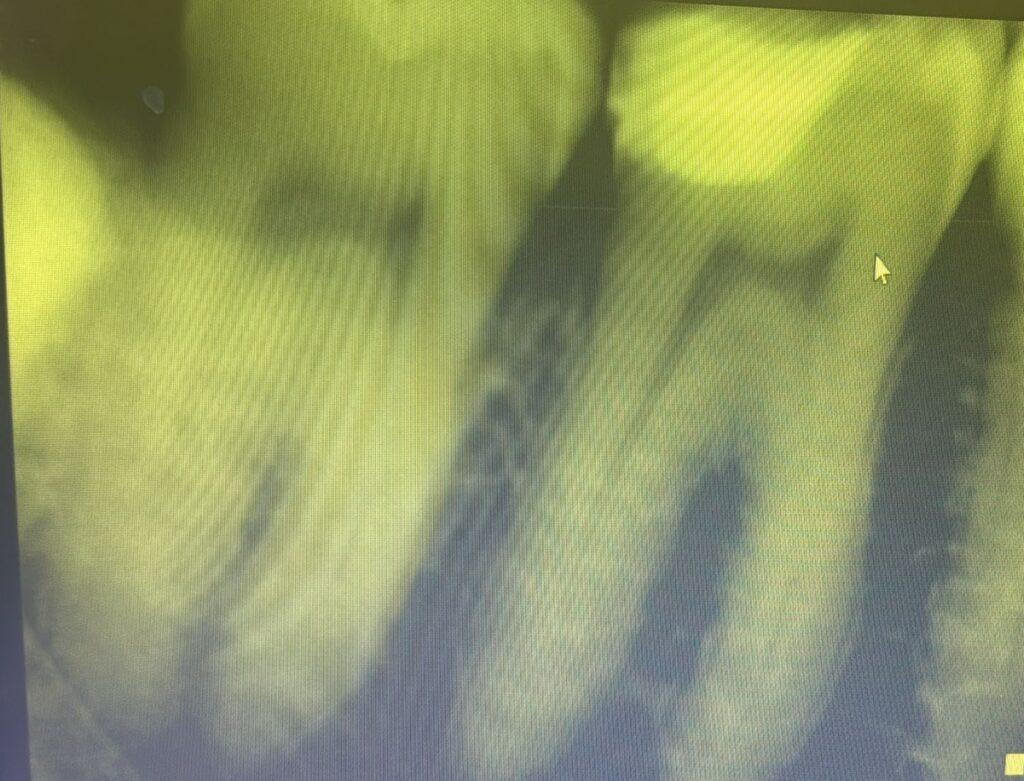
    On examination, we found deep decay in two upper-left molars — teeth 26 and 27. Dental X-rays confirmed that the cavities extended deep into the tooth structure.

    (Pre-operative dental X-rays showing extensive decay in the upper-left first and second molars (26 and 27))

    (Pre-operative intraoral photograph showing the two affected upper-left molars before restorative treatment)

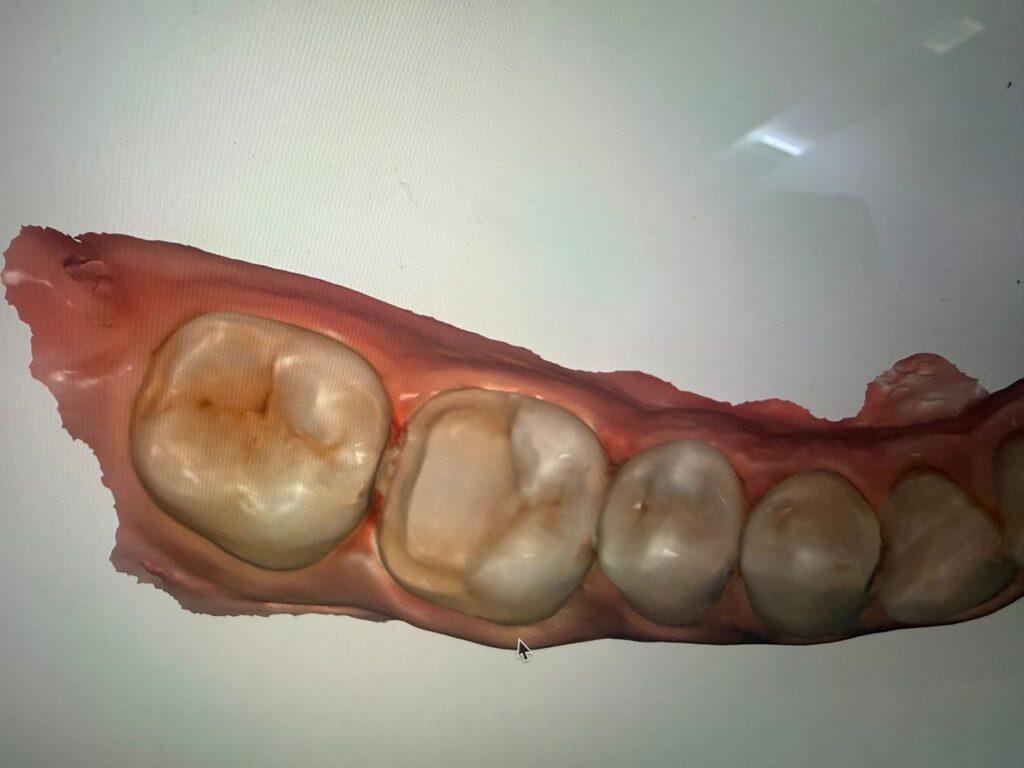
    (Pre-operative digital intraoral scan documenting the condition of the teeth before restorative preparation)

    Given the extent of decay, it was important to establish whether the pulp inside either tooth was affected and whether both teeth could be restored without root canal treatment.

    The initial cold tests showed a positive response in both teeth. This was a useful part of the diagnostic assessment, although it was not, by itself, a guarantee of long-term pulp health.

    After evaluating the findings, we planned to preserve both teeth using adhesive restorative techniques. Interestingly, although the two teeth had similarly deep decay, they required different restorative approaches.

    What was the treatment objective?

    The objective was to preserve as much healthy natural tooth structure as reasonably possible, manage the deep decay, seal the restored areas effectively and protect the remaining tooth structure.

    We followed a conservative, adhesive approach rather than automatically opting for root canal treatment or a more extensive restoration.

    The treatment plan was based on the individual requirements of each tooth.

    Tooth 27: Restoring the deep cavity with composite

    For tooth 27, we used a biomimetic adhesive approach and restored the tooth with composite using the Bioclear Injectable Technique.

    This technique allowed us to rebuild the affected tooth structure using a direct composite restoration.

    The aim was to restore the tooth while preserving the remaining healthy structure and achieving an effective seal.

    Tooth 26: Why this tooth needed an indirect onlay

    Tooth 26 required a different approach because of the restorative requirements of the remaining tooth structure.

    The treatment involved several steps:

    Immediate Dentin Sealing (IDS): After preparing the tooth, IDS was used to seal the exposed dentin. This is an important step in adhesive restorative treatment.

    Deep Margin Elevation (DME): DME was carried out to manage the deep restorative margin and establish a more suitable margin for the subsequent adhesive restoration.

    Composite restoration: Composite was placed using the Bioclear Injectable Technique as part of the restorative procedure.

    Intraoral scanning: Once the preparation was ready, an intraoral scan was taken to record the prepared tooth for the indirect restoration.

    Bonded indirect onlay: The final restoration was an indirect onlay, which was bonded to the tooth using adhesive protocols. This provided additional protection to the remaining tooth structure.

    (Digital intraoral scan after preparation of tooth 26, documenting the prepared tooth for fabrication of the indirect onlay)

    Unlike a direct filling, an indirect onlay is fabricated separately and then bonded to the prepared tooth. It can be particularly useful when a molar needs additional protection beyond what a conventional filling can provide.

    (Final intraoral photograph showing the bonded indirect onlay on tooth 26 after restorative treatment)

    How did the teeth respond after treatment?

    At the follow-up visit, the patient was happy with the treatment outcome. There was no pain, and the earlier problem of food getting lodged around the treated teeth had resolved.

    Most importantly, both deeply decayed molars had been restored without root canal treatment.

    This case demonstrates why the treatment of a deep cavity in a tooth should never be decided by its appearance alone. Even two neighbouring teeth with extensive decay may need different restorative solutions.

    The right approach is to assess each tooth individually, understand the condition of its pulp, and choose a restoration that addresses its structural requirements while preserving natural tooth tissue wherever possible.

    Another case where a tooth was restored while preserving its natural pulp.

    What are IDS, DME and the Bioclear Injectable Technique?

    Some deep cavities can be restored with a conventional filling. Others need a more carefully planned adhesive approach, particularly when the decay extends towards the gum line or a significant amount of tooth structure has been lost.

    In the case discussed above, we used three restorative techniques: Immediate Dentin Sealing (IDS), Deep Margin Elevation (DME) and the Bioclear Injectable Technique.

    Let me explain what each involves and why these techniques can be useful when restoring a deeply decayed tooth.

    What is Immediate Dentin Sealing (IDS)?

    Immediate Dentin Sealing, commonly called IDS, is an adhesive technique in which the exposed dentin is sealed with a bonding system immediately after tooth preparation.

    When a tooth is prepared for an indirect restoration, such as an onlay, some of its dentin becomes exposed. Rather than waiting until the final restoration is ready, IDS allows this exposed dentin to be sealed at the preparation stage.

    The purpose is to protect the prepared dentin from contamination and establish an adhesive surface for the subsequent bonding procedure.

    In our case, IDS was used on tooth 26 as part of the preparation for its indirect onlay. It was one of the steps in creating a suitable foundation for the final bonded restoration.

    What is Deep Margin Elevation (DME)?

    Deep Margin Elevation, or DME, is a restorative technique used when a cavity extends deep towards or below the gum line, particularly around the sides of a tooth.

    A deep cavity margin can be difficult to access, isolate, scan or restore accurately. DME involves using an adhesive restorative material, commonly composite resin, to raise the deep margin to a more accessible position.

    This can make subsequent restorative procedures, including the placement and bonding of an indirect onlay, more manageable.

    However, DME is not suitable for every deep cavity. The dentist must assess the position of the margin, the surrounding gum and supporting tissues, and whether adequate isolation and sealing can be achieved.

    In tooth 26, DME was used to manage the deep margin before proceeding with the indirect restoration.

    What is the Bioclear Injectable Technique?

    The Bioclear Method is an approach to composite dentistry that uses specially designed transparent anatomical matrices and an injection-moulding technique to shape composite material around the prepared tooth.

    Instead of simply placing composite into a cavity in conventional increments, the technique uses the matrix to help form the restoration’s intended shape and contours.

    The composite is adapted within this anatomical form, allowing the dentist to rebuild the missing tooth structure and establish appropriate contact and contours.

    In our case, the Bioclear Injectable Technique was used for the direct composite restoration of tooth 27. Composite using this technique was also part of the restorative procedure for tooth 26 before its final onlay.

    The technique is not a substitute for proper diagnosis, cavity preparation or adhesive protocols. Its suitability depends on the tooth, the extent of damage and the restoration being planned.

    What is an indirect onlay, and why might a tooth need one?

    An onlay is a type of indirect dental restoration that is fabricated outside the mouth and subsequently bonded to the prepared tooth.

    Unlike a conventional filling, which is placed directly into the cavity, an indirect onlay is designed to cover and restore a larger portion of the tooth. Depending on the preparation, it can also cover one or more weakened chewing surfaces, known as cusps.

    This additional coverage can be important when a back tooth has lost considerable structure due to deep decay. A large conventional filling may not provide the protection that the remaining tooth needs.

    An onlay can therefore be considered when the objective is to restore the tooth’s shape and function while providing support to the remaining structure.

    For tooth 26, we used a bonded indirect onlay because its restorative requirements called for additional protection. An intraoral scan was taken after preparation to record the tooth for fabrication of the final restoration.

    The important point is that these techniques serve different purposes. IDS helps seal prepared dentin, DME helps manage deep restorative margins, the Bioclear technique helps shape direct composite restorations, and an onlay provides coverage and protection where the remaining tooth structure requires it.

    They are not treatments that every patient with a deep cavity will need. The choice depends on the condition of the individual tooth and the restoration required.

    Deep cavity treatment: Filling, onlay or root canal – what’s the difference?

    When a tooth has a deep cavity, the treatment decision is not simply about removing the decay and filling the space. I also need to consider how much healthy tooth structure remains, how close the decay is to the dental pulp, and whether the restored tooth will be strong enough to withstand everyday chewing forces.

    Depending on these findings, deep cavity treatment may involve a direct filling, an indirect restoration such as an onlay, or root canal treatment followed by an appropriate restoration.

    These treatments serve different purposes. The choice depends on the condition of the individual tooth.

    When is a deep cavity filling enough?

    A direct composite filling may be suitable when the decay can be removed, the remaining tooth structure is sufficiently strong, and the cavity can be sealed reliably.

    With a deep cavity filling, the decayed portion is removed and the prepared area is restored using a tooth-coloured composite material. Modern adhesive techniques allow the restoration to bond to the remaining tooth structure.

    However, the size of the cavity matters. A tooth may have enough healthy structure to support a filling even when the decay is deep. In another tooth, extensive decay may leave the remaining walls or cusps too weak to withstand chewing pressure reliably.

    That is why I do not decide on a filling simply because the tooth can be filled. I also consider how well it is likely to function over time.

    When might an onlay be recommended for a damaged molar?

    An onlay may be appropriate when a significant amount of tooth structure has been lost and one or more cusps need additional protection.

    Unlike a conventional filling, which restores the prepared cavity directly, an onlay is made outside the mouth and then bonded to the tooth. It can restore the damaged portion while covering and protecting weakened cusps.

    For some teeth, this provides a way to reinforce the remaining structure without covering the entire tooth with a full crown. Whether an onlay is suitable depends on the extent and location of the damage, the amount of sound tooth structure available, and whether a reliable adhesive bond can be achieved.

    In the case discussed earlier, the two upper-left molars had different amounts and patterns of structural damage. One could be restored directly with composite, while the other required additional protection through a bonded indirect onlay.

    This is an important distinction: even when two teeth have deep cavities, they may not need the same restoration.

    When does a deep cavity need a root canal?

    A root canal is considered when the dental pulp inside the tooth is irreversibly inflamed or infected and cannot be expected to recover with a conservative approach.

    The decision is based on the complete clinical assessment, including the patient’s symptoms, examination findings, pulp tests and dental X-rays. The depth of the cavity alone does not establish whether root canal treatment is necessary.

    If the pulp is irreversibly damaged, removing the decay and placing a filling or onlay alone will not address the underlying problem. Root canal treatment may then be needed to treat the affected pulp before the tooth is restored.

    The final restoration is a separate but equally important decision. Depending on how much healthy tooth structure remains, the tooth may be restored with a suitable filling, an onlay or a crown. Not every tooth that has undergone root canal treatment automatically needs the same type of coverage.

    Is avoiding a root canal always the better option?

    Not necessarily.

    I believe in preserving natural tooth structure wherever it is clinically appropriate and predictable. But avoiding a root canal should never become the treatment objective at the expense of the patient’s long-term oral health.

    If the pulp is healthy or has a reasonable prospect of recovery, and the remaining tooth can be restored reliably, a conservative approach may help preserve more of the natural tooth.

    On the other hand, if the pulp is irreversibly damaged, delaying or avoiding necessary root canal treatment can allow the problem to progress.

    The right question, therefore, is not simply whether a root canal can be avoided. It is which treatment gives this particular tooth the best reasonable chance of remaining comfortable, functional and maintainable?

    That is why I assess the pulp condition and the remaining tooth structure together before recommending treatment. A filling, an onlay and a root canal are not competing choices in every situation; each has a different role in treating and restoring a damaged tooth.

    The choice between a filling, an onlay and a full crown.

    What are the signs that a deep cavity may need urgent dental attention?

    A deep cavity does not always cause severe pain. In fact, tooth decay can progress for some time without producing obvious symptoms. This is one reason why a cavity may become quite extensive before someone realises how much damage has occurred.

    However, certain symptoms should not be ignored. They may indicate that decay has progressed, that the dental pulp is inflamed, or that an infection has developed around the tooth.

    Here are some signs to watch for.

    Persistent or spontaneous toothache

    A tooth that starts hurting without any obvious trigger deserves attention, particularly if the pain keeps returning or becomes more intense.

    Unlike brief sensitivity when eating something cold or sweet, spontaneous toothache may indicate that the dental pulp is becoming significantly inflamed.

    If the pain persists, disturbs your daily activities or does not settle with ordinary pain relief, arrange a dental assessment promptly.

    Pain that lingers after hot or cold food and drinks

    Brief sensitivity to cold or sweet foods does not necessarily mean that a tooth needs a root canal.

    However, if pain continues even after the hot or cold stimulus has been removed, it may indicate a more significant response from the pulp.

    Lingering sensitivity is one of the symptoms I take seriously when assessing a deep cavity. It needs to be considered alongside clinical examination and pulp testing rather than used as a diagnosis on its own.

    Pain that disturbs your sleep

    Toothache that becomes worse at night or wakes you from sleep should not be dismissed.

    Persistent pain, particularly when it occurs without eating or drinking, can be associated with significant inflammation inside the tooth. It is a reason to seek prompt dental attention rather than waiting for the discomfort to become unbearable.

    Pain when biting or chewing

    If a tooth hurts when you bite down, chew food or release pressure, there may be damage beyond an ordinary cavity.

    Deep decay, a crack in the tooth, a weakened cusp or inflammation around the root can all contribute to biting discomfort.

    A dentist needs to identify the actual cause before deciding whether the tooth needs a filling, an onlay, root canal treatment or another approach.

    Swelling around the tooth or gums

    Swelling near a painful tooth, a pimple-like swelling on the gum, or discharge with an unpleasant taste may indicate a dental infection or abscess.

    Facial or jaw swelling, fever, and difficulty opening the mouth are also warning signs that require urgent assessment.

    A suspected dental abscess should be evaluated by a dentist as soon as possible. It will not reliably resolve on its own.

    Increasing sensitivity or discomfort

    Sometimes the early signs are less dramatic. You may notice that a tooth is becoming increasingly sensitive, that food gets trapped in the cavity, or that chewing on one side has become uncomfortable.

    These symptoms do not necessarily mean that the pulp is irreversibly damaged. However, they can indicate that the decay or structural damage needs attention.

    It is better to have the tooth examined before the problem progresses.

    When should you seek emergency medical attention?

    Most dental problems need assessment by a dentist, but certain symptoms can indicate a more serious spreading infection.

    Seek emergency medical care immediately if you experience:

    • Difficulty breathing, swallowing or speaking.
    • Significant swelling inside the mouth, throat or neck.
    • Swelling around the eye or sudden problems with vision.

    Do not wait for a routine dental appointment if these symptoms occur.

    Do these symptoms mean that you definitely need a root canal?

    No. Symptoms can help identify a problem, but they cannot establish the exact condition of the dental pulp or determine the treatment on their own.

    For example, a tooth with lingering sensitivity may need further investigation, but the final diagnosis depends on the pattern of symptoms, clinical examination, pulp tests and dental X-rays.

    Similarly, the absence of pain does not guarantee that a deep cavity is harmless.

    My advice is not to wait for severe toothache before getting a deep cavity examined. An early and accurate diagnosis gives us a better opportunity to understand the extent of decay, assess whether the pulp can be preserved, and choose the most appropriate treatment.

    The aim is not simply to relieve the pain. It is to identify the cause and treat the tooth before the damage becomes more extensive.

    Can a tooth with deep decay remain healthy after treatment?

    Yes, a tooth with deep decay can remain comfortable and functional after treatment, even when the cavity was very close to the dental pulp. However, the outcome depends on several factors, including the condition of the pulp, the amount of healthy tooth structure remaining, the quality of the restoration and how well the tooth is maintained afterwards.

    Preserving a tooth is not just about removing the decay and filling the cavity. It is also about creating a reliable seal, protecting the remaining structure and monitoring the tooth over time.

    Why a good seal matters after deep cavity treatment

    When a cavity is deep, the restoration needs to protect the prepared tooth from further bacterial contamination.

    If the restoration does not seal properly, bacteria and fluids can find their way between the filling and the tooth. This can contribute to recurrent decay and compromise the restoration.

    That is why I pay particular attention to the quality of the seal and the bonding process when restoring a tooth with deep decay.

    The choice of restorative material and technique also matters. A direct composite filling may be appropriate for one tooth, while another may need an onlay to protect weakened cusps and distribute chewing forces more favourably.

    The objective is to restore the tooth in a way that is appropriate to the damage, rather than simply close the cavity.

    Why follow-up matters after saving a tooth without a root canal

    When a deep cavity is treated without root canal treatment, the dental pulp remains inside the tooth. Even when the initial assessment suggests that it can be preserved, the tooth should be monitored.

    I advise patients to pay attention to any new or recurring discomfort, prolonged sensitivity to hot or cold, pain on biting or swelling around the tooth.

    Follow-up appointments allow the dentist to assess the restoration, check the surrounding tissues and investigate any symptoms that may develop. Further pulp testing or X-rays may be considered when clinically indicated.

    A tooth that feels comfortable after treatment is encouraging, but it does not remove the need for appropriate review.

    How can you reduce the risk of further decay?

    The long-term maintenance of a restored tooth also depends on everyday oral care.

    Brush twice a day with fluoride toothpaste, clean between your teeth regularly and avoid frequent exposure to sugary foods and drinks. Pay particular attention to the areas around large restorations, where plaque can accumulate.

    Regular dental check-ups are important too. They help identify early signs of recurrent decay, restoration damage or changes in the tooth before they become more complicated problems.

    What happened to the two teeth in this case?

    In the case discussed in this article, both upper-left molars had extensive decay and were restored without root canal treatment.

    The two teeth received different restorations according to their individual condition. One was restored directly with composite using the Bioclear technique. The other received additional restorative steps and a bonded indirect onlay for protection.

    At the recall visit, the patient was happy with the treatment. There was no pain, and food was no longer getting trapped around the restored teeth.

    This was an encouraging outcome. It also illustrates why I believe that a deep cavity should be assessed individually rather than automatically treated with the same approach in every tooth.

    The aim of conservative dentistry is not simply to avoid a root canal. It is to preserve the natural tooth when clinically appropriate, restore it reliably and continue to monitor its health.

    Frequently asked questions about deep cavities and root canals

    Can a deep cavity be filled without a root canal?

    Yes. A deep cavity can sometimes be treated with a filling without root canal treatment, provided the dental pulp is healthy or has a reasonable prospect of recovery and the remaining tooth structure can support a reliable restoration.

    The decision depends on clinical examination, pulp tests and dental X-rays. The depth of the cavity alone does not determine whether a root canal is necessary.

    Can a tooth with decay close to the nerve be saved?

    Yes, in some cases. Decay close to the dental pulp does not automatically mean that the pulp is irreversibly damaged.

    If the pulp condition allows it and the tooth can be restored predictably, a conservative approach may help preserve the natural tooth without root canal treatment.

    However, if the pulp is irreversibly inflamed or infected, root canal treatment may be necessary.

    Does a positive cold test mean I do not need a root canal?

    No. A positive cold test indicates that the tooth responds to a cold stimulus, but it does not guarantee that the pulp is completely healthy or will remain healthy.

    The result must be interpreted alongside the patient’s symptoms, clinical examination and X-ray findings. A cold test is one part of the diagnosis, not a standalone decision about root canal treatment.

    Can a deep cavity heal on its own?

    Once a cavity has formed and tooth structure has been lost, it cannot grow back on its own. Early enamel changes may sometimes be managed through remineralisation, but an established cavity generally requires dental assessment and appropriate treatment.

    Leaving a deep cavity untreated can allow decay to progress further towards the pulp.

    Is a filling enough for a very deep cavity?

    Not always. A composite filling may be sufficient if enough healthy tooth structure remains to support it and the restoration can be sealed reliably.

    If the cavity has weakened one or more cusps, an onlay or another form of protective restoration may be more appropriate. The decision depends on the amount and condition of the remaining tooth structure, not simply the depth of the cavity.

    Is an onlay better than a crown for a damaged molar?

    Neither is automatically better. An onlay restores the damaged portion of a tooth and can cover weakened cusps while preserving more of the remaining natural structure.

    A crown covers the tooth more extensively and may be appropriate when the damage is more widespread or the remaining structure requires greater coverage.

    The choice depends on the tooth’s condition, the available healthy structure and whether a predictable restoration can be achieved.

    How do I know if my tooth needs a root canal?

    Persistent or spontaneous toothache, lingering pain after hot or cold food and drinks, pain that disturbs sleep, and swelling around the tooth can be warning signs of significant pulp inflammation or infection.

    However, symptoms alone cannot confirm whether a root canal is necessary. A dentist needs to assess the tooth using clinical examination, pulp tests and dental X-rays before recommending treatment.

    Can a tooth become painful after a deep filling?

    Yes. Some sensitivity or discomfort can occur after a deep filling, particularly when the restoration is close to the dental pulp. It may settle, but persistent, worsening or spontaneous pain should not be ignored.

    If you experience lingering sensitivity, pain when biting or discomfort that does not improve, have the tooth reviewed by your dentist. Further assessment may be needed to understand how the pulp is responding.

    Can a tooth be saved if the cavity has reached the pulp?

    It depends on the condition of the pulp and the extent of the damage. If the pulp is irreversibly inflamed or infected, root canal treatment may be required. In selected cases, other pulp-preserving procedures may also be considered depending on the diagnosis and clinical circumstances.

    Even when root canal treatment is necessary, the natural tooth may still be saved and restored. The important step is to establish the correct diagnosis and choose treatment that gives the tooth a reasonable long-term prognosis.

    Considering treatment for a deep cavity? Start with the right diagnosis

    If you have been told that you have a deep cavity, or you are experiencing pain or sensitivity in a tooth, it is natural to worry about whether you will need a root canal.

    But the depth of a cavity alone does not determine the treatment. What matters is the condition of the dental pulp, how much healthy tooth structure remains and whether the tooth can be restored reliably.

    My approach is to assess these factors carefully before recommending treatment. Where clinically appropriate, I prefer to preserve natural tooth structure and consider conservative restorative options. If root canal treatment is necessary, I believe patients should understand why it is recommended and how the tooth can be restored afterwards.

    As this case illustrates, even two teeth with extensive decay may require different treatment approaches. One may be suitable for a direct composite restoration, while another may need an onlay to protect the remaining tooth structure. The important thing is to choose treatment based on the individual tooth rather than follow a standard approach for every deep cavity.

    At The Dentist in South Delhi, I believe in taking the time to understand each patient’s condition, explain the available options and help them make an informed decision.

    If you are concerned about a deep cavity in your tooth, or have been advised to undergo root canal treatment and would like to understand your options, you can arrange a dental consultation with Dr Srishti Jauhar.

    For patients living outside India or travelling to Delhi, an initial video consultation may also help us understand your concerns and discuss the next steps.

    The goal is simple: preserve your natural tooth wherever it is clinically possible, while choosing treatment that protects your long-term dental health.

    A severely damaged tooth may sometimes still be restorable.

    Clinical sources and references

    The clinical information in this article is supported by published research and professional guidelines on deep caries management, preservation of dental pulp vitality, endodontic treatment and partial-coverage restorations.

    1. Schwendicke F, Kosan E, Banerjee A, et al. (2026). Deep caries management: EFCD-ESE-ORCA S3-level clinical practice guideline. Clinical Oral Investigations, 30, Article 186.Read the full open-access guideline – Springer NatureRead the full article – PubMed Central
    2. Duncan HF, et al. (2019). European Society of Endodontology position statement: Management of deep caries and the exposed pulp. International Endodontic Journal, 52(7), 923–934.Read the article – PubMedRead the full article – Wiley Online Library
    3. Duncan HF, et al. (2023). Treatment of pulpal and apical disease: The European Society of Endodontology (ESE) S3-level clinical practice guideline. International Endodontic Journal, 56(Suppl 3), 238–295.Read the article – PubMed
    4. Prott LS, et al. (2025). Survival and Complications of Partial Coverage Restorations on Posterior Teeth – A Systematic Review and Meta-Analysis. Journal of Esthetic and Restorative Dentistry, 37(3), 620–641.Read the full open-access article – PubMed CentralRead the article – PubMed

  • No Toothache, No Sensitivity: Do I still need a Root Canal?

    No Toothache, No Sensitivity: Do I still need a Root Canal?

    Dr Srishti Jauhar, Dentist & Clinical Director, The Dentist — 23+ years of clinical experience; 4,500+ root canal treatments; Fellowship in Rotary Endodontics (IARE, USA). She follows an ethical, conservative and patient-first approach, with a strong focus on preserving natural teeth whenever reasonably possible. Through these articles, she shares her clinical experience to help patients better understand their dental problems and treatment options, and make informed decisions about their care.


    A real patient case from Dr Srishti’s practice, showing why symptoms alone cannot tell us whether the pulp inside a tooth is healthy.


    A tooth can need a root canal even when it causes no toothache or sensitivity.

    This may seem surprising, particularly when the problem first appears to be nothing more than an old filling that has come out.

    In my practice, I have seen why it is important to look beyond symptoms when assessing a tooth.

    In this case, a careful examination revealed pulp necrosis in a tooth that had caused the patient no discomfort.

    Here is what the clinical findings revealed, why root canal treatment was necessary, and how the right diagnosis helps determine whether a natural tooth needs a filling, a root canal or another form of treatment.


    In this article:

    When a tooth needs more than a filling

    Can you need a root canal without toothache or sensitivity?

    What does it mean when a tooth does not respond to a cold test?

    What can a dental X-ray reveal when a tooth doesn’t hurt?

    How does a dentist decide whether you actually need a root canal?

    Does every deep cavity or damaged filling need a root canal?

    Why was a root canal necessary when this tooth had no pain?

    What happens during root canal treatment?

    What happens to a tooth after root canal treatment?

    Can you ignore a damaged filling or deep cavity if it doesn’t hurt?

    What should you ask your dentist before agreeing to a root canal?

    When should you seek a second opinion about root canal treatment?


    When a tooth needs more than a filling

    A patient came to me with an old filling that had dislodged from the upper left second molar (tooth 27). The filling had been placed many years earlier.

    What made this case particularly interesting was that the patient reported no toothache and no sensitivity. There were no symptoms suggesting that anything was wrong with the tooth.

    However, the clinical findings told a different story.

    (Pre-operative intraoral photograph showing the dislodged longstanding restoration in the upper left second molar (27).)

    The tooth did not respond to cold testing. The X-ray also clearly showed a lesion extending well into the pulp, the innermost part of the tooth containing its nerves and blood vessels.

    Considering the cold test response alongside the radiographic and other clinical findings, the diagnosis was pulp necrosis.

    In this situation, simply replacing the old filling would not have addressed the underlying condition. Root canal treatment was therefore planned to treat the affected pulp while preserving the natural tooth.

    The procedure was initiated and completed over two appointments, using rubber dam isolation to maintain a clean, dry and controlled working field.

    This case highlights an important point: a tooth can develop pulp necrosis without causing toothache or sensitivity. The absence of symptoms does not necessarily mean that the pulp inside a tooth is healthy.

    Careful clinical examination and appropriate diagnostic tests are essential in determining what treatment is needed.

    Can you need a root canal without toothache or sensitivity?

    Yes. It is possible to need a root canal even when you have no toothache, no sensitivity and no obvious discomfort.

    One reason this can happen is a condition called pulp necrosis.

    The pulp is the soft tissue inside a tooth. It contains nerves and blood vessels that help maintain the vitality of the tooth. When this tissue loses its vitality and dies, the condition is known as pulp necrosis.

    Interestingly, a tooth with pulp necrosis may not cause any noticeable pain. This is because the affected pulp tissue is no longer functioning normally. The patient may not experience the usual pain or temperature response associated with a living, inflamed pulp.

    However, this does not mean that the condition is harmless or that the tooth no longer needs attention. Changes can also develop in the tissues surrounding the root, and these may or may not produce symptoms.

    This is why the absence of toothache should never be the only reason to assume that a tooth is healthy.

    In the case I have described, the patient had neither pain nor sensitivity. Yet, the tooth did not respond to cold testing, and the X-ray showed a lesion extending well into the pulp. The combined clinical findings led to the diagnosis of pulp necrosis and the decision to proceed with root canal treatment.

    The important distinction is that pain tells us what a patient is experiencing; it does not, by itself, tell us whether the pulp inside the tooth is healthy.

    This is why I look beyond symptoms when assessing a damaged tooth. A proper diagnosis requires a combination of the patient’s dental history, clinical examination, appropriate pulp tests and radiographic findings.

    What does it mean when a tooth does not respond to a cold test?

    A cold test is one of the clinical tests dentists use to assess the condition of the pulp inside a tooth.

    During this test, a cold stimulus is applied to the tooth, and the dentist observes whether the patient feels the sensation. The response helps assess whether the nerves within the pulp are responding to stimulation.

    The findings can provide useful clues about the health of the pulp, particularly when considered alongside the patient’s symptoms, clinical examination and dental X-rays.

    What does a normal response to a cold test look like?

    A tooth with a normally responsive pulp generally produces a brief sensation when exposed to cold. The sensation usually subsides shortly after the cold stimulus is removed.

    A tooth with an inflamed pulp may respond more intensely or continue to feel sensitive after the stimulus has been removed. The nature and duration of the response can help the dentist understand the possible condition of the pulp.

    However, responses can vary, and no single response should be used to establish a diagnosis on its own.

    What does it mean when a tooth does not respond to cold?

    When a tooth shows no response to cold testing, it raises the possibility that the pulp has lost its vitality.

    One important condition associated with this finding is pulp necrosis, in which the pulp tissue inside the tooth has died.

    However, an absent response to cold testing does not automatically confirm pulp necrosis. A false-negative response is possible, which is why the finding needs to be interpreted alongside other diagnostic information.

    Why is a cold test not enough to diagnose pulp necrosis?

    A cold test assesses the sensory response of the pulp. It does not directly measure the blood supply to the pulp tissue.

    This distinction matters because a tooth may not respond to a cold stimulus for reasons other than pulp necrosis.

    A dentist therefore needs to consider the patient’s dental history, clinical findings, other appropriate tests and radiographic examination before arriving at a diagnosis.

    In the patient I treated, the absence of a response to cold testing was considered alongside the X-ray finding of a lesion extending well into the pulp and the other clinical findings.

    It was this combined assessment that led to the diagnosis of pulp necrosis.

    An important point to remember: A tooth that does not respond to cold testing needs careful evaluation. The test helps guide the diagnosis, but the treatment decision must be based on the overall clinical picture.

    What can a dental X-ray reveal when a tooth doesn’t hurt?

    A tooth may feel perfectly normal, but a dental X-ray can reveal changes that cannot be identified from symptoms alone.

    One of the important things a dentist looks for is how deep a lesion extends within the tooth and how close it is to the dental pulp.

    (Pre-operative radiograph of tooth 27 showing the lesion extending well into the pulp.)

    The pulp is the innermost soft tissue of the tooth, containing nerves and blood vessels. When a lesion progresses deep into the tooth, the pulp can become affected, potentially leading to inflammation or loss of pulp vitality.

    This is why a dental X-ray is an important part of assessing a tooth when there is concern about deeper damage.

    Can an X-ray show if a cavity has reached the nerve?

    A dental X-ray helps a dentist assess the depth and extent of a lesion and its relationship with the pulp.

    It can show whether a lesion is relatively superficial, extends deep into the dentine, or appears to reach the pulp.

    This information is particularly useful when a patient has an old restoration, a damaged filling or a deep cavity but reports no toothache or sensitivity.

    However, an X-ray cannot directly establish whether the pulp tissue is alive, inflamed or necrotic. It provides information about the tooth’s structure, which must be interpreted alongside clinical examination and pulp testing.

    Can a tooth have deep decay without causing pain?

    Yes. The depth of a lesion and the symptoms experienced by a patient do not always correspond.

    A lesion may extend considerably into the tooth without producing noticeable discomfort. In some cases, the pulp may already have lost its vitality without the patient experiencing the typical symptoms associated with dental nerve damage.

    This is one reason why a lack of toothache should not be taken as reassurance that a deep cavity or damaged restoration is harmless.

    What did the X-ray reveal in my patient’s case?

    In the case of the upper left second molar (27), the X-ray clearly showed a lesion extending well into the pulp.

    This was an important finding because the patient had reported neither toothache nor sensitivity.

    The radiographic finding was considered alongside the absence of a response to cold testing and the other clinical findings. Together, these helped establish the diagnosis of pulp necrosis and guide the decision to perform root canal treatment.

    The important distinction is that the X-ray did not make the treatment decision on its own. It provided essential diagnostic information that, when considered with the clinical examination and pulp testing, helped explain why the tooth needed more than a replacement filling.

    A dental X-ray can reveal problems that a patient cannot feel. That is why assessing a damaged tooth requires more than simply asking whether it hurts.

    How does a dentist decide whether you actually need a root canal?

    A common question I encounter is: “How do you know that I need a root canal when I don’t have any pain?”

    It is a reasonable question. After all, when a tooth feels normal, being told that it needs an endodontic treatment can come as a surprise.

    The important thing to understand is that a root canal treatment decision is not based on pain alone, or on the result of just one test. It is based on the overall condition of the tooth and the findings from a clinical assessment.

    When I assess a tooth that may need a root canal, I consider several things.

    1. Understanding the dental history

    I first want to understand what has happened to the tooth over time.

    Has it had a filling before? Is filling broken or dislodged? Has the patient experienced any pain or sensitivity in the past? Has the tooth undergone any previous dental treatment or sustained an injury?

    Even when a patient reports no current symptoms, the dental history can provide important clues about what may have happened inside the tooth.

    2. Examining the tooth and existing restoration

    The next step is to examine the tooth itself.

    I assess the condition of the existing restoration, the extent of visible damage or decay, and the remaining tooth structure. I also look for other clinical signs that may help establish the condition of the tooth and the surrounding tissues.

    This helps me understand whether the problem is limited to the outer structure of the tooth or whether it may have extended deeper towards the pulp.

    3. Assessing the condition of the pulp

    Clinical tests such as cold testing, and where appropriate, electric pulp testing, help assess how the pulp responds to stimulation.

    The findings need to be interpreted in the context of the patient’s history and other examination results. As explained earlier, a tooth that does not respond to cold testing may have lost its pulp vitality, but the result needs to be evaluated carefully before reaching a diagnosis.

    4. Reviewing the dental X-ray

    A dental X-ray provides further information about the extent of damage within the tooth and the tissues surrounding its roots.

    I look at how close a lesion extends towards the pulp and whether there are any other radiographic changes that may influence the diagnosis and treatment plan.

    An X-ray is an important diagnostic aid, but it cannot establish the condition of the pulp independently.

    5. Establishing the diagnosis and deciding on treatment

    Once the findings have been considered together, the next step is to establish the diagnosis.

    Is the pulp healthy? Is it inflamed and potentially capable of recovery? Has it undergone irreversible damage? Or has the pulp become necrotic?

    The answer matters because these conditions do not necessarily require the same treatment.

    I also need to consider whether the remaining tooth structure is sufficient to restore and preserve the natural tooth after treatment.

    When pulp necrosis is confirmed and the tooth is suitable for preservation, root canal treatment is generally recommended to address the affected pulp and retain the natural tooth.

    In the case discussed in this article, the patient had no pain or sensitivity. However, the absent response to cold testing, the X-ray findings and the overall clinical assessment established the diagnosis of pulp necrosis. That is why I recommended root canal treatment rather than simply replacing the old filling.

    My approach is to establish what is actually happening inside the tooth before deciding what treatment it needs. A root canal should be recommended because the clinical findings justify it, not simply because a tooth has a damaged filling or a deep cavity.

    Does every deep cavity or damaged filling need a root canal?

    No. A deep cavity, an old filling or even a dislodged restoration does not automatically mean that a tooth needs root canal treatment.

    The deciding factor is not simply how much of the tooth is damaged. It is also the condition of the pulp inside the tooth.

    This distinction is important because the treatment for a tooth with a healthy or potentially recoverable pulp can be very different from the treatment required when the pulp has lost its vitality.

    When might replacing a filling be enough?

    If the pulp is healthy and the damage is limited to the outer structure of the tooth, removing the affected decay and placing an appropriate restoration may be sufficient.

    Even when decay extends deep into the dentine, it may sometimes be possible to manage the tooth while preserving the pulp.

    Depending on the clinical findings, a dentist may consider selective removal of decay, followed by a well-sealed restoration. The objective is to remove the affected tissue appropriately while avoiding unnecessary exposure or injury to the pulp.

    This is one reason why a deep cavity should not automatically be treated as an indication for a root canal.

    Can a tooth be saved without root canal treatment if the decay is close to the nerve?

    In selected cases, yes.

    When the pulp is still vital, certain procedures known as vital pulp treatments may be considered. These include indirect or direct pulp capping and partial or full pulpotomy.

    The purpose of these treatments is to preserve some or all of the living pulp tissue rather than remove it entirely.

    However, these procedures are not suitable for every tooth. Their suitability depends on the pulpal diagnosis, clinical findings, extent of damage, restorability of the tooth and the dentist’s assessment.

    The important point is that even a deep cavity does not automatically make root canal treatment the only option.

    When does a root canal become necessary?

    The situation is different when the pulp has lost its vitality and become necrotic.

    In pulp necrosis, the tissue inside the tooth has died. Simply removing decay and replacing the filling will not address the condition of the pulp.

    When pulp necrosis is confirmed and the tooth is suitable for preservation, root canal treatment is generally recommended. It involves removing the affected pulp tissue, cleaning and shaping the root canals, and filling and sealing them appropriately.

    The objective is to address the condition inside the tooth while retaining the natural tooth wherever it can reasonably be preserved.

    Why the diagnosis matters more than the size of the cavity

    This is where I believe careful diagnosis makes a real difference.

    Two teeth may appear to have similarly deep cavities or damaged fillings, but their pulp conditions may be entirely different.

    One tooth may have a vital pulp that can be preserved with an appropriate conservative treatment. Another may have irreversible damage or pulp necrosis and require root canal treatment.

    The treatment should therefore follow the diagnosis, rather than being decided simply by how large the cavity looks or whether the patient experiences pain.

    In the case discussed earlier, the upper left second molar had an old, dislodged filling. The patient had no pain or sensitivity, but the combined diagnostic findings established pulp necrosis.

    Replacing the filling alone would not have addressed the underlying pulpal condition. Root canal treatment was therefore the appropriate treatment decision for this particular tooth.

    My approach is to preserve the natural tooth and its vitality wherever clinically possible. But when the pulp has become necrotic, avoiding a root canal is not the same as preserving the tooth. Sometimes, root canal treatment is precisely what allows us to retain it.

    Why was a root canal necessary when this tooth had no pain?

    By this point, you might be wondering why I recommended a root canal instead of simply replacing the old filling.

    The answer lies in the condition of the pulp.

    When a filling becomes dislodged, the immediate problem may appear to be a damaged or missing restoration. Replacing it might seem like the obvious solution, particularly when the tooth is not causing any discomfort.

    However, a filling and a root canal address two different problems.

    A filling restores the damaged structure of a tooth. Root canal treatment addresses disease or damage within the pulp and root canal system.

    In this patient’s case, the diagnosis was pulp necrosis. The pulp tissue inside the tooth had lost its vitality. Simply placing another filling would have restored the external structure without addressing the underlying condition.

    Can a tooth with pulp necrosis be saved?

    Yes. Pulp necrosis does not automatically mean that the natural tooth has to be extracted.

    When the tooth is suitable for preservation, root canal treatment can be used to treat the affected pulp and retain the natural tooth.

    During the procedure, the affected pulp tissue is removed, and the root canal system is cleaned, shaped and sealed. The tooth can then be restored appropriately, depending on how much healthy tooth structure remains.

    The treatment plan needs to consider both the condition inside the tooth and whether the remaining structure can be restored adequately.

    Why I chose root canal treatment for this patient

    In this particular case, the combination of findings was important.

    The patient had an old, dislodged filling but reported no pain or sensitivity. The tooth showed no response to cold testing, and the X-ray revealed a lesion extending well into the pulp.

    The diagnosis was pulp necrosis.

    My recommendation was therefore based on the condition of the pulp, rather than the presence or absence of pain.

    The objective was to treat the compromised tooth through root canal treatment rather than leave the underlying pulpal condition unaddressed.

    Preserving a natural tooth does not always mean avoiding root canal treatment. When the pulp has become necrotic, root canal treatment may be the appropriate way to preserve the tooth itself.

    What happens during root canal treatment?

    Once a dentist establishes that root canal treatment is necessary, the next step is to treat the affected pulp while maintaining a clean and controlled working environment.

    Many patients are unsure about what happens during a root canal procedure. Understanding the process can make the treatment easier to approach.

    Root canal treatment involves accessing the inside of the tooth, removing the affected pulp tissue, cleaning and shaping the root canals, and then filling and sealing them to prevent contamination.

    Why is rubber dam isolation important during root canal treatment?

    One important aspect of endodontic treatment is isolating the tooth being treated.

    A rubber dam is a thin sheet of latex or non-latex material placed around the tooth to separate it from the rest of the mouth during the procedure.

    It helps create a clean, dry and controlled working field.

    There are several reasons why this is important:

    • Reduces contamination: It helps prevent saliva and oral bacteria from entering the treated tooth and root canal system.
    • Maintains a dry working field: It helps keep the tooth isolated from moisture during treatment.
    • Improves procedural control: It allows the dentist to work in a more controlled environment.
    • Protects the patient: It helps reduce the risk of accidentally swallowing or inhaling small instruments and materials used during treatment.

    Rubber dam isolation is an integral part of modern nonsurgical root canal treatment. It supports the aseptic conditions needed to clean and treat the root canal system appropriately.

    How many visits does root canal treatment take?

    A root canal does not always require the same number of appointments.

    Depending on the tooth, its condition, the complexity of the root canal system and the treatment plan, the procedure may be completed in one or more visits.

    Some cases can be completed in a single appointment, while others are carried out over two or more appointments.

    In the case discussed in this article, I initiated and completed the root canal treatment over two appointments.

    Throughout the procedure, rubber dam isolation was used to maintain a clean, dry and controlled working field.

    (Post-operative radiograph of tooth 27 following completion of root canal treatment.)

    The objective was to address the compromised tooth through a careful and controlled endodontic treatment process, while retaining the natural tooth.

    The important part of root canal treatment is not simply how quickly it is completed, but whether the procedure is carried out with appropriate diagnosis, isolation and clinical care.

    Understand what affects the overall cost of root canal treatment in India

    What happens to a tooth after root canal treatment?

    Completing root canal treatment is an important step in preserving a natural tooth. But it is not necessarily the final step in restoring it.

    Once the root canal procedure is complete, the tooth needs an appropriate final restoration to seal it, restore its function and protect the remaining tooth structure.

    This is particularly important for back teeth, such as molars, which bear considerable chewing forces.

    Does every tooth need a crown after root canal treatment?

    No. Not every tooth that undergoes root canal treatment necessarily needs a full dental crown.

    The type of restoration depends on how much healthy tooth structure remains, how much of the tooth was damaged by decay or previous fillings, whether any cracks are present and how the tooth functions during chewing.

    In some cases, a well-designed bonded filling may be sufficient.

    In others, particularly when a substantial amount of tooth structure has been lost, a restoration that covers and protects the cusps may be more appropriate.

    This could involve an onlay or a full dental crown, depending on the individual tooth.

    Why might a molar need a crown or onlay after root canal treatment?

    Molars are back teeth that are subjected to substantial chewing forces.

    When a molar has already lost considerable tooth structure through deep decay, large or longstanding restorations, or fractures, the remaining structure may need additional protection after root canal treatment.

    A crown or onlay can cover and protect vulnerable parts of the tooth, helping reduce the risk of fracture during normal function.

    However, the decision should not be based simply on whether a root canal has been performed. It depends on the amount and distribution of remaining healthy tooth structure, the thickness of the remaining walls, the presence of cracks and the forces acting on the tooth.

    Why is timely final restoration important after a root canal?

    After the root canals have been cleaned and filled, the tooth also needs a reliable seal at its upper, visible portion.

    An appropriate final restoration helps prevent bacteria and saliva from re-entering the treated root canal system. It also protects the remaining tooth structure from further damage.

    Delaying the definitive restoration unnecessarily can leave the tooth vulnerable to reinfection, recurrent decay or fracture, particularly when substantial tooth structure has been lost.

    This is why the restorative plan should be considered as part of the overall root canal treatment, rather than as an unrelated procedure to think about much later.

    How do I decide which restoration is right for a tooth?

    My approach is to assess the condition of the remaining tooth structure and the functional demands on that particular tooth.

    The aim is to provide adequate protection without removing more healthy tooth structure than necessary.

    A full crown is not automatically the answer for every root canal-treated tooth. Sometimes a more conservative restoration, such as an onlay or a bonded filling, may be appropriate.

    The objective is to retain as much healthy natural tooth structure as possible while ensuring that the treated tooth is adequately restored and protected for long-term function.

    Understand whether your tooth actually needs a dental crown after root canal treatment.

    Can you ignore a damaged filling or deep cavity if it doesn’t hurt?

    It is easy to postpone a dental appointment when a tooth isn’t causing any discomfort. If an old filling falls out but there is no pain or sensitivity, you might feel that replacing it can wait.

    But the absence of pain does not necessarily mean that the tooth is healthy or that the underlying problem is insignificant.

    Dental decay, particularly in its earlier stages, may not produce noticeable symptoms. As it progresses deeper into the tooth, it can affect the dentine and eventually the pulp.

    By the time pain develops, the condition may already require more extensive treatment.

    What happens when an old filling falls out?

    A filling restores the part of a tooth that has been damaged by decay or lost through other causes.

    When an existing filling becomes dislodged, the underlying tooth structure may be exposed or left inadequately protected. There may also be recurrent decay or other damage around the restoration.

    However, the loss of a filling does not automatically mean that the tooth needs a root canal.

    The dentist needs to examine the remaining tooth structure, assess the condition of the pulp and determine whether the problem can be managed with a replacement restoration or requires more extensive treatment.

    Can tooth decay progress without causing a toothache?

    Yes. Tooth decay can progress without producing noticeable pain, particularly during its earlier stages.

    Similarly, a tooth with pulp necrosis may not produce the symptoms patients commonly associate with a damaged dental nerve.

    This means that waiting for toothache before seeking dental attention is not a reliable way to judge whether a damaged tooth needs treatment.

    When should you see a dentist if a filling falls out but there is no pain?

    A dislodged filling should be examined even when there is no discomfort.

    A dental assessment can help establish:

    • How much of the tooth has been affected.
    • Whether there is any remaining decay beneath or around the old restoration.
    • Whether the pulp inside the tooth is healthy.
    • Whether a replacement filling is sufficient or another treatment is necessary.
    • Whether the natural tooth can be restored and preserved.

    The appropriate treatment depends on these findings, not simply on whether the tooth hurts.

    In the case discussed in this article, the patient had no pain or sensitivity despite having a longstanding filling that had dislodged. The examination revealed pulp necrosis, making root canal treatment necessary rather than simply replacing the filling.

    My advice is not to wait for a tooth to start hurting before getting a damaged filling or deep cavity examined. Early assessment helps identify what is happening and gives you a clearer understanding of the treatment needed.

    What should you ask your dentist before agreeing to a root canal?

    Being told that you need a root canal can raise several questions, particularly when you are not experiencing any pain or sensitivity.

    You may wonder why the treatment is necessary, what the examination revealed, or whether a filling or another conservative treatment could work instead.

    These are reasonable questions. You should understand the condition of your tooth and the reasons behind a treatment recommendation before proceeding.

    When a root canal is recommended, here are some questions worth discussing with your dentist.

    1. What is the exact diagnosis of my tooth?

    Ask whether the pulp inside your tooth is healthy, inflamed or necrotic.

    Understanding the diagnosis is important because different pulpal conditions may require different treatments. The absence of pain does not necessarily mean that the pulp is healthy, just as the presence of a deep cavity does not automatically mean that a root canal is required.

    2. What did the clinical tests and X-ray reveal?

    Ask your dentist to explain the findings from the clinical examination, cold test and dental X-ray.

    For example, did the tooth respond normally to cold testing? Was there an absent response? How deep does the lesion extend? Are there any changes around the root?

    Understanding these findings can help explain why a particular treatment has been recommended.

    3. Is a filling or another conservative treatment possible?

    Not every damaged tooth needs a root canal.

    Depending on the condition of the pulp, your dentist may be able to consider a replacement filling, conservative decay removal or an appropriate vital pulp treatment.

    However, when pulp necrosis is confirmed, simply replacing the filling will not address the underlying condition.

    Ask your dentist why a particular treatment is appropriate for your tooth.

    4. Can my natural tooth be preserved?

    A tooth may sometimes be preserved with root canal treatment, provided that the remaining tooth structure and supporting tissues offer a reasonable prognosis.

    Ask whether the tooth is restorable and whether there are any concerns about cracks, extensive structural damage or other factors that could affect its long-term outcome.

    5. How many appointments will I need?

    The number of visits depends on the tooth, the condition being treated and the treatment plan.

    Ask what is expected in your particular case and whether any additional procedures or appointments may be required.

    6. What restoration will I need after the root canal?

    Root canal treatment is only one part of restoring the tooth.

    Ask whether a filling, onlay or crown will be required afterwards, and why that particular restoration is appropriate.

    The answer will depend on how much healthy tooth structure remains and how the tooth will withstand normal chewing forces.

    7. What are the possible risks and limitations of the treatment?

    Every dental procedure has potential risks and limitations.

    Ask your dentist about the expected benefits, possible complications, factors that could affect the outcome and the follow-up care required.

    Understanding these aspects helps you make a more informed decision.

    Ultimately, the purpose of asking these questions is not to challenge a treatment recommendation without reason. It is to understand the diagnosis, the available options and why one approach is considered more suitable than another.

    I believe patients should have a clear understanding of why a tooth needs treatment, what that treatment involves and what alternatives may be appropriate. An informed treatment decision begins with an accurate diagnosis and a clear conversation between the dentist and the patient.

    When should you seek a second opinion about root canal treatment?

    Being advised to undergo a root canal can sometimes leave you with questions, particularly when your tooth doesn’t hurt or when you are unsure about the diagnosis.

    You may want to understand why the treatment is necessary, whether your natural tooth can be preserved, or whether another treatment could be considered.

    In such situations, seeking a second opinion can be helpful.

    A second opinion is not necessarily about questioning the first dentist’s recommendation. It is about getting another clinical assessment, understanding the findings and becoming more confident about the treatment decision.

    When is a second opinion for root canal treatment worth considering?

    You may consider another dental opinion when:

    • You don’t understand the diagnosis: You have been advised to undergo an RCT but have not understood what the examination or diagnostic tests revealed.
    • You have no noticeable symptoms: Your tooth doesn’t hurt, and you want to understand why treatment is being recommended.
    • You have received different treatment recommendations: One dentist has suggested a filling, while another has recommended root canal treatment.
    • You are unsure whether the tooth can be saved: You want to understand whether the natural tooth is restorable and what treatment options are available.
    • You have concerns about the proposed procedure: You would like another dentist to explain the benefits, limitations and possible risks of the recommended treatment.

    What should you take when seeking a second opinion?

    A useful second opinion should be based on the available clinical information, not simply on a description of what another dentist has recommended.

    Where available, carry:

    • Previous dental X-rays.
    • Clinical examination reports or treatment notes.
    • Details of any pulp tests already performed.
    • Information about previous fillings or dental procedures.
    • The proposed treatment plan.

    The dentist providing the second opinion may also need to examine the tooth and perform additional tests before reaching an independent assessment.

    Why might two dentists recommend different treatments?

    Dental treatment decisions depend on the clinical findings and their interpretation.

    Two dentists may arrive at different recommendations because they have assessed the tooth at different stages, have access to different diagnostic information, or interpret certain findings differently.

    There may also be more than one clinically reasonable approach in some situations.

    Rather than focusing only on which recommendation sounds less invasive, it is important to understand the diagnosis behind each recommendation and the likely benefits and limitations of the proposed treatments.

    How I approach a patient seeking a second opinion

    When someone comes to me for another opinion about root canal treatment, I want to understand the condition of the tooth independently.

    I review the available dental history and X-rays, examine the tooth and assess its pulp condition using appropriate clinical tests.

    I then explain what the findings indicate, whether the natural tooth appears restorable, and which treatment options may be appropriate.

    If root canal treatment is necessary, I explain why. If a more conservative approach is clinically suitable, I discuss that as well.

    My objective is not to recommend a particular treatment simply because another dentist has already suggested it or because a patient would prefer to avoid it.

    A second opinion should help you understand what your tooth actually needs. The most important consideration is arriving at an accurate diagnosis and choosing a treatment that is appropriate for your individual situation.

    Frequently asked questions about root canal treatment without pain

    1. Can you have a dead tooth without experiencing any pain?

    Yes. A tooth with pulp necrosis may not cause any noticeable pain or sensitivity. This happens because the pulp tissue inside the tooth has lost its vitality. However, the absence of pain does not mean that the condition can be ignored. A dental examination is necessary to establish the diagnosis and determine the appropriate treatment.

    2. Does a tooth that doesn’t respond to cold testing always have pulp necrosis?

    No. An absent response to cold testing can indicate pulp necrosis, but it does not confirm the diagnosis on its own. False-negative responses are possible. Dentists need to consider other clinical findings, the patient’s dental history and appropriate radiographic examination before establishing a diagnosis.

    3. Can a tooth with pulp necrosis be saved?

    Yes. If the tooth has sufficient healthy structure and is suitable for restoration, root canal treatment can often help preserve it. The procedure involves removing the affected pulp tissue, cleaning and sealing the root canal system, followed by an appropriate restoration. Pulp necrosis does not automatically mean that the tooth needs to be extracted.

    4. Does root canal treatment hurt?

    Root canal treatment is usually performed under local anaesthesia, which numbs the tooth and surrounding area. Most patients are comfortable during the procedure. Some tenderness or discomfort may occur afterwards while the surrounding tissues recover. Your dentist can explain what to expect and how to manage any discomfort.

    5. Can a dentist determine the need for a root canal from an X-ray alone?

    No. A dental X-ray helps identify the extent of decay and changes around the tooth roots, but it cannot directly determine whether the pulp is alive or necrotic. The dentist needs to consider the X-ray alongside the clinical examination, pulp testing and dental history.

    6. How many appointments does a root canal treatment take?

    The number of appointments depends on the condition of the tooth, the complexity of its root canals and the treatment plan. Some procedures can be completed in one appointment, while others require two or more. In the patient case discussed in this article, Dr Srishti completed the root canal treatment over two appointments.

    7. Does every molar need a crown after root canal treatment?

    No. The type of final restoration depends on how much healthy tooth structure remains, the extent of previous damage and the forces acting on the tooth. Depending on the individual case, a filling, onlay or full dental crown may be appropriate. The aim is to protect the treated tooth without removing more healthy structure than necessary.

    No toothache doesn’t always mean a healthy tooth

    The patient in this case came to me because an old filling had dislodged. There was no toothache and no sensitivity. Nothing about the patient’s symptoms suggested that the tooth needed extensive treatment.

    Yet, the clinical examination revealed pulp necrosis. The tooth did not respond to cold testing, and the X-ray showed a lesion extending well into the pulp.

    Considering these findings together, root canal treatment was the appropriate way to address the condition while preserving the natural tooth.

    This is an important distinction to understand: the absence of pain does not necessarily mean that a tooth is healthy, just as a deep cavity or damaged filling does not automatically mean that a root canal is necessary.

    In my practice, I believe the treatment decision should always follow a careful diagnosis. Sometimes a tooth can be preserved with a filling or another conservative procedure. At other times, root canal treatment is necessary to retain the natural tooth.

    The objective is not to avoid a particular treatment or recommend it routinely. It is to understand what the individual tooth actually needs.

    Have you been advised a root canal even though your tooth doesn’t hurt?

    If you have been advised to undergo root canal treatment but are unsure why it is necessary, it is worth understanding the diagnosis and the findings behind that recommendation.

    At The Dentist in South Delhi, I take time to assess the tooth, review the clinical findings and explain the available treatment options.

    Whether you are concerned about a damaged filling, a deep cavity or an apparently healthy tooth that has been advised an RCT, a proper clinical assessment can help you understand what is happening and what treatment may be appropriate.

    Your tooth doesn’t have to hurt for something to be wrong. But the decision to undergo a root canal should always be based on what a careful examination reveals.

    Clinical sources and references

    The clinical information in this article draws on established endodontic guidelines, professional position statements and patient-education resources. These references provide further information about pulp diagnosis, root canal treatment, dental dam isolation and the restoration of root-filled teeth.

    1. European Society of Endodontology (2023) – Treatment of pulpal and apical disease: The ESE S3-level clinical practice guideline. International Endodontic Journal, 56 (Suppl. 3), 238–295.Comprehensive clinical guidance on diagnosing and managing pulpal and apical disease, including pulp necrosis and root canal treatment.
    2. American Association of Endodontists (2013) – Endodontic Diagnosis: Colleagues for Excellence. Fall 2013.Explains diagnostic terminology, pulp testing, clinical examination and radiographic assessment, including the limitations of individual diagnostic tests.
    3. American Association of Endodontists (2024) – AAE Position Statement: Dental Dams.Explains why dental dam isolation is considered an essential part of nonsurgical root canal treatment, including its role in reducing contamination, maintaining a clean working field and protecting patients from accidental ingestion or aspiration of instruments and materials.
    4. European Society of Endodontology (2021) – European Society of Endodontology position statement: The restoration of root filled teeth. International Endodontic Journal, 54 (11), 1974–1981.Provides evidence-based guidance on restoring root-filled teeth, including the selection of fillings, onlays, crowns and other restorative approaches.
    5. American Association of Endodontists – Root Canal Treatment: Patient Information.Patient-friendly information about why root canal treatment is performed, how it works and how it helps preserve natural teeth.

  • Advised Tooth Extraction? We saved the natural tooth instead.

    Advised Tooth Extraction? We saved the natural tooth instead.

    Dr Srishti Jauhar, Dentist & Clinical Director, The Dentist — 23+ years of clinical experience; 4,500+ root canal treatments; Fellowship in Rotary Endodontics (IARE, USA). She follows an ethical, conservative and patient-first approach, with a strong focus on preserving natural teeth whenever reasonably possible. Through these articles, she shares her clinical experience to help patients better understand their dental problems and treatment options, and make informed decisions about their care.


    In this article

    The Case

    The case: a tooth that had already been advised for extraction · What the X-ray and scan showed

    The Treatment & Outcome

    Rebuilding a tooth that had almost disappeared · The result: the natural tooth was preserved

    Understanding Your Options

    Can a badly broken tooth really be saved? · When is tooth extraction actually the right choice? · Should you get a second opinion before tooth extraction?

    Frequently Asked Questions

    Frequently asked questions about extractions


    You have been told your tooth needs to be extracted. Does it really?

    Being told that a tooth needs to be extracted can feel quite final.

    Perhaps the tooth is badly broken. Perhaps very little of it is visible above the gum. Or perhaps you have already been told that the only option is to remove it and replace it with an implant or bridge.

    But the amount of tooth you can see is not, by itself, enough to decide whether a tooth can be saved.

    Before recommending extraction, it is important to understand what remains beneath the gum — particularly the condition of the root, the surrounding bone, any infection, and whether the remaining tooth structure can support a predictable restoration.

    Sometimes extraction is the right treatment. But when a natural tooth can be reasonably and predictably preserved, it is worth considering that option before removing it.

    That is exactly what happened in the case I want to share here.

    The first question is not “How broken is the tooth?”

    When a tooth is badly damaged, it is natural to look at what is visible above the gum and assume that there is very little left to save.

    Clinically, however, the more important question is:

    What is the condition of the tooth that remains beneath the gum?

    A tooth that appears severely broken may sometimes still have a healthy or structurally useful root. The surrounding bone may also provide adequate support, and there may be enough remaining tooth structure to rebuild the tooth with a suitable restoration.

    On the other hand, some teeth genuinely cannot be saved predictably. Extensive root fractures, inadequate remaining tooth structure, severe loss of supporting bone, or certain forms of infection or damage may make extraction the more appropriate option.

    This is why the decision should not be based on appearance alone.

    An examination and appropriate X-rays can help assess:

    • the condition and length of the root
    • the amount of healthy tooth structure remaining
    • the condition of the surrounding bone
    • whether there is infection or other pathology
    • whether the remaining tooth can support a restoration
    • and, importantly, whether saving the tooth offers a reasonably predictable long-term outcome

    In other words, a tooth can look almost completely lost above the gum and still deserve a closer look before it is extracted.

    That was the situation in the case below.

    The case: a tooth that had already been advised for extraction

    This case involved tooth 45, a lower-right tooth.

    The tooth was severely broken. Almost the entire visible portion of the tooth had fractured away, leaving what appeared to be little more than a root stump at the level of the gum.

    The patient was finding it uncomfortable to eat on that side.

    Before coming to us, the patient had consulted multiple dental clinics. The recommendation had been consistent: extract the tooth and replace it with either a dental implant or a bridge.

    There was, however, an important detail.

    The tooth had already undergone root canal treatment.

    At first glance, with so little tooth structure remaining above the gum, extraction might seem like the obvious solution. But rather than deciding based only on what was visible, we wanted to assess whether the remaining root and supporting tissues offered a realistic possibility of rebuilding the tooth.

    The X-ray and scan provided some encouraging information.

    What the X-ray and scan showed

    The X-ray and scan changed the way we looked at the tooth.

    (Scan showing intact root structure)

    Although very little of the tooth remained above the gum, the root itself was intact and had adequate length. There were also no periapical changes visible on the X-ray and scan, and the surrounding bone support appeared adequate.

    These findings were important.

    The question was no longer simply, “How much of the tooth is broken?”

    It became:

    “Is the remaining root healthy and structurally suitable enough to support a new restoration?”

    In this case, the answer appeared to be yes.

    The existing root canal treatment meant that the tooth did not need another root canal treatment. Instead, the possibility of using the existing root as the foundation for rebuilding the tooth could be considered.

    Of course, preserving the tooth was not presented as a guaranteed outcome. The prognosis was discussed with the patient as guarded, along with the alternative of extraction followed by replacement.

    After understanding both approaches, the patient chose to try to preserve the natural tooth.

    Why we decided to give the natural tooth a chance

    The decision to preserve this tooth was not based simply on a desire to avoid extraction.

    There are situations where removing a tooth is the most appropriate and predictable treatment. If a tooth is fractured beyond a point where it can be restored, if the root itself is compromised, if there is inadequate supporting bone, or if the remaining structure cannot reliably support a restoration, trying to save it may only postpone the inevitable.

    That is not what we wanted to do here.

    The reason this case was different was what we found when we looked beyond the part of the tooth that had broken away.

    The visible portion of the tooth was almost completely gone. What remained at the gum level looked, at first, like very little to work with. But the root was intact and sufficiently long. The surrounding bone support was adequate, and there were no periapical changes visible on the X-ray.

    Those findings gave us something important: a foundation.

    The tooth had already undergone root canal treatment, so our objective was not to repeat that treatment. Instead, the question was whether the existing root could be used to support a new tooth structure above the gum.

    We discussed this carefully with the patient.

    There were essentially two paths.

    The first was to remove the remaining tooth and subsequently replace it with a dental implant or a bridge. This would be a conventional and entirely reasonable approach if the tooth was considered unsalvageable.

    The second was more conservative: retain the existing natural root and reconstruct the missing portion of the tooth over it.

    The second option also came with uncertainty. We explained that the prognosis was guarded. Preserving a severely damaged tooth is not the same as guaranteeing that it will last indefinitely. The patient needed to understand both the potential benefit and the possibility that the tooth might ultimately require extraction if it could not be maintained.

    After discussing these considerations, the patient chose to attempt preservation.

    At that point, the treatment was no longer about simply “avoiding an extraction.”

    It was about determining whether the remaining natural root could be converted into a stable foundation for a new restoration — and doing so carefully enough that the tooth could return to useful function.

    That is where the reconstruction began.

    Rebuilding a tooth that had almost disappeared

    Reconstructing this tooth was not simply a matter of placing a crown over what was left.

    There was very little natural tooth structure visible above the gum, so the first challenge was to create a sound foundation on which the final crown could sit.

    The remaining root was therefore prepared carefully. Since the tooth had already undergone root canal treatment, a portion of the existing root canal was used to create space for a post. Care was taken to retain as much of the remaining root structure as possible while creating the space required for the reconstruction.

    A customized post and core were then planned.

    (Post & Core foundation built on the available root structure)

    The purpose of the post was not to make the root itself stronger. Rather, it provided a way to create a new foundation extending from the remaining root, allowing the missing portion of the tooth to be reconstructed above the gum.

    Instead of relying on a standard, prefabricated shape, we used a digital workflow to capture the relevant dimensions and fabricate a customized post and core. Once ready, it was cemented into the prepared root.

    This changed the situation considerably.

    What had initially looked like little more than a root stump now had a reconstructed core that could be prepared for the final crown.

    Creating the right foundation for the crown

    The next consideration was the relationship between the reconstructed tooth and the surrounding gum tissue.

    When a tooth has broken down to the gum level, simply rebuilding the visible portion is not enough. The margin of the eventual restoration also needs to be managed carefully in relation to the soft tissues around the tooth.

    The remaining tooth structure and the soft tissue were therefore managed to expose an appropriate margin for the restoration.

    The tooth was then prepared using the Biologically Oriented Preparation Technique (BOPT) approach.

    A further digital scan was taken after the preparation. This allowed the laboratory to use the actual prepared tooth and surrounding contours to design the final restoration rather than relying on a conventional impression.

    The crown was then designed and manufactured using a CAD/CAM digital workflow.

    Once the crown was ready, it was tried in to assess its fit and relationship with the surrounding tissues and opposing teeth. After the necessary checks, it was cemented onto the reconstructed tooth.

    What had started as a tooth with almost no visible crown structure had therefore been rebuilt in stages:

    the remaining natural root → a customized post and core → preparation for the final restoration → a full-coverage crown.

    The objective throughout was not to disguise how much of the original tooth had been lost.

    It was to make use of the natural root that remained and build a functional restoration around it.

    And, importantly, this was achieved without extracting the tooth.

    The result: the natural tooth was preserved

    Once the crown was cemented, the tooth was no longer just a root stump.

    It had been reconstructed into a functional tooth that could once again participate in chewing.

    The patient was able to use the tooth without the discomfort that had been present before treatment, and the tooth was restored without having to remove the remaining natural root.

    For the patient, this meant something quite significant.

    Instead of beginning again with an extraction followed by an implant or bridge, the treatment had made it possible to retain the natural tooth structure that was still clinically usable.

    Of course, this does not mean that every severely broken tooth can be treated in the same way. This particular outcome was possible because of the specific circumstances of this tooth — including the condition and length of the remaining root, the supporting bone, and the absence of periapical changes on the X-ray.

    That distinction is important.

    The lesson from this case is not that extraction is unnecessary.

    It is that a tooth that looks beyond saving may sometimes deserve a closer clinical assessment before it is removed.

    In this case, the examination and X-ray showed that there was still a viable foundation to work with. The patient understood that the prognosis was guarded, considered extraction and replacement as an alternative, and chose to make an attempt to preserve the natural tooth.

    And that decision allowed us to rebuild the tooth rather than replace it.

    Can a badly broken tooth really be saved?

    Sometimes, yes.

    But whether a badly broken tooth can be saved cannot be determined reliably from a photograph or simply by looking at how much of the tooth is visible in the mouth.

    The important question is whether there is enough healthy, structurally useful tooth remaining — particularly below the level of the break — to support a restoration in a predictable way.

    This is why two teeth that look equally badly broken may have completely different treatment options.

    One may have a root that is intact, adequate surrounding bone and enough remaining structure to allow the tooth to be rebuilt. Another may have a fracture extending into the root, extensive loss of supporting tissues, or so little sound structure remaining that any attempt at restoration would have a poor prognosis.

    What does the dentist look for?

    When assessing a severely broken tooth, several factors become important.

    The condition of the root

    The root is often the most important part of the tooth when very little crown remains. Its length, shape and structural integrity can influence whether it can provide a suitable foundation for a restoration.

    The amount of healthy tooth structure remaining

    It is not simply a matter of how much tooth is left. The remaining structure needs to be capable of supporting and retaining the planned restoration.

    The surrounding bone and tissues

    A tooth does not exist in isolation. The health and support of the tissues around its root are important when considering whether preservation is realistic.

    The presence of infection or other changes

    Clinical examination and appropriate X-rays can reveal problems that may not be apparent from the visible portion of the tooth. Signs of infection, changes around the root or other pathology can significantly affect the treatment decision.

    Whether the tooth can be restored predictably

    This is perhaps the most important consideration.

    The goal should not be to preserve a tooth at any cost. If a tooth can technically be rebuilt but the prognosis is very poor, extraction may ultimately be the more sensible option.

    Conversely, if the remaining tooth structure and supporting tissues offer a reasonable foundation, removing the tooth simply because it looks severely damaged may mean giving up on a natural tooth that could potentially have been retained.

    That is why the decision is best made after examining the tooth, studying the appropriate X-rays and considering the patient’s individual circumstances.

    The case described above is a good example.

    Very little of the visible tooth remained, and several dentists had recommended extraction. But the root was intact, sufficiently long, and supported by adequate surrounding bone, with no periapical changes visible on the X-ray. Those findings changed the conversation from “How do we replace this tooth?” to “Can we reasonably rebuild what is still there?”

    Sometimes, that is the question worth asking before an extraction is carried out.

    When is tooth extraction actually the right choice?

    Preserving a natural tooth is valuable, but preservation should never become the goal at any cost.

    There are teeth that cannot be saved predictably. In such situations, recommending extraction is not a failure of conservative dentistry. It is often the more responsible treatment decision.

    The challenge is knowing the difference between a tooth that is severely damaged but potentially restorable and one where attempting to preserve it is unlikely to provide a satisfactory or durable result.

    Extraction may become the more appropriate option when the tooth or its supporting structures have been compromised beyond what can be predictably restored.

    For example, a tooth may have:

    • a fracture extending into the root that makes restoration unreliable
    • insufficient sound tooth structure remaining to support a restoration
    • severe loss of the bone or tissues supporting the tooth
    • extensive or persistent infection that cannot be predictably managed
    • structural damage that makes a stable restoration impractical
    • a prognosis so poor that repeated attempts to preserve the tooth would only delay the inevitable

    The exact decision depends on the individual tooth and the findings from a clinical examination and appropriate imaging.

    This is why I would be cautious about both extremes.

    “This tooth definitely needs extraction” may be too quick a conclusion when the remaining root and supporting tissues have not been properly assessed.

    But “every natural tooth should be saved” is equally inappropriate.

    The objective is not simply to avoid extraction.

    The objective is to choose the treatment that gives the patient the most reasonable balance of predictability, function, biological health and long-term outlook.

    Sometimes that means rebuilding the natural tooth.

    Sometimes it means removing it and replacing it.

    What matters is that the decision is made because the tooth’s actual condition warrants it — not simply because the visible part of the tooth looks badly damaged.

    That distinction was particularly important in the case described above.

    The tooth looked almost completely lost above the gum. But once we assessed what remained underneath, there was enough of a foundation to consider preservation.

    And that is why, before agreeing to an extraction, it can be worthwhile to understand what exactly makes the tooth unsalvageable in your particular case.

    If the tooth really cannot be saved, what happens next?

    If an examination shows that a tooth cannot be restored predictably, extraction may be the appropriate treatment. But even then, the decision does not end with removing the tooth.

    The missing tooth will usually need to be considered as part of a broader treatment plan — particularly if it is important for chewing, appearance or maintaining the function of the surrounding teeth.

    Depending on the individual situation, the space can generally be replaced with a dental implant, a bridge or a removable partial denture.

    A dental implant replaces the missing tooth’s root with an artificial implant, which can then support a crown. An implant may be an excellent option in an appropriate patient, but it involves its own assessment, planning, healing and restorative stages.

    A bridge uses the teeth adjacent to the missing tooth to support a replacement tooth. Whether this is suitable depends on the condition and position of the neighbouring teeth, among other factors.

    A removable partial denture is another option in selected situations, particularly when multiple teeth are missing or when a removable solution is more appropriate for the patient.

    There is therefore no single replacement that is automatically right for everyone.

    The important point is that extraction and replacement should be considered together as part of the overall treatment plan.

    This is also why, when a natural tooth has a reasonable possibility of being preserved, it can be worth discussing that possibility before proceeding directly to extraction.

    Preserving the tooth may avoid the need for a replacement altogether.

    But when preservation is not predictable, the focus should shift from trying to save an unsalvageable tooth to planning the most appropriate way to restore function and oral health after extraction.

    The right decision is ultimately the one that makes sense for that particular tooth, that particular mouth and that particular patient.

    Should you get a second opinion before tooth extraction?

    If you have been told that a tooth needs to be extracted, it is reasonable to ask questions before making that decision.

    This does not mean that the first dentist is necessarily wrong. In many cases, extraction is the appropriate treatment. But if you are unsure, particularly when you have been told that the tooth is “too broken” or “cannot be saved,” a second opinion can help you understand why.

    A useful second opinion should not simply give you a different answer.

    It should give you a better understanding of the tooth.

    The dentist should be able to explain what the clinical examination and X-rays show, what remains of the tooth, whether the root is intact, whether there is adequate supporting bone, and whether there is enough healthy structure to support a restoration.

    Just as importantly, you should understand the prognosis.

    If an attempt is made to preserve the tooth, how predictable is that treatment? What are the limitations? What could happen if the tooth does not respond as hoped? And if extraction is recommended, why is preservation considered unsuitable?

    These are more useful questions than simply asking:

    “Can you save my tooth?”

    A responsible answer may sometimes be yes, sometimes no, and sometimes “we need to investigate further.”

    What should you take for a second opinion?

    If you decide to seek another opinion, take your existing dental records and X-rays with you whenever possible. They can provide useful information and may prevent unnecessary repeat investigations.

    It is also helpful to ask the dentist to explain the options in terms you can understand.

    You should leave the consultation knowing:

    • why extraction has been recommended
    • whether the tooth has been assessed for possible preservation
    • what makes the tooth restorable or non-restorable
    • what the prognosis would be if you attempted to save it
    • what treatment would be required to preserve it
    • and what the alternatives would be if extraction is ultimately necessary

    The purpose of a second opinion is therefore not to find a dentist who will promise to save the tooth.

    It is to make sure you understand the condition of the tooth well enough to make an informed decision.

    In the case described in this article, that distinction mattered. The patient had already received consistent recommendations for extraction. A closer assessment showed that the remaining root and supporting structures offered another possibility — although with a guarded prognosis.

    The patient was then able to make that decision with a clear understanding of both paths.

    Before removing a natural tooth, understanding why it cannot be predictably saved is often worth the time.

    What should you ask before agreeing to a tooth extraction?

    If you have been advised to have a tooth extracted, you do not need to make the decision without understanding what is happening.

    You can ask your dentist to explain the reasoning in straightforward terms.

    Here are some questions that can help you have a more useful conversation:

    1. Why does this tooth need to be extracted?

    Ask what specific finding makes the tooth unsuitable for preservation. “The tooth is badly broken” may describe what you can see, but it does not necessarily explain what is happening beneath the gum.

    2. Is the root intact?

    When much of the visible tooth has been lost, the condition of the remaining root becomes particularly important.

    3. Is there enough healthy tooth structure left to restore it?

    A tooth may look severely damaged but still have usable structure. Equally, there may be too little sound structure to support a predictable restoration.

    4. What does the X-ray show?

    Ask your dentist to show you the X-ray and explain what they see. The condition of the root, surrounding bone and tissues can influence whether preservation is realistic.

    5. If we try to save it, what would the treatment involve?

    Understanding the treatment required helps you compare preservation with extraction and replacement on an informed basis.

    6. What is the prognosis if we try to save the tooth?

    This is an especially important question.

    Saving a tooth is not simply about whether it can technically be rebuilt. Ask how predictable the proposed treatment is and what limitations or risks you should understand.

    7. What happens if the attempt to save it is unsuccessful?

    A responsible treatment plan should also consider the alternative. Knowing what would happen if preservation does not work can make the decision much clearer.

    8. If it needs to be extracted, what are my replacement options?

    Ask about the alternatives available in your particular situation — such as an implant, bridge or removable partial denture — and why one may be more appropriate than another.

    You do not need to know the dental terminology before having this conversation.

    What matters is that you understand why extraction is being recommended, whether preservation has been properly considered, what the prognosis is, and what your alternatives are.

    Sometimes, that conversation confirms that extraction is the right decision.

    And sometimes, as this case demonstrates, it reveals that there may still be a reasonable opportunity to preserve the natural tooth.

    Why preserving a natural tooth can be worth considering

    When a tooth can be preserved with a reasonably predictable prognosis, keeping the natural tooth can have meaningful advantages.

    A natural tooth is part of a living biological system. It is held in place by the tissues surrounding its root and functions together with the neighbouring teeth and supporting structures. When the tooth can be retained, we are able to work with that existing biological foundation rather than first removing it and then planning how to replace what has been lost.

    This does not mean that a dental implant is a poor treatment.

    Implants have an important and well-established role in replacing missing teeth, and for a tooth that genuinely cannot be saved, an implant may be an excellent option. The same applies to bridges and other forms of tooth replacement in appropriately selected situations.

    The distinction is simply this:

    If a natural tooth can be reasonably and predictably restored, it is worth asking whether it needs to be removed in the first place.

    Preserving a tooth can mean avoiding an extraction and the subsequent treatment required to replace it. It also means retaining the patient’s own tooth rather than removing it and introducing an artificial replacement.

    But preservation should always be considered in the context of prognosis.

    There is little benefit in keeping a tooth temporarily if the remaining structure is incapable of supporting a predictable restoration, or if the biological conditions around it are unfavourable. Repeated treatment on a tooth with a very poor prognosis can eventually become more complicated, costly and frustrating for the patient.

    That is why conservative dentistry is not simply about doing less treatment.

    It is about doing only the treatment that is justified by the condition of the tooth.

    Sometimes the most conservative decision is to restore and retain the natural tooth.

    Sometimes the most conservative decision, from the patient’s long-term perspective, is to remove a tooth that genuinely cannot be maintained predictably and replace it appropriately.

    The skill lies in making that distinction.

    In the case described earlier, the natural root still provided a usable foundation. Rather than removing it automatically because the visible crown had been lost, we assessed whether that foundation could be used to reconstruct the tooth.

    In this particular case, it could.

    That is why I believe that when extraction has been recommended, the conversation should include one simple question:

    “Is there a reasonable and predictable way to preserve this tooth?”

    If the answer is no, extraction can be the right treatment.

    And if the answer is yes, that possibility deserves to be considered before the natural tooth is removed.

    If you have been told your tooth cannot be saved

    Being told that a tooth cannot be saved can leave you with very little time to process what you have just been told.

    The recommendation may come with an immediate treatment plan: extract the tooth, allow the area to heal, and then consider an implant or bridge.

    Sometimes, that is exactly the right sequence.

    But if you are uncertain about the recommendation, it is reasonable to pause and understand the diagnosis before making an irreversible decision.

    Ask what, specifically, makes the tooth unsuitable for preservation.

    Is there a fracture in the root? Is there too little healthy tooth structure remaining? What is the status of the supporting bone – is it severely compromised? Is there an infections or another problem that cannot be predictably treated? Or is the tooth simply very badly broken above the gum?

    Those are very different situations.

    A tooth that is badly broken may look alarming, but appearance alone does not tell us whether the remaining root can be used.

    That is why, when a patient comes to me after being advised extraction, I prefer to first understand the tooth that remains, rather than make a decision based only on the tooth that has been lost.

    That means examining the tooth carefully, reviewing the appropriate X-rays and considering whether there is enough sound structure and supporting tissue to make preservation a reasonable option.

    And sometimes, after doing that assessment, the conclusion is still that the tooth should be extracted.

    That is an important outcome too.

    The purpose of a conservative approach is not to promise that every tooth can be saved. It is to make sure that a tooth is not removed simply because it looks difficult to restore, when there may still be a reasonable way to preserve it.

    The case in this article was one such situation.

    The patient had already heard the same recommendation from several clinics. Extraction followed by replacement appeared to be the straightforward path. But the examination and X-ray revealed that the remaining root was intact, sufficiently long and supported by adequate bone.

    That did not make preservation guaranteed.

    It made preservation worth considering.

    And after discussing the guarded prognosis and the alternative of extraction and replacement, the patient chose to try to retain the natural tooth.

    That is ultimately what a good treatment decision should allow a patient to do: understand the choices, understand the uncertainty, and then make an informed decision about their own tooth.

    A final thought, as I see the cases

    When a tooth is badly damaged, it is understandable to assume that extraction is the only realistic option.

    As dentists, however, we have to look beyond what is immediately visible.

    The question I ask is not simply, “How much of the tooth is left?” It is, “What is the condition of what remains, and can it support a predictable restoration?”

    That distinction can sometimes change the treatment plan completely.

    The case discussed in this article is a good example. Very little of the visible tooth remained, and extraction had already been recommended. But the remaining root was intact and sufficiently long, the surrounding bone support was adequate, and there were no periapical changes visible on the X-ray.

    Those findings gave us a reason to consider preservation.

    At the same time, I would never want a patient to interpret this as a promise that a severely broken tooth can always be saved. Every tooth is different. Sometimes the most responsible treatment is extraction.

    My approach is therefore quite simple:

    If a natural tooth can be reasonably and predictably preserved, I believe that option deserves to be considered. If it cannot, I believe the patient should be told clearly why — and helped to choose the most appropriate replacement option.

    For me, conservative dentistry is not about avoiding treatment.

    It is about avoiding unnecessary treatment, while being honest about what is and is not realistically possible.

    And when a patient is facing an irreversible decision such as extraction, I believe they deserve to understand that distinction before making it.

    Frequently asked questions about extractions

    Can a badly broken tooth be saved?

    Sometimes, yes. A badly broken tooth may still be restorable if the remaining root and tooth structure are suitable, the surrounding tissues provide adequate support, and the tooth can be restored with a reasonably predictable prognosis.

    The visible amount of tooth remaining is not enough to determine this. A clinical examination and appropriate X-rays are important before deciding whether extraction is necessary.

    Can a tooth broken at the gum line be saved?

    A tooth broken close to or at the gum line may sometimes be rebuilt, but it depends on what remains beneath the gum.

    The condition of the root, the amount of sound tooth structure, the surrounding bone and tissues, and the ability to create a stable restoration all need to be assessed. In some cases, preservation is possible; in others, extraction may be the more predictable option.

    Is tooth extraction always necessary if most of the tooth is missing?

    No. Losing most of the visible crown does not automatically mean that the entire tooth is unsalvageable.

    If the remaining root is intact and there is adequate supporting tissue and sufficient structure to support a restoration, preserving the tooth may sometimes be considered.

    However, the prognosis needs to be assessed on an individual basis.

    Should I get a second opinion before tooth extraction?

    If you are uncertain about an extraction recommendation, getting a second opinion can be reasonable, particularly when the tooth is being described as “too broken to save.”

    The purpose of a second opinion should not be to find someone who will promise to save the tooth. It should help you understand why extraction has been recommended, whether preservation has been considered, what the prognosis would be, and what your alternatives are.

    Can a root canal treated tooth be saved if the crown has broken off?

    Sometimes. A root canal treated tooth can occasionally be rebuilt even when a substantial portion of the crown has been lost, provided the remaining root and tooth structure are suitable for restoration.

    In the case described in this article, the tooth had already undergone root canal treatment, and the remaining root provided a foundation that could be used for reconstruction.

    That does not mean every root canal treated tooth with a broken crown can be saved. The condition of the individual tooth needs to be assessed.

    What happens if my tooth cannot be saved?

    If a tooth cannot be restored predictably, extraction may be the appropriate treatment. The missing tooth can then be considered for replacement with options such as a dental implant, bridge or removable partial denture, depending on the individual circumstances.

    The important thing is to understand why preservation is not considered predictable before proceeding with extraction.

    Is saving a natural tooth better than getting a dental implant?

    There is no universal answer.

    A dental implant can be an excellent way to replace a tooth that genuinely cannot be saved. But if a natural tooth can be reasonably and predictably restored, it is worth considering whether extraction and replacement are necessary in the first place.

    The decision should be based on the condition and prognosis of the individual tooth, rather than on the assumption that either preservation or an implant is always better.

    How do I know if my tooth can be saved instead of extracted?

    The only reliable way to answer that is through an appropriate dental examination and assessment of the tooth, usually including X-rays.

    The dentist will need to evaluate the remaining tooth structure, root, surrounding bone and tissues, any infection or other pathology, and whether the proposed restoration can be supported predictably.

    If you have been advised to have a tooth extracted and are unsure about the recommendation, a detailed assessment can help you understand your options before making an irreversible decision.

    If you have been advised to have a tooth extracted

    So, if you have been told that a tooth needs to be extracted and you are unsure whether it can be saved, it is reasonable to understand the diagnosis before making that decision.

    At The Dentist, we assess the individual tooth, review the appropriate X-rays and discuss the treatment options with the patient — including preservation when it offers a reasonable and predictable possibility, and extraction when it does not.

    There is no promise that every tooth can be saved.

    But if preserving your natural tooth is important to you, we can help you understand whether that is a realistic option in your particular case.

    You can contact The Dentist to arrange a consultation or discuss your case with our team.

    If you are visiting Delhi from overseas or are currently outside India, you can also contact us to discuss your dental concerns and explore whether an initial remote consultation would be appropriate before planning an in-person visit.


    Advised a Root Canal Treatment? We saved the tooth without it.

    Learn more from Happy Patient Reviews.

    The True Cost of Dental Implants in India (2026).

    The True Cost of Tooth Crowns in India (2026).

  • Can Root Canal Treatment be avoided? A real case of preserving a natural tooth.

    Can Root Canal Treatment be avoided? A real case of preserving a natural tooth.

    Dr Srishti Jauhar, Dentist & Clinical Director, The Dentist — 23+ years of clinical experience; 4,500+ root canal treatments; Fellowship in Rotary Endodontics (IARE, USA). She follows an ethical, conservative and patient-first approach, with a strong focus on preserving natural teeth whenever reasonably possible. Through these articles, she shares her clinical experience to help patients better understand their dental problems and treatment options, and make informed decisions about their care.


    In this article

    The Case
    The case · What I found when I examined the tooth · Why I decided not to proceed directly to root canal treatment

    The Treatment & Outcome
    How we treated the tooth while preserving the pulp · Why the tooth needed more than a simple filling · The outcome

    Understanding Your Options
    When root canal treatment is the right treatment · What is vital pulp therapy? · Should you get a second opinion?

    Frequently Asked Questions
    Frequently asked questions about avoiding root canal treatment


    Can root canal treatment always be avoided?

    If you have been told that you need a root canal, it is natural to wonder whether there is another way to save the tooth.

    I understand that hesitation. A root canal is a significant treatment decision, and once it has been recommended, many patients simply want to know one thing:

    “Do I really need it?”

    The answer cannot be determined by pain alone.

    When I assess a tooth that has been advised for root canal treatment, I look at the complete clinical picture: the patient’s symptoms and history, the condition of the tooth and any existing filling or restoration, the findings on examination, pulp sensibility testing and the dental X-rays.

    The purpose is not to avoid root canal treatment at all costs. Root canal treatment is an important and predictable treatment when the pulp is irreversibly damaged or when endodontic treatment is otherwise indicated.

    But there are also cases in which the tooth may still have a reasonable opportunity to be treated more conservatively.

    I recently saw one such case.

    The patient came to me with significant pain in a lower molar and had already been advised root canal treatment at other clinics.

    The symptoms were serious enough that a root canal seemed like a reasonable possibility. But when I examined the tooth carefully, there were findings that made me pause before committing to an irreversible treatment.

    The question became:

    Could we treat the cause of the problem while preserving the tooth’s natural pulp?

    In this case, the answer was yes.

    This is the story of how we approached that tooth, why I decided not to proceed directly to root canal treatment, and what the case can — and cannot — tell us about avoiding a root canal.

    Most importantly, it illustrates a principle I consider fundamental to conservative dentistry:

    The right treatment begins with the right diagnosis.

    Why tooth pain does not always mean you need a root canal

    Tooth pain can be a sign that the pulp inside a tooth is inflamed or infected. But pain by itself does not tell us exactly what is happening inside the tooth.

    Two teeth can produce very similar symptoms — pain, sensitivity to hot or cold, or discomfort while chewing. Yet they require very different treatment.

    A tooth may hurt because of deep decay, a leaking or failing restoration, a crack, trauma, or inflammation of the pulp. In some situations, the pulp may still have the potential to remain healthy after the cause of irritation is treated. In others, the damage may be irreversible and root canal treatment may be the appropriate way to save the tooth.

    This is why I would not make a root canal decision based on the intensity of pain alone.

    What matters is the condition of the pulp

    The pulp is the living tissue inside the tooth that contains nerves and blood vessels. When it becomes severely and irreversibly inflamed or infected, root canal treatment may be necessary.

    But if the pulp is still capable of recovering, there may be circumstances in which a more conservative treatment can be considered.

    The important question is therefore not simply:

    “How much does the tooth hurt?”

    It is:

    “What is causing the pain, and what is the condition of the pulp?”

    Answering that requires a proper clinical assessment rather than relying on any single symptom or test.

    A careful diagnosis comes before the treatment decision

    When I see a patient who has already been advised a root canal, I first want to understand the tooth before deciding what treatment it needs.

    I consider the patient’s symptoms and dental history, examine the tooth and its existing restoration, assess the pulp using appropriate sensibility tests, and study the dental X-rays.

    The X-ray can provide important information about the tooth, its roots and the surrounding bone. Pulp sensibility testing provides another piece of the diagnostic picture.

    Neither should be interpreted in isolation.

    The findings have to be considered together before deciding whether root canal treatment is necessary or whether a conservative approach may be appropriate.

    That distinction is important. Because the aim is not to avoid root canal treatment simply because a patient wants to avoid it. The aim is to avoid unnecessary treatment while providing root canal treatment when the tooth genuinely needs it.

    That is the approach I took with the patient in this case.

    How I assess whether a root canal is actually necessary

    When a patient comes to me after being advised a root canal, I do not want to make the decision simply by looking at the previous recommendation. I want to understand the tooth for myself.

    There are several pieces to that assessment, and each tells me something different.

    Your symptoms and dental history

    I start by listening carefully to what the patient has experienced.

    When did the pain begin? Is it triggered by cold or hot foods? Does it stop quickly, or does it linger? Does the tooth hurt when biting or chewing? Has there been swelling? Has the tooth been filled, treated or injured previously?

    These details help build a picture of what may be happening, but symptoms alone are not enough to establish the diagnosis.

    Clinical examination

    I then examine the tooth itself.

    First, I look for visible decay, a failing or leaking restoration, cracks or other structural problems. Then I also assess the tooth. And the surrounding tissues clinically to understand whether the symptoms can be traced to this particular tooth.

    Sometimes the source of pain is not where a patient expects it to be, which is another reason a careful examination matters.

    Pulp sensibility testing

    The next part of the assessment is understanding how the pulp is responding.

    Cold testing and, where appropriate, other sensibility tests can provide useful information about the sensory response of the pulp. These tests do not directly measure the blood supply of the pulp, so they are more accurately described as pulp sensibility tests rather than vitality tests.

    The result is interpreted alongside the patient’s symptoms, clinical findings and radiographs. A response to testing is an important piece of information, but it does not by itself prove that a tooth does or does not need root canal treatment.

    Dental X-rays and the surrounding bone

    Radiographs help me look beyond what can be seen clinically.

    I assess the depth and extent of existing restorations or decay, the roots and surrounding bone, and whether there are any visible changes around the root tip.

    The absence of a visible change around the root tip can be reassuring, but it does not by itself rule out significant pulpal disease. The radiograph has to be interpreted together with the clinical findings.

    Looking at the whole picture

    Ultimately, the decision is not based on one symptom, one X-ray or one test.

    It comes from putting all of the information together:

    What is the patient experiencing? What is happening in the tooth? How is the pulp responding? What do the radiographs show? And is there a conservative treatment that has a reasonable chance of preserving the tooth and its pulp?

    That is the assessment I made in the case I am about to describe.

    The case: a painful lower molar that had already been advised for root canal treatment

    The patient came to me with significant pain in a lower right molar — Tooth 46.

    Eating had become difficult. Hot and cold foods were triggering pain, and there was lingering discomfort that had begun to interfere with everyday life.

    The tooth had previously been restored with a filling, and the symptoms had gradually worsened over time.

    Before coming to The Dentist, the patient had consulted multiple clinics and had been advised to undergo root canal treatment.

    Given the symptoms, that recommendation was understandable.

    But the patient wanted another opinion before proceeding with an irreversible treatment.

    The question was simple:

    Could this tooth still be treated without removing its natural pulp?

    To answer that, I needed to assess the tooth carefully rather than assume that the previous recommendation was either right or wrong.

    I began with the clinical and radiographic findings.

    What I found when I examined the tooth

    The first part of the assessment was the dental X-ray.

    (Pre-treatment dental X-ray showing the deep existing restoration in the affected lower molar, with no visible periapical changes around the root tip.)

    It showed a deep, old filling in the affected molar. The seal around the restoration appeared to have broken down, allowing the possibility of bacterial leakage beneath the filling and irritation of the deeper tooth structure.

    This provided a possible explanation for the patient’s symptoms.

    But there was another important finding.

    There were no visible periapical changes around the root tip.

    In other words, the X-ray did not show a visible abnormality in the surrounding bone at the apex of the tooth.

    That was useful information, but it was not enough on its own to decide against root canal treatment.

    An X-ray cannot tell us everything about the condition of the pulp. I therefore needed to consider the clinical findings and the pulp’s response to sensibility testing as well.

    The pulp was still responding

    The tooth responded positively to pulp sensibility testing.

    This was an important finding because it indicated that the pulp was responding to the test stimulus.

    However, I did not interpret that result in isolation. A positive sensibility response does not, by itself, establish that the pulp is healthy or that root canal treatment is unnecessary.

    I considered it together with the patient’s symptoms, the clinical examination and the radiographic findings.

    Taken as a whole, the findings suggested that there was a possibility of treating the tooth conservatively rather than proceeding directly to root canal treatment.

    That possibility needed to be weighed carefully against the risks of preserving the pulp.

    The next decision was therefore not simply “How can we avoid a root canal?”

    It was:

    “Does this tooth have a reasonable chance of recovering if we remove the source of irritation and restore it appropriately?”

    Why I decided not to proceed directly to root canal treatment

    At this point, I had to make a clinical decision.

    The patient was experiencing significant pain, so simply assuming that the tooth could be left untreated was not an option. At the same time, the findings did not make it necessary to proceed immediately with root canal treatment without considering whether the natural pulp could still be preserved.

    Several findings were important when considered together:

    • The tooth had a deep, old filling that appeared to have lost its seal.
    • There was a possible source of bacterial leakage and irritation beneath the existing restoration.
    • The tooth responded to pulp sensibility testing.
    • There were no visible periapical changes around the root tip.
    • The tooth still had sufficient structure to consider restorative treatment.

    None of these findings, by itself, was enough to rule out root canal treatment. The decision came from looking at the complete clinical picture.

    My thinking was that if the source of irritation could be removed and the tooth could then be properly sealed and restored, there was a reasonable possibility that the pulp could remain functional and the tooth could settle.

    So, rather than removing the pulp immediately, I decided to take a conservative approach and treat the underlying problem while giving the natural pulp an opportunity to recover.

    This was not a decision to avoid root canal treatment at all costs.

    It was a decision to preserve the pulp because, in this particular case, I felt there was a reasonable and clinically appropriate opportunity to do so.

    It is also important to say that this does not necessarily mean that the earlier recommendations for root canal treatment were wrong. Dentists may reach different treatment decisions based on the findings available to them, the clinical examination and how the symptoms and tests are interpreted.

    The important question for me was not whether a root canal had previously been recommended.

    It was whether, after my own examination, this tooth could reasonably be treated without proceeding directly to root canal treatment.

    In this case, I felt it was worth trying.

    How we treated the tooth while preserving the pulp

    Once we decided to take a conservative approach, the next priority was to remove the source of irritation and restore the tooth in a way that protected the remaining healthy tooth structure.

    The treatment was carried out under local anaesthesia and with a rubber dam to maintain a clean, controlled working field.

    The old filling was carefully removed so that I could assess the tooth underneath it. The compromised tooth structure was then selectively removed, while taking care not to sacrifice sound tooth structure unnecessarily.

    At the deeper part of the cavity, a biocompatible material was placed to help protect the underlying pulp.

    The tooth was then rebuilt using a fibre-reinforced composite material.

    Because the tooth had already lost a significant amount of structure, I did not consider a simple filling sufficient for long-term restoration. We therefore planned an indirect onlay to provide better coverage and protection.

    The tooth was digitally scanned, and the onlay was subsequently bonded to the tooth using adhesive cement.

    The objective throughout the procedure was straightforward:

    Remove the source of irritation, protect the remaining tooth structure and pulp, and restore the tooth without unnecessarily removing the natural pulp.

    This approach allowed us to preserve the tooth while still providing the structural protection it needed.

    Why the tooth needed more than a simple filling

    Preserving the pulp did not mean that the tooth could simply be given another filling and left as it was.

    The old restoration had already failed to provide an adequate seal, and removing the compromised filling and damaged tooth structure left the molar with a significant amount of structural loss.

    A tooth in this condition needs to be restored with its long-term strength and function in mind.

    That is why, after protecting the deeper part of the tooth and rebuilding the lost structure with fibre-reinforced composite, we chose an indirect onlay rather than relying on a conventional filling alone.

    The onlay provided additional coverage and helped protect the remaining tooth structure during normal chewing.

    This distinction is important.

    Preserving the natural pulp and restoring the tooth properly are two separate parts of the treatment.

    The goal was not simply to avoid a root canal. It was to leave the patient with a tooth that was both biologically preserved and adequately restored.

    The outcome: the pain resolved and the natural tooth was preserved

    After the treatment, the patient’s pain settled and the tooth became comfortable enough for normal chewing again.

    The sensitivity that had been troubling the patient also reduced significantly.

    Most importantly, we were able to preserve the natural tooth without proceeding with root canal treatment at that stage.

    For me, this was a satisfying outcome not simply because we avoided a root canal, but because we were able to address the likely source of the problem while preserving the tooth’s natural pulp and restoring the tooth appropriately.

    However, I would not want this single case to create the impression that a painful tooth can generally be treated without root canal treatment.

    It cannot.

    The outcome in this case depended on the condition of this particular tooth, the clinical findings and the assessment made before treatment. Other teeth with similar symptoms may have a very different diagnosis and may genuinely require root canal treatment.

    That distinction is important when considering whether a root canal can be avoided.

    Does this mean every painful tooth can avoid a root canal?

    No.

    This case should not be interpreted as evidence that root canal treatment is unnecessary whenever a tooth is painful.

    Some painful teeth have pulp inflammation or damage that cannot predictably recover. In those situations, root canal treatment may be the appropriate way to remove the diseased pulp, control infection and retain the tooth.

    Other teeth may have a different problem that can be managed more conservatively, provided the tooth and pulp meet the clinical requirements for that approach.

    That is why I would not make the treatment decision based on pain intensity alone.

    Two patients can have similar symptoms but require completely different treatment.

    The important questions are:

    • What is causing the pain?
    • What is the condition of the pulp?
    • What does the clinical examination show?
    • What do the X-rays show?
    • Is the tooth structurally restorable?
    • Is there a reasonable and predictable way to treat the problem while preserving the pulp?

    If the answer to these questions supports pulp preservation, a conservative treatment may be worth considering.

    If the pulp is irreversibly damaged, infected or otherwise unlikely to recover, trying to avoid a root canal can do more harm than good.

    The goal should not be to avoid root canal treatment. The goal should be to choose the least invasive treatment that is appropriate and predictable for that particular tooth.

    When root canal treatment is the right treatment

    Root canal treatment is an important treatment when the dental pulp has been irreversibly damaged or when endodontic treatment is otherwise indicated.

    The aim is not to avoid root canal treatment whenever possible. It is to recognise when the pulp is unlikely to recover and treat the tooth appropriately rather than trying to preserve tissue that cannot be predictably preserved.

    Root canal treatment may be appropriate when the clinical diagnosis indicates irreversible pulp damage or pulp necrosis, particularly when the tooth is otherwise restorable.

    Symptoms that may raise concern include spontaneous pain, pain that lingers after a hot or cold stimulus, pain that becomes increasingly difficult to manage, or other findings suggesting significant pulpal disease. However, symptoms alone do not establish the diagnosis.

    The diagnosis needs to be based on the complete assessment of the tooth, including the patient’s history, clinical examination, pulp sensibility testing and appropriate dental X-rays.

    There are also situations where the problem is no longer limited to the pulp. Infection and inflammatory changes around the root may develop, and these findings can influence the treatment decision.

    In such cases, trying to avoid root canal treatment simply because the patient would prefer a more conservative option may not be in the patient’s best interest.

    A root canal is not a treatment to be feared or avoided at all costs. When the diagnosis indicates that it is the appropriate treatment, it can be an important way of retaining a natural tooth rather than extracting it.

    The key is knowing when the tooth has a reasonable opportunity for pulp preservation — and when it does not.

    What is vital pulp therapy?

    Vital pulp therapy refers to treatments designed to preserve the health and function of all or part of the dental pulp rather than removing the entire pulp through root canal treatment.

    It can be considered in appropriately selected teeth when the pulp has a reasonable opportunity to remain healthy or recover after the source of irritation is addressed.

    The treatment can take different forms depending on the condition of the tooth and the extent of pulpal involvement. The appropriate procedure therefore cannot be decided simply from the fact that a tooth is painful or that an X-ray looks reassuring.

    A careful diagnosis is essential before considering pulp-preserving treatment.

    This includes assessing the patient’s symptoms and history, examining the tooth, carrying out appropriate pulp sensibility testing and evaluating diagnostic-quality dental X-rays. The condition of the tooth and its restorability also matter.

    In selected cases, preserving the pulp can offer an alternative to removing it completely.

    But vital pulp therapy is not suitable for every tooth that has been advised for root canal treatment.

    The diagnosis, extent of pulpal damage, condition of the tooth and surrounding tissues, and the clinical judgement of the treating dentist all need to be considered.

    In the case described in this article, the decision was made after assessing the individual tooth rather than applying a general rule that root canal treatment should be avoided.

    That is an important distinction.

    Pulp preservation is a treatment option in appropriately selected cases — not a promise that every painful tooth can be saved without a root canal.

    Should you get a second opinion before having a root canal?

    If you have been advised to have a root canal, getting a second opinion can be reasonable when you are uncertain about the diagnosis or want to understand whether there are other appropriate treatment options.

    A second opinion does not necessarily mean that the first dentist was wrong.

    Root canal treatment may be exactly the right treatment for a particular tooth. But because it is an irreversible procedure, it is reasonable to understand why it has been recommended and whether the tooth has any realistic alternative treatment options before proceeding.

    When seeking another opinion, take your existing dental X-rays, treatment records and any relevant reports with you. It is also useful to explain clearly what symptoms you have experienced, when they started and what makes them better or worse.

    The dentist providing the second opinion should ideally assess the tooth independently rather than simply looking at the previous recommendation.

    That assessment may include:

    • Reviewing your symptoms and dental history
    • Examining the tooth and surrounding tissues
    • Performing appropriate pulp sensibility tests
    • Reviewing existing dental X-rays
    • Assessing the remaining tooth structure and restorability
    • Explaining whether root canal treatment is necessary, whether another treatment may be appropriate, or whether further investigation is needed

    The purpose of a second opinion should not be to find someone who will simply say “you don’t need a root canal.”

    It should help you understand what is actually happening inside and around the tooth, why a particular treatment has been recommended, and what reasonable alternatives exist, if any.

    That is the kind of second opinion I believe is most useful to a patient.

    Questions to ask your dentist before agreeing to a root canal

    Before proceeding with root canal treatment, it is reasonable to understand why it has been recommended and what your options are.

    You may want to ask:

    • What is the diagnosis for this tooth?
    • What findings indicate that I need a root canal?
    • What did the pulp sensibility tests show?
    • What do my X-rays show?
    • Is the tooth structurally restorable?
    • Is there any reasonable way to preserve the pulp in my particular case?
    • If we do not proceed with a root canal immediately, what are the risks?
    • If a conservative treatment is attempted, how will we know whether it has worked?
    • If the conservative approach does not succeed, what would the next treatment be?
    • Are there any cracks, decay or problems with an existing filling that need to be addressed?

    You do not need to decide based simply on whether the words “root canal” sound alarming.

    What matters is understanding the diagnosis, the reasoning behind the recommendation and the realistic alternatives, if any.

    A good treatment decision should leave you understanding what is wrong with the tooth, why the proposed treatment is appropriate, and what you can reasonably expect from each available option.

    If you are travelling to Delhi for a second opinion

    If you are travelling to Delhi and have already been advised root canal treatment, it can be useful to have your existing dental records reviewed before you make travel arrangements.

    You can share your recent dental X-rays, reports and relevant treatment history with the clinic for an initial discussion. A video consultation may also help you understand what information is available and what may need to be assessed in person.

    However, a remote consultation has limitations.

    A dentist cannot fully examine the tooth, perform pulp sensibility testing or assess the tooth clinically through a video call. The final treatment decision may therefore need to wait until an in-person examination and appropriate diagnostic tests have been completed.

    If you are travelling specifically for a second opinion, it is helpful to bring:

    • Recent dental X-rays, preferably the original digital files if available
    • Previous treatment records or reports
    • A list of treatments already performed on the tooth
    • Information about when the pain or sensitivity started and how it has changed
    • Details of any medication prescribed for the problem

    Having this information in advance can make the consultation more useful and may help the dentist understand your case before you arrive.

    For international patients, the practical question is often not simply “Can I have a consultation?”

    It is also:

    “Can I understand my treatment options before I travel, and can the treatment be planned realistically around my visit?”

    That is something worth discussing with the dental team before making travel arrangements.

    Frequently asked questions about avoiding root canal treatment

    Can root canal treatment be avoided?

    Sometimes, but not in every case.

    Whether a root canal can be avoided depends on the condition of the pulp, the cause of the problem, the condition and restorability of the tooth, and the findings from the clinical examination, pulp sensibility testing and dental X-rays.

    If the pulp has a reasonable opportunity to recover, a pulp-preserving approach may sometimes be considered. If the pulp is irreversibly damaged or infected, root canal treatment may be the appropriate treatment.

    Does severe tooth pain always mean I need a root canal?

    No. Severe pain can occur for different reasons, and the intensity of pain alone does not establish whether root canal treatment is necessary.

    The cause of the pain and the condition of the pulp need to be assessed before deciding on treatment.

    What tests are used to decide whether I need a root canal?

    A dentist may consider your symptoms and dental history, examine the tooth and surrounding tissues, perform pulp sensibility testing and take appropriate dental X-rays.

    No single test should normally be interpreted in isolation.

    Cold and electric tests are more accurately described as pulp sensibility tests. They assess the pulp’s response to a stimulus but do not directly measure its blood supply or prove that the pulp is healthy.

    Can an inflamed pulp heal without root canal treatment?

    In some appropriately selected cases, the pulp may be capable of recovering after the source of irritation is removed and the tooth is properly treated and sealed.

    However, this depends on the nature and extent of the pulpal inflammation and the overall condition of the tooth.

    A dentist needs to determine whether pulp preservation is a reasonable and predictable option in that particular case.

    What are the alternatives to root canal treatment?

    There is no single alternative that is suitable for every tooth.

    Depending on the diagnosis and condition of the tooth, treatment may involve removing decay or a failing restoration and restoring the tooth, or a pulp-preserving procedure such as vital pulp therapy.

    In some cases, root canal treatment remains the appropriate option.

    The important point is to establish the diagnosis before deciding which treatment is suitable.

    When is root canal treatment unavoidable?

    There are situations where the pulp is irreversibly damaged or has become necrotic, or where endodontic treatment is otherwise indicated.

    In such circumstances, attempting to avoid a root canal may not be in the patient’s best interest.

    The final decision should be based on the clinical diagnosis and the condition of the individual tooth.

    Is it worth getting a second opinion about a root canal?

    If you are uncertain about the diagnosis or want to understand whether other appropriate treatment options exist, a second opinion can be useful.

    It should not be about finding someone who will automatically avoid a root canal.

    A good second opinion should help you understand why the treatment has been recommended, what the diagnosis is, and whether there are any reasonable alternatives for your particular tooth.

    Can I discuss my dental X-rays with The Dentist before travelling to Delhi?

    Yes, you can contact the clinic to discuss your case and share available dental X-rays or reports before travelling.

    A preliminary discussion or video consultation can help you understand what can be assessed remotely and what may need to be examined in person.

    However, a remote consultation cannot replace a clinical examination or diagnostic tests such as pulp sensibility testing. A final treatment decision may therefore require an in-person assessment.

    Have you been advised a root canal and want another opinion?

    If you have been advised root canal treatment and are unsure whether it is the right treatment for your tooth, you are welcome to discuss your case with us.

    Bring your existing dental X-rays and treatment records if you have them. If you are travelling to Delhi, you can also contact the clinic in advance to discuss whether a video consultation would be useful before your visit.

    The purpose of an assessment is not to promise that a root canal can be avoided.

    It is to understand what is happening with your tooth, whether the pulp can reasonably be preserved, and which treatment is most appropriate for your particular situation.

    If a root canal is genuinely indicated, we will explain why. And if there is a reasonable opportunity to preserve the natural pulp, that option can also be discussed.

    If you have been advised a root canal and would like an independent clinical opinion, you can contact The Dentist to discuss your case.


    In some cases, an extraction may also be advised. We saved the natural tooth instead.

    The true cost of Root Canal Treatment in India (2026).

    Learn more from Happy Patient Reviews.


    To schedule your appointment with The Dentist tap on the Schedule an Appointment tab displayed on this page.

    For directions: The Dentist on Google Maps


  • True Cost of Invisible Aligners in India (2026): Why it matters.

    True Cost of Invisible Aligners in India (2026): Why it matters.

    Dr Srishti Jauhar, Dentist & Clinical Director, The Dentist — 23+ years of clinical experience; 4,500+ root canal treatments; Fellowship in Rotary Endodontics (IARE, USA). She follows an ethical, conservative and patient-first approach, with a strong focus on preserving natural teeth whenever reasonably possible. Through these articles, she shares her clinical experience to help patients better understand their dental problems and treatment options, and make informed decisions about their care.


    In this article

    Understanding Invisible Aligners

    What are invisible aligners, and what can they actually correct? · Who should go for invisible aligners? · When invisible aligners may not be the right treatment

    Understanding the Cost

    What is the cost of invisible aligners in India in 2026? · Why does the cost of invisible aligners vary so much? · What is included in the cost of invisible aligners, and what isn’t?

    Understanding Your Treatment

    Invisible aligners vs traditional braces: how do you decide? · What does the invisible aligner treatment process actually involve? · How long does invisible aligner treatment take? · Are invisible aligners painful?

    For Expats & International Patients

    If you are travelling to India for aligner treatment · What should you ask your orthodontist before paying for aligners?


    The price is only one part of aligner treatment. Understand what affects the cost, what you’re actually paying for, and why the right treatment plan matters.


    The first question most patients ask when they start considering invisible aligners is simple: “How much will it cost?”

    It is a reasonable question. But after more than two decades of treating patients, I have found that the price quoted for an aligner treatment rarely tells the whole story.

    Two patients can receive very different quotations for what appears to be the same treatment. The difference may have little to do with the plastic trays themselves.

    It can come from the complexity of the tooth movement required, the orthodontic planning behind the treatment, the aligner system being used, the level of clinical supervision, refinements during treatment, retainers afterwards, and what is actually included in the package.

    There is another question I believe is even more important:

    Are invisible aligners the right treatment for your particular teeth and bite?

    I would not want a patient to choose aligners simply because they are discreet, convenient or being offered at an attractive price. The starting point should be a proper assessment of the orthodontic problem and what we are trying to achieve.

    At The Dentist, patients who are suitable for aligner treatment are evaluated and planned by Dr Karan Bhalla, our orthodontic specialist, whose practice is focused on orthodontics, clear aligners and braces. My role as a dentist and clinical director is also to look at the wider picture — including the health of the teeth and gums and whether any other dental treatment needs to be addressed before orthodontic treatment begins.

    So, when we talk about the cost of invisible aligners in India in 2026, I think it is important to look beyond the number on the quotation.

    In this guide, I will explain what determines the cost of aligner treatment, what you should expect to be included, why quotations can vary substantially, when aligners may or may not be appropriate, and the questions I would encourage you to ask before committing to treatment.

    Why the price of invisible aligners can be misleading

    When patients compare aligner treatments, it is natural to compare the numbers first. But a lower quotation does not necessarily mean that you are getting the same treatment for less.

    An aligner treatment is not simply a series of transparent trays. Behind those trays is a diagnosis, a treatment plan, a sequence of planned tooth movements, clinical monitoring and, sometimes, adjustments along the way.

    This is why I encourage patients not to compare aligner packages based on the number printed on the quotation alone.

    A more useful question is:

    “What exactly is included in this cost, and who is responsible for planning and supervising my treatment?”

    For example, one treatment package may include the initial assessment, digital scans, treatment planning, all planned aligners, progress reviews, refinements and retainers.

    Another quotation may appear considerably cheaper but may not include some of these components.

    The complexity of the case also matters. Moving a few mildly crowded teeth is not necessarily comparable to correcting significant crowding, gaps, rotations or a bite problem.

    The number and type of tooth movements required can affect the treatment plan, the number of aligners and the amount of orthodontic supervision needed.

    This is also why I would be cautious about choosing an aligner treatment solely because it is advertised as the most affordable option.

    The real cost is the cost of achieving the right orthodontic result — not simply the cost of the plastic trays.

    For patients considering aligners, Dr Karan Bhalla, our orthodontic specialist, assesses the orthodontic requirements and plans treatment according to the individual case.

    This distinction is important because the same aligner system can be used for very different patients, but the clinical planning behind those treatments is not necessarily the same.

    So before comparing prices, I recommend understanding three things:

    • What problem is the treatment intended to correct?
    • How has the treatment been planned for your particular teeth and bite?
    • What is included in the quoted fee from the beginning of treatment through retention?

    Once you understand these, comparing the cost of different aligner treatments becomes much more meaningful.

    What are invisible aligners, and what can they actually correct?

    Invisible aligners, also called clear aligners, are a series of custom-made transparent trays designed to gradually move teeth into planned positions.

    Each aligner is slightly different from the previous one. When worn as prescribed, it applies controlled pressure to specific teeth, gradually moving them according to the orthodontic treatment plan.

    Unlike traditional fixed braces, aligners can be removed for eating, brushing and flossing. This is one of the main reasons they have become popular, particularly among adults and working professionals who would prefer a more discreet form of orthodontic treatment.

    But I think it is important to understand what “invisible” actually means.

    The aligner itself may be discreet, but the treatment is not simply about wearing a series of transparent trays. The trays are the visible part of a much larger orthodontic process — assessment, diagnosis, treatment planning, tooth movement, monitoring and retention.

    What can invisible aligners correct?

    Depending on the individual case and the movements required, aligners may be used to address problems such as:

    • Crowded or overlapping teeth
    • Gaps between teeth
    • Certain tooth rotations
    • Mild to moderate alignment problems
    • Some bite-related problems

    However, suitability cannot be determined simply by looking at whether the teeth appear crooked or spaced.

    The way your upper and lower teeth meet, the amount and direction of tooth movement required, the condition of your teeth and gums, and other orthodontic factors all need to be considered.

    This is why I would not recommend deciding on aligners based only on photographs, an online simulation or the appearance of your front teeth.

    For patients who are suitable for clear aligner treatment, Dr Karan Bhalla, our orthodontic specialist, evaluates the orthodontic requirements and plans the tooth movements and treatment sequence.

    The objective is not simply to make the teeth look straighter. A properly planned orthodontic treatment should take into account the patient’s bite, function, oral health and the stability of the result.

    That assessment is also the first reason why the cost of aligner treatment can vary so much from one patient to another.

    Before asking “How much do aligners cost?”, ask “Do I need aligners?”

    I often find that patients begin the conversation with a treatment already in mind. They may have seen an aligner advertisement, watched a treatment video online, or noticed someone they know getting clear aligners.

    By the time they reach the clinic, the question is sometimes simply, “Which aligner should I choose?”

    I prefer to take a step back.

    The first question should be whether orthodontic treatment is appropriate for you at all, and if it is, what problem we are trying to correct.

    A patient may be concerned about crooked front teeth, a small gap or a smile that has changed over the years.

    But what appears to be a straightforward cosmetic problem can sometimes involve the way the upper and lower teeth meet, the position of other teeth, or the overall alignment of the bite.

    That is why an orthodontic assessment matters before choosing an aligner system.

    What does the assessment look at?

    An orthodontist will typically consider factors such as:

    • The position and alignment of your teeth
    • Crowding or spacing
    • Tooth rotations and the amount of movement required
    • How your upper and lower teeth come together
    • The relationship between the teeth and jaws
    • The health of your teeth and gums
    • Previous orthodontic treatment and any subsequent movement of the teeth
    • The treatment result you are hoping to achieve

    The purpose is not simply to decide whether you can wear an aligner.

    It is to determine what needs to be moved, where it needs to move, how it can be moved predictably, and whether aligners are an appropriate way of achieving that result.

    For patients considering aligner treatment at The Dentist, this orthodontic assessment is carried out by Dr Karan Bhalla, our orthodontic specialist. His role is to evaluate the orthodontic problem and determine the appropriate treatment approach rather than simply selecting an aligner brand.

    Why this matters when you’re comparing prices

    Once the orthodontic problem has been properly assessed, the cost becomes easier to understand.

    A patient requiring relatively straightforward tooth movement may have a very different treatment plan from someone who has significant crowding, rotations or bite-related concerns.

    So if you receive two very different aligner quotations, it is worth asking whether the two treatment plans are actually comparable.

    The cheapest quotation is only meaningful if it is offering the treatment you actually need, with appropriate planning and supervision.

    This is why I would encourage patients to make the clinical assessment the starting point — and the price comparison the next step.

    Who should go for invisible aligners?

    If you are considering invisible aligners, you may already have a particular concern about your smile — perhaps your teeth have become crowded, you have gaps between them, or your teeth have shifted since you had braces years ago.

    You may also simply want straighter teeth without wearing visible metal braces.

    These are all common reasons patients ask me about aligners.

    Invisible aligners can be a good option for many people, particularly adults and working professionals who want a discreet way to straighten their teeth.

    They can be used to address a number of alignment problems, including:

    • Crowded or overlapping teeth
    • Gaps between teeth
    • Teeth that have shifted after previous orthodontic treatment
    • Certain rotated or poorly positioned teeth
    • Some bite and alignment problems

    But there is an important distinction between wanting aligners and being well suited to aligner treatment.

    The type of tooth movement required matters. So does your bite, the condition of your teeth and gums, and the overall orthodontic problem that needs to be corrected.

    For example, two people may both feel that their front teeth are crooked, yet the treatment required can be quite different once the teeth and bite are properly assessed.

    Are aligners suitable for adults?

    Yes. Adults are increasingly choosing clear aligners because they can fit more easily into professional and social life.

    But being an adult does not automatically make aligners the right choice. What matters is the condition of your teeth and gums, the orthodontic problem you want to correct and whether the required tooth movements can be achieved appropriately with aligners.

    What if I only want to improve my front teeth?

    This is another question I hear quite often.

    Sometimes the concern really is limited to the visible front teeth. But the teeth cannot always be assessed in isolation. The way those teeth meet the opposing teeth, the available space and the position of the surrounding teeth can all influence the treatment plan.

    That is why I would encourage you not to choose an aligner treatment simply because you have identified one or two teeth that you would like to straighten.

    The right treatment starts with understanding the whole bite, not just the part of your smile that you can see.

    When invisible aligners may not be the right treatment

    It is just as important to know when not to choose invisible aligners.

    I would never want a patient to start orthodontic treatment simply because aligners are convenient, discreet or currently popular. The treatment needs to be appropriate for the problem we are trying to correct.

    There are situations where another orthodontic approach may be more appropriate, depending on the individual case.

    This can happen when the required tooth movements are particularly complex, when the bite needs more extensive correction, or when the patient’s teeth and gums need attention before orthodontic treatment can begin.

    There is also an important practical consideration: aligners only work when they are worn consistently.

    Because they are removable, the responsibility is partly with the patient. If you are unlikely to wear them for the recommended number of hours each day, repeatedly remove them for long periods, or find it difficult to follow the treatment instructions, a different approach may sometimes make more sense.

    Previous orthodontic treatment also deserves careful consideration. If your teeth have moved after braces or earlier aligner treatment, the new treatment plan needs to account for why that movement occurred rather than simply trying to straighten the visible teeth again.

    And sometimes the issue is not primarily orthodontic at all.

    For example, if a tooth looks different because it has lost structure, has been restored, or has another dental problem, moving it may not be the appropriate first step. The underlying dental condition needs to be understood before deciding what treatment is required.

    When braces may be a better option

    There are orthodontic situations in which traditional fixed braces may provide a more appropriate or predictable way of achieving the required tooth movements.

    This does not mean that braces are better than aligners in general. It means that the right treatment depends on the individual case.

    This is one of the reasons I encourage patients to discuss both options with their orthodontist rather than deciding on a treatment based purely on appearance or price.

    At The Dentist, Dr Karan Bhalla, our orthodontic specialist, evaluates these treatment choices based on the patient’s orthodontic requirements and the result that needs to be achieved.

    Sometimes the best aligner treatment is the one you are advised to have. Sometimes the best decision is to choose another form of orthodontic treatment. The important thing is to understand why.

    What determines the cost of invisible aligners in India?

    There is no single price for invisible aligner treatment because there is no single type of aligner treatment.

    The cost depends largely on what needs to be corrected and how that correction needs to be carried out. A straightforward alignment problem may require a very different treatment plan from a case involving significant crowding, rotations or bite correction.

    When you receive an aligner quotation, I would therefore look beyond the total amount and understand what has gone into arriving at that figure.

    1. The complexity of your case

    The more complicated the tooth movements and bite correction required, the more involved the treatment planning may become.

    A patient with minor crowding may need a relatively straightforward sequence of movements. Another patient may require considerably more planning because several teeth need to move in different directions or the bite also needs to be addressed.

    This is one of the main reasons two patients can be quoted very different amounts for aligner treatment.

    2. The number of aligners you need

    Aligner treatment usually involves a series of trays, with each tray designed to make specific movements.

    The number of trays required depends on the treatment plan. More extensive tooth movement may require a longer sequence, although the number of trays by itself should not be used as a measure of treatment quality.

    What matters is whether the sequence has been appropriately planned for your particular orthodontic problem.

    3. The aligner system being used

    Different aligner systems use different materials, digital workflows, treatment-planning systems and manufacturing processes.

    Well-known systems such as Invisalign are not necessarily comparable with every lower-cost aligner product simply because both use transparent trays.

    When comparing systems, it is worth understanding not only the brand name but also how your treatment is planned, manufactured and monitored.

    4. The orthodontic planning and supervision

    An important part of aligner treatment happens before you ever receive your first tray.

    Your teeth and bite need to be assessed, the required movements planned and the progress of treatment monitored.

    This clinical component can therefore form an important part of the overall cost.

    For patients who are suitable for aligner treatment at The Dentist, this orthodontic planning is handled by Dr Karan Bhalla, our orthodontic specialist, who has over 19 years of orthodontic experience and specialises in clear aligners, Invisalign and braces.

    5. Attachments and additional procedures

    Some patients need small tooth-coloured attachments placed on selected teeth to help achieve particular movements.

    Depending on the case, other procedures may also be required before, during or after orthodontic treatment.

    These should be discussed before treatment begins so that you understand whether they are included in the quoted cost or charged separately.

    6. Refinements during treatment

    Sometimes teeth do not move exactly as initially predicted.

    Your orthodontist may therefore recommend additional refinement aligners to make further adjustments. Whether refinements are included in the original fee varies between treatment providers and packages.

    This is something I would specifically ask about before starting treatment.

    7. Retainers after your teeth are straight

    Finishing the active aligner treatment is not necessarily the end of your orthodontic journey.

    Teeth can move after orthodontic treatment, which is why retention is an important part of maintaining the result.

    Find out whether retainers are included in your treatment fee, how many sets are provided and what your orthodontist recommends for wearing them after treatment.

    8. The level of follow-up you receive

    Aligner treatment requires monitoring.

    Depending on the treatment plan and the provider, this may involve regular in-person appointments, remote monitoring or a combination of both.

    The important question is not simply how many appointments you will have. It is whether your progress is being appropriately monitored and whether there is a clear process for dealing with problems or unexpected tooth movement.


    The cost is more than the aligner trays

    When you put all of these factors together, the price of aligner treatment becomes easier to understand.

    You are not simply paying for a set of transparent trays. You are paying for a combination of assessment, diagnosis, treatment planning, customised manufacturing, clinical supervision, possible refinements and retention.

    That is why I recommend comparing treatment plans rather than prices alone.

    A lower quotation may be perfectly appropriate for one patient. It may not provide the same overall treatment for another.

    The important thing is to know exactly what you are being offered before you make the comparison.

    What is the cost of invisible aligners in India in 2026?

    If you are researching invisible aligners, you will probably come across prices ranging from around ₹60,000 to ₹3.5 lakh or more in India.

    That is a very wide range — and it is one of the reasons patients often find aligner pricing confusing.

    The difference is not simply about the transparent trays themselves. The cost can vary depending on the aligner system, the complexity of your orthodontic problem, the treatment duration, the number of aligners required, the level of orthodontic supervision and what is included in the treatment package.

    As a useful 2026 reference, Invisalign India currently lists indicative treatment costs of:

    Type of caseIndicative Invisalign cost
    Mild casesFrom ₹1,50,000
    Moderate casesFrom ₹2,50,000
    Severe/complex casesFrom ₹3,50,000

    (Note: These are indicative prices, not fixed fees. Invisalign itself states that the final cost is determined by the treating provider and can vary according to case complexity, treatment duration and the provider chosen.)

    Other clear-aligner systems available in India can cost considerably less. Current 2026 market references commonly place domestic or regional aligner treatments in the ₹60,000–₹1.5 lakh range, although the exact price varies substantially between brands, providers and cases.

    So, rather than thinking of invisible aligners as having one fixed price, I would suggest thinking about them in broad bands:

    Treatment levelApproximate 2026 cost in India
    Lower-cost / domestic aligner systems₹60,000–₹1,50,000
    Premium aligner treatment₹1,50,000–₹2,50,000
    More comprehensive / complex treatment₹2,50,000–₹3,50,000+

    (Note: These are indicative ranges for understanding the market, not a quotation for your treatment. Your actual cost can only be determined after your teeth and bite have been assessed and a treatment plan has been prepared.)

    Why can the difference be so large?

    A patient paying ₹70,000 and another paying ₹2.5 lakh may not actually be buying the same treatment.

    The difference may relate to:

    • The complexity of the orthodontic problem
    • The aligner system and technology used
    • The number of aligners required
    • The duration of treatment
    • Orthodontic diagnosis and treatment planning
    • In-person monitoring and follow-up
    • Refinement aligners, if required
    • Attachments or other additional procedures
    • Retainers after treatment
    • What is included in the package and what is charged separately

    This is why I would be cautious about choosing an aligner treatment based simply on the lowest advertised price.

    The more useful question is not “Which aligner is cheapest?” but “What treatment am I actually getting for the price I have been quoted?”

    Why does the cost of invisible aligners vary so much?

    If you have already started comparing aligner prices, you may have noticed that the difference can be substantial.

    One clinic may quote ₹70,000, another ₹1.2 lakh, and another ₹2.5 lakh or more.

    That does not automatically mean that one clinic is overcharging or that the least expensive option is inadequate. In many cases, the treatment being offered is simply not identical.

    The cost can change because of several factors.

    The complexity of your teeth and bite

    A small amount of crowding is very different from a case where multiple teeth need to be rotated, moved vertically or repositioned while also correcting the bite.

    More complex orthodontic problems generally require more detailed planning and a more involved sequence of tooth movements.

    The aligner system

    There are many clear-aligner systems available today, ranging from established international systems to Indian and other regional systems.

    They may differ in their materials, digital planning systems, manufacturing processes, clinical protocols and monitoring.

    This is one reason it is not particularly useful to compare two treatments simply by asking which brand of aligner is being used.

    The treatment planning

    The trays are only one part of the treatment.

    Before they are manufactured, your teeth need to be assessed and the desired movements planned. The sequence of movements needs to make clinical sense for your particular bite and treatment objectives.

    This planning is an important part of what you are paying for.

    The amount of treatment required

    Some patients need a relatively short sequence of aligners. Others need a longer treatment because there are more teeth to move or more complex corrections to make.

    However, I would not recommend using the number of trays or the advertised treatment duration alone as a way of deciding whether one treatment is better than another.

    Refinements

    Sometimes the teeth do not move exactly as predicted.

    Your orthodontist may therefore need to make further adjustments and provide additional aligners. Whether these refinement aligners are included in the original fee varies between providers.

    This is an important question to ask before you begin.

    What happens after your teeth are straight?

    Your treatment does not necessarily end when you finish your last active aligner.

    Retainers are generally used to help maintain the new position of your teeth. Find out whether retainers are included in the quoted price and what ongoing retention will involve.

    The level of clinical supervision

    Some aligner treatments involve regular visits to the orthodontist, while others may make greater use of remote monitoring.

    The important consideration is not simply how many times you visit the clinic.

    It is whether your treatment is being appropriately monitored and whether your orthodontist can intervene if your teeth are not moving as expected.


    So, what should you compare?

    When comparing two aligner quotations, I would suggest putting the prices aside initially and asking whether you are actually comparing like with like.

    Ask:

    • Who has assessed my teeth and bite?
    • Who is planning my orthodontic treatment?
    • Which aligner system is being used?
    • How many stages of treatment are anticipated?
    • Are refinements included?
    • Are attachments included?
    • How will my progress be monitored?
    • Are retainers included?
    • What happens if my teeth do not move according to the original plan?

    Only after you have answers to these questions does the price become meaningful.

    A ₹70,000 treatment and a ₹2 lakh treatment may look very different on paper, but the number alone cannot tell you which treatment is appropriate for a particular patient.

    The real comparison is between the complete treatment plans, not just the price of the aligners.

    What is included in the cost of invisible aligners, and what isn’t?

    When a clinic gives you a quotation for invisible aligners, it is worth asking for a little more detail than the final amount.

    A quotation may cover the complete treatment journey, or some components may be charged separately. The important thing is to understand this before you start.

    Here are the questions I would ask.

    Is the initial consultation included?

    Find out whether your initial orthodontic assessment is part of the aligner package or charged separately.

    This is also the stage at which you should understand what assessment and diagnostic records are required before treatment can be planned.

    Are digital scans and treatment planning included?

    Ask whether the digital scan and orthodontic treatment planning are included in the quoted fee.

    The scan creates the digital model of your teeth, but the important clinical step is what happens with that information — how your tooth movements are planned and how the treatment is designed around your particular bite.

    Are all the planned aligners included?

    Some quotations may refer to a particular number of aligners or a particular treatment package.

    Ask exactly what you are receiving and whether additional aligners later in the treatment would involve another charge.

    Are refinements included?

    This is one of the questions I would not skip.

    Sometimes additional refinement aligners are required if the teeth do not finish exactly where they were expected to. Different providers have different policies about whether these are included.

    Ask:

    “If I need refinement aligners, will I have to pay extra?”

    Are attachments included?

    Some cases require small tooth-coloured attachments to help particular teeth move.

    Ask whether placing and removing these attachments is included in your treatment fee.

    Are follow-up appointments included?

    Find out how your progress will be monitored and whether these reviews are included in the package.

    You should also understand what happens if your treatment does not progress according to the original plan.

    Are retainers included?

    This is particularly important because the active phase of orthodontic treatment is not the whole story.

    Once your teeth have reached their planned positions, retainers are generally required to help maintain them.

    Ask:

    “Are my retainers included, and how many sets will I receive?”

    What happens if I need additional treatment?

    Sometimes a patient has another dental problem that needs to be addressed before or during orthodontic treatment.

    For example, a cavity, gum problem or an existing restoration may need attention. Ask how such treatment would be handled and whether it forms part of the aligner quotation or is separate.


    A simple checklist before you pay

    Before committing to an aligner treatment, I would want the following to be clear:

    What to askIncluded?
    Initial consultation✓ / ✗
    Digital scans✓ / ✗
    Treatment planning✓ / ✗
    Planned aligners✓ / ✗
    Attachments✓ / ✗
    Refinements✓ / ✗
    Progress reviews✓ / ✗
    Retainers✓ / ✗
    Additional procedures✓ / ✗

    There is nothing wrong with choosing a lower-cost treatment if it is appropriate for your needs and you understand what you are receiving.

    The problem is paying less without knowing what has been left out.

    A transparent quotation should allow you to understand the likely total cost of your treatment rather than discovering additional expenses only after you have started.

    Low-cost aligners vs orthodontist-supervised treatment

    A lower-cost aligner treatment can be tempting, particularly when the difference in price appears substantial.

    But before making that decision, I would look carefully at how the treatment is being delivered, not just at the aligners themselves.

    There are different ways in which clear aligner treatment can be provided. Some models rely heavily on remote communication and digital workflows, while others involve regular in-person assessment and supervision by an orthodontist.

    Neither the price nor the delivery model, by itself, tells you whether a particular treatment is appropriate for you.

    What matters is whether the level of assessment and supervision is suitable for the complexity of your case.

    What does orthodontic supervision add?

    Orthodontic treatment involves moving living teeth through bone. The movement needs to be planned carefully and monitored throughout treatment.

    With supervised treatment, your orthodontist can assess how your teeth are responding and determine whether the treatment is progressing as expected.

    If something needs to change, the treatment plan can be reviewed rather than simply continuing with the original sequence.

    This becomes particularly relevant when the treatment involves more than straightforward cosmetic alignment.

    What should you understand about remote or at-home aligner treatment?

    Remote monitoring can make orthodontic treatment more convenient, and for appropriately selected cases it may form part of the treatment process.

    However, convenience should not replace appropriate clinical assessment.

    A photograph or digital scan can provide useful information, but it does not necessarily provide everything an orthodontist needs to assess a patient’s overall oral health and orthodontic requirements.

    I would therefore ask how your teeth and bite will be assessed before treatment, who is responsible for the treatment plan, how often your progress will be reviewed and what happens if your teeth do not move as expected.

    Does paying more guarantee a better result?

    No.

    I would not equate a higher price automatically with a better outcome. A more expensive aligner system is not necessarily the right choice for every patient, just as the least expensive option is not necessarily the wrong one.

    The important question is whether the treatment approach, clinical planning and level of supervision are appropriate for your particular case.

    This is also why I would be cautious about choosing an aligner treatment purely because of the brand or because it has been advertised as premium.

    What I would compare before choosing

    If you are comparing a lower-cost aligner package with a more closely supervised treatment, ask:

    • Who is diagnosing and planning my orthodontic treatment?
    • Will my bite be assessed, rather than just the appearance of my teeth?
    • Who will monitor my progress?
    • How will problems be identified?
    • What happens if my teeth do not move as planned?
    • Are refinements included?
    • Are retainers included?
    • Can I see and discuss my treatment plan with the orthodontist?

    The goal is not to find the most expensive aligner treatment. It is to find an appropriate treatment plan with a level of clinical care that matches your needs.

    Invisible aligners vs traditional braces: how do you decide?

    If you know that your teeth need orthodontic treatment, the next question is often: “Should I choose invisible aligners or braces?”

    The appearance of aligners is an obvious advantage for many patients. But I would not make the decision based on appearance alone.

    Both aligners and braces are orthodontic treatments. The more important question is which approach is appropriate for the particular tooth movements and bite correction that you need.

    Invisible aligners

    Clear aligners are removable, discreet and can make eating and maintaining your usual brushing and flossing routine more convenient.

    They are particularly attractive to adults and working professionals who may not want visible brackets and wires during treatment.

    However, because they are removable, they also require a high level of patient compliance. You need to wear them as instructed for the treatment to progress as planned.

    Traditional braces

    Braces use brackets and wires attached to the teeth to apply controlled forces throughout treatment.

    They remain fixed in place, so the patient does not have to remember to put them back after eating or brushing.

    Braces can also be considered when more extensive or complex orthodontic movements are required.

    So which one should you choose?

    There isn’t a universal answer.

    For some patients, clear aligners may provide an appropriate way of achieving the required tooth movements. For others, traditional braces may be a more suitable approach.

    This is where an orthodontic assessment becomes important.

    Dr Karan Bhalla, our orthodontic specialist, considers the patient’s teeth, bite, treatment objectives and the movements required when deciding which orthodontic approach is appropriate.

    I also encourage patients to think about their own circumstances.

    If discretion and removability are particularly important to you, aligners may have advantages. If you are concerned about remembering to wear removable appliances consistently, fixed braces may offer a practical benefit.

    A simple comparison

    Invisible alignersTraditional braces
    AppearanceClear and discreetVisible brackets and wires
    RemovableYesNo
    EatingAligners removed while eatingSome dietary adjustments may be needed
    Brushing and flossingEasier to maintain your usual routineRequires additional care around brackets and wires
    Patient complianceImportant because aligners are removableLess dependent on daily wear
    Orthodontic suitabilityDepends on the required tooth movementsCan be used for a wide range of orthodontic problems
    MonitoringRegular orthodontic monitoring is still requiredRegular orthodontic monitoring is required

    The decision should therefore come after understanding the orthodontic problem, not before.

    If someone tells you that you need orthodontic treatment, I would ask not only “Which treatment looks better?” but also:

    “What are we trying to correct, and why is this particular treatment appropriate for my case?”

    What does the invisible aligner treatment process actually involve?

    Invisible aligner treatment is often presented as simply wearing a series of clear trays. In reality, the trays are only one part of the treatment.

    A properly planned aligner treatment involves assessment, diagnosis, digital planning, active treatment, monitoring and, eventually, retention. Each stage has a role in making sure the teeth are moving towards the intended result.

    1. Your initial consultation

    The process begins with an examination rather than with choosing an aligner brand.

    Your teeth, gums, bite and overall oral health need to be assessed. We also discuss what you would like to change — whether that is crowding, spacing, teeth that have moved after previous orthodontic treatment, or a broader concern about the alignment of your teeth.

    If there are dental problems that need attention first, such as decay or gum disease, these may need to be addressed before orthodontic treatment begins.

    2. Records and digital scans

    Depending on your case, your orthodontic records may include photographs, digital scans and dental X-rays.

    The digital scan creates a three-dimensional representation of your teeth. This allows the orthodontic treatment to be planned virtually and helps determine how the teeth are expected to move.

    A scan, however, is not a diagnosis by itself. It needs to be interpreted alongside your clinical examination and bite.

    3. Your treatment plan is created

    Once the records have been assessed, the required tooth movements are planned.

    The software can show a simulation of how your teeth may move during treatment. I think it is important for patients to understand that this simulation is a treatment plan, not a guarantee of the final result.

    The orthodontist has to decide whether the proposed movements are appropriate for your particular teeth and bite and whether aligners are the right way to achieve them.

    4. Your aligners are made

    Once the treatment plan is finalised, a series of custom aligners is produced.

    Each aligner is designed to make a small, planned change in the position of your teeth. You progress through the series according to the schedule given to you by your orthodontist.

    Some patients may also need small tooth-coloured attachments placed on particular teeth. These can help the aligners achieve specific movements that would otherwise be difficult to accomplish.

    5. You wear the aligners as instructed

    This is where your role becomes particularly important.

    Unlike braces, aligners can be removed. You will normally need to wear them for the amount of time recommended by your orthodontist and remove them for eating, drinking anything other than water, and oral hygiene as instructed.

    The success of treatment therefore depends not only on the treatment plan but also on how consistently you follow it.

    6. Your progress is monitored

    Aligner treatment is not simply a matter of receiving a box of trays and completing them on your own.

    Your orthodontist needs to monitor how your teeth are actually responding. At review appointments, progress can be assessed and any necessary changes to the treatment plan can be made.

    Sometimes the teeth move very closely to the original plan. Sometimes they do not. Monitoring allows the treatment to be adjusted when necessary.

    7. Refinement aligners may sometimes be needed

    Not every patient finishes exactly where the initial digital simulation predicted.

    If some teeth need further movement, additional or refinement aligners may be prescribed. Whether these are needed — and whether they are included in your original package — is something worth asking about before treatment begins.

    This is also one reason why I encourage patients to understand what their quoted treatment cost actually covers.

    8. Retention after the teeth are straight

    Finishing the last active aligner does not mean that orthodontic treatment is over.

    Teeth can move after orthodontic treatment, which is why retainers are an important part of maintaining the result. Your orthodontist will advise you about the type of retainer and how it should be worn.

    I often tell patients that straightening the teeth is one stage; maintaining that result is another.

    The important point

    When you are comparing invisible aligner treatments, don’t think of the treatment as simply “How many trays am I getting?”

    The more useful question is:

    “Who is assessing my teeth, who is planning the movements, how will my progress be monitored, and what happens if my teeth do not move exactly as planned?”

    That is what turns a series of clear plastic trays into an orthodontic treatment plan.

    How long does invisible aligner treatment take?

    The duration of invisible aligner treatment depends largely on what needs to be corrected.

    A patient with minor crowding or a small amount of tooth movement may complete treatment relatively quickly. Someone who needs more extensive tooth movement or bite correction may require a longer treatment period.

    This is why I would be cautious about choosing an aligner treatment simply because an advertisement promises a particular number of months.

    What affects the treatment time?

    Several factors can influence how long treatment takes:

    • The amount of tooth movement required
    • The complexity of your bite
    • The type of movements your teeth need
    • How consistently you wear your aligners
    • How your teeth respond to the planned movements
    • Whether additional refinement aligners are required

    Two patients can have apparently similar crooked teeth but need very different treatment durations because the underlying orthodontic problems are not the same.

    Can treatment take longer than initially estimated?

    It can.

    The initial treatment plan is based on how your teeth are expected to respond. In practice, tooth movement is a biological process, and individual teeth do not always move exactly as predicted.

    If some teeth have not reached their planned positions, your orthodontist may recommend additional aligners or adjustments to the treatment plan.

    This is one reason I prefer patients to think of the quoted treatment duration as an estimate rather than a guarantee.

    Does wearing the aligners properly make a difference?

    Yes.

    Because aligners are removable, your cooperation is an important part of treatment. They need to be worn according to the instructions given to you, and you need to progress through the aligners as advised.

    If you frequently leave them out for longer than recommended, the planned tooth movements may not happen as expected and treatment may take longer.

    What should you ask about treatment duration?

    Instead of asking only:

    “How many months will my aligner treatment take?”

    I would ask:

    “What is the estimated duration for my case, what could make it longer, and are refinements included if they are needed?”

    That gives you a much more realistic understanding of the commitment involved.

    The goal should not simply be to finish orthodontic treatment as quickly as possible. It should be to achieve the intended result in a carefully planned and appropriately monitored way.

    What does wearing aligners actually require from you?

    One of the biggest differences between invisible aligners and braces is that you are responsible for wearing your aligners.

    They are removable, which is one of their biggest advantages. You can take them out when you eat and when you clean your teeth. But that same flexibility means that treatment depends partly on how consistently you follow the instructions given to you.

    You need to wear them consistently

    Your orthodontist will give you specific instructions about how long you should wear your aligners each day and when to change from one aligner to the next.

    The important thing is consistency.

    Taking your aligners out occasionally for meals or other necessary reasons is expected. Leaving them out for long periods on a regular basis, however, can interfere with the planned tooth movements.

    You will need to remove them for eating

    Unlike braces, aligners are normally removed when you eat.

    This means you can continue to eat your usual foods without worrying about food getting trapped around brackets and wires. But it also means that if you snack frequently throughout the day, you will need to consider the practical inconvenience of repeatedly removing and replacing your aligners.

    Water is generally the simplest choice while wearing them. Follow your orthodontist’s instructions regarding other drinks.

    Your oral hygiene needs to remain good

    You should continue brushing and cleaning your teeth carefully throughout treatment.

    Because the aligners fit closely over your teeth, maintaining good oral hygiene is particularly important. Food debris and plaque should not simply be trapped underneath the aligners for long periods.

    Your aligners themselves also need to be cleaned according to the instructions provided for your particular system.

    You need to remember to put them back

    This sounds obvious, but it is one of the most common practical challenges with removable orthodontic treatment.

    You take them out to eat, perhaps remove them for a meeting or occasion, and then forget to put them back.

    For some patients this is easy to manage. For others, particularly those with irregular routines, it requires more discipline.

    You may need attachments

    Some tooth movements require small tooth-coloured attachments to be placed on selected teeth.

    These help the aligner grip the teeth and produce particular movements. They are generally much less noticeable than traditional braces, but they are still part of the treatment and should be considered when discussing what your treatment will involve.

    You need to attend your reviews

    Even though much of the treatment happens through the aligners themselves, orthodontic treatment still needs appropriate monitoring.

    Your orthodontist needs to check whether the teeth are moving as planned and whether any changes are required.

    If something is not progressing as expected, identifying it during a review is much more useful than simply continuing through the remaining trays without assessment.

    The most important question is whether aligners fit your lifestyle

    I often find that patients focus on whether aligners are discreet. That is certainly one of their attractions, but there is another question worth asking:

    “Can I realistically follow the routine that aligner treatment requires?”

    If you are comfortable removing and replacing your aligners, maintaining your oral hygiene and following the prescribed schedule, their removability can be a significant advantage.

    If you know that you are unlikely to wear them consistently, a fixed orthodontic option may sometimes be worth discussing instead.

    Invisible aligners are therefore not completely passive treatment. The technology does some of the work, but your consistency matters too.

    What happens if you don’t wear your aligners as instructed?

    Invisible aligners are removable, and that is one of their biggest advantages. But it also means that your consistency becomes part of the treatment.

    If you do not wear your aligners for the amount of time recommended by your orthodontist, the teeth may not move according to the planned sequence.

    Your next aligner may not fit properly

    Each aligner is designed to make a specific stage of tooth movement.

    If the teeth have not moved sufficiently with the previous aligner, moving to the next one can make it feel tight or uncomfortable, or it may not seat properly over the teeth.

    This is not something to simply ignore. If an aligner does not fit as expected, it is better to contact your orthodontist rather than continuing through the series without guidance.

    Treatment may take longer

    Inconsistent wear can mean that the planned tooth movements take longer than anticipated.

    You may therefore need to wear certain aligners for longer, change your treatment schedule or require additional aligners before the planned result is achieved.

    This is one reason why I tell patients that the treatment duration quoted at the beginning is an estimate. Your cooperation and the way your teeth respond both influence the actual timeline.

    You may need refinement aligners

    If some teeth have not reached their planned positions, your orthodontist may recommend refinement aligners to complete or adjust the movements.

    Refinements are not unusual in orthodontic treatment, but it is worth understanding before starting whether they are included in your package and under what circumstances.

    What should you do if you have not worn your aligners properly?

    Don’t try to compensate by making your own changes to the schedule.

    If you have been wearing your aligners inconsistently, or have left them out for an extended period, tell your orthodontist. They can assess where your teeth are and advise you whether to continue with the current aligner, return to an earlier one or modify the treatment plan.

    The important point

    Aligners can offer considerable convenience because they are removable, but that convenience comes with responsibility.

    Before choosing them, ask yourself honestly:

    “Can I follow the wearing schedule consistently for the duration of my treatment?”

    If the answer is yes, their removability can be a major advantage. If you know that consistent wear is likely to be difficult, it is worth discussing other orthodontic options before starting treatment.

    The aim is not simply to have a box of aligners. It is to use them consistently enough for the treatment plan to work as intended.

    Are invisible aligners painful?

    A question I am often asked is: “Will invisible aligners hurt?”

    The honest answer is that you may experience some pressure, tightness or mild discomfort, particularly when you start a new aligner. This is generally associated with the gentle pressure being used to move the teeth.

    It should not, however, be assumed that significant or persistent pain is simply something you have to tolerate.

    What does aligner discomfort feel like?

    Patients commonly describe the sensation as:

    • pressure on certain teeth
    • tightness when a new aligner is fitted
    • mild tenderness when biting
    • occasional irritation from the edge of an aligner

    The sensation can be more noticeable when you move to a new stage because the new aligner is designed for the next set of tooth movements.

    For many patients, the discomfort settles as they become accustomed to the new aligner.

    Why do aligners cause pressure?

    Orthodontic treatment works by applying controlled forces to the teeth.

    Each aligner is designed to make a small change in tooth position. The feeling of pressure is therefore not necessarily a sign that something is wrong — it can simply indicate that the aligner is doing what it was designed to do.

    What matters is the nature and severity of the discomfort.

    Can aligners cause mouth irritation?

    They can occasionally.

    A new aligner may have an edge that rubs against the inside of the cheek, lip or tongue. If this happens, don’t simply continue wearing an uncomfortable aligner without discussing it with your orthodontist.

    Sometimes a minor adjustment can make the aligner more comfortable.

    When should you contact your orthodontist?

    If you experience significant pain, persistent discomfort, swelling, bleeding or another symptom that concerns you, contact your orthodontist.

    Similarly, if an aligner suddenly feels very different, does not seat properly, or causes unusual discomfort, it is worth having it checked rather than assuming that you simply need to “push through” the problem.

    Are aligners more comfortable than braces?

    This is difficult to answer universally.

    Aligners do not have brackets and wires, so some patients find them more comfortable in everyday life. They can still create pressure as the teeth move, and some people may experience irritation from the trays.

    Braces and aligners also produce discomfort in different ways, so the experience varies from person to person.

    I would therefore be wary of choosing one treatment purely because it is advertised as “painless”.

    The important thing to remember

    Some pressure or mild discomfort can be a normal part of moving teeth. Significant or persistent pain deserves attention.

    The objective of orthodontic treatment is controlled tooth movement — not making you uncomfortable for the sake of treatment.

    If you are considering aligners, ask not only how they will look but also what you should expect during treatment and who you can contact if something does not feel right.

    Can aligners fix bite problems, or are they only for crooked teeth?

    When people think about invisible aligners, they often think about straightening crowded or crooked front teeth.

    But orthodontic treatment is not only about how your teeth look. The way your upper and lower teeth come together — your bite — is also important.

    Depending on the case, clear aligners can be used to address certain bite and alignment problems. However, not every bite problem can or should be treated with aligners.

    What is a bite problem?

    Your bite describes how your upper and lower teeth meet when you close your mouth.

    There are several different types of bite relationships, and they can range from relatively minor alignment issues to more complex orthodontic problems.

    A patient may therefore come to me saying:

    “My teeth are crooked.”

    But when we examine the teeth and bite together, the issue may be more than simple crowding.

    Can aligners correct bite problems?

    In some cases, yes.

    Clear aligners can be used to make planned tooth movements that improve both tooth alignment and certain bite relationships.

    They may be appropriate for some patients with issues involving:

    • crowding
    • spacing
    • certain types of overbite or underbite
    • crossbite involving particular teeth
    • teeth that have shifted after previous orthodontic treatment
    • other alignment problems that can be addressed through controlled tooth movement

    But the important word is “some.”

    The suitability of aligners depends on the individual diagnosis, the movements required and the relationship between the teeth and jaws.

    Why can’t you decide from the front teeth alone?

    This is particularly important for patients who are interested in treating only the teeth that show when they smile.

    Your front teeth may look relatively straightforward to align, while the relationship between your upper and lower teeth may require a different approach.

    Straightening the visible teeth without considering the overall bite can therefore be an incomplete way of looking at orthodontic treatment.

    This is why an orthodontic assessment should look beyond the appearance of the smile.

    What if my bite problem is more complex?

    Some orthodontic problems may require treatment beyond what aligners can predictably achieve on their own.

    In such cases, traditional braces or another orthodontic approach may be more appropriate. In some patients, the underlying issue may also involve the position or relationship of the jaws rather than simply the position of individual teeth.

    That does not mean aligners are unsuitable for everyone with a bite concern. It means that the treatment method should follow the diagnosis, rather than the other way around.

    Don’t choose aligners simply because they are invisible

    This is one of the reasons I prefer to assess the complete situation before discussing the cost or the brand of aligners.

    If aligners can achieve the correction you need appropriately, they can be an excellent option.

    If another treatment is more suitable for your particular bite or tooth movements, I would rather explain that to you than recommend aligners simply because they are more discreet.

    The useful question is therefore not:

    “Can aligners fix bite problems?”

    It is:

    “Can aligners predictably correct my particular bite and achieve the result I need?”

    That is a clinical question that can only be answered after your teeth and bite have been properly assessed.

    Can adults get invisible aligners?

    Yes. Adults can absolutely have orthodontic treatment with invisible aligners.

    In fact, many adults who visit me have spent years thinking about straightening their teeth but have postponed treatment because they did not want visible braces.

    Aligners can make orthodontic treatment more discreet and can fit relatively easily into many adult lifestyles. But being an adult does not automatically make aligners the right choice. The same clinical assessment is still necessary.

    Why do adults choose invisible aligners?

    The reasons are often practical rather than purely cosmetic.

    Adults may choose aligners because they:

    • want to improve crowded or uneven teeth
    • have gaps they would like to close
    • have noticed their teeth shifting after previous orthodontic treatment
    • would prefer a less noticeable alternative to conventional braces
    • want to be able to remove their orthodontic appliance for eating and brushing
    • have professional or social commitments where they would rather not have visible brackets and wires

    For many working adults, the discreet appearance is a significant advantage.

    Is it too late to straighten your teeth?

    No.

    There is no rule that orthodontic treatment is only for teenagers. Adults can undergo orthodontic tooth movement when their teeth and supporting tissues are suitable for treatment.

    What matters is the condition of your teeth and gums, the orthodontic problem that needs to be corrected and your overall treatment requirements.

    What if I had braces when I was younger?

    This is quite common.

    Some adults seek aligner treatment because their teeth have shifted after previous orthodontic treatment, particularly if they have not been wearing their retainers consistently.

    These cases can sometimes involve relatively limited tooth movement. However, it is still important to understand why the teeth have moved and whether there are other bite or alignment issues that need to be considered.

    What if I have crowns, fillings or other dental work?

    Having previous dental treatment does not automatically rule out aligners.

    However, existing restorations and the condition of the teeth need to be considered when planning orthodontic movement. The same applies to gum health and any other dental issues.

    This is another reason why I would not recommend choosing an aligner package based simply on an online assessment or photograph.

    What if I only want to straighten my front teeth?

    This is one of the most common requests I hear from adults.

    Sometimes limited orthodontic treatment can be appropriate. But even when the concern is only the front teeth, I would want to understand how moving those teeth will affect the surrounding teeth and your bite.

    The objective should not simply be to make the front teeth look straighter. It should be to achieve a result that is appropriate for your overall dental situation.

    The question is not your age

    If you are an adult considering invisible aligners, the more useful questions are:

    Are my teeth and gums healthy enough for orthodontic treatment?

    What exactly needs to be corrected?

    Can aligners achieve that correction appropriately in my case?

    Am I prepared to wear and care for them consistently?

    Age alone should not be the deciding factor.

    If aligners are appropriate for your case, being an adult should not stop you from considering them.

    What should you ask your orthodontist before paying for aligners?

    Once you start comparing invisible aligners, it is easy to focus on the number at the bottom of the quotation.

    I would encourage you to pause before making that decision.

    A lower price may represent a perfectly appropriate treatment plan — but it may also mean that some parts of the treatment are not included. Similarly, a higher price does not automatically mean that the treatment is more suitable for you.

    Before paying for aligners, I would ask these questions.

    1. What exactly are you correcting?

    Ask your orthodontist to explain the problem in simple terms.

    Is it crowding, spacing, tooth rotation, a bite problem, relapse after previous orthodontic treatment, or a combination of these?

    You should understand what the treatment is actually intended to change.

    2. Are aligners the right treatment for my case?

    Don’t assume that because you want invisible aligners, they are necessarily the best option.

    Ask whether aligners can achieve the movements you need predictably, and whether braces or another approach would be more appropriate.

    3. Who is planning and supervising my treatment?

    Find out who is responsible for the orthodontic diagnosis, treatment planning and ongoing monitoring.

    This is particularly important when comparing different treatment models, because the level of clinical involvement can vary.

    4. What does the quoted price include?

    Ask specifically about:

    • consultation and assessment
    • scans and other records
    • treatment planning
    • the planned series of aligners
    • attachments, if required
    • follow-up appointments
    • refinement aligners
    • retainers after treatment

    Don’t assume that everything you will need is included simply because you have been given a single treatment price.

    5. What happens if my teeth don’t move as planned?

    This is a very useful question.

    Ask what happens if a tooth does not track with the aligner, if the treatment takes longer than expected, or if additional aligners are required.

    Also ask whether there are additional costs in such situations.

    6. How long is my treatment expected to take?

    Ask for an estimated treatment duration based on your case, rather than a general promise made in an advertisement.

    It is equally useful to ask what could make the treatment take longer.

    7. Will I need attachments or other procedures?

    Some movements require attachments or other orthodontic techniques.

    If you are expecting a completely invisible treatment, it is better to know in advance what will actually be placed on your teeth.

    8. What happens after my teeth are straight?

    Ask about retainers before you begin treatment, not after you finish it.

    Find out what type of retainer is recommended, whether it is included in the treatment cost and what the longer-term retention plan will be.

    9. How often will I need to be reviewed?

    Ask how your progress will be monitored and what happens if you have a problem between scheduled appointments.

    You should know who you can contact if an aligner does not fit properly or something does not feel right.

    10. Can you explain my treatment plan to me?

    You should feel comfortable asking your orthodontist to explain what is going to happen and why.

    A good treatment discussion should leave you understanding:

    what needs to be corrected → how it will be corrected → how long it may take → what it will cost → and what happens if the plan needs to change.

    Don’t compare aligners on price alone

    After asking these questions, you may find that two quotations that initially looked very different are actually offering quite different things — or that two similar-looking prices have very different levels of inclusion and supervision.

    That is why I believe the most useful comparison is not simply:

    “Which aligner is cheaper?”

    It is:

    “Which treatment plan is appropriate for my teeth, what exactly is included, and who will be responsible for my care throughout the process?”

    That is a much better basis for making an informed decision.

    If you are travelling to India for aligner treatment

    For patients living outside India, the decision to have orthodontic treatment in another country involves more than comparing treatment costs.

    If you are considering travelling to India for invisible aligners, you should also think about how your treatment will be assessed, planned and monitored during your stay and after you return home.

    Can aligner treatment be planned before you travel?

    In some cases, an initial discussion can be arranged before you travel.

    You may be able to share existing dental records, photographs, scans or X-rays so that the dentist or orthodontist can understand your concerns and advise you about the next steps.

    However, these records cannot always replace an in-person examination. The final treatment plan may need to be confirmed after your teeth, gums and bite have been clinically assessed.

    How many visits will you need?

    This depends on the complexity of your treatment and how the particular practice manages aligner care.

    Before travelling, ask what appointments are likely to be required and whether some follow-ups can be managed remotely.

    This is particularly important if you are visiting India for a limited period.

    How long should you plan to stay?

    Don’t plan your trip around an advertised treatment duration alone.

    Your first visit may involve examination, records and treatment planning, while the active orthodontic treatment continues over a longer period.

    If you are travelling from overseas, it is therefore useful to discuss the expected treatment stages before booking flights or accommodation.

    What happens after you return home?

    This is one of the most important questions for an international patient.

    Ask how your progress will be monitored if you are no longer in India, what happens if an aligner does not fit properly, and who you should contact if you have a problem during treatment.

    If refinements or additional treatment are required, you should also understand how these will be managed.

    What should international patients send before travelling?

    If you already have recent dental records, you can ask whether they would be useful for the initial discussion.

    Depending on your situation, these may include:

    • recent dental X-rays
    • intraoral scans, if available
    • photographs of your teeth
    • details of previous orthodontic treatment
    • information about existing dental restorations or other dental treatment

    The more relevant information your dental team has beforehand, the more useful the initial discussion can be.

    Don’t choose treatment only because it costs less in India

    India can offer a cost advantage for many types of dental treatment, but for orthodontic treatment I would not recommend making the decision based on the price difference alone.

    You are committing to a treatment process that may continue for many months. The quality of the assessment, treatment planning, clinical supervision and arrangements for follow-up are all important.

    For an international patient, I would therefore ask:

    Who will assess and plan my treatment?

    How will my progress be monitored?

    What happens if I need refinement aligners?

    If I have a problem after I return home, what do I do?

    What exactly is included in the quoted cost?

    These questions are often more useful than simply asking how much aligners cost in India.

    At The Dentist

    For patients travelling to India, we can discuss your concerns and available records before you travel where appropriate.

    The purpose of that initial discussion is not to promise a treatment plan from photographs alone. It is to help you understand whether an in-person assessment is likely to be appropriate, what records may be needed and how the treatment process could be organised around your visit.

    For international patients, planning the logistics of treatment is part of making an informed decision — particularly when orthodontic treatment extends well beyond a single visit.

    How I approach aligner treatment at The Dentist

    When a patient comes to The Dentist asking about invisible aligners, I don’t start with the aligner brand or the price.

    I start with the teeth.

    I want to understand what the patient is concerned about, what needs to be corrected and whether orthodontic treatment is actually necessary. If treatment is appropriate, the next question is whether aligners are the right way to achieve it.

    For me, this is important because the most expensive treatment is not necessarily the right treatment, and the cheapest treatment is not necessarily the right treatment either.

    We begin with an assessment, not a package

    The first step is to understand your dental and orthodontic situation properly.

    We look at your teeth, gums, bite and the movements that would be required. If there are other dental issues that need attention first, these are discussed before orthodontic treatment is started.

    Only after understanding the case can we have a meaningful conversation about the treatment options and their likely cost.

    The treatment should match the problem

    I don’t believe every patient who wants straighter teeth needs the same treatment.

    For some patients, clear aligners may be an appropriate and convenient option. For others, conventional braces or another approach may make more sense.

    There are also patients who initially come asking for aligners but discover that their concern is not primarily an orthodontic problem. In those situations, treating the underlying dental issue may be more appropriate than starting orthodontic treatment.

    Specialist orthodontic planning matters

    Where aligner treatment is appropriate, the orthodontic aspects of the case are planned and supervised with Dr Karan Bhalla.

    The aim is not simply to make the teeth appear straighter in a digital simulation. The treatment needs to consider the movements required, the bite and the result we are trying to achieve.

    That distinction matters because orthodontic treatment is about moving teeth in a controlled way — not simply changing their appearance on a screen.

    I want patients to understand what they are paying for

    When we discuss the cost of aligner treatment, I prefer to explain what is included rather than give a single number without context.

    Depending on the treatment plan, this may include the assessment, records and scans, treatment planning, aligners, attachments, follow-up appointments, refinement aligners and retainers.

    The exact inclusions should always be clear before treatment begins.

    We don’t recommend treatment simply because it is popular

    Invisible aligners have become much more widely available, and there are now many systems and treatment models for patients to choose from.

    That gives patients more choice, but it can also make the decision confusing.

    My role is not to convince every patient to have aligners. It is to help the patient understand whether orthodontic treatment is appropriate, what the alternatives are and what is involved before making that decision.

    If aligners are suitable, we can discuss them properly.

    If they are not the right option, I would rather explain why.

    The result matters more than the tray

    Ultimately, I don’t think patients should judge aligner treatment by the appearance of the trays, the number of aligners in the box or the price quoted at the beginning.

    The more important questions are:

    Is the treatment appropriate for my teeth?

    Is the plan based on a proper assessment?

    Are the movements and bite being considered?

    Will my treatment be monitored properly?

    Do I understand what is included in the cost?

    And perhaps most importantly:

    Do I understand why this is the treatment being recommended for me?

    That is the approach I believe gives patients a better basis for making an informed decision about invisible aligners.

    When I would recommend aligners, and when I would not

    I don’t believe that invisible aligners should be recommended simply because a patient wants a discreet way to straighten their teeth.

    There are many situations where aligners can be an excellent orthodontic option. But there are also situations where another treatment may be more appropriate.

    When I would consider aligners

    I would consider clear aligners when the patient’s orthodontic problem can be addressed appropriately with them and the patient is comfortable with the responsibilities that come with removable treatment.

    This may include patients with:

    • certain types of crowding or spacing
    • teeth that have shifted after previous orthodontic treatment
    • selected tooth rotations and alignment problems
    • certain bite problems that can be addressed with aligner-based tooth movement
    • a preference for a discreet, removable orthodontic appliance

    For an adult who wants to improve the alignment of their teeth without conventional braces, aligners can therefore be a very reasonable option — provided the clinical situation is suitable.

    When I would be more cautious

    I would be more cautious when the treatment requires movements that may not be predictably achieved with aligners alone, or when there are other dental or gum problems that should be addressed first.

    I would also consider how realistic aligner treatment is for the individual patient.

    If someone knows that they are unlikely to wear removable aligners consistently, I would rather discuss that honestly before treatment begins.

    When I would recommend another approach

    There are cases where conventional braces or another orthodontic treatment may be more appropriate.

    This can depend on the complexity of the tooth movements, the nature of the bite problem and the overall treatment objectives.

    The point is not that braces are “better” than aligners, or that aligners are “better” than braces.

    The appropriate treatment depends on the problem we are trying to solve.

    Sometimes orthodontic treatment isn’t the first treatment needed

    There are also situations where a patient comes in wanting aligners but has another dental issue that needs attention first.

    For example, if there is untreated dental disease or a problem affecting the health of the teeth or gums, that needs to be considered before starting orthodontic movement.

    In such circumstances, delaying aligner treatment is not a rejection of the patient’s goal. It is part of making sure the teeth are in a suitable condition for orthodontic treatment.

    My approach is simple

    I don’t want a patient to leave with aligners simply because they asked for them.

    I want them to leave understanding:

    what needs to be corrected,

    which treatment options are available,

    why one option may be more appropriate than another,

    and what that treatment will involve.

    If aligners are the right choice, I am very happy to discuss them.

    If they are not, I believe the patient deserves to know that just as clearly.

    For me, the success of a consultation is not measured by whether a patient starts aligner treatment. It is measured by whether the patient understands their options well enough to make an informed decision.

    The real cost of invisible aligners: what should matter beyond the price?

    By now, you can see why there is no single meaningful answer to the question, “How much do invisible aligners cost in India?”

    The price you are quoted is important. But it is only one part of the decision.

    When you are comparing treatments, I would look at the complete treatment plan, rather than the cost of the aligners alone.

    What are you actually paying for?

    The treatment cost can reflect much more than the clear trays themselves.

    It may include:

    • your initial assessment
    • scans and diagnostic records
    • orthodontic treatment planning
    • the aligners themselves
    • attachments where required
    • clinical monitoring and follow-up
    • refinement aligners, if needed
    • retainers after active treatment
    • adjustments to the treatment plan when necessary

    The exact inclusions vary, which is why two quotations should not be compared simply by looking at the final number.

    A lower price is not automatically a problem

    There is nothing inherently wrong with choosing a lower-cost aligner system.

    If it is appropriate for your case, the treatment is properly planned and supervised, and you understand exactly what is included, a lower price may simply reflect a different aligner system or treatment model.

    Equally, a higher price does not automatically mean that the treatment is more appropriate.

    Price alone cannot tell you the quality or suitability of an orthodontic treatment plan.

    Look at the complete treatment journey

    Before making a decision, I would consider:

    Diagnosis — Has your teeth and bite been properly assessed?

    Treatment planning — Is there a clear explanation of what needs to move and why?

    Supervision — Who will monitor your progress during treatment?

    Inclusions — Do you know exactly what your quoted cost covers?

    Refinements — What happens if some teeth do not move as planned?

    Retention — What happens after your active treatment is finished?

    Convenience — Does the treatment fit realistically into your lifestyle?

    So, what is the “true cost”?

    For me, the true cost of invisible aligner treatment is not simply the amount you pay for a series of trays.

    It is the cost of achieving and maintaining an appropriate orthodontic result, including the assessment, planning, treatment, supervision and retention that may be required along the way.

    That is why I would encourage you not to ask only:

    “How much do invisible aligners cost?”

    Instead, ask:

    “What treatment do I need, why is this treatment appropriate for me, what exactly is included, and who will look after my treatment from beginning to end?”

    Once you have answers to those questions, the price becomes much easier to understand — and much more meaningful to compare.

    Invisible aligners in India — Frequently asked questions

    How much do invisible aligners cost in India in 2026?

    The cost can vary considerably depending on the aligner system, complexity of your case, treatment duration, clinical supervision and what is included in the treatment package. In India, patients may see quotes ranging from around ₹60,000 to ₹3.5 lakh or more. These are broad indicative ranges rather than a fixed price for treatment. Your actual cost can only be determined after assessing your teeth and planning the treatment.

    Are invisible aligners worth the cost?

    That depends on your particular case and what is included in the treatment. The important question is not simply whether aligners are expensive or inexpensive. You should understand whether they are appropriate for your teeth, who is planning and supervising the treatment, what is included in the quoted cost and what happens if refinements are required.

    Are invisible aligners suitable for everyone?

    No. Aligners can be appropriate for many orthodontic problems, but they are not the right treatment for every patient. The complexity of your tooth movements, your bite, oral health and your ability to wear removable aligners consistently all need to be considered.

    Can invisible aligners fix crowded teeth?

    They can correct certain types of crowding. However, the amount and nature of crowding matters. More complex cases may require a different orthodontic approach, so an assessment is necessary before deciding whether aligners are appropriate.

    Can invisible aligners close gaps between teeth?

    Yes, clear aligners can be used to close certain spaces between teeth. The cause and location of the spacing are important, however. Your orthodontist should determine why the gaps exist and whether simply moving the teeth together is the appropriate treatment.

    Can invisible aligners fix an overbite or other bite problems?

    They can address certain bite problems through planned tooth movement. However, not every bite problem can be predictably corrected with aligners alone. The relationship between your upper and lower teeth, the movements required and the overall orthodontic diagnosis need to be considered.

    Are invisible aligners painful?

    You may experience some pressure, tightness or mild discomfort, particularly when starting a new aligner. Significant, persistent or unusual pain should not simply be ignored. If an aligner causes considerable discomfort or does not fit properly, contact your orthodontist.

    How long do I need to wear invisible aligners each day?

    Your orthodontist will give you the specific wearing instructions for your treatment. Because aligners are removable, consistent wear is important. Frequently leaving them out for longer than recommended can interfere with the planned tooth movements and may extend treatment.

    How long does invisible aligner treatment take?

    Treatment time varies according to the complexity of your case. Minor alignment problems may require less time, while more extensive tooth movement or bite correction can take longer. Refinement aligners may also be required if some teeth do not move exactly as planned.

    Can adults get invisible aligners?

    Yes. Adults can undergo orthodontic treatment with clear aligners if their teeth and supporting tissues are suitable for treatment. Previous orthodontic treatment, existing dental work, gum health and the type of tooth movement required should all be considered.

    Can I get aligners if I have crowns or fillings?

    Having crowns or fillings does not automatically rule out aligner treatment. However, your existing dental work and the condition of your teeth need to be considered when planning orthodontic movement. An examination is therefore important before treatment begins.

    Are invisible aligners better than braces?

    Neither is universally better. Aligners and braces are different ways of providing orthodontic treatment. The appropriate option depends on the tooth movements required, your bite, treatment objectives and how consistently you can manage removable aligners.

    What happens if I don’t wear my aligners properly?

    The planned tooth movements may not occur as expected. Your next aligner may not fit properly, treatment may take longer and additional or refinement aligners may sometimes be required. If you have not worn your aligners consistently, speak to your orthodontist rather than changing the treatment schedule yourself.

    Do invisible aligners include retainers?

    Not necessarily. This depends on the treatment package and provider. Retainers are an important part of maintaining the result after active orthodontic treatment, so ask whether they are included in your quoted cost before starting.

    Can I travel to India for invisible aligner treatment?

    Yes, international patients can explore aligner treatment in India. However, orthodontic treatment generally extends over a period of time rather than being completed during a single visit. If you are travelling to India, discuss the expected appointments, monitoring arrangements, refinements and follow-up before planning your trip.

    What should I ask before choosing an invisible aligner treatment?

    At a minimum, ask:
    What exactly needs to be corrected?
    Are aligners appropriate for my case?
    Who is planning and supervising my treatment?
    What is included in the quoted price?
    Are refinement aligners included?
    Are attachments included if I need them?
    How long is my treatment expected to take?
    How will my progress be monitored?
    What happens if my teeth don’t move as planned?
    What happens after treatment, and are retainers included?

    These questions can tell you considerably more than the price of the aligners alone.
    Clinical sources and references

    Clinical sources and references

    The clinical information in this article is informed by guidance and evidence from recognised orthodontic organisations and evidence-based sources.

    1. British Orthodontic Society (BOS) — Clear Aligners
      Covers clear aligner treatment, case selection, comprehensive assessment, treatment planning, limitations and the importance of retention after treatment.
      British Orthodontic Society — Clear Aligners
    2. American Association of Orthodontists (AAO) — Orthodontic Treatment Methods
      Provides patient information on clear aligners, braces and retainers, including how treatment choice depends on individual orthodontic needs.
      American Association of Orthodontists — Orthodontic Treatment Methods
    3. American Association of Orthodontists (AAO) — Orthodontic Retainers
      Explains the role of retainers in maintaining tooth position after active orthodontic treatment and the different types of retainers available.
      American Association of Orthodontists — Orthodontic Retainers
    4. Martin C, Littlewood SJ, Millett DT, et al. — Retention procedures for stabilising tooth position after treatment with orthodontic braces. Cochrane Database of Systematic Reviews. 2023;5:CD002283.
      A systematic review examining different approaches to orthodontic retention and the evidence for maintaining tooth position after treatment.
      Cochrane Review — Retention procedures after orthodontic treatment
  • 11 helpful oral care tips for elders in 2026. Learn more.

    11 helpful oral care tips for elders in 2026. Learn more.

    As parents age, they need special care for their health.

    We tend to stay extra careful about visible healthcare issues.

    But oral hygiene often takes a backseat.

    Often, parents do not complain about any dental issue unless it starts paining.

    Visit The Dentist today.

    Or speak with our Doctors at +91-9971711810 and understand how basic oral care steps can help your parents maintain oral hygiene and help them save a costly dental treatment later.


    THE DENTIST – An Advanced Dental Care facility focused on Saving Your Natural Teeth. At THE DENTIST, we believe that nothing beats your natural teeth. That’s why our approach is centered on preserving them for as long as possible, with the right diagnosis, advanced techniques, and gentle care. With over 20 years of combined experience, our senior doctors bring expertise from some of Delhi NCR’s top hospitals. We offer a wide range of treatments including Root Canals, Dental Implants, Invisible Aligners, Crowns & Bridges, Teeth Whitening, and more — all tailored to your specific needs. Our core team of doctors include Dr Srishti Jauhar, an expert in Root Canal Treatments (3000+ RCTs done so far); Dr Anurag Singh, an expert in Dental Implants (3000+ Dental Implants done so far) & Dr Karan Bhalla an expert in Dental Aligners & Braces (600+ Invisible Aligners executed so far). At THE DENTIST, we combine science, skill, and sensitivity to help you hold on to your natural smile, longer.

    Learn more about our Doctors.

    Read our Patient Reviews.


    11 helpful oral care tips during pregnancy in 2026.

    11 helpful oral care tips for kids in 2026.


    Caring for the oral hygiene of elder parents is crucial for their overall health and well-being.

    Parents may face specific oral health challenges that require special attention as they age.

    Here are 11 oral care tips to help your parents maintain oral hygiene and help them save a costly dental treatment later.

    1. Visit the dentist for regular check-ups.

    Encourage your parents to visit the dentist regularly, ideally every 6 months.

    Regular dental check-ups can help your dentist identify any oral health issues promptly.

    While their visit, the dentist can also provide professional cleanings of their teeth.

    Such professional dental cleaning can remove plaque and tartar buildup that may be harder for your parents to manage at home.

    2. Address dry mouth concerns, if any.

    Many elders experience dry mouth due to medications, medical conditions, or reduced saliva production.

    It is quite common, and your parents may be facing the same concerns.

    In the long run, dry mouth increases the risk of having cavities and other oral health problems.

    Encourage your parents to stay hydrated, use saliva substitutes (if required), or try sugar-free candies or gums to stimulate saliva flow.

    3. Ensure proper denture care.

    If your parents wear dentures, you must ensure that they clean them regularly.

    Removable dentures should be taken out and cleaned after every meal.

    And the mouth should be gently cleaned before reinserting them.

    Dentures should be soaked overnight in a denture-cleaning solution to remove bacteria and stains.

    4. Adopt new brushing techniques.

    Due to age, some elders may face physical limitations.

    At times it may be challenging for them to brush their teeth effectively.

    Consider using an electric toothbrush with a larger handle for easier grip and reduced strain in such a case.

    You can also assist in brushing to ensure thorough teeth cleaning.

    5. Ask them to floss.

    Flossing or using interdental brushes is vital to clean between teeth and along the gumline.

    If your parents find traditional flossing difficult, consider using floss picks or water flossers, which can be more manageable and easy for them to use.

    6. Adequate nutrition and hydration.

    At their age, A balanced diet is crucial for maintaining oral health.

    Encourage your parents to consume foods rich in essential nutrients, including calcium & vitamin D.

    Adequate hydration is also essential for oral health and overall well-being.

    7. Address tooth sensitivity concerns.

    Tooth Sensitivity to hot, cold, or sweet foods is common at this age.

    Sensitive toothpaste or fluoride treatments can help remove the discomfort.

    And if tooth sensitivity persists, you must visit for a dental checkup and discuss it with the dentist.

    8. Adjust medications, if required.

    Some medications can have side effects like dry mouth or gum problems.

    And if you do not take the necessary action, these issues may lead to other dental concerns.

    Encourage your parents to discuss any oral health issues, if any, with their dentist.

    If required, explore potential adjustments in medications.

    9. Regular screening for Oral Cancer.

    Prolonged consumption of tobacco and alcohol may lead to a higher risk of oral cancer.

    Especially for elders, regular oral cancer screening is essential in such a case.

    10. Push them for a smoke-free lifestyle.

    If your parents still smoke, encourage them to quit it.

    As we all are aware, smoking is harmful not only to oral health but to overall well-being.

    Continuing smoking at a later age increases the risk of gum disease and oral cancer.

    11. Encourage adopting healthier oral habits, but do not push.

    Let your parents maintain independence in their oral care routine as far as possible.

    Provide necessary assistance as and when required, but do not push, and do not take away their independence.

    It is okay to push for healthier habits, but remember, there’s always a boundary.


    Why patients trust The Dentist

    At The Dentist, our philosophy is built around Ethical & Conservative Dental Care.

    Whether you’re a local patient, an expat in India, an NRI, or an international traveller seeking advanced dental treatment, our focus is the same: preserve natural teeth whenever possible, recommend only necessary treatment, and deliver dentistry designed for long-term comfort, function, and oral health.

    Over the years, patients from India and across the world have trusted The Dentist for Root Canal Treatment, Dental Crowns, Smile Rehabilitation, Dental Implants, Cosmetic Dentistry, and full-mouth restorative care because of our emphasis on transparency, precision, and conservative treatment planning.

    Conservative dentistry before aggressive treatment

    We strongly believe that nothing functions quite like your own natural teeth. Whenever possible, our approach focuses on preserving healthy tooth structure rather than recommending unnecessary extractions or overly aggressive procedures. Every treatment plan is designed with long-term oral health and tooth preservation in mind.

    Ethical and transparent treatment planning

    Patients are carefully guided through available treatment options, expected timelines, advantages, limitations, and estimated costs before treatment begins. Rather than rushing patients toward a single procedure, the focus remains on helping them make informed and comfortable long-term decisions about their oral health.

    Advanced technology with precision-focused dentistry

    Modern dentistry depends heavily on accuracy and precision. The Dentist uses advanced diagnostic systems, digital scans, precision instruments, and modern restorative workflows designed to improve treatment quality, aesthetics, bite accuracy, comfort, and long-term durability.

    Experienced clinicians across major dental specialties

    The Dentist brings together experienced clinicians across Root Canal Treatment, Dental Implants, Smile Rehabilitation, Cosmetic Dentistry, Invisible Aligners, and Restorative Dentistry. This multidisciplinary approach allows patients to receive more coordinated and comprehensive treatment planning under one roof.

    Premium materials and trusted dental laboratories

    The long-term success of treatments such as Dental Crowns, Veneers, Bridges, and Implant restorations depends heavily on material quality and laboratory precision. We work with trusted dental laboratories and premium restorative systems to help ensure natural aesthetics, precise fit, strength, comfort, and longevity.

    Focus on long-term comfort and natural function

    Good dentistry should not simply look aesthetic initially — it should feel natural and function comfortably for many years. Special emphasis is placed on bite balance, gum health, precision fit, chewing comfort, and long-term oral stability across all treatments.

    Strict sterilisation and patient safety protocols

    Patient safety remains a core priority at every stage of treatment. The clinic follows strict sterilisation and hygiene protocols designed to maintain high standards of infection control, cleanliness, and procedural safety.

    Personalised care for local and international patients

    Whether treating a local family from Delhi, an expat working in India, or an international patient visiting for advanced dental treatment, every patient receives detailed evaluation, personalised treatment planning, and dedicated attention. We strongly believe that quality dentistry requires time, communication, and individualised care rather than rushed consultations or standardised treatment approaches.

    Trusted by patients from India and around the world

    Over the years, patients from the United States, United Kingdom, Europe, Australia, the Middle East, Africa, and Asia have visited The Dentist for advanced restorative and cosmetic dental care. Many international patients appreciate the combination of ethical treatment planning, conservative dentistry, advanced technology, personalised communication, and efficient treatment coordination available at the clinic.

    Dentistry designed for long-term oral health

    Ultimately, our philosophy is simple — deliver dental treatment that preserves natural teeth whenever possible, functions comfortably, looks natural, and remains stable for many years to come.


    To schedule your appointment with The Dentist tap on the Schedule an Appointment tab displayed on this page.

    For directions: The Dentist on Google Maps


  • 11 helpful oral care tips during pregnancy in 2026. Learn more.

    11 helpful oral care tips during pregnancy in 2026. Learn more.

    Did you know oral hygiene is quite critical during pregnancy?

    You are always overwhelmed during your pregnancy.

    Often oral care takes a backseat.

    Visit The Dentist today.

    Or speak with our Doctors at +91-9971711810 and understand how basic oral care steps can keep you & your newborn safe.


    THE DENTIST – An Advanced Dental Care facility focused on Saving Your Natural Teeth. At THE DENTIST, we believe that nothing beats your natural teeth. That’s why our approach is centered on preserving them for as long as possible, with the right diagnosis, advanced techniques, and gentle care. With over 20 years of combined experience, our senior doctors bring expertise from some of Delhi NCR’s top hospitals. We offer a wide range of treatments including Root Canals, Dental Implants, Invisible Aligners, Crowns & Bridges, Teeth Whitening, and more — all tailored to your specific needs. Our core team of doctors include Dr Srishti Jauhar, an expert in Root Canal Treatments (3000+ RCTs done so far); Dr Anurag Singh, an expert in Dental Implants (3000+ Dental Implants done so far) & Dr Karan Bhalla an expert in Dental Aligners & Braces (600+ Invisible Aligners executed so far). At THE DENTIST, we combine science, skill, and sensitivity to help you hold on to your natural smile, longer.

    Learn more about our Doctors.

    Read our Patient Reviews.


    11 helpful oral care tips for elders in 2026.

    11 helpful oral care tips for kids in 2026.


    Oral hygiene is always as critical during pregnancy.

    The usual hormonal changes can sometimes lead to specific dental issues.

    Oral hygiene during pregnancy is essential not only for the expectant mother’s well-being but also for the health of the developing baby.

    Poor Oral Health is sometimes linked to premature birth and low birth weight, making oral care an essential aspect of prenatal care.

    If you have any concerns or questions about oral hygiene during pregnancy, don’t hesitate to discuss them with your dentist or healthcare provider.

    Here are 11 helpful oral care tips that you must ensure during pregnancy:

    1. Get regular dental check-ups.

    Schedule a dental check-up early in pregnancy.

    It can address any existing dental issues at the beginning of your pregnancy and establish a baseline for oral health.

    If possible, avoid dental procedures during the first trimester.

    And always coordinate any necessary treatments with the obstetrician and dentist.

    2. Inform your Dentist about pregnancy.

    Always inform the dentist about the pregnancy.

    Also, inform how far along you are.

    This will allow your Dentist to tailor your dental treatments and procedures based on the specific needs and concerns during pregnancy.

    3. Start flossing.

    Start flossing along with your regular brushing habits.

    Maintain a regular flossing habit.

    Aim to brush twice a day and floss once a day.

    Brush your teeth thoroughly while being gentle on the gums.

    4. Address morning sickness first.

    If you experience morning sickness, avoid brushing your teeth immediately after vomiting.

    First, rinse your mouth with water or fluoride mouthwash.

    Then wait for about 20-30 minutes before brushing your teeth.

    This step will protect the enamel, which stomach acids may soften.

    5. Address Gum Sensitivity and Bleeding.

    The hormonal changes during pregnancy can sometimes lead to increased gum sensitivity and bleeding.

    Continue to floss gently and use a soft toothbrush to minimize the irritation, if at all.

    6. Manage & control Pregnancy Gingivitis.

    Pregnancy Gingivitis is a common condition characterized by red, swollen, and tender gums.

    In such a case, maintain good oral hygiene.

    And consider using an antimicrobial mouthwash to reduce bacterial growth and inflammation.

    7. Ensure proper nutrition.

    Eat a balanced diet rich in essential nutrients during pregnancy.

    The diet must be rich in calcium and vitamin D.

    This will support the developing baby’s oral and overall health.

    8. Increase the intake of water.

    Staying hydrated is essential for oral health and overall well-being.

    Drink plenty of water throughout the day.

    9. Limit sugary snacks.

    Avoid excessive consumption of sugary snacks and beverages during pregnancy.

    This will prevent tooth decay and maintain oral health.

    10. Do not procrastinate on dental problems.

    If you experience dental pain or notice changes in your oral health, consult your Dentist immediately.

    A prompt checkup is essential in such a case.

    11. Stay stress-free.

    Pregnancy can be a stressful time.

    And stress can affect your oral health.

    Practice relaxation techniques and seek support to reduce stress levels.


    Why patients trust The Dentist

    At The Dentist, our philosophy is built around Ethical & Conservative Dental Care.

    Whether you’re a local patient, an expat in India, an NRI, or an international traveller seeking advanced dental treatment, our focus is the same: preserve natural teeth whenever possible, recommend only necessary treatment, and deliver dentistry designed for long-term comfort, function, and oral health.

    Over the years, patients from India and across the world have trusted The Dentist for Root Canal Treatment, Dental Crowns, Smile Rehabilitation, Dental Implants, Cosmetic Dentistry, and full-mouth restorative care because of our emphasis on transparency, precision, and conservative treatment planning.

    Conservative dentistry before aggressive treatment

    We strongly believe that nothing functions quite like your own natural teeth. Whenever possible, our approach focuses on preserving healthy tooth structure rather than recommending unnecessary extractions or overly aggressive procedures. Every treatment plan is designed with long-term oral health and tooth preservation in mind.

    Ethical and transparent treatment planning

    Patients are carefully guided through available treatment options, expected timelines, advantages, limitations, and estimated costs before treatment begins. Rather than rushing patients toward a single procedure, the focus remains on helping them make informed and comfortable long-term decisions about their oral health.

    Advanced technology with precision-focused dentistry

    Modern dentistry depends heavily on accuracy and precision. The Dentist uses advanced diagnostic systems, digital scans, precision instruments, and modern restorative workflows designed to improve treatment quality, aesthetics, bite accuracy, comfort, and long-term durability.

    Experienced clinicians across major dental specialties

    The Dentist brings together experienced clinicians across Root Canal Treatment, Dental Implants, Smile Rehabilitation, Cosmetic Dentistry, Invisible Aligners, and Restorative Dentistry. This multidisciplinary approach allows patients to receive more coordinated and comprehensive treatment planning under one roof.

    Premium materials and trusted dental laboratories

    The long-term success of treatments such as Dental Crowns, Veneers, Bridges, and Implant restorations depends heavily on material quality and laboratory precision. We work with trusted dental laboratories and premium restorative systems to help ensure natural aesthetics, precise fit, strength, comfort, and longevity.

    Focus on long-term comfort and natural function

    Good dentistry should not simply look aesthetic initially — it should feel natural and function comfortably for many years. Special emphasis is placed on bite balance, gum health, precision fit, chewing comfort, and long-term oral stability across all treatments.

    Strict sterilisation and patient safety protocols

    Patient safety remains a core priority at every stage of treatment. The clinic follows strict sterilisation and hygiene protocols designed to maintain high standards of infection control, cleanliness, and procedural safety.

    Personalised care for local and international patients

    Whether treating a local family from Delhi, an expat working in India, or an international patient visiting for advanced dental treatment, every patient receives detailed evaluation, personalised treatment planning, and dedicated attention. We strongly believe that quality dentistry requires time, communication, and individualised care rather than rushed consultations or standardised treatment approaches.

    Trusted by patients from India and around the world

    Over the years, patients from the United States, United Kingdom, Europe, Australia, the Middle East, Africa, and Asia have visited The Dentist for advanced restorative and cosmetic dental care. Many international patients appreciate the combination of ethical treatment planning, conservative dentistry, advanced technology, personalised communication, and efficient treatment coordination available at the clinic.

    Dentistry designed for long-term oral health

    Ultimately, our philosophy is simple — deliver dental treatment that preserves natural teeth whenever possible, functions comfortably, looks natural, and remains stable for many years to come.


    To schedule your appointment with The Dentist tap on the Schedule an Appointment tab displayed on this page.

    For directions: The Dentist on Google Maps


  • Natural Tooth, even if it’s just a root Vs Dental Implant.

    It is a difficult decision to make, in case you are wondering whether to get rid of the root or save it.

    The natural tooth will always take precedence over a Dental Implant.

    For more information, talk to The Dentist today.

    Schedule your appointment now. Or call us at 9971711810.


    THE DENTIST – An Advanced Dental Care facility focused on Saving Your Natural Teeth. At THE DENTIST, we believe that nothing beats your natural teeth. That’s why our approach is centered on preserving them for as long as possible, with the right diagnosis, advanced techniques, and gentle care. With over 20 years of combined experience, our senior doctors bring expertise from some of Delhi NCR’s top hospitals. We offer a wide range of treatments including Root Canals, Dental Implants, Invisible Aligners, Crowns & Bridges, Teeth Whitening, and more — all tailored to your specific needs. Our core team of doctors include Dr Srishti Jauhar, an expert in Root Canal Treatments (3000+ RCTs done so far); Dr Anurag Singh, an expert in Dental Implants (3000+ Dental Implants done so far) & Dr Karan Bhalla an expert in Dental Aligners & Braces (600+ Invisible Aligners executed so far). At THE DENTIST, we combine science, skill, and sensitivity to help you hold on to your natural smile, longer.

    Learn more about our Doctors.

    Read our Patient Reviews.


    Hang on to your tooth for as long as possible.

    In our practice, we always recommend saving your natural tooth.

    Even if it is just a root, saving it and restoring it to function is possible.

    Nothing beats your own tooth, and if you can get another few years out of it, then nothing like it.

    If there is not enough healthy tooth structure left, then it can be rebuilt and saved.

    I have a broken tooth and My Dentist has given me 2 options. Post and core and crown or implant and crown. Which one should i choose?

    Your broken tooth is a natural Implant.

  • Crooked Teeth: Invisible Braces or Traditional Braces?

    Crooked Teeth: Invisible Braces or Traditional Braces?

    Dr Srishti Jauhar, Dentist & Clinical Director, The Dentist — 23+ years of clinical experience; 4,500+ root canal treatments; Fellowship in Rotary Endodontics (IARE, USA). She follows an ethical, conservative and patient-first approach, with a strong focus on preserving natural teeth whenever reasonably possible. Through these articles, she shares her clinical experience to help patients better understand their dental problems and treatment options, and make informed decisions about their care.


    Understand when invisible braces can straighten crooked teeth, when traditional braces may be a better option, and how to choose the right treatment for your teeth.


    If you have crooked teeth, you may have wondered whether you really need traditional metal braces or whether invisible braces can straighten your teeth just as effectively.

    It is a question I understand, particularly among adults who would prefer to improve their smile without wearing visible braces.

    The good news is that invisible braces can correct many types of crooked teeth, including crowding, overlapping and certain rotated teeth.

    However, they are not the right option for every alignment problem.

    Before choosing between invisible braces and traditional braces, it is important to understand what your teeth actually need. The position of your teeth, the way your bite comes together and the health of your gums all matter when deciding on treatment.

    In this article, I will explain the differences between the two options, when invisible braces may be suitable and how to make a more informed decision about straightening your teeth.


    In this article:

    You have crooked teeth. Do you really need traditional braces?

    Can invisible braces straighten crooked teeth?

    What types of crooked teeth can invisible braces correct?

    What if your teeth are very crooked?

    Invisible braces or traditional braces: What is the difference?

    Are invisible braces suitable for adults with crooked teeth?

    How do you know which treatment is right for your teeth?

    How long does it take to straighten crooked teeth?

    What happens after your crooked teeth have been straightened?

    So, should you choose invisible braces or traditional braces?

    Clinical sources and references


    You have crooked teeth. Do you really need traditional braces?

    When someone comes to us concerned about crooked teeth, the first conversation is not necessarily about choosing between invisible braces and traditional braces.

    It is about understanding what is bothering them about their teeth and what they would like to change.

    For some people, a few front teeth have become uneven or overlap slightly.

    Others have more noticeable crowding, twisted teeth or teeth that have gradually moved out of position over the years.

    And quite often, the question is the same: can these problems be corrected without having to wear visible metal braces?

    It is understandable why many people prefer invisible braces.

    The idea of straightening your teeth with transparent aligners, without the appearance of conventional braces, can be appealing, particularly if you are an adult.

    But I would not recommend choosing an orthodontic treatment simply because one option is less noticeable than another.

    Crooked teeth can involve different types of alignment problems. Sometimes the concern is mainly how the teeth look. In other cases, the way the upper and lower teeth meet also needs attention.

    Your overall dental health and the condition of your gums matter too.

    This is why invisible braces and traditional braces should be considered in the context of what your teeth actually need.

    Invisible braces can be an effective option for many people, but they are not necessarily suitable for every case.

    The important thing is to understand which treatment can address your particular concern appropriately, rather than deciding on the appliance before understanding the problem.

    Can invisible braces straighten crooked teeth?

    Yes, invisible braces can straighten many types of crooked teeth. They have made orthodontic treatment a more discreet option for people who would prefer not to wear conventional metal braces.

    Invisible braces, commonly known as clear aligners or transparent braces, consist of a series of custom-made, removable trays that fit over your teeth.

    Each set is designed to move your teeth gradually towards their planned positions. As you progress from one set of aligners to the next, your teeth move in small, controlled steps.

    However, I would not suggest that someone choose invisible braces simply because they want to avoid traditional braces. The more important question is whether clear aligners can achieve the correction their teeth actually need.

    For example, correcting a few slightly misaligned front teeth may involve a different level of treatment from correcting significant crowding, rotated teeth or an uneven bite.

    These situations cannot all be approached in the same way.

    The suitability of invisible braces depends on several factors, including the position of your teeth, the movements required and how your upper and lower teeth come together.

    Some alignment problems can be treated effectively with clear aligners, while others may be better managed with traditional braces.

    This is where an orthodontic assessment becomes important. An orthodontist can examine your teeth and bite, understand the correction required and determine whether invisible braces are likely to be an appropriate option.

    So, if you have crooked teeth, you do not necessarily have to rule out invisible braces or assume that traditional braces are your only option.

    But the choice should follow a proper assessment of your teeth, rather than being based only on the appearance or convenience of the appliance.

    What types of crooked teeth can invisible braces correct?

    When you look at crooked teeth, you may simply feel that some teeth are not sitting where they should. But the underlying alignment problem can be quite different from one person to another.

    Some people have teeth that overlap, while others have gaps, twisted teeth or front teeth that appear uneven.

    There are also people whose teeth have shifted after wearing braces earlier in life.

    Invisible braces can be considered for several of these alignment concerns. However, the type and extent of correction required will determine whether clear aligners are suitable.

    Let’s look at some common situations.

    Crowded or overlapping teeth

    If some of your teeth overlap or appear to be pushed behind or in front of neighbouring teeth, you may have dental crowding.

    This often happens when there isn’t enough space in the dental arch for the teeth to align comfortably. Depending on the extent of crowding and the space available, invisible braces may be an option for gradually bringing the teeth into better alignment.

    However, not all crowded teeth can be treated in the same way. The orthodontist needs to assess how much movement is required and how that space can be managed before recommending clear aligners.

    Crooked or twisted teeth

    Sometimes, the problem is not simply that a tooth is out of line. A tooth may also be rotated, making it appear twisted in relation to the neighbouring teeth.

    Certain rotated teeth can be corrected with invisible braces. However, the amount of rotation and the position of the tooth can influence how predictable the correction will be.

    This is one of the situations where an orthodontist needs to assess the actual tooth movement required rather than judging suitability from appearance alone.

    Uneven or crooked front teeth

    For many people, the concern is mainly about their front teeth. One tooth may sit slightly forward, another may overlap it, or the front teeth may not appear evenly aligned when smiling.

    Invisible braces may be suitable for correcting some of these problems. But even when only the front teeth appear crooked, it is important to consider how they relate to the remaining teeth and the overall bite.

    Straightening the visible teeth should not come at the expense of proper alignment.

    Gaps between teeth

    Not everyone who wants straighter teeth has crowded teeth. Some people have spaces between their teeth that make their smile appear uneven.

    Clear aligners can be used to close certain gaps by gradually moving the teeth closer together. However, the reason for the gaps also matters. Their size, location and underlying cause need to be understood before deciding on treatment.

    Teeth that have shifted after previous braces

    You may have worn traditional braces earlier in life and been happy with the results, only to notice that some teeth have gradually moved again.

    This can happen after orthodontic treatment, particularly when retainers are not worn as advised.

    Depending on how much the teeth have shifted and whether the bite has changed, invisible braces may be an option for correcting the alignment again. An orthodontic assessment is important before deciding whether further aligner treatment is appropriate.

    As you can see, invisible braces are not restricted to people who have just one or two slightly crooked teeth. They can be considered for different types of alignment problems. What matters is understanding the correction required in your particular case and whether clear aligners can achieve it appropriately.

    What if your teeth are very crooked?

    If your teeth are noticeably crooked, crowded or overlapping, you may wonder whether invisible braces can correct them or whether traditional braces are your only option.

    It is a reasonable concern. Many people associate clear aligners with minor corrections and assume that more severely crooked teeth can only be treated with conventional braces. However, the decision is not always that straightforward.

    Invisible braces can be used for some cases involving considerable crowding or misalignment. But the fact that aligners can correct certain complex problems does not mean they are suitable for every case.

    What matters is not just how crooked your teeth look, but what needs to happen to bring them into the right position.

    For example, some teeth may need to be moved sideways, while others may need to be rotated or repositioned. There may also be a bite problem that needs to be corrected along with the visible misalignment.

    These movements can differ considerably in their complexity. In some situations, clear aligners may be appropriate. In others, traditional braces may offer the orthodontist better control over the movements required.

    This is why I would advise against deciding whether invisible braces will work simply by looking at photographs of other people’s treatment results. Two people can have teeth that look similarly crooked but require quite different treatment approaches.

    An orthodontist needs to examine your teeth, assess your bite and understand the correction required before recommending either option.

    So, if you have very crooked teeth, don’t assume that invisible braces are automatically ruled out. Equally, don’t assume that they will necessarily work just because they are a popular alternative to traditional braces.

    The right treatment is the one that can address your particular alignment problem appropriately.

    Invisible braces or traditional braces: What is the difference?

    When comparing invisible braces with traditional braces, I would encourage you to look beyond how they appear. Both are designed to straighten teeth, but the way they work and what they require from you during treatment are quite different.

    The differences become important when you consider your daily routine, eating habits, oral hygiene and the discipline needed to complete the treatment.

    Appearance

    The most obvious difference is how visible they are.

    Invisible braces use transparent, removable aligners that fit over your teeth. They are generally less noticeable when you speak or smile, which is one reason many adults consider them.

    Traditional braces use brackets attached to the teeth and a wire that connects them. Metal braces are clearly visible, although other types of fixed braces may be less noticeable.

    If you are particularly conscious about the appearance of braces at work, during meetings or in social situations, clear aligners may feel more convenient.

    Eating and drinking

    With invisible braces, you remove the aligners before eating. This means you can generally continue eating your usual meals without having to work around brackets and wires.

    You should also remove them when drinking anything other than plain water, as food and drinks can stain the aligners or affect your teeth while they are covered.

    Traditional braces remain fixed to your teeth throughout treatment. You may need to avoid certain hard, sticky or chewy foods because they can damage the brackets or wires.

    Cleaning your teeth

    Oral hygiene needs attention with both options, but the routine is different.

    With invisible braces, you remove the aligners to brush and floss your teeth. You also need to clean the aligners as instructed before wearing them again.

    With traditional braces, brushing and flossing can take more time because food particles and plaque can collect around the brackets and wires. You need to be particularly careful about cleaning these areas.

    Whichever option you choose, keeping your teeth and gums healthy throughout orthodontic treatment is important.

    Comfort during treatment

    Neither option is completely free from discomfort.

    With invisible braces, you may feel pressure or tightness when you start wearing a new set of aligners. This is expected as the aligners apply force to move your teeth.

    With traditional braces, you may experience soreness after adjustments. The brackets and wires can also sometimes irritate the inside of your cheeks or lips.

    The nature of the discomfort may differ, but both treatments require some adjustment as your teeth move.

    The discipline required

    This is an important difference that people sometimes underestimate.

    Invisible braces are removable, which makes them convenient. But that convenience also means you are responsible for wearing them as prescribed by your orthodontist. Taking them out too frequently or not wearing them for the recommended duration can affect treatment progress.

    Traditional braces remain attached to your teeth, so you do not have to remember to put them back after meals or throughout the day. However, they require careful cleaning and attention to food choices.

    In other words, clear aligners require consistency in wearing them, while fixed braces require greater care with cleaning and everyday habits.

    Which option can correct crooked teeth better?

    This is where the comparison becomes more individual.

    Both invisible braces and traditional braces can correct crooked teeth. However, they may not be equally suitable for every alignment problem.

    The treatment choice depends on the position of your teeth, the amount and type of movement required, and whether your bite also needs correction.

    In some cases, clear aligners may be an appropriate option. In others, traditional braces may give the orthodontist better control over the movements needed.

    This is not something I would want you to decide based only on photographs, treatment advertisements or someone else’s results. An orthodontist needs to assess your teeth and bite before recommending the approach.

    Ultimately, invisible braces are not automatically better because they are less noticeable, and traditional braces are not automatically better because they are fixed. The right choice is the one that can achieve the correction your teeth need, while also being suitable for your circumstances.

    If you are also comparing the financial aspects of treatment, you can read our guide to the cost of invisible aligners in India

    Are invisible braces suitable for adults with crooked teeth?

    Many adults who come to us with concerns about crooked teeth have one question in mind: can they straighten their teeth at this stage of life without having to wear traditional metal braces?

    The answer is yes. Adults can undergo orthodontic treatment, and invisible braces can be an option for many of them.

    In fact, clear aligners have made teeth straightening more convenient for adults who may feel uncomfortable wearing visible braces at work, during meetings or in their everyday social lives.

    However, I would not want you to assume that invisible braces are suitable simply because you are an adult or because your teeth have only recently become crooked.

    Does age matter when choosing invisible braces?

    Being an adult does not automatically make you unsuitable for orthodontic treatment.

    Teeth can be moved at different ages, provided the teeth and supporting gums are healthy enough for treatment. What matters is the condition of your mouth and the type of correction required.

    For adults, I would particularly want the overall dental health to be considered before starting treatment. Existing fillings, crowns, missing teeth, gum health and any other dental concerns may influence how treatment is planned.

    This is also why a proper dental assessment matters before choosing an orthodontic appliance.

    What if your teeth have become crooked over the years?

    You may have had reasonably straight teeth earlier in life but noticed that they have gradually become crowded or uneven.

    This can happen for different reasons. Teeth may shift over time, including after previous orthodontic treatment, particularly if retainers have not been worn as advised.

    If you are considering invisible braces to correct this movement, the first step is to understand how much your teeth have shifted and whether your bite has also changed.

    In some cases, clear aligners may be suitable for correcting the new alignment. In others, a different orthodontic approach may be needed.

    What if you have crowns, fillings or other dental work?

    Many adults have already had dental treatment before considering braces. You may have fillings, crowns, bridges or even missing teeth.

    This does not automatically rule out invisible braces. However, existing dental work needs to be considered carefully because it can affect how aligners fit and how teeth can be moved.

    Your dentist and orthodontist should understand your dental history before treatment is planned. If there are untreated cavities, gum problems or other concerns, these may need attention first.

    I would always prefer that these issues are addressed rather than rushing into teeth straightening.

    Is it too late to straighten your teeth?

    Not necessarily.

    If you are an adult with crooked teeth, you do not have to assume that you have missed the opportunity to improve their alignment.

    Invisible braces may be suitable, but the decision should be based on your dental health, the movements required and the condition of your bite.

    The important thing is not to choose a treatment simply because it is discreet. It is to find an approach that can straighten your teeth appropriately while taking care of your overall oral health.

    How do you know which treatment is right for your teeth?

    By now, you may have a better understanding of what invisible braces and traditional braces can do. But you may still be wondering which option would be right for your teeth.

    This is where I would suggest moving away from comparing the two treatments in general and looking at your own dental condition.

    Two people can have crooked teeth that look quite similar but need very different orthodontic treatment. The amount of crowding, the position of individual teeth and the way the upper and lower teeth meet can all influence the treatment approach.

    Dr Karan Bhalla, our orthodontist, can assess your teeth and bite, explain the available treatment options and help determine which approach is appropriate for your particular case. His profile includes his MDS in Orthodontics, 19+ years of experience and expertise in clear aligners and braces.

    Start with the health of your teeth and gums

    Before considering how to straighten your teeth, it is important to understand their overall condition.

    Are your gums healthy? Do you have any untreated cavities? Are there existing fillings, crowns or other dental restorations that need to be considered?

    These are not minor details. Orthodontic treatment involves moving teeth within the supporting tissues, so the health of your teeth and gums needs attention before treatment begins.

    If any dental problems need to be addressed first, I would rather have those taken care of than rush into straightening your teeth.

    Understand the correction your teeth need

    The next step is to understand what is actually causing the crooked appearance.

    Some people have mild crowding or overlapping. Others have rotated teeth, more significant alignment problems or an uneven bite.

    The correction required may involve more than simply bringing the visible front teeth into a straight line.

    This is why an orthodontist needs to examine your teeth, assess your bite and determine the movements required. Based on this assessment, the orthodontist can advise whether invisible braces, traditional braces or another approach would be more appropriate.

    Discuss your expectations and everyday routine

    The treatment also needs to work with your lifestyle.

    If you travel frequently, attend meetings or prefer not to wear visible braces, you may naturally lean towards clear aligners.

    However, aligners need to be worn consistently as prescribed. You must also remove them for meals and clean your teeth before putting them back.

    Traditional braces do not depend on you remembering to wear them, since they remain attached to your teeth. But they require careful cleaning and some adjustments to your eating habits.

    I believe it is important to discuss these practical considerations honestly before starting treatment. The option that looks more convenient may not necessarily be the one best suited to your dental needs.

    Get an orthodontist’s opinion before deciding

    At The Dentist, I believe treatment decisions should be made after understanding the patient’s overall dental health and the correction they need.

    For the orthodontic part of this decision, a specialist assessment is important. Dr Karan Bhalla, our orthodontist, can evaluate the alignment of your teeth, your bite and the movements required to determine which treatment approach is suitable.

    You should have a clear understanding of why a particular option is being recommended, what it is expected to correct and what the treatment will involve.

    My advice is simple: don’t begin by deciding that you want invisible braces or traditional braces. Begin by understanding what your teeth need. Once that is clear, choosing the appropriate treatment becomes a much more informed decision.

    How long does it take to straighten crooked teeth?

    One of the first things people want to know when considering braces is how long they will need to wear them.

    It is an understandable question. Whether you are considering invisible braces or traditional braces, you would naturally want to know when you can expect to see your teeth looking straighter.

    The honest answer is that there is no single treatment duration that applies to everyone.

    Why does treatment time differ from person to person?

    The time required to straighten crooked teeth depends on the type of alignment problem and the amount of correction needed.

    If only a few teeth need relatively minor movement, treatment may take less time than a case involving significant crowding, rotated teeth or bite correction.

    The orthodontist also needs to consider how your teeth respond during treatment and whether the planned movements are progressing as expected.

    This is why I would be cautious about relying on someone else’s treatment duration when estimating your own.

    Do invisible braces take less time than traditional braces?

    Not necessarily.

    It is tempting to assume that invisible braces will straighten your teeth faster because they use a series of aligners. But treatment time depends primarily on the correction required and the orthodontic plan, rather than simply on whether you choose removable or fixed braces.

    Some cases may be treated effectively with clear aligners, while others may require traditional braces. The estimated duration can differ even between people using the same type of appliance.

    Your orthodontist should explain the expected treatment time after assessing your teeth and bite.

    Does wearing invisible braces consistently matter?

    Yes. This is particularly important with clear aligners.

    Unlike traditional braces, aligners can be removed. You therefore need to follow the prescribed wearing schedule and change to the next set only as instructed by your orthodontist.

    If you do not wear them consistently, your teeth may not move as planned. This can affect treatment progress and may mean that additional aligners or adjustments are required.

    Regular follow-up appointments are also important so that your orthodontist can monitor the movement of your teeth.

    What if your teeth are not straightening as expected?

    Orthodontic treatment needs to be monitored rather than treated as a fixed sequence that will always proceed exactly as planned.

    Sometimes, teeth do not move as anticipated. The orthodontist may need to reassess the progress, make adjustments or modify the treatment plan.

    I believe it is important to understand this before beginning treatment. Straightening teeth is a gradual process, and achieving a suitable result matters more than trying to finish within an arbitrary deadline.

    When you consult an orthodontist, ask for an estimated treatment duration based on your particular condition. Also understand what could affect that estimate.

    The aim should not simply be to straighten your teeth as quickly as possible. It should be to achieve the required correction in a planned and appropriate manner.

    What happens after your crooked teeth have been straightened?

    Getting your teeth straightened is an important step, but it is not the end of the process.

    Once your orthodontic treatment is complete, you need to take steps to maintain the alignment you have achieved. This is because teeth can gradually shift over time, even after successful treatment with invisible or traditional braces.

    This is something I would want every patient to understand before beginning orthodontic treatment.

    Why can teeth become crooked again after braces?

    Teeth are not permanently fixed in one position. They can move throughout life, and the changes that occur after orthodontic treatment may cause some teeth to shift.

    This is known as orthodontic relapse.

    You may notice that a front tooth has started overlapping another tooth again, or that small spaces have appeared between previously straight teeth.

    This can happen for different reasons, including not wearing retainers as advised after treatment.

    Why are retainers important after treatment?

    Retainers help maintain the position of your teeth after braces or clear aligner treatment.

    During orthodontic treatment, your teeth are gradually moved into new positions. Once the active treatment is complete, retainers help keep them in those positions while the surrounding supporting tissues adapt.

    Your orthodontist will recommend the type of retainer and explain how often and for how long you need to wear it.

    Some retainers are removable, while others are fixed behind the teeth. The right choice depends on your individual treatment and circumstances.

    Do you need retainers after invisible braces too?

    Yes. Retention is important after both invisible braces and traditional braces.

    Choosing clear aligners does not mean your teeth will stay straight permanently once the last aligner has been worn.

    You should follow your orthodontist’s instructions about retainers just as carefully as you followed the instructions during active treatment.

    If you stop wearing removable retainers without guidance, your teeth may gradually move out of alignment.

    How can you maintain your results?

    The most important thing is to follow the retention plan recommended by your orthodontist.

    Continue attending dental check-ups, maintain good oral hygiene and let your dentist know if you notice any changes in your teeth or gums.

    If you have a fixed retainer, it is also important to keep the area around it clean and have it checked periodically.

    I would encourage you not to think of retainers as an optional extra after treatment. Maintaining the result is part of the overall orthodontic journey.

    Straightening your teeth takes time and commitment. Taking care of that result afterwards deserves the same attention.

    So, should you choose invisible braces or traditional braces?

    If you have read this far, you probably have a better idea of what invisible braces and traditional braces can do. But you may still be wondering which one you should choose.

    My advice would be not to make this decision based only on appearance, convenience or the experiences of other people.

    Invisible braces can be an excellent option for many people who want to straighten crooked teeth discreetly. Traditional braces can also achieve good orthodontic results and may be more appropriate for certain types of tooth movements or bite corrections.

    Neither option is automatically right for everyone.

    What matters is the condition of your teeth and gums, the alignment problem that needs to be corrected and the treatment approach that can address it appropriately.

    I would also encourage you to consider what you can realistically manage during treatment. If you choose invisible braces, you need to be disciplined about wearing and caring for your aligners. If you choose traditional braces, you need to be prepared for the additional attention required for cleaning and eating.

    At The Dentist, I believe that any decision about straightening your teeth should begin with understanding your overall dental health and what you want to achieve.

    Dr Karan Bhalla, our orthodontist, can assess your teeth and bite, explain the available treatment options and help determine whether invisible braces or traditional braces are suitable for your particular case.

    You do not need to decide which appliance you want before seeking an opinion. First understand what your teeth need. Then choose the treatment that is appropriate for them.

    If crooked teeth have been bothering you, it is worth getting them assessed rather than assuming that one type of braces will necessarily be better than the other.

    Frequently asked questions about invisible braces for crooked teeth

    Can invisible braces fix really crooked teeth?

    Invisible braces can correct many types of crooked teeth, including certain cases involving crowding, overlapping and rotated teeth. However, they are not suitable for every complex alignment problem.

    The decision depends on the movements required and whether your bite also needs correction. An orthodontist needs to assess your teeth before confirming whether clear aligners are an appropriate option.

    Can invisible braces straighten only the front teeth?

    In some cases, orthodontic treatment can focus on the front teeth. However, even if only your front teeth appear crooked, the orthodontist needs to consider how they relate to the remaining teeth and your overall bite.

    Treating only the visible area without considering the rest of your teeth may not address the underlying alignment problem.

    Are transparent braces as effective as traditional braces?

    Both transparent aligners and traditional braces can straighten teeth effectively when used for suitable cases.

    However, their effectiveness depends on the type of tooth movement required, the complexity of the case and how well the treatment is followed.

    Some problems can be managed with clear aligners, while others may be better treated with fixed braces. The two options should not be considered interchangeable for every patient.

    Can adults get invisible braces for crooked teeth?

    Yes. Adults can undergo orthodontic treatment, and invisible braces may be suitable for many of them.

    Age alone does not determine whether you can have clear aligners. Your dental health, gum condition, existing dental work and the alignment problem all need to be considered before treatment is recommended.

    Can crooked teeth be corrected without traditional braces?

    Yes. Traditional braces are not the only way to straighten crooked teeth.

    Clear aligners offer a removable and less noticeable alternative for many suitable cases. However, some alignment problems may still require fixed braces.

    The best approach depends on the correction your teeth need, rather than simply on which appliance you prefer.

    Can teeth become crooked again after braces?

    Yes. Teeth can gradually shift after orthodontic treatment, whether you have worn invisible braces or traditional braces.

    This is why retainers are an important part of treatment. Your orthodontist will recommend the appropriate type of retainer and explain how regularly you need to wear it to maintain the alignment achieved.

    Clinical sources and references

    The information in this article is informed by established orthodontic guidance and published clinical research. The following resources offer further reading on clear aligners, traditional braces, adult orthodontic treatment and the importance of retainers.

    1. British Orthodontic Society – Clear aligners
      Guidance on how clear aligners work, the types of orthodontic problems they may address, their limitations and the importance of specialist assessment.
    2. British Orthodontic Society – Orthodontics for adults
      Information about orthodontic treatment options for adults and considerations when deciding to straighten your teeth.
    3. Alhafi ZM, Hajeer MY, Alam MK, Jaber ST (2025). Quality and stability of orthodontic treatment outcomes with clear aligners versus fixed appliances: A systematic review and meta-analysis. European Journal of Orthodontics, 47(6).
      A review comparing treatment outcomes with clear aligners and fixed orthodontic appliances, including treatment quality, duration and post-treatment stability.
    4. British Orthodontic Society – Retainers
      Explains why teeth can shift after orthodontic treatment and why retainers are important for maintaining the results.
    5. Baneshi M, O’Malley L, El-Angbawi A, Thiruvenkatachari B (2025). Effectiveness of clear orthodontic aligners in correcting malocclusions: A systematic review and meta-analysis. Journal of Evidence-Based Dental Practice, 25(1), 102081.
      Reviews clinical evidence comparing clear aligners with fixed appliances, including treatment effectiveness and limitations in the available evidence.

    These resources provide general clinical information and research evidence. The suitability of invisible braces or traditional braces must be determined through an individual dental and orthodontic assessment.

  • The cost of root canal treatment – How important is this question?

    Here’s why you may want to shift your focus from the ‘Cost of root canal treatment’ to the ‘Quality’ treatment.

    Talk to The Dentist today.

    Schedule your appointment now. Or call us at 9971711810.


    THE DENTIST – An Advanced Dental Care facility focused on Saving Your Natural Teeth. At THE DENTIST, we believe that nothing beats your natural teeth. That’s why our approach is centered on preserving them for as long as possible, with the right diagnosis, advanced techniques, and gentle care. With over 20 years of combined experience, our senior doctors bring expertise from some of Delhi NCR’s top hospitals. We offer a wide range of treatments including Root Canals, Dental Implants, Invisible Aligners, Crowns & Bridges, Teeth Whitening, and more — all tailored to your specific needs. Our core team of doctors include Dr Srishti Jauhar, an expert in Root Canal Treatments (3000+ RCTs done so far); Dr Anurag Singh, an expert in Dental Implants (3000+ Dental Implants done so far) & Dr Karan Bhalla an expert in Dental Aligners & Braces (600+ Invisible Aligners executed so far). At THE DENTIST, we combine science, skill, and sensitivity to help you hold on to your natural smile, longer.

    Learn more about our Doctors.

    Read our Patient Reviews.


    For many of us, when a root canal treatment is advised, a terror of unbearable pain occurs in our minds.

    For some reason, about 80-90% of the patients associate pain with root canal treatment. 

    And most of them end up avoiding the treatment for as long as it takes.

    But first, it is crucial to understand why you need a root canal treatment.

    When the soft tissues inside the root of the tooth get infected or inflamed, it usually starts to pain.

    In most cases, such a situation leads to a root canal treatment.

    There could be many answers to control the pain. However, all of them are usually temporary resolutions.

    Root canal treatment is the only remedy for the pain to subside in such cases permanently.

    Some of the most common symptoms of such an infection are:

    • A visible decayed tooth
    • Extreme pain in the tooth
    • Extreme sensitivity to hot and cold while eating or drinking
    • Possible trauma to the tooth – fracture or chipped tooth
    • The same tooth is undergoing multiple treatments – like filling a cavity, re-filling the cavity & thereon.

    There can be many reasons for advising root canal treatment.

    Whatever the reason, one common denominator among all root canal treatments is that it can save your natural tooth.

    Treatment of pain is just one part of it. Saving your tooth with the root canal treatment is another benefit you get when you undergo this treatment.

    A root canal treatment is always a wise choice when you want to take care of your tooth pain and also intend to save your natural tooth for life.

    Then the cost of root canal treatment becomes secondary compared to quality treatment.

    Hence, now you can understand the importance of this treatment. So the quality of the treatment becomes much more important than the cost of root canal treatment.

    However, the cost of root canal treatment depends on many factors.

    1) Location of the tooth involved

    The cost may be lesser for a front tooth affected than the back tooth or a molar.

    2) The complexity of the root canal system of a tooth

    After determining the root canal system

    3) No. of sittings required to accomplish the treatment

    4) The extent of the decay of a tooth

    5) Retreatment of previously done root canals

    6) The kind of technology, technique and materials used by the Endodontist

    7) The experience and expertise of the Endodontist

    Hence, You need to focus on finding the right dentist/endodontist and finding the best treatment and aftercare for the root canal treatment rather than worrying about the cost.

    It is your tooth, and you want it for the rest of your life, so it is safe to say that you would like to get the best.


    Why patients trust The Dentist

    At The Dentist, our philosophy is built around Ethical & Conservative Dental Care.

    Whether you’re a local patient, an expat in India, an NRI, or an international traveller seeking advanced dental treatment, our focus is the same: preserve natural teeth whenever possible, recommend only necessary treatment, and deliver dentistry designed for long-term comfort, function, and oral health.

    Over the years, patients from India and across the world have trusted The Dentist for Root Canal Treatment, Dental Crowns, Smile Rehabilitation, Dental Implants, Cosmetic Dentistry, and full-mouth restorative care because of our emphasis on transparency, precision, and conservative treatment planning.

    Conservative dentistry before aggressive treatment

    We strongly believe that nothing functions quite like your own natural teeth. Whenever possible, our approach focuses on preserving healthy tooth structure rather than recommending unnecessary extractions or overly aggressive procedures. Every treatment plan is designed with long-term oral health and tooth preservation in mind.

    Ethical and transparent treatment planning

    Patients are carefully guided through available treatment options, expected timelines, advantages, limitations, and estimated costs before treatment begins. Rather than rushing patients toward a single procedure, the focus remains on helping them make informed and comfortable long-term decisions about their oral health.

    Advanced technology with precision-focused dentistry

    Modern dentistry depends heavily on accuracy and precision. The Dentist uses advanced diagnostic systems, digital scans, precision instruments, and modern restorative workflows designed to improve treatment quality, aesthetics, bite accuracy, comfort, and long-term durability.

    Experienced clinicians across major dental specialties

    The Dentist brings together experienced clinicians across Root Canal Treatment, Dental Implants, Smile Rehabilitation, Cosmetic Dentistry, Invisible Aligners, and Restorative Dentistry. This multidisciplinary approach allows patients to receive more coordinated and comprehensive treatment planning under one roof.

    Premium materials and trusted dental laboratories

    The long-term success of treatments such as Dental Crowns, Veneers, Bridges, and Implant restorations depends heavily on material quality and laboratory precision. We work with trusted dental laboratories and premium restorative systems to help ensure natural aesthetics, precise fit, strength, comfort, and longevity.

    Focus on long-term comfort and natural function

    Good dentistry should not simply look aesthetic initially — it should feel natural and function comfortably for many years. Special emphasis is placed on bite balance, gum health, precision fit, chewing comfort, and long-term oral stability across all treatments.

    Strict sterilisation and patient safety protocols

    Patient safety remains a core priority at every stage of treatment. The clinic follows strict sterilisation and hygiene protocols designed to maintain high standards of infection control, cleanliness, and procedural safety.

    Personalised care for local and international patients

    Whether treating a local family from Delhi, an expat working in India, or an international patient visiting for advanced dental treatment, every patient receives detailed evaluation, personalised treatment planning, and dedicated attention. We strongly believe that quality dentistry requires time, communication, and individualised care rather than rushed consultations or standardised treatment approaches.

    Trusted by patients from India and around the world

    Over the years, patients from the United States, United Kingdom, Europe, Australia, the Middle East, Africa, and Asia have visited The Dentist for advanced restorative and cosmetic dental care. Many international patients appreciate the combination of ethical treatment planning, conservative dentistry, advanced technology, personalised communication, and efficient treatment coordination available at the clinic.

    Dentistry designed for long-term oral health

    Ultimately, our philosophy is simple — deliver dental treatment that preserves natural teeth whenever possible, functions comfortably, looks natural, and remains stable for many years to come.


    How to schedule your appointment at The Dentist?

    It is simple. Choose any of the following options:

    • You can schedule your appointment online.
    • Write to the doctor at [email protected].
    • Call The Dentist at 9971711810 to get your appointment confirmed.
    • A prior appointment is always good. However, if you are in Delhi, you can also walk in at a convenient time. Monday through Saturday, between 10 am till 7 pm.

    Directions to The Dentist on Google Map

    Read more to see what the Patients at The Dentist say.